Music, counted among the 64 kalā (arts) in Indian civilization, has long been recognized as a transformative force that refines intellect, nourishes emotion, and sustains spiritual well-being. Within the Hindu way of life, music functions as both pedagogy and prayer, shaping memory, focus, and devotion. Listeners and practitioners consistently observe that attentive listening and disciplined practice relieve stress, ease mental fatigue, and cultivate inner balance—an experience often articulated through the insight that “Nada Brahma,” sound is a pathway to the sacred.
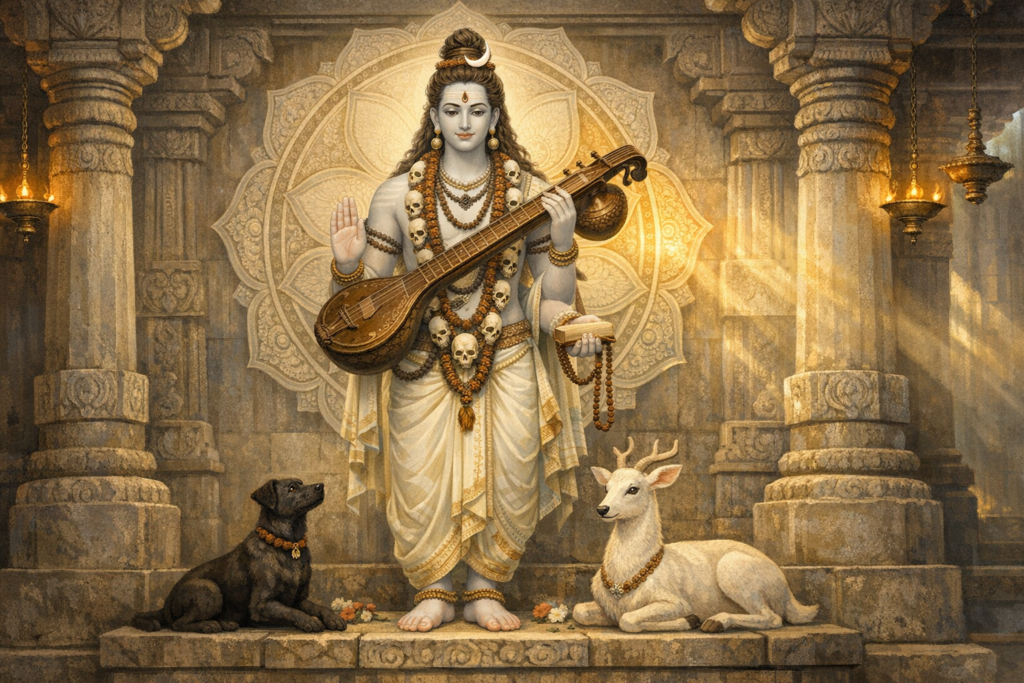
Within this continuum, Maa Saraswati is revered as the presiding deity of knowledge, music, and the arts. Iconography depicts Saraswati with a veena, seated upon a white lotus, attended by a hamsa (swan), and often holding a manuscript and a japa mala. Each element conveys a clear symbolism: purity and sattva (white), discernment and wisdom (hamsa), the flowering of learning (lotus), scriptural literacy (manuscript), and disciplined practice (mala). As the Goddess of Music, Saraswati exemplifies refined expression, clear thought, and the harmonizing power of sound.
In lived experience, music aligned with dhyana (meditation), japa (mantra recitation), and bhakti (devotional focus) strengthens concentration and emotional resilience. Raga, tala, and bhava, when approached with mindful attention, can calm the nervous system, clarify intention, and elevate spiritual energy. Devotional renditions—whether in temple kirtan, household puja, or quiet svadhyaya (self-study)—demonstrate how sound can shift mood states, deepen reflection, and stabilize the mind. These benefits align with the cultural understanding that the arts, when practiced ethically and attentively, are vehicles of inner harmony and wisdom.
Respect for Saraswati and the pursuit of knowledge resonates across dharmic traditions. In Hinduism, Saraswati embodies vidya (true knowledge) and kala (art). Jain traditions honor Saraswati as a guardian of learning and scriptural study. In Buddhist traditions, Sarasvati is invoked as a patron of eloquence and protector of the Dharma in certain texts, affirming a shared esteem for enlightened speech and understanding. Sikh tradition, while not deity-centered, elevates gyan (wisdom) and the sacred power of shabad (divine word) through kirtan. Together, these perspectives affirm unity in spiritual diversity: a common reverence for disciplined learning, ethical expression, and the sanctifying role of music.
Seasonal observances reinforce these values in daily life. Saraswati Puja during Vasant Panchami situates books, instruments, and tools of study on the altar, symbolically offering intellectual pursuits to the Goddess. Many chant the simple, time-honored mantra “Om Aim Saraswati Namah,” reflecting a gentle yet steady commitment to clarity of thought and purity of expression. Practical observances extend beyond the festival: mindful listening, daily riyaaz (practice), respectful study of scriptures, and honoring the Guru–Shishya parampara cultivate creativity, ethical discipline, and sustained learning throughout the year.
Countless students, musicians, and teachers recount how early-morning practice softens anxiety, how a well-chosen raga transforms a distracted mind, or how a brief period of mantra recitation before study supports comprehension and memory. Such experiences, though personal, are widely shared and point to a consistent conclusion: when music serves knowledge and virtue, it becomes a sacred art that refines character, elevates culture, and strengthens community bonds.
Honoring Maa Saraswati as the Goddess of Music thus invites a life of balance: intellectual rigor joined with aesthetic sensitivity, and personal growth aligned with collective harmony. By recognizing music as a discipline of mind and a bridge of the heart, communities across Hinduism, Buddhism, Jainism, and Sikhism can nurture a shared cultural heritage—one that celebrates wisdom, compassion, and unity in spiritual diversity.
Inspired by this post on Hindu Pad.