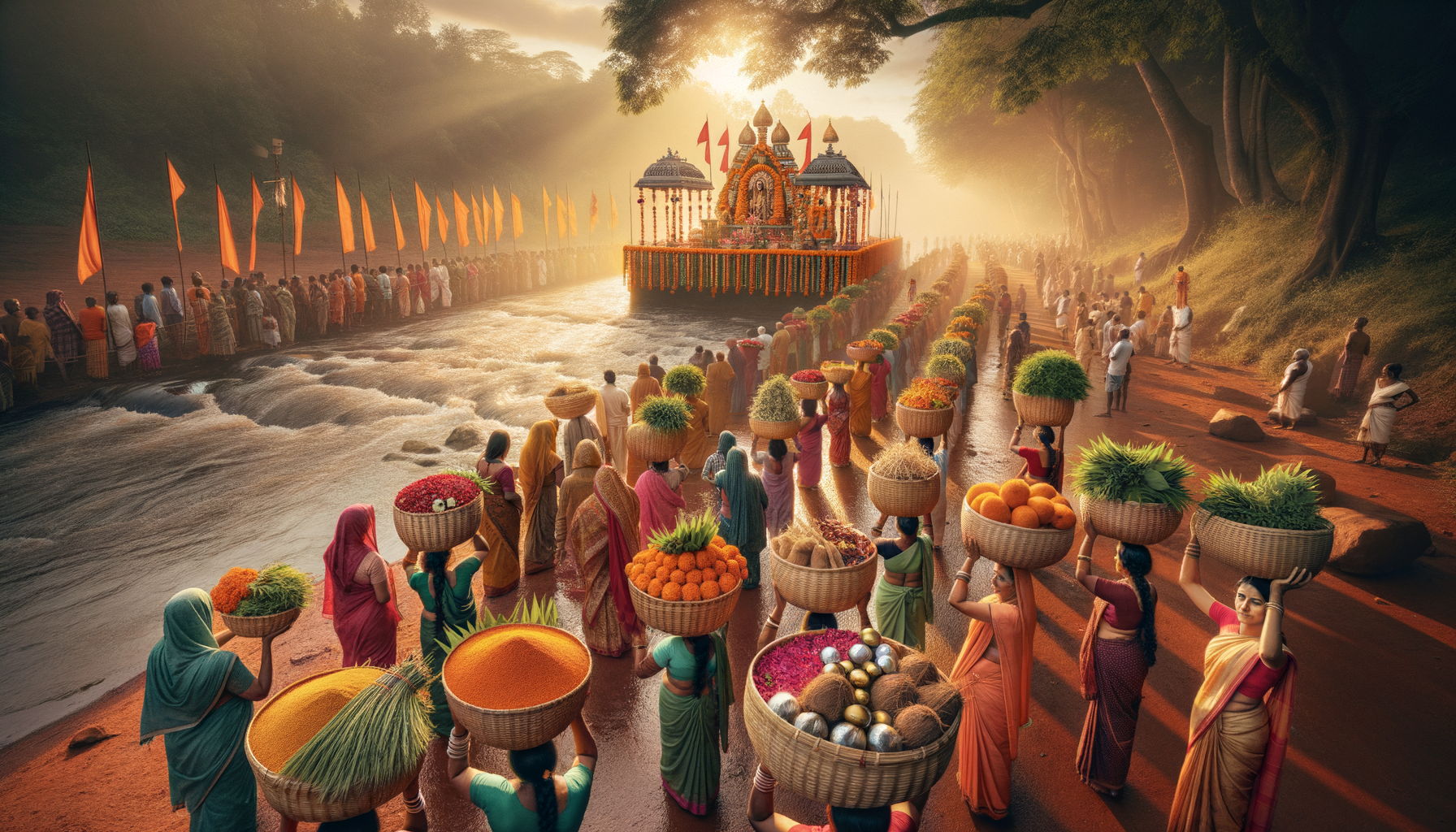
The third day of Medaram Jathara in 2026 falls on 30 January, a focal date when Sammakka Saralamma Darshanam is traditionally sought by devotees after completing the Punya Snanam in Jampanna Vaagu. Recognized as one of the largest tribal celebrations in Asia, the Jathara embodies a living heritage of Telangana that harmonizes tribal customs with the broader dharmic ethos of reverence, community service, and ecological respect.
Ritual observance on Day 3 follows a clear sequence: devotees perform the sacred bath (Punya Snanam) in Jampanna Vaagu and then proceed for darshan of the goddesses Sammakka and Saralamma. Offerings reflect both devotion and everyday sanctitywomen traditionally present ‘Odi Biyyam’ (sacred rice) and ‘saare’ (a combination of necessary items in daily life). These offerings symbolize nourishment, care, and the continuity of household well-being, aligning with the dharmic ideal of sustaining both family and community.
In 2026, sammakka sarakka darshanam date is 30 January 2026. On this auspicious day, the darshan stream typically swells as families, elders, and youth converge in orderly queues, accompanied by devotional singing and a palpable atmosphere of gratitude. Many participants report a renewed sense of clarity after the ritual bath and darshan, describing the experience as both emotionally grounding and spiritually elevating.
The symbolism of ‘Odi Biyyam’ and ‘saare’ extends beyond individual households. Shared preparation and distribution of these offerings foster social bonds, intergenerational learning, and mutual support. Such practices resonate with values cherished across dharmic traditionscompassion (karuṇā), non-violence (ahiṁsā), generosity (dāna), and communal harmonythereby welcoming visitors from diverse spiritual backgrounds while maintaining the festival’s distinctive cultural identity.
Medaram Jathara’s third day thus serves as a nexus of devotion and cultural continuity: Jampanna Vaagu as a sacred ecology for Punya Snanam; Sammakka Saralamma Darshanam as a reaffirmation of faith; and the offerings as a lived expression of care. The festival’s inclusive atmosphere reflects a wider South Asian heritage in which multiple paths to the sacred coexist, encouraging respect for diverse practices within a shared moral horizon.
For those planning observance in 2026, the emphasis remains on mindful participationhonoring riverine sanctity at Jampanna Vaagu, maintaining decorum in darshan, and offering ‘Odi Biyyam’ and ‘saare’ with sincerity. In doing so, devotees uphold a tradition that is both ancient and contemporary, binding community, environment, and spirituality into a single, cohesive act of remembrance and renewal.
Inspired by this post on Hindu Pad.