Fatal Pride in Hindu Epics: Comparing Mahishasura and Ravana for Timeless Dharmic Lessons
·4 min read
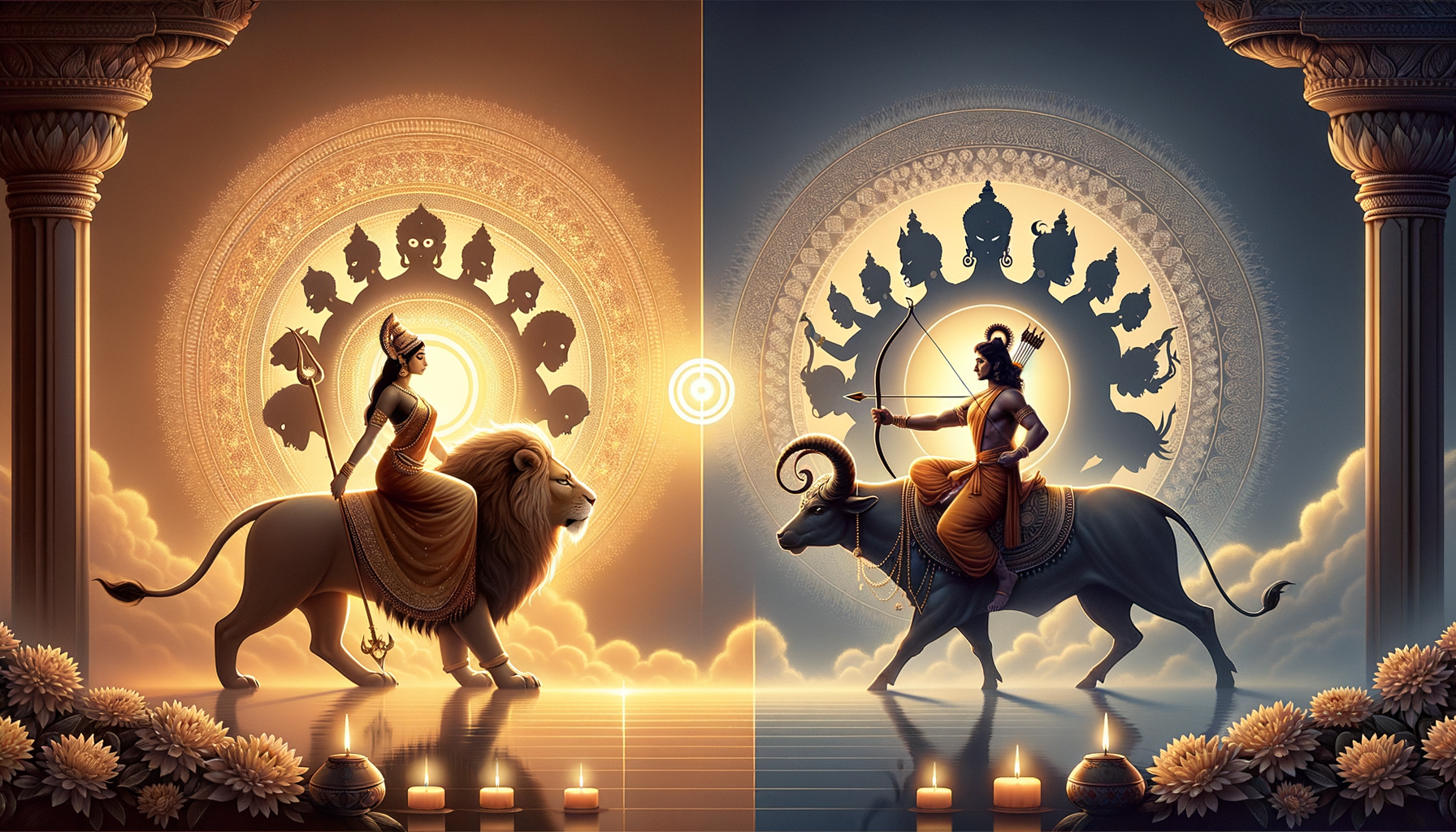
In Hindu mythology, Mahishasura and Ravana stand as powerful embodiments of how unchecked pride and arrogance invite inevitable downfall. Though distinct in origin and characterMahishasura as an asura and Ravana as a learned king and devotee of Shivatheir paths converge in a shared trajectory: extraordinary strength amplified by boons, hubris escalating into adharma, and an ultimate reckoning that restores cosmic balance (dharma). Their narratives, preserved in the Devi Mahatmya and the Ramayana, serve as enduring moral compasses for society and leadership alike.
Mahishasura’s rise begins with a boon that no man could kill him, prompting a reign of terror driven by contempt for the devas and the order of the cosmos. In response, the collective shakti of the devas manifests as Durga, whose victorycelebrated during Navaratri and Durga Pujareasserts the rightful boundaries of dharma and adharma. Ravana’s power, similarly guarded by boons, grows alongside Vidya (knowledge), but his transgressionsmost notably the abduction of Sitareflect a will that prioritizes ego over righteous restraint.
In both cases, counsel is offered and ignored. Mahishasura dismisses warnings, trusting invulnerability more than prudence. Ravana rebuffs Vibhishana’s prudent advice, choosing personal pride over ethical governance. The refusal to listen to wise counsel becomes a pivotal link between these antagonists, underscoring a leadership truth: when rajas and tamas eclipse sattva, discernment fades and collapse follows.
Their defeats illuminate the logic of dharma. Mahishasura is overcome by the divine feminineDurgaprecisely where his boon left a gap. Ravana is defeated by Sri Rama, maryada personified, whose human form fulfills the condition Ravana had underestimated. Both episodes reveal a consistent principle in Hindu epics: power without humility is structurally unstable, and dharma’s corrective eventually arrives through unanticipated channels.
The cultural memory of these narratives remains vivid in living traditions. Durga Puja and Dussehra are not merely festivals; they are communal reflections on the perils of arrogance and the relief that follows the restoration of order. Public ritualsfrom the veneration of the Devi to the symbolic burning of Ravana’s effigiesoffer a shared ethical rehearsal, reminding society that justice and compassion are collective responsibilities.
Read through a comparative lens, these stories present parallel leadership lessons. Ethical rule demands accountability, attention to counsel, and alignment with the larger good. The image of Durga emerging from the combined energies of the devas signals the strength of unity and collective intention; the alliance around Rama’s cause highlights cooperation across differences for the preservation of dharma. These motifs resonate with contemporary governance and organizational life, where checks and balances, humility, and service-centered leadership sustain long-term stability.
A dharmic convergence emerges across traditions. Buddhism cautions that attachment and conceit deepen dukkha; Jainism identifies mana (pride) as a kashaya that binds karma; Sikh teachings warn against haume (ego) among the five thieves. In this shared wisdom, the trajectories of Mahishasura and Ravana powerfully converge with broader Indic insights: ego isolates, humility integrates; ego inflames adharma, humility restores harmony. Unity among dharmic traditions thus rests on a common ethic of self-mastery, compassion, and righteous action.
For many readers, these epics also invite personal reflection. The temptation to ignore advice when success arrives, to overvalue strength while undervaluing restraint, and to conflate power with virtue are not distant mythic errors but everyday human inclinations. The narratives offer an emotionally resonant pathway from hubris to humilityreminding that clarity, empathy, and balance are learned in the crucible of challenge.
Ultimately, the comparison between Mahishasura and Ravana affirms a simple, rigorous principle: strength guided by dharma serves life; strength guided by pride corrodes it. By returning, again and again, to the ethical throughline of the Ramayana and the Devi Mahatmya, communities cultivate inner steadiness and social cohesion. In that spirit, these stories continue to inspire a culture of unity in diversity across Hinduism, Buddhism, Jainism, and Sikhismhonoring the shared pursuit of wisdom, responsibility, and the common good.
What do Mahishasura and Ravana have in common in Hindu epics?
Both figures misuse extraordinary power protected by boons, allow pride to grow into adharma, and ignore wise counsel. Their defeats restore dharmic balance and show that strength without humility becomes unstable.
How does Durga's victory over Mahishasura teach a dharmic lesson?
Mahishasura trusts his boon and dismisses the order of the cosmos, but Durga emerges from the collective shakti of the devas to defeat him. The story presents the divine feminine as a corrective force that reasserts the boundaries between dharma and adharma.
Why is Ravana's refusal to listen to Vibhishana important?
Ravana’s rejection of Vibhishana’s prudent advice shows how pride can overpower ethical governance. The article frames this refusal to heed counsel as a leadership failure that leads to collapse.
What do Durga Puja and Dussehra represent in this comparison?
Durga Puja and Dussehra keep these narratives alive as communal reflections on arrogance, justice, and restored order. Rituals such as venerating the Devi and burning Ravana’s effigies become shared reminders of ethical responsibility.
What leadership lessons does the comparison of Mahishasura and Ravana offer?
The comparison emphasizes humility, accountability, attention to counsel, and alignment with the larger good. It connects these epic lessons to modern governance and organizational life, where checks and balances and service-centered leadership support stability.
How does the article connect Hindu epics with Buddhist, Jain, and Sikh teachings?
The article notes a shared dharmic ethic around ego and humility: Buddhism cautions against attachment and conceit, Jainism identifies pride as mana, and Sikh teachings warn against haume. Across these traditions, ego isolates while humility supports harmony and righteous action.