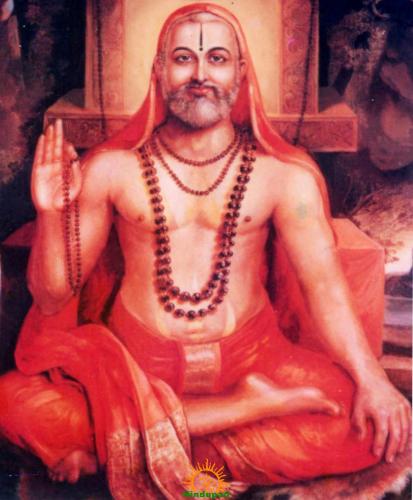
In Hindu traditions, color is never merely aesthetic. Each hue carries philosophical intent and spiritual resonance, communicating what doctrinal language alone cannot. This semiotics of color is especially vivid in Hanuman iconography, where saffron and scarlet function as a living commentary on bhakti, tapas, and kshatra. Together these shades condense his identity as Vayuputra, steadfast servant of Bhagavan Ram, and a bridge between Shaiva and Vaishnava devotion.
Saffronvariously called bhagwa, kesari, or geruasignifies tapas (austerity), tyaga (renunciation), and inner fire (agni) that purifies and illumines. It is the color of monks’ robes, the discipline of the yogic path, and the radiance of sattva strengthened by purposeful rajas. Within the shared dharmic civilizational space, this symbolism is widely recognized: Buddhist kasaya robes, Sikh kesri in the Nishan Sahib, and the broader Indic reverence for the ascetic ideal all point to saffron as a visual grammar of spiritual resolve.
When applied to Hanuman, saffron captures brahmacharya, nishkama-seva (selfless service), and the disciplined channelling of prana. As Vayuputra, he embodies controlled vitalitybreath harnessed to dharmaso that strength serves compassion and courage serves truth. In iconography, saffron marks that interior stance: power subordinated to devotion, speed tempered by steadiness, and presence refined by humility.
Scarlet (bright red) introduces a complementary register. In classical Indic thought on the gunas, red evokes dynamic rajas: vigor, motion, and purposeful engagement. In the Hanumanic context, this tone signals vira-bhava (heroic disposition), the resolute kshatra that defends dharma without hatred, and the practical energy required to act decisively in the world. It evokes the fearless leap of the Sundara Kanda, the indomitable will that crosses oceans, and the burning clarity that dismantles obstacles.
Read together, saffron and scarlet resolve a paradox fundamental to the yogic life: how does one unite renunciation and responsibility, inward quietude and outward courage? Saffron answers with tapas and restraint; scarlet answers with virya (valor) and commitment. Their synthesis on Hanuman’s person is the color-language of integrative spiritualitysattva guiding rajasso that action remains lucid, ethical, and compassionate.
Popular lok-parampara preserves this integration in the beloved sindoor narrative. Tradition recounts that Sita applied a small streak of vermilion for the long life of Bhagavan Ram. On learning its meaning, Hanuman covered his entire body in sindoor to demonstrate boundless devotion. Hence, many Hanuman murtis in North and Western India appear saffron-scarlet, and devotees anoint the deity with sindoor as an enactment of total, unreserved bhakti.
Historically, the vermilion used in temples has included mineral and plant-derived pigments. Preparations have ranged from cinnabar-based vermilion to turmeric–lime formulations that yield orange-red hues; these are often mixed with sesame, mustard, or jasmine (chameli) oil for ritual anointing. While regional recipes vary, the visual intent is consistent: imbue the murti with the warmth of agni and the glow of devotion.
Ritual practice reflects this chromatic theology. On Tuesdays (Mangalvar) and Saturdays (Shanivar), devotees offer sindoor, chameli oil, and marigold garlands, seeking courage, clarity, and protection. The offerings engage the sensessight, touch, scentas a pedagogical tool; the mind reads the colors as cues for inner qualities: steadfastness (saffron), initiative (scarlet), and unwavering remembrance of Sri Rama.
Regional iconography magnifies this diversity-in-unity. In many North Indian shrines, Hanuman appears vividly orange-red; in South Indian temples, granite or panchaloha icons are typically unpainted yet richly alankrita (adorned) with chandan, vibhuti, and kumkum. Both modes are canonical: color in the North pedagogically emphasizes bhakti and virya, while the South’s stone icons foreground permanence, gravity, and darshanic focus. The theological center holds across styles.
Agamic and shilpa traditions prioritize the deity’s attributes over fixed pigments. Hanuman’s abhaya and varada mudras, the gada (mace) signifying disciplined strength, and the Rama-dhvaja (flag bearing the Lord’s name) articulate his essence independent of palette. In Panchamukhi Hanuman forms, chroma remains secondary to directional guardianship and the protective, mantric geometry of the five faces.
A useful semiotic lens is the triad of gunas. White often encodes unalloyed sattva, black the inertia of tamas, and red the dynamism of rajas. Saffronan orange that leans toward the glow of firecan be read as sattva illumined by disciplined rajas, the signature of tapas. Scarlet then amplifies action under that guidance. On Hanuman, the two cooperate: action is not agitation; renunciation is not withdrawal.
Yogic physiology offers an allied reading. Hanuman’s Vayu-tattva links him to prana, while the scarlet–saffron band evokes the agni of the manipura kshetra (navel center), the seat of transformative will. In lived practice, devotees report that reciting Hanuman Chalisa steadies breath (pranayama’s rhythm), warms resolve, and clarifies purposeprecisely the inner states these colors signal.
Astrology and temple observance add further layers. Tuesday’s Mangal (Mars) resonates with red’s assertive tone, while Saturday’s Shani is approached through Hanuman’s protective grace; traditions recount Shani’s pledge to spare the devotees of Mahavir. Thus, visiting Hanuman temples on these days aligns celestial timing with psychological tuning: color, mantra, and vrata synchronize intention and effort.
The dhvaja (flag) in Hanuman temples is frequently bhagwa, proclaiming the victory of dharma as a daily ethic rather than a partisan statement. The saffron banner at the dhwajasthambha reminds worshippers that ethical courage begins with self-mastery; its color mirrors the flame that consumes pettiness and lights the path of seva.
Within the broader dharmic family, the semantics of saffron and scarlet cultivate unity. Buddhist monastic robes instantiate renunciation; Jain ascetic disciplines exemplify non-possession and ethical purity; Sikh kesri affirms sovereign commitment to protect righteousness. Though their theologies and practices differ, the shared color language honors restraint, courage, and servicevirtues Hanuman personifies without sectarian boundary.
Contemporary devotees often express how the first sight of a saffron-hued Hanuman at dawn quiets anxiety and invites moral clarity before the day’s decisions. The scarlet tilak, glimpsed on the murti or worn by the devotee, becomes a tactile reminder to act with fearless kindness and unshakeable integrity, as Hanuman’s own story teaches in the Ramayana’s Sundara Kanda.
For home worship, color-aware puja can be simple and profound. A saffron cloth for the altar, marigold or hibiscus garlands, and a small application of natural sindoor offered with Ram-nama japa align the senses with intention. The emphasis remains on inner alignmentshraddha (faith), smriti (recollection), and sevaso that ritual color becomes ethical color in daily conduct.
Material culture scholars note that pigments also encode continuity. Temple murals, festival flags, and local craft traditions transmit this chromatic vocabulary across generations, turning visual culture into a vernacular theology. In that way, the saffron and scarlet of Hanuman do not merely decorate; they educate.
Ultimately, Hanuman’s palette is a pedagogic synthesis: saffron for the tapas that purifies motive, scarlet for the courage that carries duty to completion. Both are anchored in bhaktithe unwavering remembrance of Sri Rama. In a plural dharmic world that honors many margas (paths), these colors communicate a shared ethic: strength yoked to compassion, speed governed by wisdom, and fame surrendered to service.
Seen through this lens, the “Saffron and the Scarlet: The Sacred Colors of Hanuman” are less pigment than practice. They are an invitation to cultivate inner fire without anger, valor without vanity, and renunciation without indifferencean invitation that resonates across Hinduism, Buddhism, Jainism, and Sikhism, and remains as relevant in today’s complex world as it was in the timeless epics.
Inspired by this post on Hindu Blog.