-
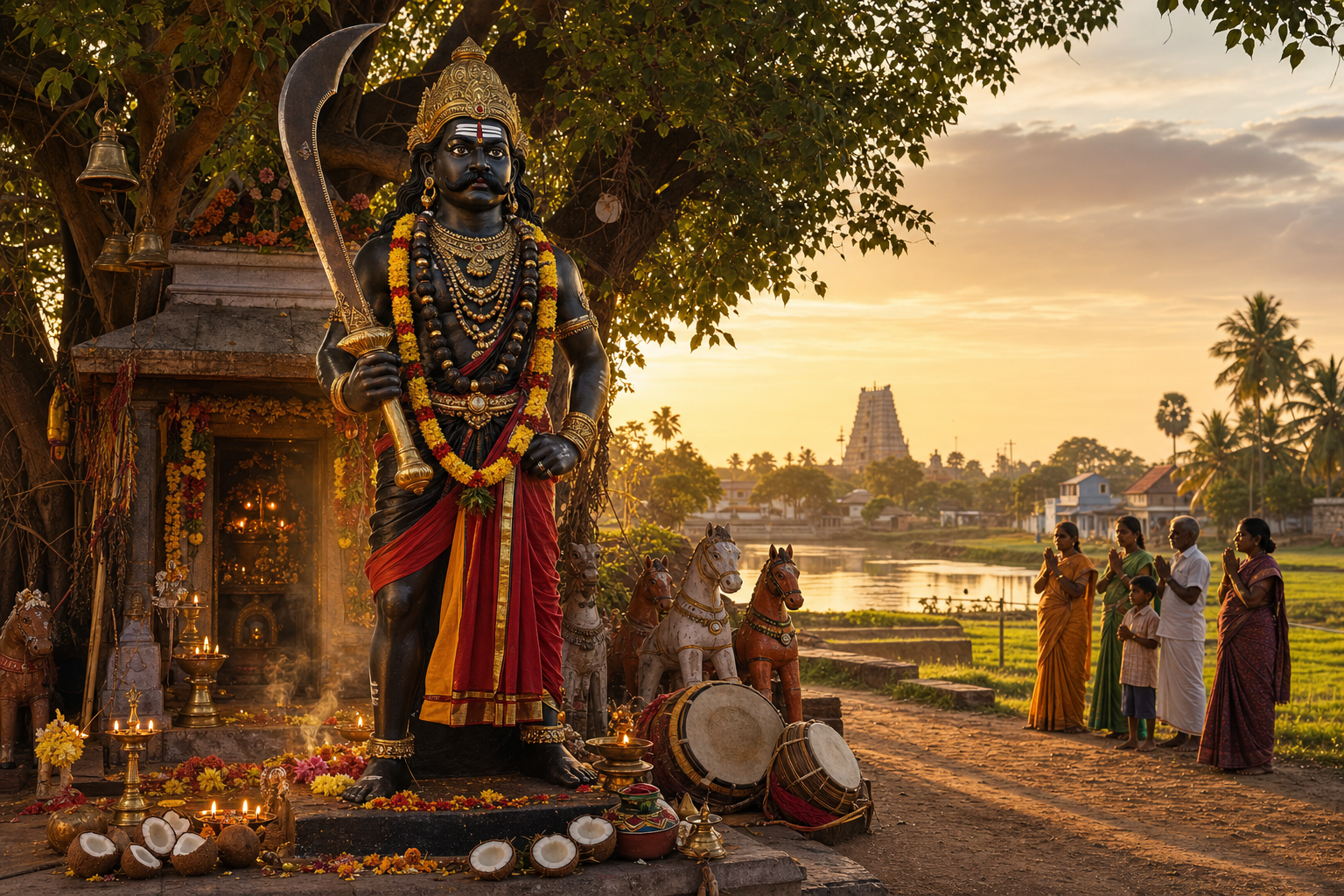
Guardians at the Village Edge: Ayyanar’s Terracotta Horses—History, Ritual, Symbolism

Across rural Tamil Nadu, monumental terracotta horses stand guard as votive offerings to Ayyanar, the village boundary-keeper whose protection encircles fields, groves, and water. This long-form, research-driven overview explains the history, iconography, and ritual ecology of Ayyanar worship, showing how art, craft, and community cohere into a living heritage system. Readers will learn how Velar/Kuyavar…
-
Decoding Andal’s Parrot (Shuka): Vaishnava Iconography of Love, Voice, and Divine Bhakti Power

Andal’s parrot (Shuka) is a potent Vaishnava symbol that unites love, voice, and sacred memory in a single, graceful image. The iconography presents Andal as a serene, poetic devotee whose companion bird evokes messenger-love central to Tamil Bhakti. The Shuka’s association with mantra and nama-sankirtana highlights how disciplined speech transforms echo into wisdom. By recalling…
-
Annanmar Swamy of Kongu Nadu: Living Legacy and Valor of Ponnar–Shankar in Tamil History

Rooted in the Cauvery basin of Kongu Nadu, the legend of Annanmar Swamy—Ponnar and Shankar—preserves a 500-year-old tradition of valor and dharma in Tamil history. This concise account explains their veneration across village shrines, the cultural memory that sustains their story, and the film “PONNAR SHANKAR” that introduced the legend to wider audiences. Readers gain…
-
Murugan and Tamil: The Enduring Sacred Bond Shaping Language, Identity, and Living Heritage

Murugan—known as Kartikeya or Skanda—stands as a guardian of Tamil language, culture, and identity, revealing how sacred tradition and linguistic creativity thrive together. Drawing on Sangam literature and Tirumurukāṟṟuppaṭai, the narrative traces Murugan’s sacred geography and Tamil poetics as living heritage. It highlights Tiruppugazh’s refined prosody, temple inscriptions, and festivals like Skanda Sashti and Karthigai…