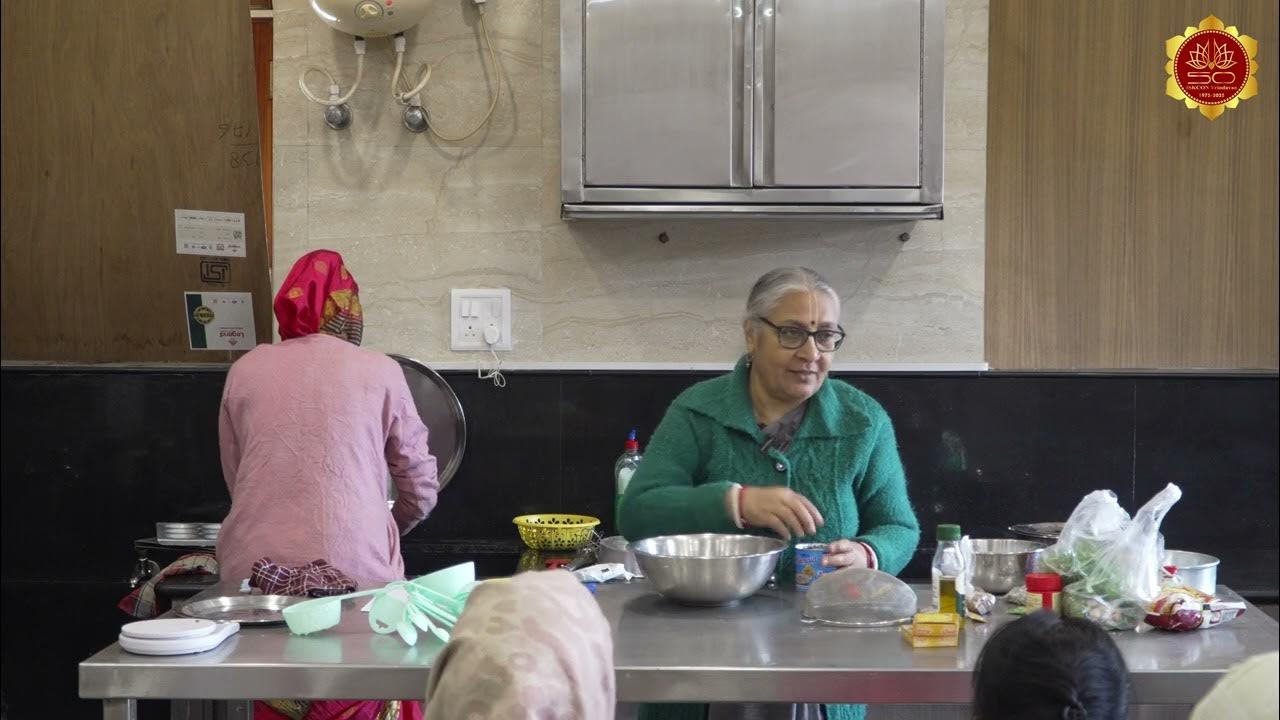
On 17 December 2025, H.G. Purnima Mataji led a devotional baking demonstration dedicated to Srimati Radharani, presenting an accessible, sattvic approach to festive cooking that aligns with the Bhakti Tradition and the wider tapestry of Hindu culture. The session highlighted how measured ingredients, mindful methods, and an atmosphere of reverence can transform simple preparations into offerings of care and community bonding.
The first preparation centered on a rich, eggless nut-based cake. The ingredient list, presented with clarity for reproducibility, included: 130 grams Butter; 2 cups Maida; 1 canned condensed milk; 1 cup Khoya; 1 tsp Baking Powder; 1/2 tsp Baking Soda; 100 grams Almonds; 50 grams Pistachio; a little Milk; and a little Ilaychee Powder. Together, these components balance sweetness, richness, and fragrance, with Ilaychee Powder imparting a gentle, comforting aroma.
The second preparation focused on Idli DHOKLA, a soft, savory item suited to light meals and community gatherings. The ingredients specified were: 500 grams Suji; 400 grams Dahi; half a cup of Oil; 1 tsp Mustard Seeds; 2 tsp sesame Seeds; and 2 Sachets. The proportions point toward a pleasantly airy texture and a flavorful tempering, while maintaining a wholesome, vegetarian profile consistent with Pure Food principles.
Participants commonly connect with such sessions through sensory memorythe warmth of a freshly baked cake, the light tang of Dahi, the subtle crunch of sesame Seedsrecalling family kitchens and festive tables. The emphasis on measured ratios, gentle handling, and simple, reliable combinations makes the recipes approachable for home cooks who seek consistency without complexity.
Beyond technique, the demonstration modeled a unifying cultural practice: vegetarian, non-violent cooking that resonates across Hinduism, Buddhism, Jainism, and Sikhism. Rooted in values of ahimsa and seva, these preparations foster shared meals, mutual respect, and the kind of community care that strengthens interfaith and intrafaith harmony within dharmic traditions.
From an educational perspective, the ingredient clarity supports repeatable outcomes, while the choice of Maida, Khoya, and nuts ensures depth of flavor and texture in the cake, and Suji with Dahi offers a balanced base for Idli DHOKLA. The inclusion of Ilaychee Powder lends a classic aromatic profile, and the careful use of leavening and tempering elements encourages lightness and subtle complexity.
By combining methodical instruction with devotional intention, the class demonstrated how culinary heritage and mindful preparation can elevate everyday cooking into a shared cultural experienceone that nourishes both body and spirit and strengthens community ties.
Inspired by this post on Dandavats.