
A spiritual retreat can be uplifting for many reasons, yet the most enduring retreats usually offer more than a pleasant change of scenery. They create a structured environment in which dharma, devotion, disciplined practice, learning, seva, and community life are experienced together. The original source available for transformation preserved only a brief Facebook-linked reference and an image, but its central claim was clear: the retreat was experienced as unusually uplifting, enriching, and nourishing. That evaluation deserves careful reflection because, in the Dharmic traditions, genuine nourishment is not limited to the body or the emotions; it includes the refinement of intention, the clarification of values, and the renewal of one’s relationship with the Divine, the community, and the self.
Within the broad landscape of Hindu spirituality, and especially within the bhakti traditions associated with Krishna consciousness and Gaudiya Vaishnavism, retreat life has a specific theological and practical significance. It is not merely a vacation with devotional decoration. It is a temporary reordering of daily life around sadhana, satsanga, kirtan, scriptural hearing, prasadam, reflection, and service. These elements work together to shift attention away from distraction and toward remembrance. When approached with sincerity, such a retreat becomes a living classroom where philosophy is not only discussed but embodied through sound, food, time, conduct, and relationships.
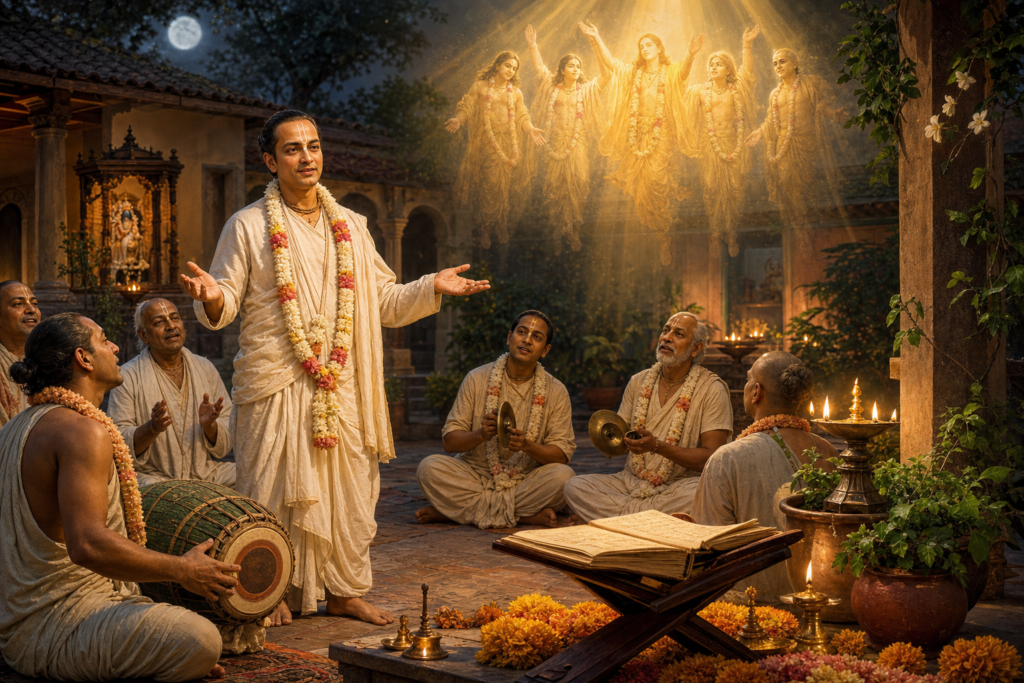
The most meaningful feature of such a gathering is often its atmosphere. A well-conducted retreat does not depend only on the eloquence of speakers or the beauty of the location, though both can help. Its deeper power lies in the shared intention of the participants. When people gather to chant, study, serve, listen, and honor one another, the social environment itself becomes formative. Ordinary habits of competition, self-display, anxiety, and isolation soften. In their place, a different rhythm appears: rising early, singing sacred names, hearing scripture, accepting sanctified food, and measuring the day by spiritual attention rather than productivity alone.
From an academic perspective, retreats function as concentrated ritual communities. They compress into a few days what many traditions recommend as a lifelong discipline: regular practice, moral restraint, devotional expression, meaningful association, and service-oriented living. In Hindu thought, the human being is not understood as a merely economic or psychological unit. The person is an embodied, relational, moral, and spiritual being. A retreat addresses these layers simultaneously. The body is cared for through regulated meals and rest; the mind is steadied through mantra and study; the emotions are refined through devotion; the intellect is engaged through philosophy; and the social self is trained through seva and community participation.
This is why the word “nourishing” is especially important. In a Dharmic context, nourishment is not sentimental. It is technical. The Sanskritic vocabulary of spiritual cultivation often distinguishes between what agitates consciousness and what clarifies it. Sattva, commonly translated as clarity, harmony, or goodness, is strengthened by disciplined living, truthful speech, pure food, study, self-control, compassion, and spiritual association. A retreat organized around these principles can create a sattvic field in which participants feel lighter, steadier, and more receptive to higher insight. The feeling of upliftment is therefore not accidental; it emerges from an integrated discipline.
Kirtan is central to this experience. In the bhakti traditions, sacred sound is not treated as a symbolic reminder alone. It is understood as a direct means of spiritual contact. The congregational chanting of the names of Krishna, Rama, Hari, Govinda, and other sacred names creates a shared devotional space that transcends ordinary social boundaries. People of different ages, backgrounds, languages, and degrees of learning can participate together. This accessibility is one of the strengths of bhakti. It does not abolish learning, discipline, or theology; rather, it allows the heart to enter the path even before the intellect has mastered every detail.
Scriptural hearing gives depth to that emotional participation. A retreat centered only on mood can become temporary enthusiasm. A retreat that combines kirtan with study becomes more stable because devotion is joined with understanding. Texts such as the Bhagavad Gita, Srimad Bhagavatham, and the teachings of Vaishnava acharyas provide conceptual clarity about the nature of the self, the purpose of action, the discipline of the mind, the meaning of surrender, and the relationship between the individual soul and the Supreme. In this setting, philosophy is not abstract speculation. It becomes a guide for living with humility, attention, and responsibility.
The retreat experience also demonstrates the educational power of routine. Modern life often treats freedom as the absence of structure, yet most spiritual traditions understand that freedom matures through wise structure. Waking, chanting, eating, studying, resting, serving, and gathering at set times may appear simple, but such regularity protects the mind from fragmentation. In yoga and bhakti, repeated practice is not mechanical when it is joined with intention. It trains attention. It reduces the tyranny of impulse. It gives the heart a reliable path back to remembrance.
Prasadam, the sanctified food offered to the Divine and then shared, is another essential dimension. In many Hindu traditions, food is never merely biological intake. It carries ethics, intention, subtle influence, community meaning, and ritual significance. A retreat meal taken as prasadam becomes a lesson in gratitude and interdependence. The farmer, cook, server, donor, teacher, community, and Divine source of nourishment are all implicitly acknowledged. Such eating can become contemplative without becoming austere. It teaches that spirituality does not reject the senses; it educates them.
Seva, or service, prevents retreat life from becoming self-absorbed. A gathering can easily become another consumer experience if participants arrive only to receive inspiration. Dharmic retreat culture is healthiest when everyone is gently invited into contribution: serving meals, cleaning spaces, assisting elders, supporting children, preparing programs, arranging books, welcoming newcomers, or simply listening with care. Through seva, the ego’s demand to be constantly noticed is softened. Community becomes not an audience but a shared field of responsibility.
The emotional power of such retreats often comes from this combination of devotion and belonging. Many people carry spiritual longing privately. In ordinary settings, that longing can feel difficult to express. A retreat gives that longing a language, a sound, a timetable, and a community. The result can be deeply moving. Tears during kirtan, quietness after a lecture, gratitude during prasadam, or a renewed desire to practice at home should not be dismissed as passing emotion. Properly understood, these moments indicate that the inner life has been given room to breathe.
At the same time, an academically careful assessment must avoid romantic exaggeration. A retreat is not a permanent solution to every difficulty. Its value depends on preparation, leadership, inclusivity, follow-through, and the ability to translate temporary inspiration into daily discipline. The most nourishing retreats do not merely create a high point; they help participants return home with a realistic path. This may include a regular japa practice, weekly satsanga, better reading habits, more mindful food choices, reduced digital distraction, a renewed commitment to family duties, or a more compassionate approach to community service.
The unity of Dharmic traditions is also relevant here. Hinduism, Buddhism, Jainism, and Sikhism differ in metaphysics, practices, scriptures, and institutional histories, yet they share a serious concern for self-discipline, ethical life, inner transformation, compassion, and liberation from ego-centered existence. A bhakti retreat rooted in Krishna consciousness can therefore be appreciated without narrowing the spiritual horizon. It can stand as one expression within a wider Dharmic ecosystem in which chanting, meditation, seva, non-harm, truthfulness, humility, and community life are honored in different but resonant ways.
This inclusive understanding matters. A retreat that strengthens one’s own tradition should not produce contempt for others. In its best form, bhakti deepens reverence. It gives participants a more grounded identity while making them more generous toward sincere seekers on other Dharmic paths. The goal is not homogenization, where every tradition is flattened into sameness. The goal is mutual respect rooted in clarity. A mature practitioner can love Krishna deeply, honor the Vaishnava sampradaya sincerely, and still recognize the discipline of a Jain monk, the meditation of a Buddhist practitioner, the seva of a Sikh sangat, and the many streams of Hindu worship as part of a broader civilizational commitment to spiritual refinement.
The social importance of retreats should not be underestimated. In diaspora communities and urban Indian settings alike, religious identity can easily become reduced to festivals, inherited labels, or occasional temple visits. Retreats create continuity. Children observe adults practicing with seriousness. Elders transmit memory without needing formal lectures at every moment. Young adults encounter tradition as something intellectually meaningful and emotionally alive rather than merely obligatory. Families experience worship, study, and service together. Such environments are vital for cultural preservation because they allow tradition to be lived, not simply defended.
There is also a psychological dimension. Modern people often live under chronic stimulation, comparison, and fatigue. A retreat structured around mantra, silence, sacred music, shared meals, and ethical conversation can reduce mental noise. This should not be confused with clinical treatment, but it can support emotional balance and spiritual resilience. The nervous system responds to rhythm, voice, breath, community warmth, and meaningful ritual. Kirtan regulates breath and attention. Japa builds concentration. Scriptural study provides cognitive orientation. Seva reduces self-preoccupation. Together, these practices can create a sense of groundedness that many participants describe as peace.
The intellectual nourishment of a retreat deserves equal attention. Bhakti is sometimes misunderstood as anti-intellectual because it emphasizes love and surrender. Historically, however, the Vaishnava traditions have produced sophisticated theology, aesthetics, hermeneutics, poetry, music, temple culture, and social institutions. A serious retreat can introduce participants to questions of ontology, ethics, devotion, ritual theory, and the philosophy of the self. The Bhagavad Gita’s teachings on karma yoga, bhakti yoga, jnana, discipline, and equanimity remain especially relevant because they address action in the world rather than escape from it.
For this reason, the retreat can be described as enriching in the fullest sense. It enriches understanding by connecting practice with philosophy. It enriches emotion by directing feeling toward devotion rather than restlessness. It enriches community by transforming strangers into co-practitioners. It enriches culture by transmitting music, food, language, gesture, and memory. It enriches daily life by showing that spiritual practice is not confined to dramatic moments; it can be woven into eating, speaking, walking, cleaning, listening, and resting.
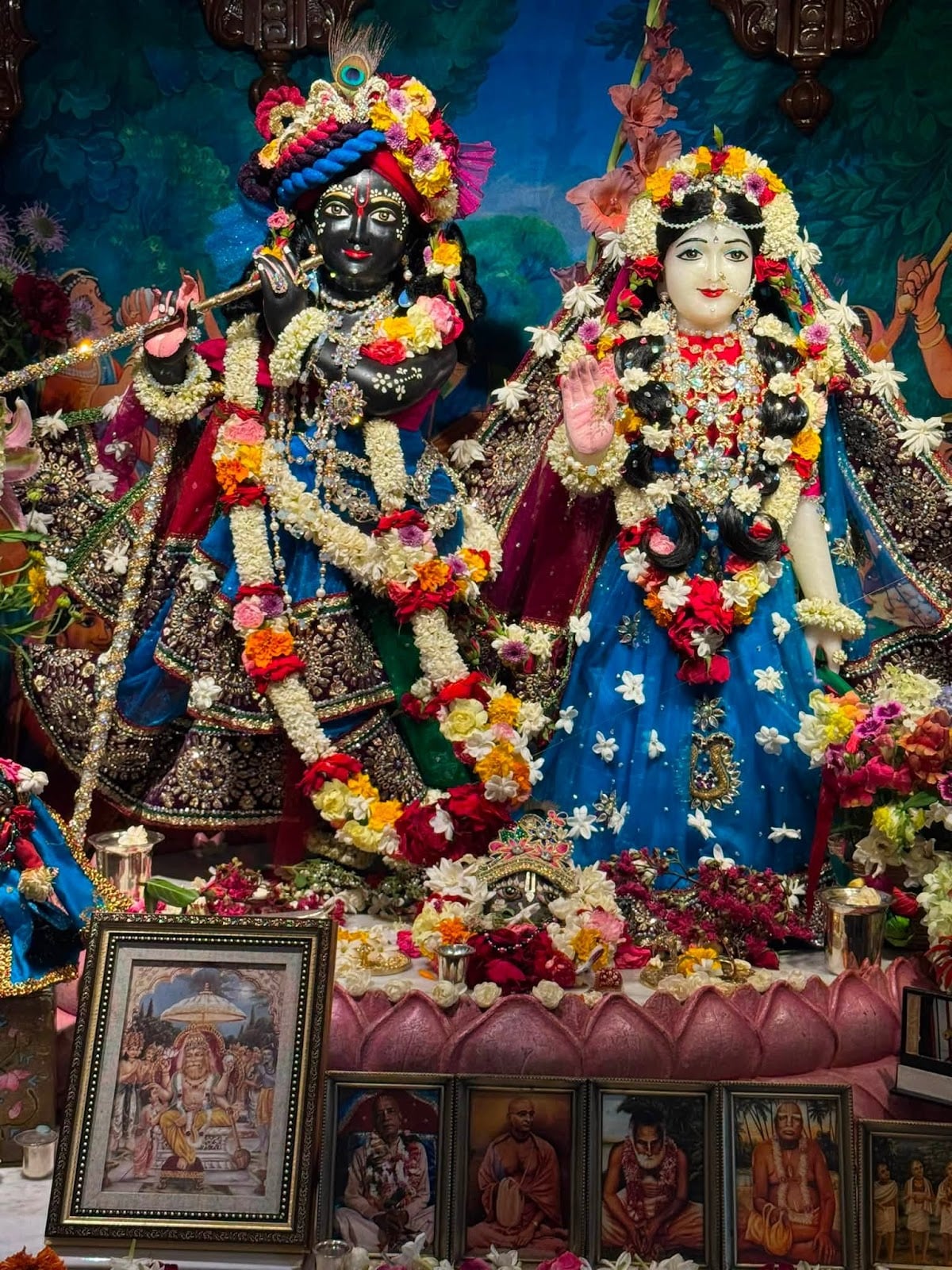
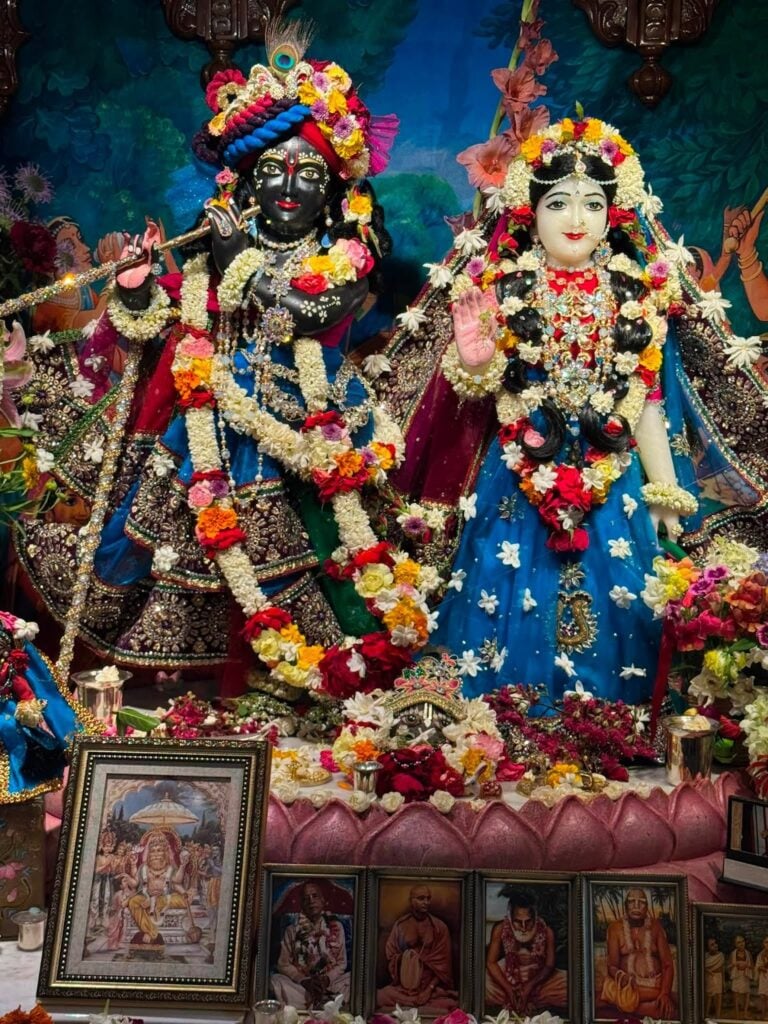
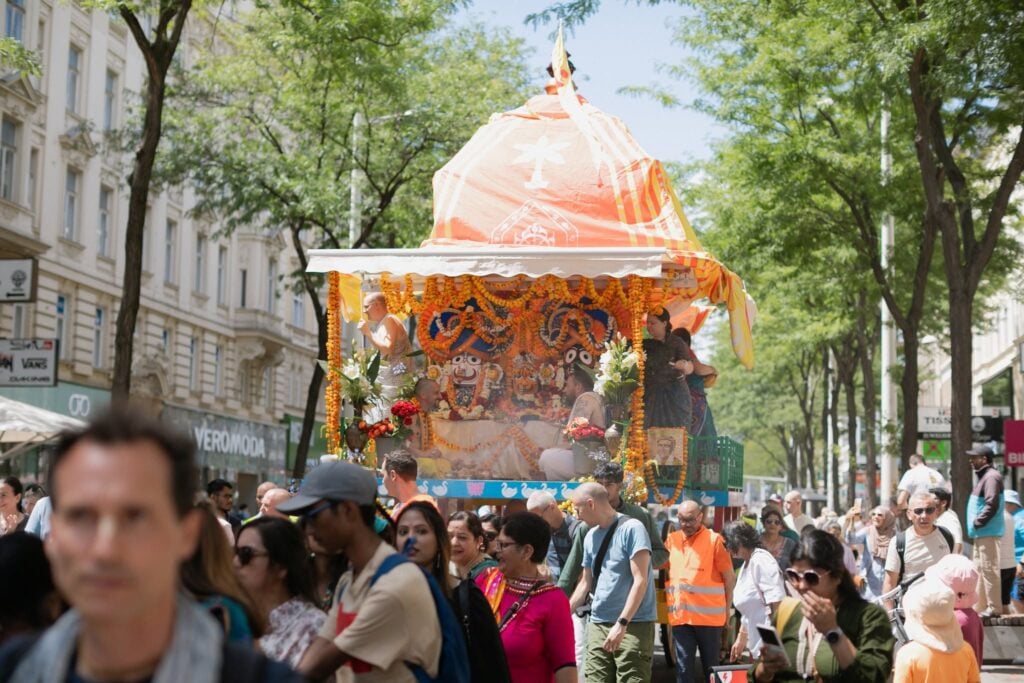
The image attached to the source, while not accompanied by detailed written context in the provided material, also points to the visual dimension of memory. Retreats are remembered through faces, sacred spaces, shared meals, devotional gatherings, and quiet moments that remain vivid long after the event. Images can preserve a glimpse of community, but the deeper significance lies in what the participants carry forward. The true measure of a retreat is not only how beautiful it appeared but whether it produced steadiness, humility, gratitude, and renewed commitment.
A well-formed retreat also teaches the difference between inspiration and transformation. Inspiration is the spark; transformation is the disciplined tending of that spark after returning home. The practical question is therefore clear: what habits become more dharmic after the retreat? Does speech become kinder? Does worship become more regular? Does family life become more patient? Does study become more consistent? Does service become less performative? Does one become more capable of honoring other sincere practitioners? These are the signs that a retreat has moved beyond pleasant memory into lasting spiritual formation.
In this light, describing the retreat as uplifting, enriching, and nourishing is not merely praise. It is a compact summary of what Dharmic retreat culture aims to accomplish. Upliftment refers to the elevation of consciousness through sacred sound, association, and remembrance. Enrichment refers to the deepening of knowledge, culture, and relational meaning. Nourishment refers to the strengthening of body, mind, heart, and spiritual aspiration through prasadam, practice, and community. When all three are present together, the retreat becomes a meaningful expression of Sanatana Dharma in lived form.
The enduring lesson is that spiritual life requires environments that support it. Individual willpower is important, but human beings are shaped by association. A retreat offers a temporary but powerful association with people, sounds, teachings, foods, and routines that orient consciousness toward the sacred. Its value lies in reminding participants that another way of living is possible: disciplined without harshness, joyful without superficiality, communal without loss of individuality, and devotional without sectarian narrowness.
Such experiences are especially valuable in an age of fragmentation. A nourishing bhakti retreat offers a model of integrated life. It shows that philosophy can sing, food can teach, service can heal pride, community can educate, and devotion can bring clarity to ordinary responsibilities. For those seeking spiritual growth, Krishna consciousness, Dharmic community, and a more grounded practice of bhakti, the significance of such a retreat lies not only in what was felt during the gathering but in what continues afterward: steadier remembrance, deeper gratitude, and a more generous commitment to living dharma with sincerity.
Inspired by this post on Dandavats.




Leave a Reply
You must be logged in to post a comment.