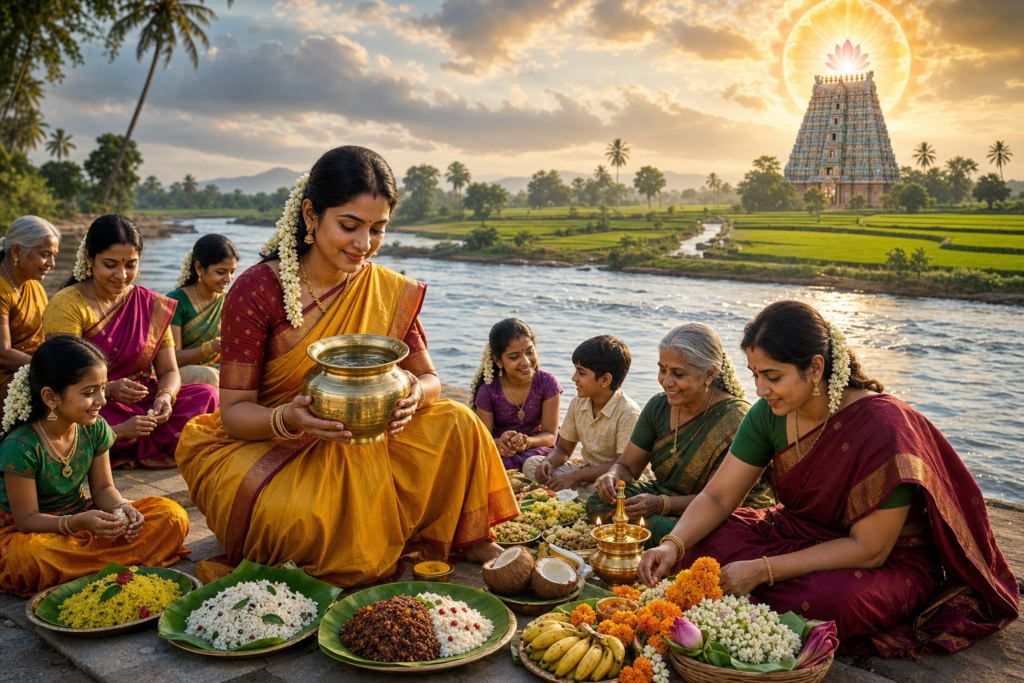
Vishu, observed across Kerala and by Malayalis worldwide, ceremonially marks the astronomical New Yearthe first sunrise following the Sun’s sidereal ingress into Mesha (Aries). The festival blends precise astronomical reckoning with deeply symbolic household and temple rituals, framing the year ahead in light, abundance, and ethical intent. While joyous and communal in tone, Vishu is also rigorously structured in its customs, from the pre-dawn viewing of the Vishukkani to the distribution of Vishu Kaineettam and the preparation of the grand Vishu Sadya.
In calendrical terms, Vishu is anchored in Mesha Sankramana, the Sun’s entry into sidereal Aries as computed in the nirayana system used in Kerala Panchangams. The Malayalam month of Medam begins with this ingress, typically falling on 14–15 April in the Gregorian year. Although the Malayalam Era (Kolla Varsham) formally starts in Chingam (August–September), Vishu is upheld as the astrological new year day. The word ‘Vishu’ is linked to the Sanskrit ‘Viṣu’ (equinox), reflecting a historical association with seasonal balance; due to precession, the celebration now follows a few weeks after the March equinox while preserving its original symbolism of auspicious equilibrium.
Determining the correct festival day follows a consistent principle used by Kerala almanacs: the sunrise after Mesha Sankramana is observed as Vishu. Households plan the key observanceVishukkani darśanamat dawn, preferably during or immediately after the Brahma Muhurta window that precedes sunrise. If Mesha Sankramana occurs late in the morning, the subsequent day’s sunrise becomes the reference. In practice, local panchang guidance ensures timing aligns with both scriptural norms and community consensus.
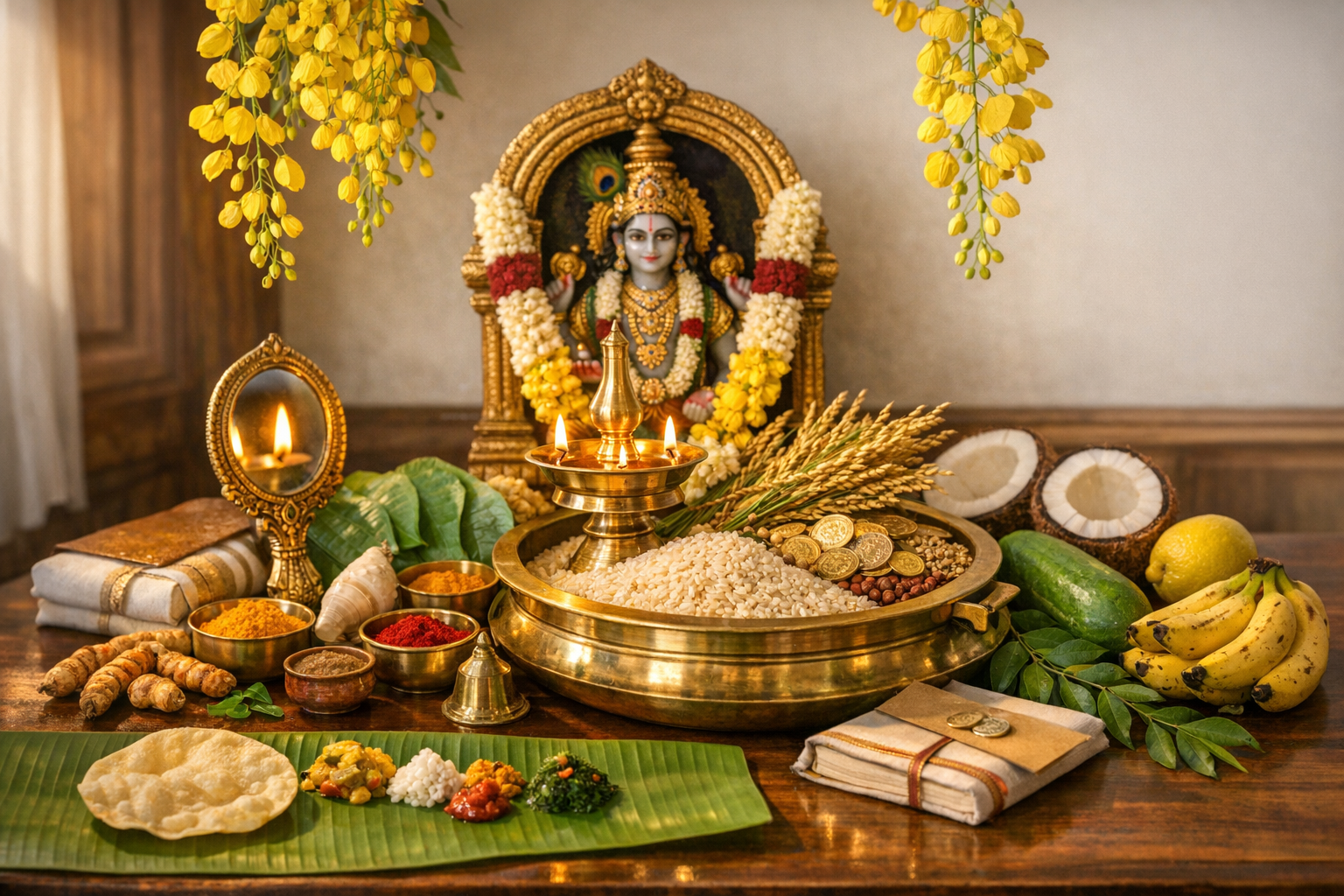
The Vishukkani, literally the “auspicious first sight,” is the devotional and psychological fulcrum of the day. By mindfully curating a tableau of light, grain, gold, sacred images, and seasonal abundance, families prime attention and intention toward prosperity, clarity, and dharmic conduct. The first gaze of the year falling upon this arrangement is believed to shape a sattvic inner state, inspiring ethical action and confident beginnings.
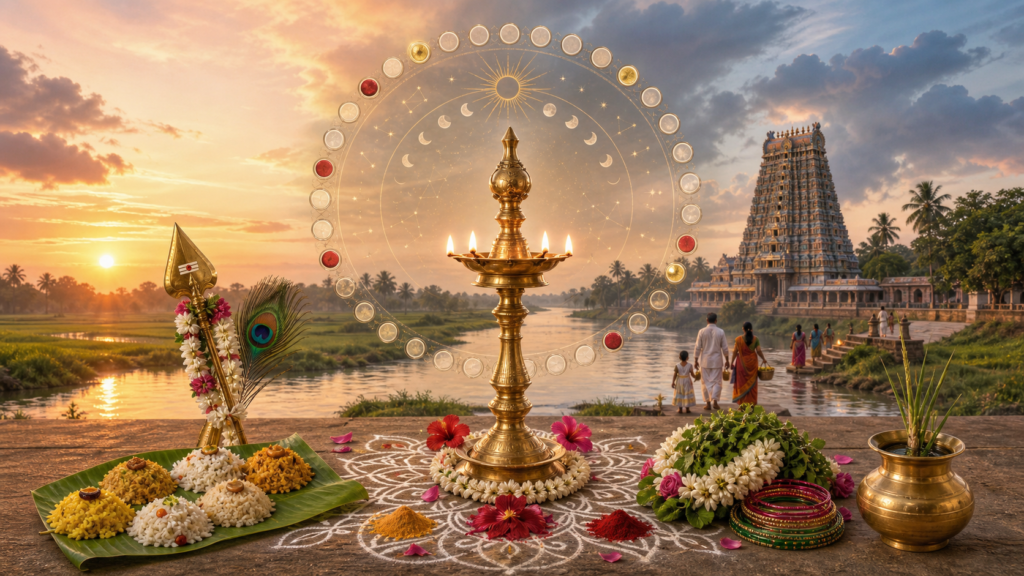
A traditional Vishukkani features a nilavilakku (oil lamp) lit before an image or murti of Bhagavan Vishnuoften as Sri Krishna, Guruvayurappan, or Anantha Padmanabhaset within or beside a broad-brimmed uruli. The uruli and its surroundings are filled or decorated with nira (paddy sheaves), raw rice, grains, coins, gold ornaments, a valkannadi (hand-mirror), betel leaves, arecanut, haldi (manjal), kumkumam, fresh turmeric and sandal paste, a conch or bell, and the sacred text of choice (such as the Bhagavad Gita or Ramayana). Seasonal produce expresses plenitude: kani konna (Cassia fistula, the golden shower flower), cucumber, coconut, lemon, jackfruit, mango, banana, and tender curry leaves are all common inclusions.
Each element carries layered meaning. The nilavilakku embodies the light of jnana; the mirror magnifies self-reflection and inner clarity; gold and grain denote material and food security; sacred texts and murtis anchor the mind in dharma; and kani konna, blooming resplendently at this time, heralds solar brilliance and seasonal renewal. The integrated visual serves as a cognitive and devotional “first impression” for the year’s conduct.
Households typically arrange the Vishukkani late on the eve of Vishu so that the first dawn sight is undisturbed. The lamp is placed at the heart of the arrangement and kept safely away from flammable decorations. The deity image or idol is positioned at eye level where possible, with the valkannadi angled so that one’s face appears amid symbols of abundance and sanctity. Rice, coins, and ornaments are arrayed to the fore, while fruits and vegetables flank the central vessel. Kani konna garlands may adorn the murti or the uruli’s rim.
At first light, family memberswith eyes gently covered or closedare led to the Vishukkani. The lamp is bright, flowers fresh, and the room quiet to enable contemplative seeing. A simple stotra to Vishnu or Krishna may be recited, followed by silent prayer and gratitude. After darśanam, some families distribute simple tirtha, apply sandal and kumkumam, and chant a verse from a sacred grantha chosen as a “signature” passage for the year’s ethical inspiration.
Vishu Kaineettam follows as a cherished rite of intergenerational bonding. Elders gift coins or currency to juniors as a blessing for disciplined prosperity, learning, and self-cultivation. The act is less about amount and more about intention, encouraging generosity, responsibility, and mindful use of resources. Many extend Kaineettam as dāna beyond the family, contributing to annadānam, educational needs, or local service initiatives, thus aligning personal fortune with community well-being.
New garments, known as Vishukodi, are worn to signify inner renewal and social auspiciousness. The preference for simple, elegant attiresuch as the Kasavu sari or mundu with gold borderreinforces an aesthetic of purity and restraint, harmonizing with the festival’s sattvic mood. The sensory arc of the morning often includes Vishu padakkam (fireworks), which, when observed safely and in moderation, accentuate the exuberant welcome to the new solar cycle.
The Vishu Sadya presents a carefully balanced vegetarian feast that celebrates Kerala’s culinary grammar of seasonality, nutrition, and rasa. Typical components include parippu curry with ghee, sambar, rasam, avial, thoran, olan, erissery, kootu curry, inji puli, mango or pineapple pachadi, kichadi, pappadam, banana and sharkara upperi, steamed red or white rice, and payasams such as palada or ada pradhaman and chakka pradhaman. The repertoire engages all six tastes in measured proportion, mirroring the festival’s emphasis on balanced living.
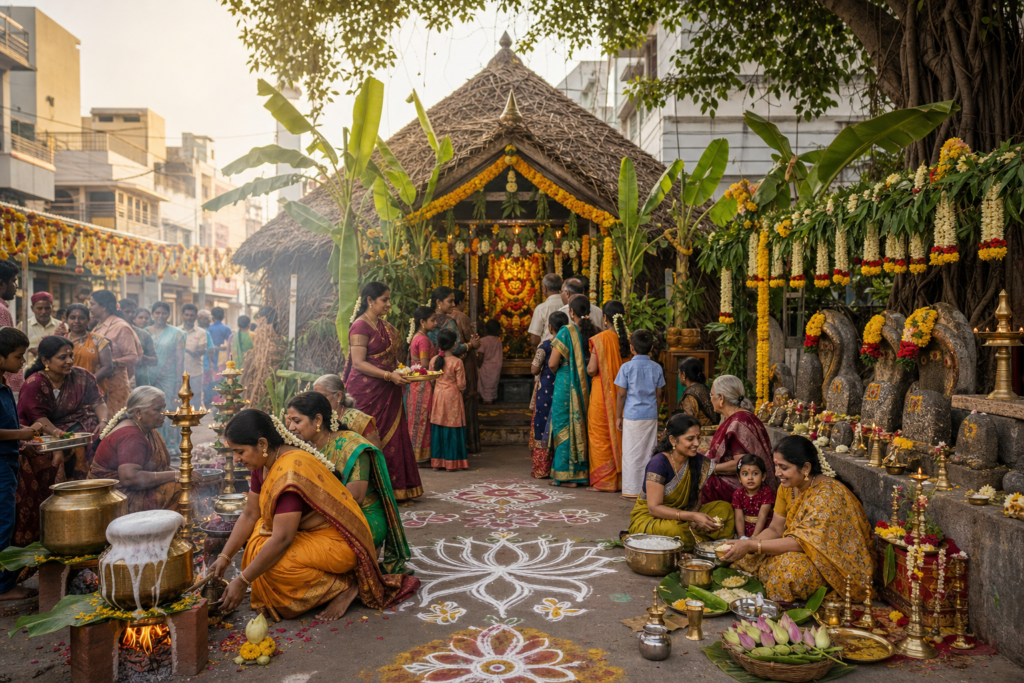
Temples across Kerala amplify the household experience with public Vishukkani darśanams and special pujas. At Sabarimala Ayyappa Temple, at Guruvayur, and in many regional kshetras, the Vishukkani is arranged with exquisite ritual precision, drawing thousands for first-light darśana. The visual presence of nilavilakku, paddy sheaves, kani konna, and Vishnu’s image in these sanctums projects a civilizational memory of order, abundance, and divine guardianship that resonates far beyond the festival day.
Regional nuances enrich the festival’s cultural spectrum. In parts of coastal Karnataka, a related observance known as Bisu Parba echoes the spirit of renewal and agricultural gratitude. North Malabar families may emphasize specific local produce or sequence certain house customs differently. Across the diaspora, households adapt with substituted flowers when kani konna is unavailable, using marigold or other yellow blossoms that approximate the festival’s solar hue.
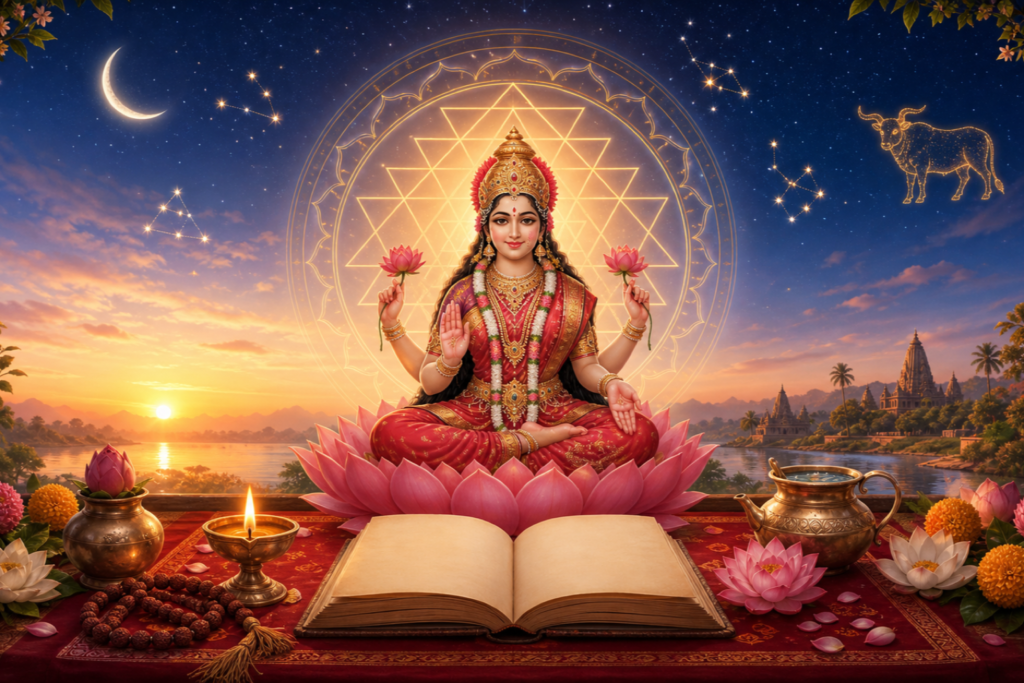
The practice known as Vishu Phalam, or yearly astrological guidance, is rooted in traditional Kerala jyotisha. Community astrologers may issue general forecasts based on the Sun’s ingress, lunar asterisms, and key planetary conditions at sunrise. Thoughtfully understood, Vishu Phalam is intended as reflective counsel to guide effort, ethics, and remediesnot as fatalistic decree. Households commonly integrate these insights with daily sadhana, svadhyaya, and prudent planning.
Beyond ritual detail, the festival’s social function is profound. Vishu spotlights intergenerational learningthe elder’s careful preparation of the Vishukkani, the child’s first darśanam at dawn, the inclusive meal that gathers kin and neighbors. The choreography elevates attention, gratitude, restraint, and giving as baseline virtues for the months ahead. In modern contexts, families also choose eco-conscious adaptations such as reusable brassware, traditional oil lamps, and minimal, responsible fireworks to preserve air quality and safety.
The wider dharmic world reflects a family resemblance of seasonal new-year observances around this time. Vaisakhi in Punjab, Puthandu in Tamil Nadu, Bohag Bihu in Assam, Pohela Boishakh in Bengal, and the Sinhala Aluth Avurudda in Sri Lanka collectively honor the Sun’s transition and agrarian renewal. While practices differ, Hindu, Buddhist, Jain, and Sikh communities share an ethic of dāna, gratitude, and collective harmony, affirming unity in dharmic diversity without erasing distinctive lineages. Vishu thus participates in a civilizational rhythm that nurtures coexistence and mutual respect.
Astronomically inclined observers often note the technical underpinnings of timing. Kerala almanacs follow nirayana (sidereal) calculations, traditionally referenced to treatises like the Surya Siddhānta and refined through modern drik (observational/astronomical) methods. In practical terms, this means the sankranti moment, occurring at varying local times, is tied to the first ensuing sunrise for festival observance, ensuring communal synchronization independent of the exact minute of solar ingress.
Common questions arise regarding the festival’s calendrical identity. Vishu is the first day of Medam and the astrological new year day in the Malayalam solar zodiac; however, the Malayalam civil year (Kolla Varsham) begins later with Chingam. Both markers remain culturally alive: Vishu for its cosmic-ritual opening of the year’s intent, and Chingam for administrative and civil computations, with Onam anchoring that season’s celebrations.
For those preparing the Vishu Puja at home, a simple, structured vidhi aids clarity. On Vishu eve, cleanse and decorate the puja space, place the murti or image of Vishnu or Krishna, and arrange the uruli with grain, coins, mirror, sacred text, fruits, vegetables, and kani konna. At dawn, light the nilavilakku, guide family to the Vishukkani with eyes closed, open to the first sight, chant a brief Vishnu stotra or Gita verse, offer flowers, and share tirtha. Conclude with Vishu Kaineettam, dress in Vishukodi, and partake of the Sadya later in the day.
Diaspora households can uphold authenticity through intelligent substitution. Where kani konna is unavailable, locally grown yellow flowers signal solar radiance; where uruli or valkannadi are hard to source, any clean, broad vessel and a simple mirror suffice; gold may be symbolized by small jewelry or even a gilt object used only for puja; a favorite scripture in the home language can anchor the reading. The essence is the intentional first sight, not the absolute uniformity of materials.
Safety and sustainability practices are integral to contemporary observance. Oil lamps should be placed on stable, heat-resistant surfaces away from curtains and dry decorations; fireworks, if used, should be limited, supervised, and compliant with local regulations; biodegradable flower offerings and reusable metal or clayware reduce waste; and food sharing initiatives extend the festival’s prosperity to those in need.
Vishu’s symbolism is ultimately practical: light dispels inner confusion; the mirror prompts honest self-appraisal; grain and gold remind households to steward resources wisely; and the shared meal models balance and inclusivity. Each year’s first sight becomes a compact with oneself and one’s community to live by clarity, compassion, and courage.
As temples ring with bells and homes glow with lamps, the Vishu festival reaffirms a unifying message that resonates across dharmic traditions: the cosmos moves in order, and human flourishing follows when thought, word, and action align with that order. Rooted in Kerala’s living heritage yet expansive in its embrace, Vishu invites every household to begin anewanchored in knowledge, sustained by generosity, and guided by the steady light of dharma.
Inspired by this post on Hindu Pad.