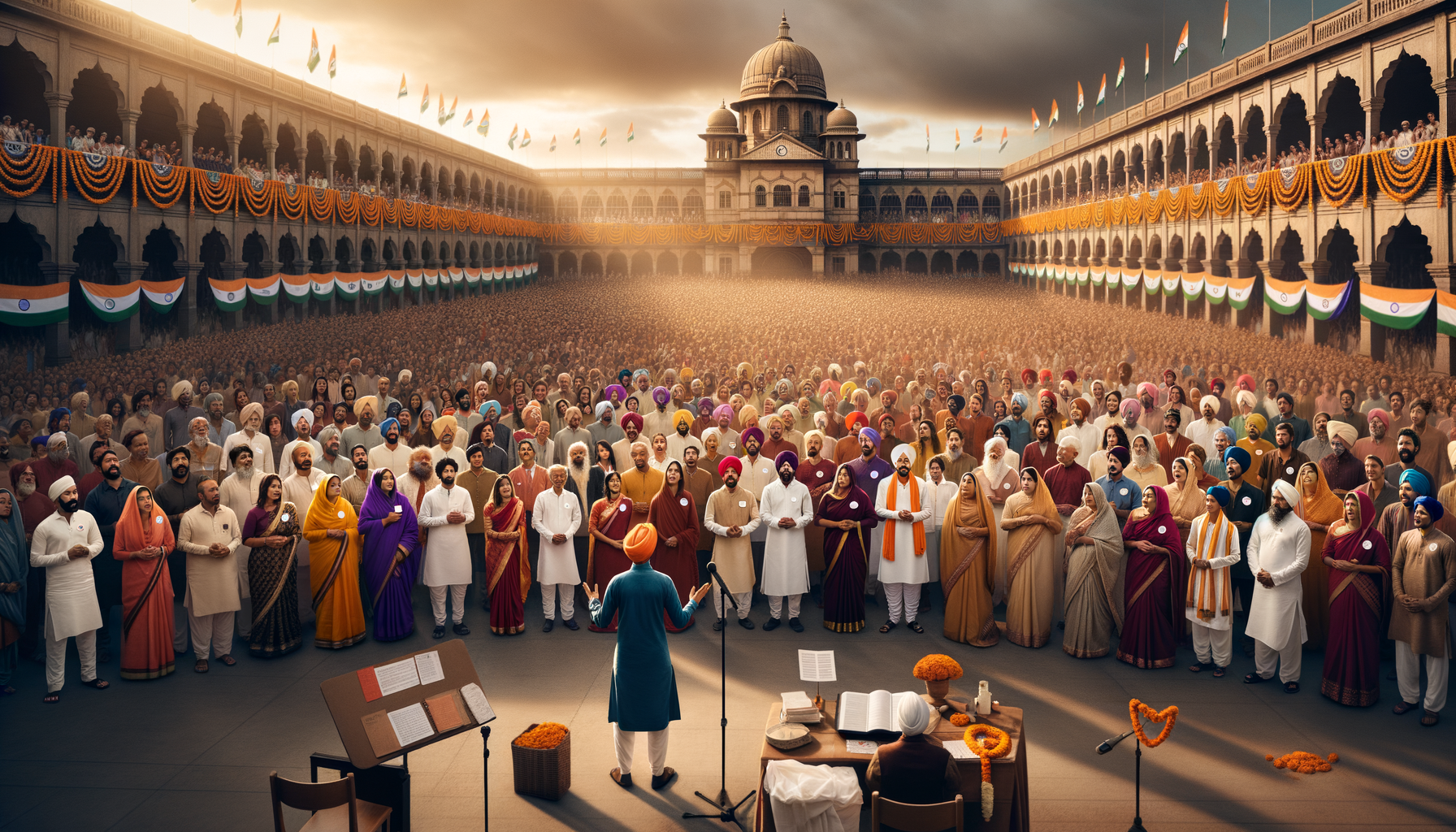
Marking the 150th anniversary of ‘Vande Mataram’, a collective rendition of India’s National Song took place in Kolhapur under the aegis of the Hindu Janajagruti Samiti (HJS), aligned with the Union Government’s nationwide initiative. The gathering resonated with disciplined enthusiasm, reflecting how a shared cultural expression can strengthen civic pride and national cohesion.
‘Vande Mataram’, composed by Bankim Chandra Chattopadhyay in the late 19th century and first sung publicly by Rabindranath Tagore in 1896, has long served as a symbol of India’s freedom struggle and cultural self-confidence. Its adoption as the National Song underscores a historical continuum—bridging the aspirations of the past with the responsibilities of the present.
The Kolhapur event drew families, students, professionals, and elders, creating an intergenerational space where memory and meaning converged. Participants observed that the unified cadence of voices fostered a palpable sense of belonging, while the lyrics evoked gratitude for the land and its people. Many attendees described a quiet resolve—an inner reminder that patriotism is best expressed through everyday acts of unity and service.
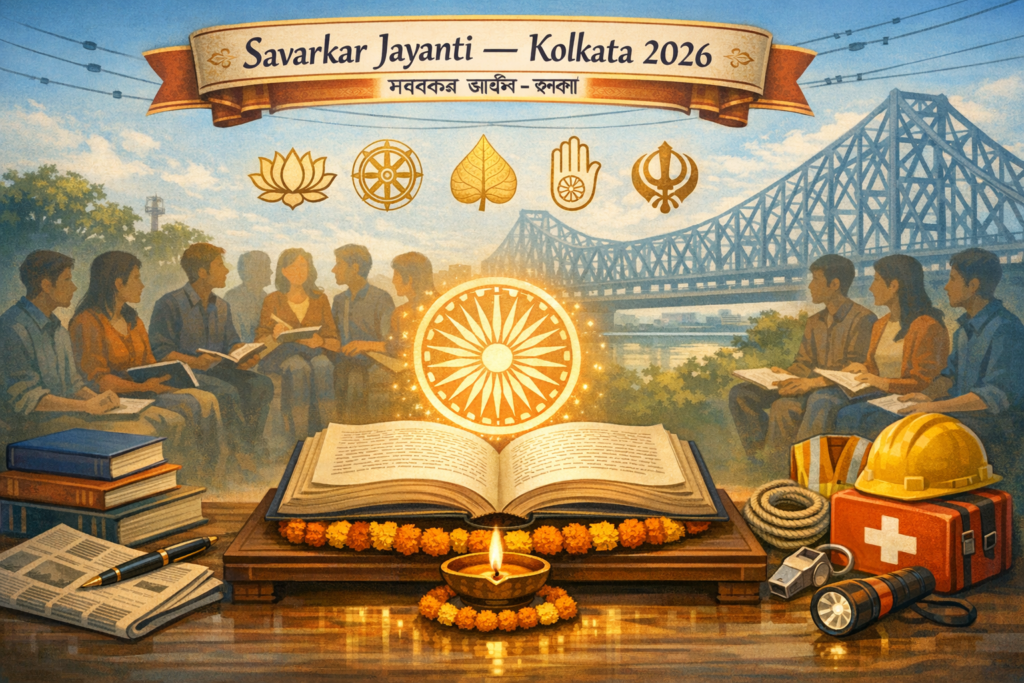
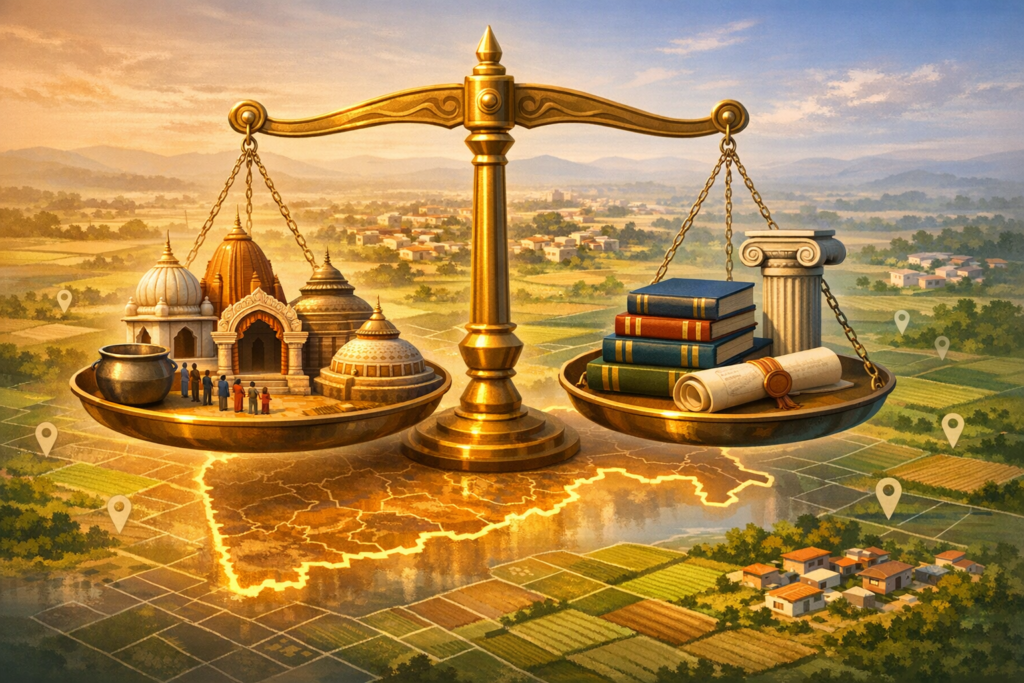
Importantly, the program emphasized inclusivity across dharmic traditions—Hinduism, Buddhism, Jainism, and Sikhism—highlighting a civilizational ethos that values plural paths to the common good. The rendition of ‘Vande Mataram’ thus became more than musical homage; it offered a shared platform for dharmic unity, encouraging respect for diverse practices within a unified national framework.
Community engagement was central to the experience. Local cultural groups and educators supported participants with simple, accessible cues, enabling newcomers and seasoned singers alike to contribute with confidence. The format helped first-time participants appreciate the song’s rhythm and message, turning the gathering into a living classroom of cultural heritage and civic learning.
Observers noted that the emotional tenor of the event—marked by composure rather than spectacle—enhanced its academic and civic value. The collective voice affirmed constitutional ideals, while the setting allowed individuals to reflect on how cultural symbols can nurture social harmony without exclusion or stridency.
By aligning with the Union Government’s nationwide initiative, the Kolhapur rendition demonstrated how decentralized community events can advance national goals in a manner that is both respectful and participatory. The result was a synthesis of cultural continuity and contemporary civic engagement—an approach that can be replicated by communities seeking to renew shared values through inclusive public expression.
As the 150th year milestone invites renewed reflection, the Kolhapur gathering illustrates a clear lesson: when communities sing together, they remember together. In doing so, they strengthen bonds across generations and traditions, contributing to a durable culture of unity in diversity—an enduring aspiration at the heart of India’s dharmic civilization.
Inspired by this post on Hindu Jagruti Samiti.