Shakti in Motion: HJS empowers women at Hindu Mahila Mahotsav, Loni Kalbhor, Pune 2026
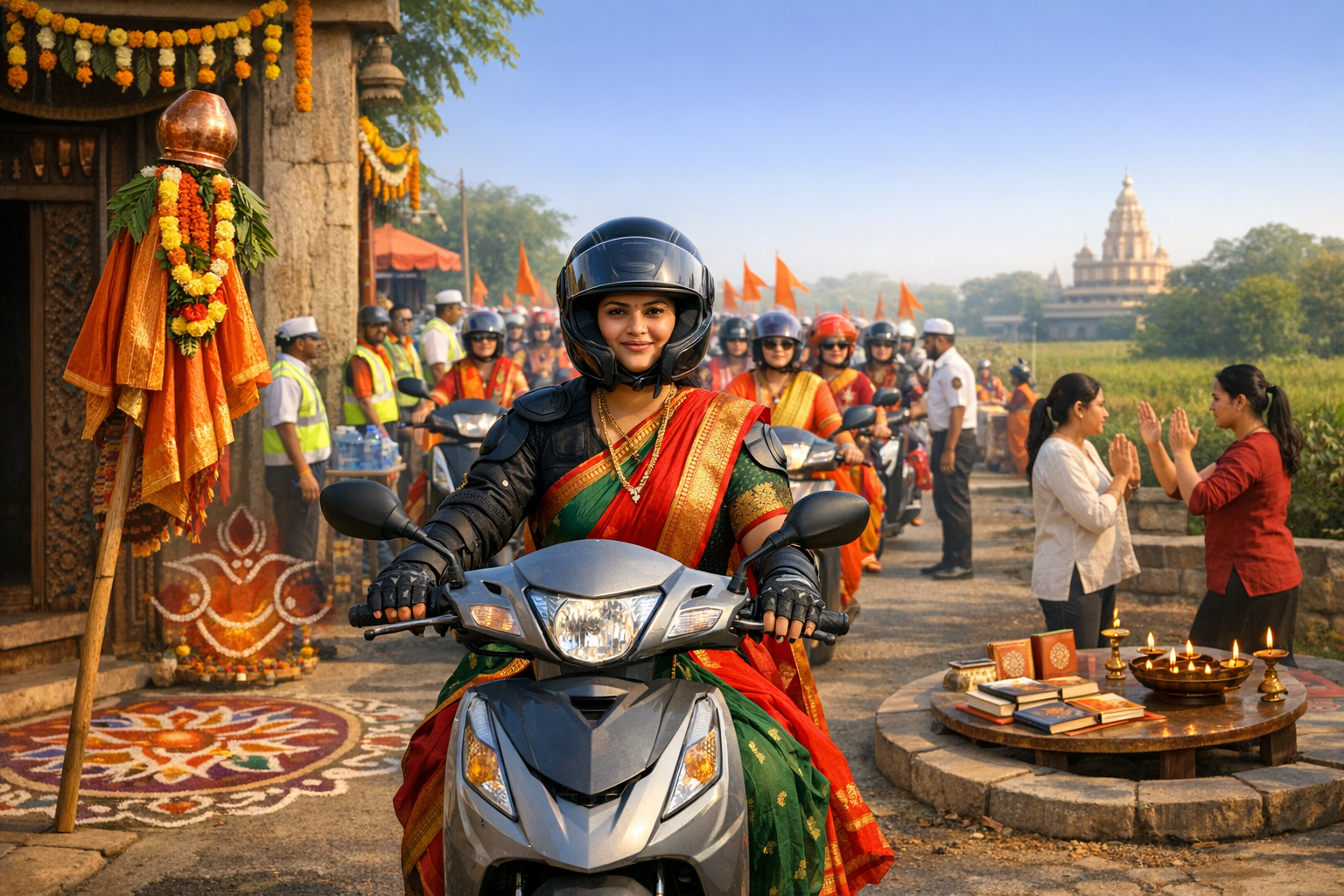
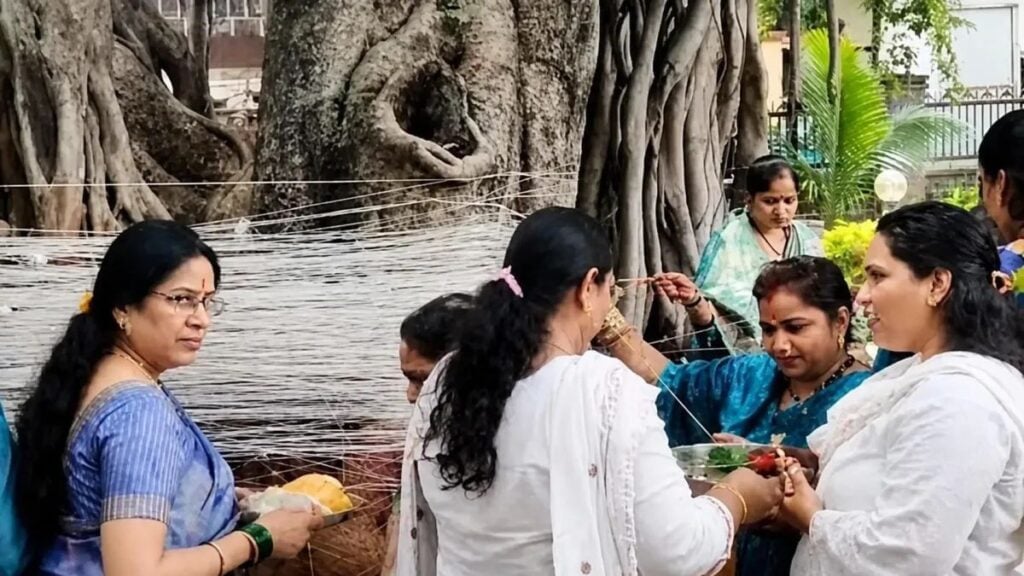
On Gudi Padwa 2026, the Hindu Mahila Mahotsav in Loni Kalbhor, Pune, became a vivid demonstration of Shakti in public life. Through collaboration among local organisations and guidance from Hindu Janajagruti Samiti (HJS), the program combined a grand two-wheeler rally with focused sessions on Dharmashikshan, self-defence awareness, and cultural preservationplacing women’s empowerment at the centre of community celebration and civic responsibility.
Gudi Padwa marks Chaitra Shukla Pratipada and the advent of the Shalivahana Shaka new year in the Maharashtrian tradition. Situating the Hindu Mahila Mahotsav on this date locates empowerment within a living ritual calendar where timekeeping, ethics, and social cohesion historically intersect. Its proximity to Chaitra Navratri 2026 further aligns the gathering with the veneration of the nine forms of Devi, connecting outer celebration to the cultivation of inner steadiness and strength.
As a community-centred event rather than a stage-bound ceremony, the Mahotsav emphasised public pedagogy: learning by moving together, speaking together, and safeguarding one another in shared civic spaces. The combination of devotional expressions with neighbourhood outreach reinforced confidence, mutual respect, and social trustkey ingredients for durable community safety and participation.
HJS’s guidance framed empowerment within Dharmashikshanpractical religious education that connects scriptural insights to daily conduct. Emphasis rested on ethical agency (svadharma lived responsibly), personal safety, and civic virtue, with the understanding that social harmony is strengthened when individuals interiorise disciplined practices grounded in compassion, restraint, and accountability.
The grand two-wheeler rally functioned as both symbol and method. Community rides of this nature, when conducted with helmet use, road marshals, staggered formation, hydration points, and coordination with local traffic authorities, model discipline and collective care. In this way, enthusiasm and safety become complementary values in a dharmic public sphere, communicating that civic joy and civic order can be pursued together.
Seen through an empowerment lens, the Mahotsav echoed a capability approachexpanding substantive freedoms such as mobility, knowledge, and voiceso that women can shape outcomes within households, workplaces, and community institutions. Cultural continuity amplifies these capabilities by providing affirming narratives, shared rituals, and intergenerational mentorship that translate identity into confident action.
Self-defence awareness was positioned beyond techniques to include layered prevention and lawful response. The approach encompassed situational awareness, boundary-setting, de-escalation, confident verbal assertion, and last-resort physical responses. Reference to the right of private defence within Indian jurisprudence (Indian Penal Code, Sections 96–106) clarified the legal framework for proportional, ethical self-protection while continuing to emphasise prudence and community-first safety.
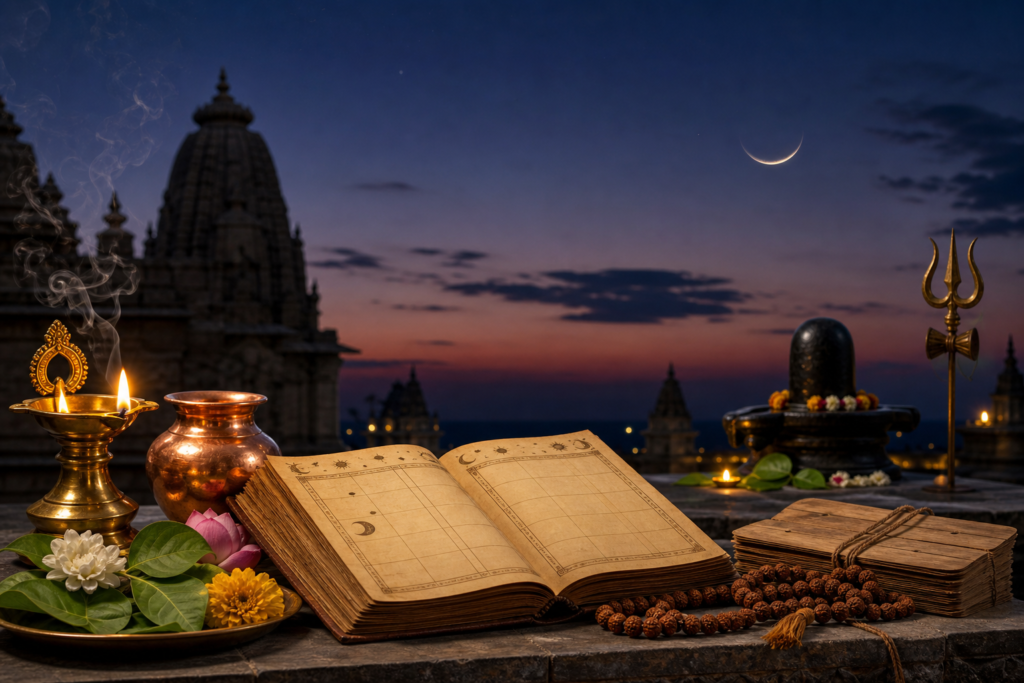
Dharmashikshan, as articulated in community forums, often draws on foundational sources: the Bhagavad Gita’s ideal of steadiness (sthita-prajna), the Devi Mahatmya’s portrayal of Shakti as protective intelligence, and didactic literature such as Hitopadesha for civic virtues. Translating these teachings into everyday protocolsrespectful speech, shared seva, punctuality, and care for public spacesturns values into visible habits and sustains a Hindu way of life anchored in both principle and practice.
Cultural preservation was presented not as nostalgia but as a knowledge system with practical utility. Music, dress, language, and festival iconography collectively carry memory, encode ethical cues, and maintain social resilience amid rapid urban change. In this sense, heritage functions as intangible infrastructure: it stabilises identity, reduces friction, and enables swift, coordinated public action for the common good.
The Mahotsav’s framing welcomed unity across the dharmic familyHindu, Buddhist, Jain, and Sikh traditionsby highlighting shared commitments to compassion (maitri/karuna), non-violence (ahimsa), righteous courage (virya), and seva. Historical exemplars across these pathssuch as Mahaprajapati Gautami, Jain sadhvis, and Mai Bhagoaffirm that women’s leadership is integral to dharmic continuity and communal well-being.
Intergenerational participation served as a practical curriculum: elders narrated festival meanings, youth coordinated logistics and documentation, and peers managed safety and hydration. This distributed leadership strengthens social capital and offers first-time volunteers structured opportunities to lead, thereby cultivating future organisers grounded in experience and service.
Aligning the Mahotsav with Chaitra Navratri 2026 also invited inner disciplinesdaily japa, mindful fasting, and reflective readingso that public celebration is anchored in introspective practice. When households synchronise such micro-practices, the aggregate effect is a culture of attention, kindness, and mutual accountability that radiates into neighbourhood life.
In the peri-urban context of Loni Kalbhor and the broader Pune regionwhere rapid growth meets deep heritagethe Mahotsav illustrated how festivals can bridge rural-urban sensibilities. Marathi devotional forms, local artisanal motifs, and contemporary safety protocols coexisted without dilution, demonstrating that tradition and modernity can be mutually reinforcing rather than oppositional.
Communities seeking to adapt this model can retain core elements while localising delivery: a culturally resonant date; a visible, safety-anchored procession; applied Dharmashikshan that links texts to conduct; lawful self-defence awareness; and explicit inclusion of all dharmic traditions. Clear, year-round follow-throughstudy circles, mentoring, and service projectsturns festival energy into sustained civic momentum.
Taken together, the Hindu Mahila Mahotsav on Gudi Padwa 2026 reaffirmed that Shakti is not only a theological insight but also a civic resource. Through HJS’s guidance, collaborative organisation, and a resonant public ritual, the event advanced women’s empowerment, lawful self-protection, and cultural preservationoffering a replicable blueprint for communities across Maharashtra and beyond.
What was the Hindu Mahila Mahotsav in Loni Kalbhor, Pune about?
The Hindu Mahila Mahotsav on Gudi Padwa 2026 combined a grand two-wheeler rally with sessions on Dharmashikshan, self-defence awareness, and cultural preservation. The event placed women’s empowerment at the centre of community celebration and civic responsibility.
How did the event connect Gudi Padwa 2026 with Chaitra Navratri 2026?
Gudi Padwa marks Chaitra Shukla Pratipada and the Shalivahana Shaka new year in the Maharashtrian tradition. Its proximity to Chaitra Navratri 2026 connected public celebration with the veneration of Devi and inner disciplines such as japa, mindful fasting, and reflective reading.
What role did Hindu Janajagruti Samiti (HJS) play in the Mahotsav?
HJS provided guidance that framed empowerment through Dharmashikshan, practical religious education connected to daily conduct. The emphasis included ethical agency, personal safety, civic virtue, compassion, restraint, and accountability.
How did the two-wheeler rally support women’s empowerment and public safety?
The rally served as both a symbol of women’s mobility and a method of public pedagogy. The article highlights helmet use, road marshals, staggered formation, hydration points, and coordination with traffic authorities as ways community rides can model discipline and collective care.
What did the self-defence awareness component include?
Self-defence awareness went beyond physical techniques to include situational awareness, boundary-setting, de-escalation, confident verbal assertion, and last-resort physical responses. The article also refers to Indian Penal Code Sections 96–106 to frame private defence as lawful, proportional, and prudent.
How can other communities adapt the Mahotsav model?
The article suggests retaining core elements such as a culturally resonant date, a visible safety-anchored procession, applied Dharmashikshan, lawful self-defence awareness, and explicit inclusion of dharmic traditions. Year-round follow-through through study circles, mentoring, and service projects can turn festival energy into sustained civic momentum.