Tirumala Tirupati Devasthanams (TTD) will conduct the annual Pushpayagam at Sri Kalyana Venkateswara Swamy Temple, Srinivasa Mangapuram, on Sunday, 15 March 2026. In accordance with temple tradition, the pre-festival observancesSenadhipati Utsavam and Ankurarpanamare scheduled for Saturday, 14 March 2026, from 6:00 PM to 8:00 PM, marking the formal commencement of sacred preparations.
Situated approximately 12 km from Tirupati in Andhra Pradesh, the Srinivasa Mangapuram shrine venerates Sri Kalyana Venkateswara, a celebrated Vaishnavite form of Lord Vishnu associated with divine nuptials (kalyana). Administered by TTD, the temple exemplifies rigorous Agamic worship, active community participation, and a living heritage of Vaishnava ritual culture in the region.
Pushpayagam (also spelled Pushpa Yagam) literally denotes a floral offering rite and functions as a dosha-parihara utsavaman expiatory and thanksgiving ceremony performed annually to atone for inadvertent ritual lapses, to express collective gratitude, and to invoke divine protection for societal and environmental well-being. The rite’s visual poetry resides in surrendering nature’s fragrance, color, and delicacy to the Lord as a symbol of refined sattva and inner devotion.
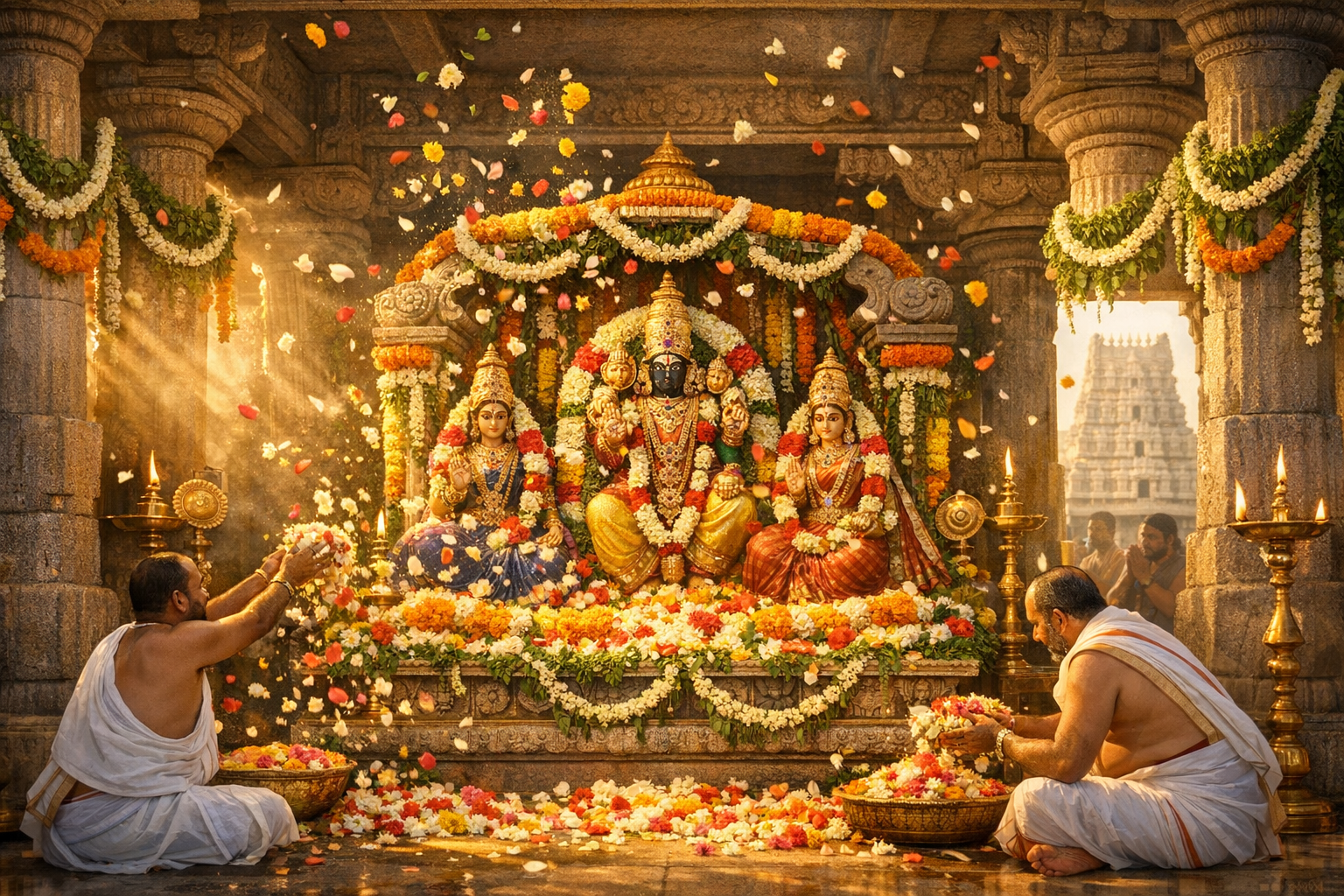
Within the Vaishnava Agamic frameworkpredominantly Vaikhanasa at this temple, while Pancharatra texts also illuminate parallel practicesfloral worship is positioned among life-cycle festivals (utsavams) that sustain temple sanctity across seasons. Agama manuals describe Pushpa Yaga as a rite that integrates vow (sankalpa), fire oblation (homa), and layered offerings (upacharas) with the culminating shower of blossoms (pushpa vrishti) over the processional deities (Utsava Murthis).
The pre-festival Senadhipati Utsavam honors Sri Vishvaksena, the commander of the Lord’s celestial retinue (Senadhipati), seeking removal of obstacles and smooth conduct of the celebration. Ankurarpanamthe consecrated sowing of seeds (ankura)installs auspicious beginnings and fertility, ritually rooting the festival in renewal and hope. For 2026, these rites will be observed on 14 March between 6:00 PM and 8:00 PM, in keeping with muhurta determined by the temple’s archakas.
On Pushpayagam day, the sequence typically includes sankalpa, homa as per temple tradition, and extensive alankara of the Utsava Murthis. Priests then perform archana, often with sahasranama recitation, before the ceremonial floral samarpana (pushpa vrishti) in which blossoms and select sacred leaves are reverentially offered. The rite integrates the Shodashopachara idealsfragrance (gandha), garlands (mala), and ornamentation (alankara)through an environmentally resonant medium.
Flowers employed are generally sourced seasonally and may include jasmine (malli), chrysanthemum, marigold, roses, tulasi, and other locally available sacred leaves. Their layered hues and fragrances construct a theological aesthetic in which beauty is not merely decorative but emblematic of purity, compassion, and the devotee’s inward offering of the heart’s finest sentiments to Sri Kalyana Venkateswara.
Liturgical soundscapes are integral. Vedic parayanam, stotra chanting, and Vaishnava hymnody (including Divya Prabandham recitations where scheduled) reinforce contemplative focus. The cadence of mantra, synchronized with the sensory presence of flowers, orients the mind toward one-pointed remembrance (smarana) and devotion (bhakti).
Festival logistics at TTD-managed shrines typically involve organized darshan queues, protective barricades, sanitation measures, and guidance from trained personnel and volunteers (including Srivari Sevaks where deployed). Devotees are advised to anticipate higher footfall, arrive early, adhere to customary dress codes, and carry minimal belongings to facilitate a dignified and secure worship experience. Schedules are operationally contingent; checking official TTD communications for any late adjustments is prudent.
Devotees frequently describe Pushpayagam as immersive. The interweaving of floral alankara, chant, and incense fosters a contemplative atmosphere in which families from across Andhra Pradesh and beyond undertake vows (vratas), offer service (seva), and reaffirm bonds of community and faith. Many visitors note how the rite’s aesthetics gently encourage inner stillness, gratitude, and ethical resolve.
The offering of flowers as a sign of purity, impermanence, and reverence is a hallmark shared across the Dharmic traditions. Hindu Pushpayagam, Buddhist flower pūjā at viharas, Jain usage of puṣpa in aṣṭaprakāri worship and śāntidhāra, and floral adornment in Sikh gurdwaras collectively affirm non-violence, gratitude, and beauty in devotion. Framing Pushpayagam within this broader tapestry nurtures mutual respect and unity among Hinduism, Buddhism, Jainism, and Sikhism.
As an intangible cultural heritage practice, Pushpayagam sustains Agamic knowledge systems, the local floriculture economy, and a temple-centered ecology of participation. By celebrating nature’s abundance without excess, the rite aligns devotion with environmental sensitivity and invites reflection on the interdependence of humanity and natural cycles.
Responsible participation strengthens the festival’s cultural and ecological ethos. Reusable water bottles, avoidance of single-use plastics, and use of public or shared transport where feasible are advisable. Photography norms are generally conservative within temple premises; following staff instructions preserves the dignity of worship and the comfort of fellow devotees.
Accessibility and safety remain key considerations. TTD customarily facilitates orderly movement, provides signage, and deploys staff for crowd guidance and basic assistance. Visitors with elders or children may plan staggered arrival windows and hydration breaks, keeping in mind that the sanctum and prakaras can become densely populated during peak ritual moments.
At Srinivasa Mangapuram, Pushpayagam thus operates simultaneously on devotional, social, and ecological planes: an offering to Sri Kalyana Venkateswara, a communal act of gratitude and harmony, and an aesthetic affirmation that discipline, beauty, and care for nature can be practiced together within the temple’s living tradition.
With Senadhipati Utsavam and Ankurarpanam on 14 March 2026 (6:00 PM–8:00 PM) and Pushpayagam on 15 March 2026, Sri Kalyana Venkateswara Swamy Temple prepares to welcome devotees into a sacred celebration of flowers, faith, and collective well-being. Observing with disciplined devotion and ecological mindfulness honors both the letter of Agama and the shared values of the wider Dharmic family.
Inspired by this post on Hindu Pad.