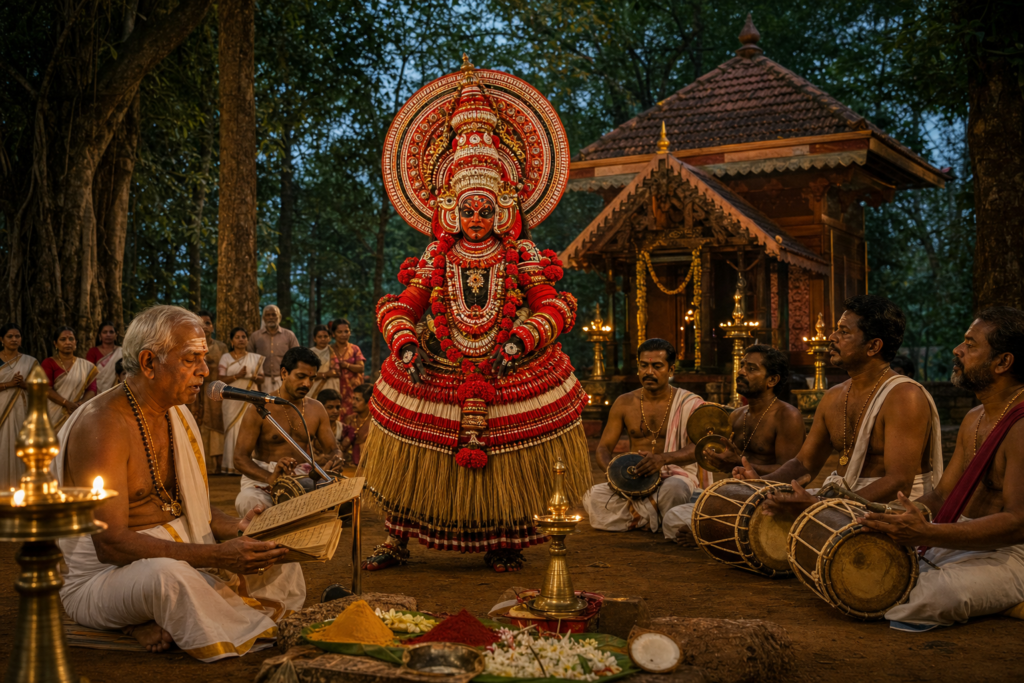
Panguni Uthiram occupies a central place in Tamil cultural and spiritual life as a celebration of sacred union, communal harmony, and devotional renewal. Observed annually in Panguni masam, it coincides with the Uthiram (Uttara Phalguni) nakshatra, a stellar marker traditionally associated with auspicious alliances. In 2026, Panguni Uthiram falls on April 1, and, as in many years, the observance aligns closely with the Full Moon day, or Pournami, reinforcing the festival’s symbolism of fullness, completeness, and cosmic balance.
As a calendrical event, Panguni Uthiram is defined by the convergence of the Tamil solar month Panguni and the lunar mansion Uthiram. The Tamil calendar tracks festivals by syncing the solar month with the Moon’s transit through specific nakshatras. Uthiram spans the zodiac from the end of Simha to early Kanya, and its appearance during Panguni frequently coincides with Pournami. Because nakshatra timings are location-specific and can straddle adjoining dates, consulting a local panchang is recommended to determine exact observance windows for April 1, 2026.
The theological heart of Panguni Uthiram is the celebration of divine unions and their ethical, social, and spiritual resonances. In Shaiva temples, devotees honor KalyanasundararShiva as the auspicious bridegroomalong with Pārvatī, emphasizing the harmonious interplay of consciousness and energy. In the Kaumara tradition, Subrahmanya (Murugan) is venerated with Devasena (Deivayanai), and in some regions Valli Kalyanam is also commemorated, highlighting Murugan’s role as granter of grace and valor. Vaishnava temples highlight the inseparable bond of Sriman Narayana and Sri Lakshmi, whose union is interpreted as the cosmic template for protection and compassion toward creation.
Across Tamil Nadu, the festival’s most visible temple event is the Thirukalyanam, or celestial wedding, performed with meticulous ritual sequence and scriptural precision. The ceremony serves as a public affirmation of dharma, reminding society of the virtues upheld by the grihastha ashramafidelity, responsibility, generosity, and service. In many households, married couples take this occasion to renew vows before the deities, seeking blessings for concord and resilience in family life.
Among the grandest public celebrations is the Panguni Uthiram Serthi at Srirangam Sri Ranganathaswamy Temple, where Ranganathar and Ranganayaki come together in a deeply symbolic union. The Serthi sevailiterally the divine meetingdraws vast congregations, punctuated by Vedic recitations, alankaram, and processions that transform the precincts into a living canvas of Tamil devotional heritage. The ritual narrative here emphasizes Sri Vaishnava understandings of grace, reciprocity, and divine sovereignty.
Murugan temples such as Thiruparankundram, Tiruchendur, Palani, and Tiruttani observe Panguni Uthiram with special abhishekam, alankaram, and Kalyanotsavam to Valli and Devasena. The festival cycle typically includes grand processions with vahanams, deepa aradhana, and sustained community participation through bhajans and annadanam. In several shrines, including Sikkal Singaravelan temple, the festival season underscores Murugan’s intimate connection with devotees who seek courage, clarity, and the removal of inner obstacles.
In Chennai, Kapaleeshwarar Temple’s Panguni Brahmotsavam frames the month with expansive ritual programming, religious music, and processions. While specific highlight days vary annually by panchang, the Uthiram alignment within Panguni often intensifies devotional attendance and temple-centered community life, showcasing the continuity of traditional temple administration and collective stewardship.
Rituals during Panguni Uthiram typically begin with suprabhatam and temple purification, followed by elaborate abhishekam with sacred substances such as water, milk, curd, honey, sandalwood paste, and tender coconut water. The deities are adorned with special alankaram, after which homa and the formal Kalyanotsava mantras are recited. The concluding processions, with deepa aradhana and distribution of prasadam, extend sanctity from the garbhagriha to the entire townscape.
Devotees often undertake vratas in the days leading up to Uthiram, observing simple diets, increased japam, and participation in temple seva. In many Murugan shrines, paal kudam offerings and vow-fulfillment rituals are performed, reflecting a theology of reciprocity in which personal effort, ethical conduct, and divine grace co-operate. Such practices are embedded within a framework of ahiṁsa, self-discipline, and community care.
Expressions of devotion can also include kavadi-related vows in regions where this practice is customary. While forms range from simple shoulder kavadis to austerities supervised by temple authorities, the underlying principle remains the sublimation of personal challenges into disciplined devotion. Temples and devotees alike emphasize safety, moderation, and adherence to locally prescribed norms, ensuring that the spiritual intent remains primary and that community well-being is safeguarded.
Within the home, Panguni Uthiram is widely regarded as an auspicious day for couples to offer prayers for marital harmony and for families to honor elders and mentors. The festival’s narratives encourage resolve in upholding truthfulness, mutual respect, and shared responsibility, thereby translating metaphysical ideals into living social ethics.
Although Panguni Uthiram is a distinctively Tamil Hindu observance, its core themethe sanctity of sacred vows and the harmonizing of complementary principlesresonates across India’s broader dharmic family. Hinduism, Buddhism, Jainism, and Sikhism all uphold ethical commitments, compassion, and community service as pathways to collective uplift. By foregrounding unity, shared values, and respect for diverse practices, the festival contributes to a wider culture of interrelated dharmic traditions living in mutual esteem.
From a calendrical perspective, Panguni corresponds to the Sun’s transit in Meena (Pisces), while Pournami places the Moon in a sign opposite the Sun; Uthiram (Uttara Phalguni) is the nakshatra through which the Full Moon commonly traverses for this observance. The confluence of solar, lunar, and stellar markers bestows a layered auspiciousness that temple communities have preserved through well-defined ritual canons and annual utsava calendars.
In practical terms for 2026, devotees and visitors can expect April 1 to anchor major observances in Tamil Nadu, with precise nakshatra start and end times varying by district. Planning travel with the local panchang, coordinating darshan timings, and understanding temple-specific sequencesabhishekam, alankaram, Kalyanotsavam, and processionscan greatly enhance the devotional and cultural experience.
Large pilgrim centers typically introduce access controls and crowd management on Panguni Uthiram. Visitors benefit from arriving early, carrying only essentials, observing dress codes, and following directions from temple volunteers and authorities. Many shrines also encourage eco-conscious practices such as reusable containers for offerings and responsible disposal of flowers and packaging, aligning devotion with environmental stewardship.
The Tamil diaspora sustains vibrant Panguni Uthiram celebrations in Sri Lanka, Malaysia, Singapore, and beyond, often modeling their observances on Tamil Nadu temple liturgies. These gatherings strengthen cultural continuity abroad, foster community networks, and introduce younger generations to the philosophy and aesthetics of Tamil Hindu festivals through music, dance, and narrative recitations.
As a living tradition, Panguni Uthiram functions simultaneously as theology, calendar science, temple art, and community practice. Its enduring appeal lies in the way it links metaphysical truths about unity and complementarity to concrete social virtuescooperation, fidelity, and shared responsibilitythus forming a seamless bridge between the sanctum and society.
In 2026, the convergence of Panguni, Uthiram nakshatra, and Pournami on April 1 offers a rarefied devotional moment. Whether experienced in the monumental corridors of Srirangam, before Murugan’s sanctum at Tiruchendur or Thiruparankundram, within the festive milieu of Chennai’s Kapaleeshwarar Temple, or at local shrines across Tamil Nadu, the festival invites renewed commitment to unity, service, and inner refinement.
Ultimately, Panguni Uthiram presents a comprehensive spiritual ecology: the calendar’s precision aligns with temple ritual excellence; mythic narratives cultivate ethical imagination; and collective participation nurtures social harmony. The festival thereby affirms a core insight cherished across dharmic traditionsthat when vows are safeguarded and compassion is cultivated, both individual lives and the broader community thrive.
Inspired by this post on Hindu Pad.