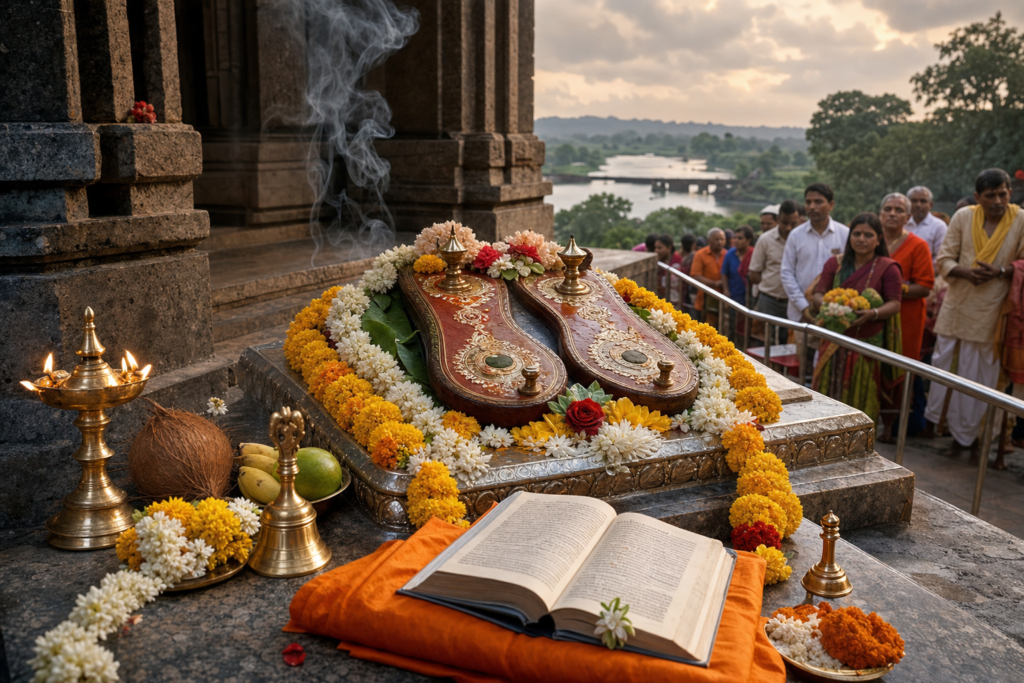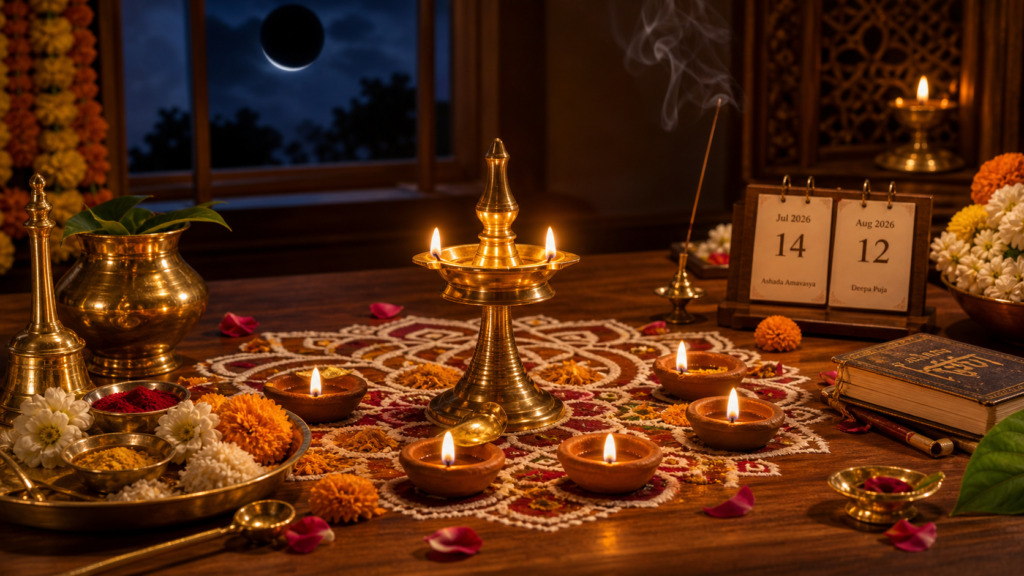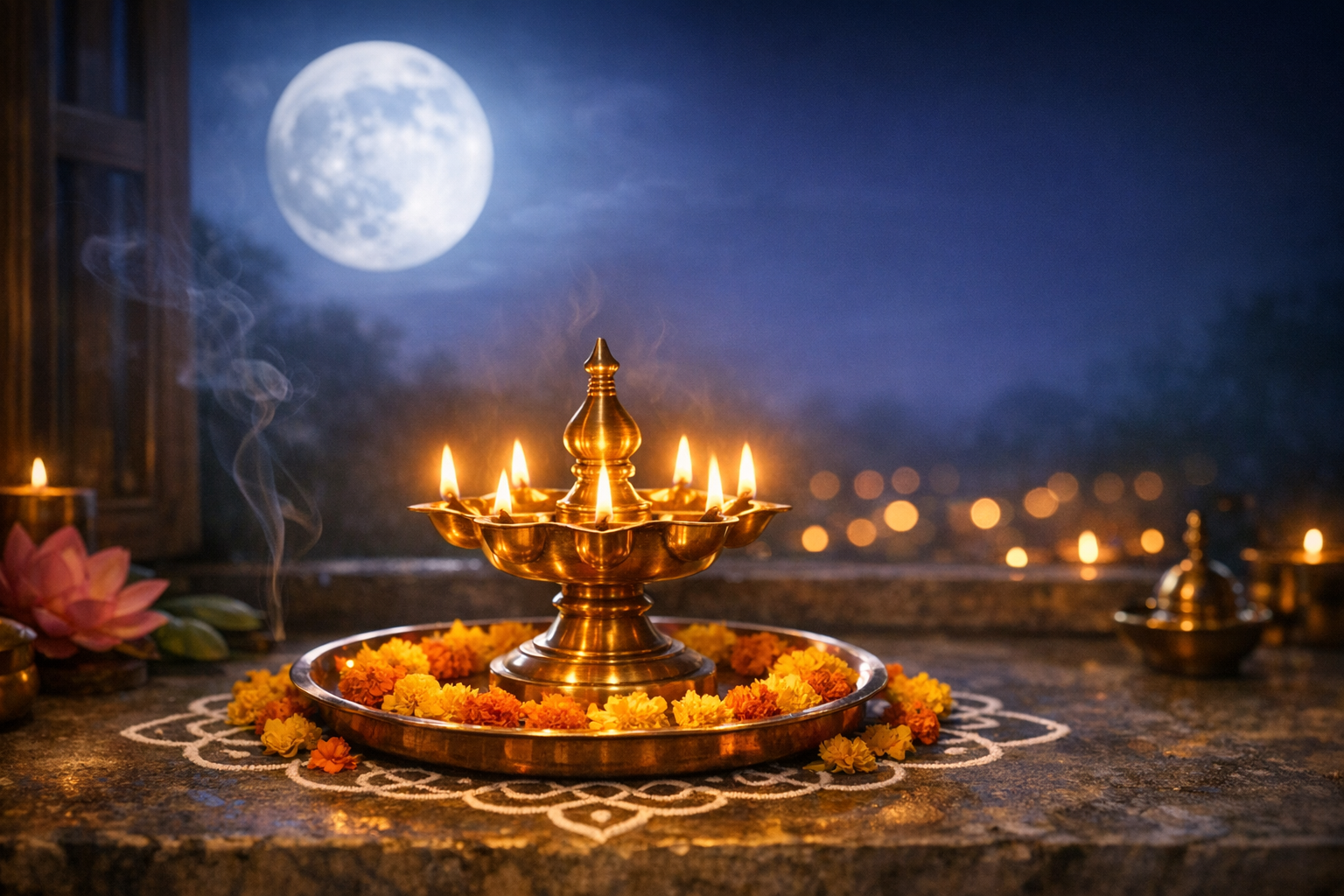
Pournami Deepa Puja, often rendered as Deepa Pooja on the Full Moon day, is a luminous confluence of ritual, symbolism, and contemplative practice in Hindu traditions. It centers on lighting oil or ghee lamps (deepa) as an offering to the Divine while aligning practice with the open, reflective quality of the full moon (Purnima). Across regions and lineages, the rite is valued for its devotional depth and its capacity to focus attention, quieten the senses, and unify communities in a shared field of sacred light.
In contemporary discourse, Sri Sri Ravishankar (Art of Living) has emphasized that both full moon and new moon are traditional times of celebration, and celebration in the Indian spiritual ethos naturally gathers around lamps. This observation resonates with centuries of lived practice: where there is collective joy, gratitude, and prayer, there are lampson altars, thresholds, temple corridors, and riverbankseach flame a quiet affirmation of hope.
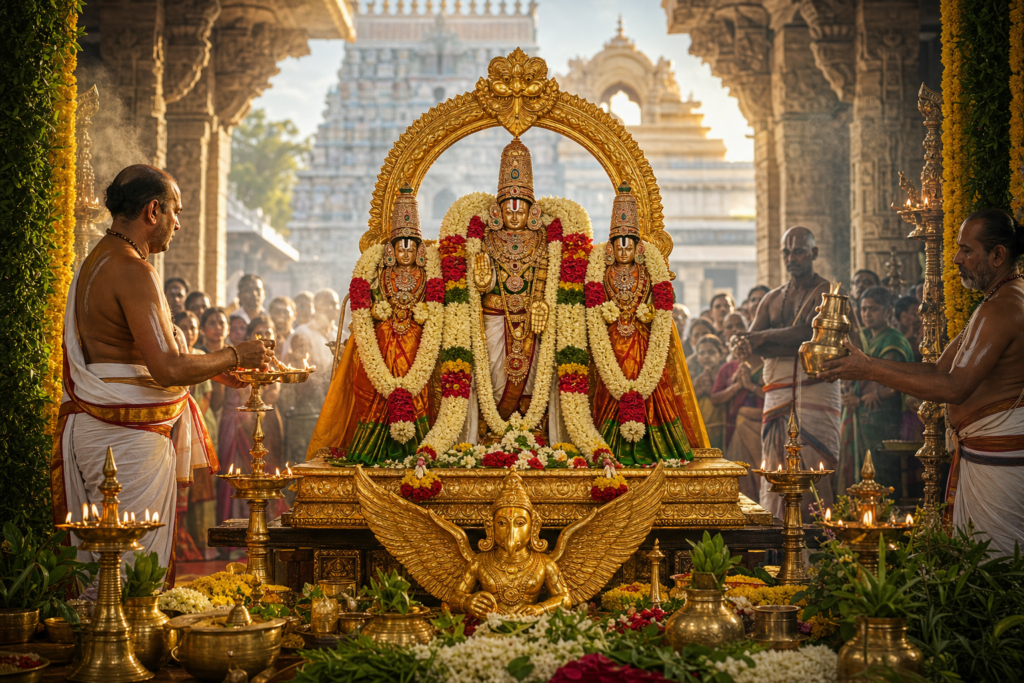
Scripturally and ritually, the deepa occupies a central place. Vedic hymns invoke Agni as the mediator of offerings and the gateway between human devotion and divine grace (e.g., the opening of the Rig Veda). Later Puranic and Agamic traditions codify the lamp as an essential upachara (offering) within pañcopachara or ṣoḍaśopachara puja sequences; the light is waved to the deity, witnessed by practitioners, and received inwardly as darshan. The lamp thus bridges outward ritual and inner contemplation.
Choosing the full moon for Deepa Pooja reflects astute cultural astronomy. Purnima nights are bright, sociable, and naturally conducive to collective ritual. The lunar cycle also structures many vows (vrata), readings (parayana), and special observances such as Satyanarayan Puja, Sharad Purnima, Dev Deepavali, and Karthika Purnima in different regions. Within this cadence, Pournami Deepa Puja marks a moment to cultivate sattvaclarity, steadiness, and quiet luminositythrough a deliberately simple act: tending a living flame.
Traditional allegory often interprets the lamp’s elements as spiritual metaphors: the wick as the individual ego, oil or ghee as latent impressions (vasanas), and the flame as consciousness. As the wick burns steadily, residues are transfigured into light. This imagery offers an experiential teaching: sustained attention and devotion refine perception, illuminating both worshipped deity and worshipper’s heart.
The practice is emphatically unifying within the broader dharmic family. In Buddhism, Purnima (Poya) daysmost notably Vesakfeature the offering of lamps at viharas as gestures of wisdom and compassion. In Jain traditions, lamps are central to major observances including Kartik Purnima and Diwali (marking the nirvana of Mahavira), symbolizing the dispelling of karmic darkness. Sikh gurdwaras radiate with light during Bandi Chhor Divas (concurrent with Diwali), and the luminous motif of jyot speaks to the ever-present divine light. This shared lexicon of light honors diversity while revealing a common spiritual grammar: illumination as insight and care for all beings.
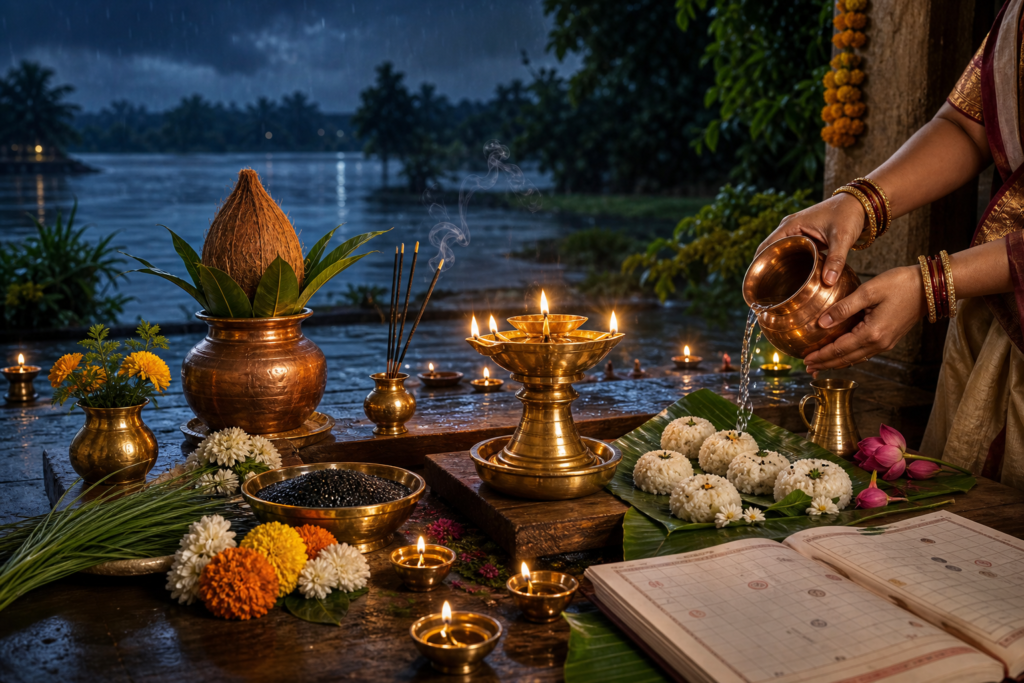
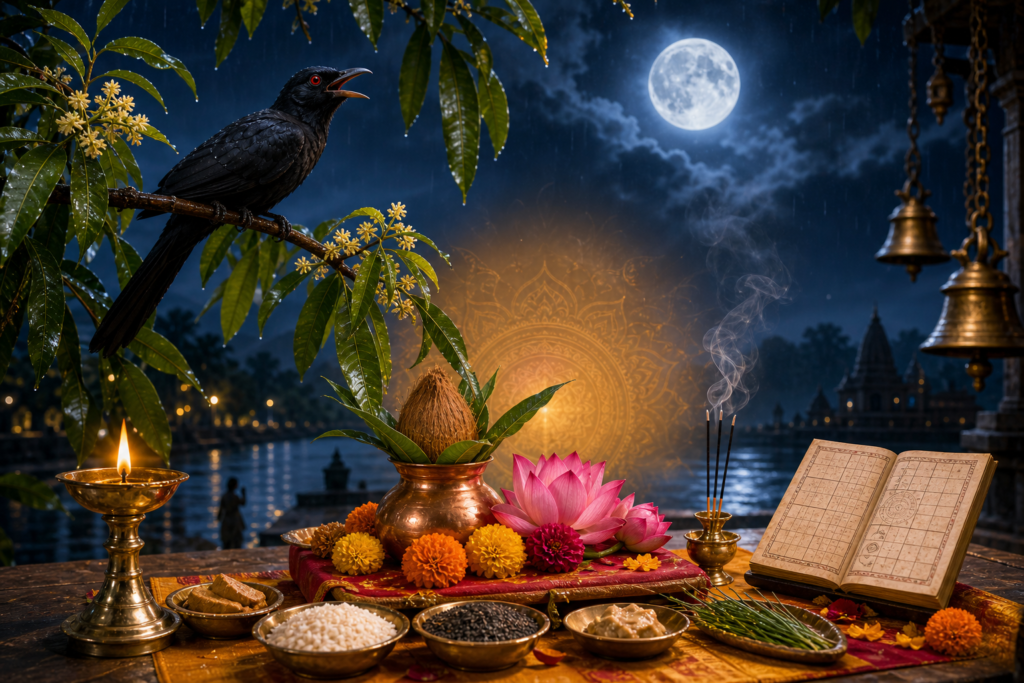
Materials and placement, while regionally varied, follow enduring conventions. Earthen or metal lamps (preferably bronze, brass, or copper) are cleaned and placed on a stable, non-flammable base. Ghee is traditionally preferred for deity worship; sesame (til) oil is widely used for household lamps and is associated in many lineages with stability and auspiciousness. Wicks are cotton, prepared single or multi-stranded. Orientation commonly favors the east or northeast; many households also line thresholds with lamps to invite prosperity, safety, and communal goodwill.
Preparation emphasizes mindful order. The space is cleaned, the altar arranged with water, flowers, incense, and offerings, and the intention (sankalpa) clearly statedfor personal clarity, family well-being, and sarva-bhūta-hita (welfare of all beings). Children and elders often participate together, sustaining intergenerational continuity and embodied memory of the rite.
Timing aligns with the local Purnima tithi. Practitioners commonly begin during pradoṣa (around sunset) or at visible moonrise, guided by a regional panchang. This temporal sensitivity ties devotional rhythm to the sky’s rhythm, reinforcing the contemplative awareness that ritual time is living, cyclical, and relational.
A concise observance of Pournami Deepa Puja typically includes silent centering; Ganesha invocation; salutations to Chandra; offering of flowers, incense, and food; and the lighting and waving of the lamp as āratī. In many homes, a dedicated lamp is offered to Dipalakshmi, personifying auspicious radiance and abundance. The sequence culminates in quiet meditation and a shared distribution of prasad.
Simple, widely used verses can anchor attention during lighting, for example: “Deepa Jyothi Parabrahma, Deepa Jyothi Janardhana, Deepo me hara tu paapam, Sandhya deepam namostute.” Many also recite Gayatri, Mahamrityunjaya, Sri Suktam, or personal ishta-mantras. The textual breadth allows households to honor lineage while remaining hospitable to guests and neighbors from related traditions.
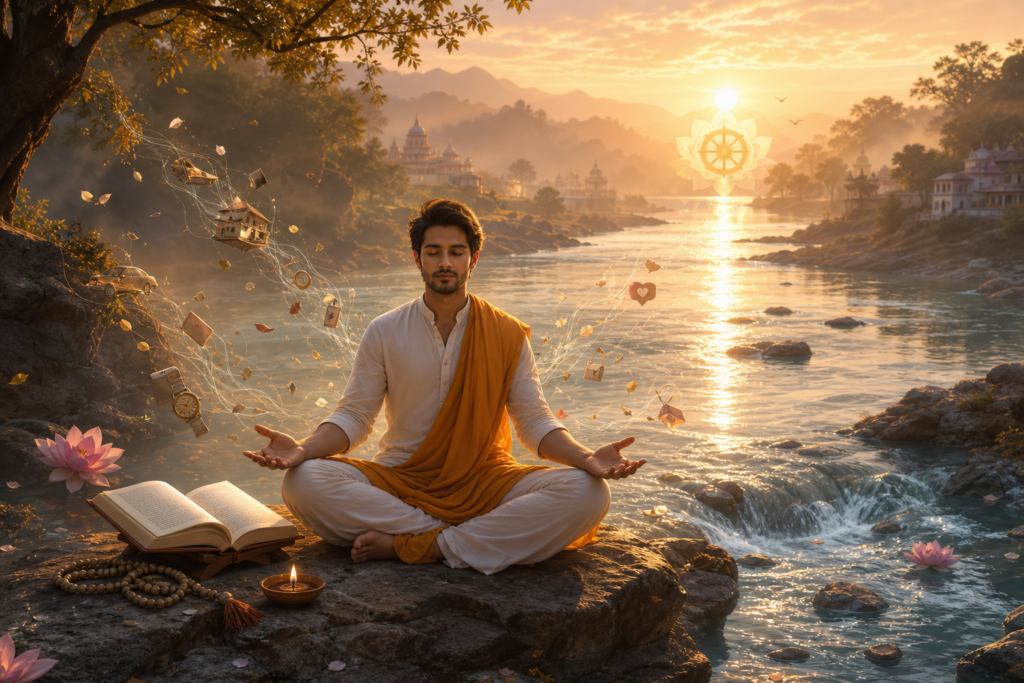
Contemplative practice integrates naturally with the flame. Trataka, a classical dharana exercise, involves steady, relaxed gazing at the lamp’s tip for short intervals, followed by eyes-closed awareness of the afterimage. In moderation and with soft focus, this can cultivate ekagrata (one-pointedness), reduce scattered thinking, and support a smoother transition into silent meditation. As with all ocular practices, comfort and safety guide duration and intensity.
Contemporary research on sensory ecology and circadian rhythm also offers an instructive perspective. Warm, low-intensity light in the evening is friendlier to melatonin secretion than high-intensity blue-rich lighting; gentle firelight naturally encourages a parasympathetic shift associated with relaxation. While ritual significance remains primary, these findings help explain why many report calmer mood, deeper sleep, and a sense of emotional regulation after evening lamp worship.
Vastu-influenced customs suggest placing the principal lamp toward the east or northeast of the altar. A single-wick lamp is often used for meditative steadiness; two wicks are associated in many households with saubhagya (wholesome prosperity); five-wick lamps (pañcamukhi) appear in temples and during special pūjās. Local sampradaya guidance, family tradition, and practical safety considerations together shape the final arrangement.
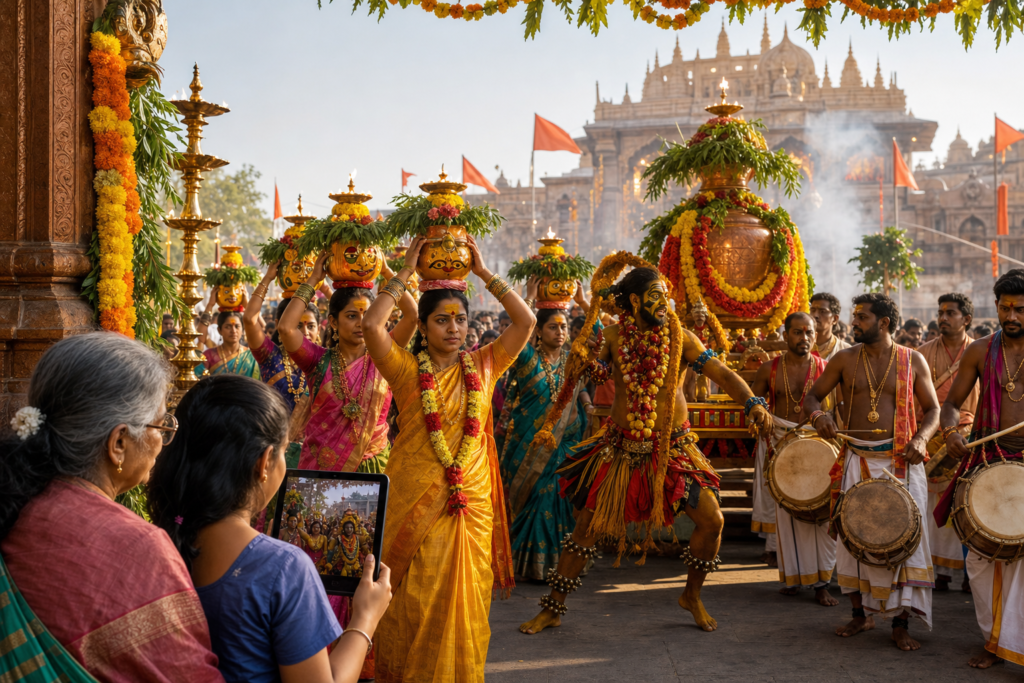
Pournami Deepa Puja is frequently woven into parallel observancesSatyanarayan Puja, Karthika Deepam, Dev Deepavali, Sharad Purnima alankarasso that the flame becomes a movable axis uniting different stories, deities, and community gatherings. Diaspora communities have adapted the rite to apartments and community halls, nurturing shared belonging through collective aarti, kirtan, and quiet moments of gratitude.
Safety is integral to sanctity. Lamps are placed away from curtains and drafts, on stable, heat-resistant surfaces; long hair and clothing are secured; a bowl of sand or water remains accessible; children participate under attentive guidance. Rituals that protect life and property protect meaning as well.
Ethical and ecological considerations increasingly inform practice. Earthen diyas are reusable when well-cared-for; cotton wicks and clean ghee or sesame oil minimize soot and odor; ventilated spaces preserve indoor air quality. Where smoke sensitivity or building regulations constrain open flame, some households reserve a single ghee lamp for the altar and complement with LED lamps elsewhere, prioritizing intention while upholding safety and neighborly care.
Common questions arise and invite thoughtful, tradition-informed responses. Ghee or oil? Ghee is commonly preferred for deity worship; sesame oil is venerable for household lighting. How many lamps? One for focus; two for auspicious household welfare; more for festivalsguided by tradition and circumstance. What if moonrise is obscured by weather? The sankalpa can still be held at the appropriate tithi; the inner attitude binds the ritual to its celestial marker. Are electric lamps acceptable? Many communities honor at least one living flame while using LEDs for practical extension; mutual respect and safety provide a balanced path.
Service (seva) harmonizes naturally with the rite. On Purnima, many households combine Deepa Pooja with food donation, sharing sweets with neighbors, or supporting local temples and community centers. The lamp’s meaning thus radiates outwardillumination expressed as hospitality, solidarity, and small, consistent acts of care that strengthen social fabric across dharmic communities.
Ultimately, Pournami Deepa Puja endures because it is simple, profound, and capacious. It invites steady attention, gratitude for shared breath and shared light, and a widening circle of concernfrom household to neighborhood, from lineage to the broader kinship of Hinduism, Buddhism, Jainism, and Sikhism. In honoring the full moon with lamps, diverse practitioners participate in a quietly transformative discipline: aligning with the sky, tending the flame, and letting that light illumine conduct, community, and conscience.
In this spirit, the full moon’s celebratory moodso often highlighted in contemporary teachingsmeets the lamp’s contemplative clarity. The result is a practice that is festive yet disciplined, traditional yet inviting, and personal yet deeply communal, sustaining unity in spiritual diversity through the shared language of light.
Inspired by this post on Hindu Pad.