Narayanavanam Kalyana Venkateswara Swamy Temple will observe its annual Brahmotsavam in 2026 from May 28 to June 5, marking nine consecutive days of solemn worship and public celebration. In keeping with established temple practice, Koil Alwar Tirumanjanam is scheduled for May 24 and Ankurarpanam on May 27. Among the major highlights, Garuda Seva will take place on June 1, and the deeply cherished Kalyanotsavam will be conducted on June 4, aligning the festival’s spiritual arc with the temple’s unique kalyana (divine wedding) legacy.
Situated in Narayanavanam in the Tirupati region of Andhra Pradesh, the temple venerates Sri Kalyana Venkateswara Swamy, a form of Lord Vishnu associated with the sacred wedding to Goddess Padmavati. According to the sthala-purana (temple tradition), Narayanavanam is integrally linked to the celestial marriage, which has shaped the temple’s identity and ritual calendar. This contextual backdrop makes the Brahmotsavam here not only a public celebration but also an embodied remembrance of the grahastha-dharma idealshousehold harmony, mutual commitment, and social responsibility.
Liturgically, the Brahmotsavam is typically guided by Vaishnava agamic praxis, with daily sevas, Vedic recitations, and vahana processions intended to manifest the presence of the deity amid the community. The nine-day structure moves from auspicious commencement rites through a crescendo of processions and homas, before concluding with formal closures that return the temple to its daily rhythm. The calendar in 2026 falls in late May and early June, a period when the Telugu lunar almanac often situates significant Vaishnava festivities in the bright fortnight of Jyeshtha, though exact tithis are determined and announced by the temple’s priests.
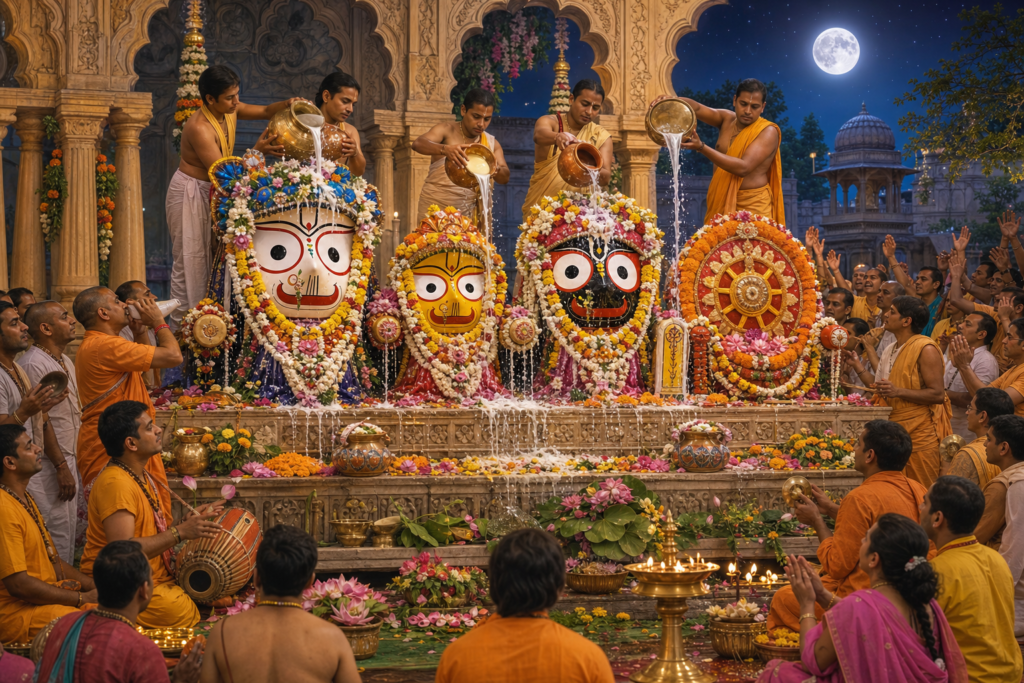
Koil Alwar Tirumanjanam on May 24 precedes the festival and is a meticulous temple purification and sanctification ritual. In this practice, the sanctum and essential spaces are cleansed with water and a prescribed mixture of aromatic and herbal substances, following agamic guidelines. The rite renews the ritual purity of the mandira (temple), ensuring that the presiding deity’s presence is honored with a freshly sanctified environment before the crowds arrive for the public celebrations.
Ankurarpanam on May 27 formally inaugurates the festival. Symbolized by the sowing of sacred seeds (navadhanya) in sanctified earth, it invokes auspicious growth and the germination of merit for the entire community. In the Vaishnava tradition, Ankurarpanam marks the ritual “seed” from which the festival unfolds, making clear that the Brahmotsavam is both an offering to the divine and a vow to cultivate virtue, compassion, and shared welfare.
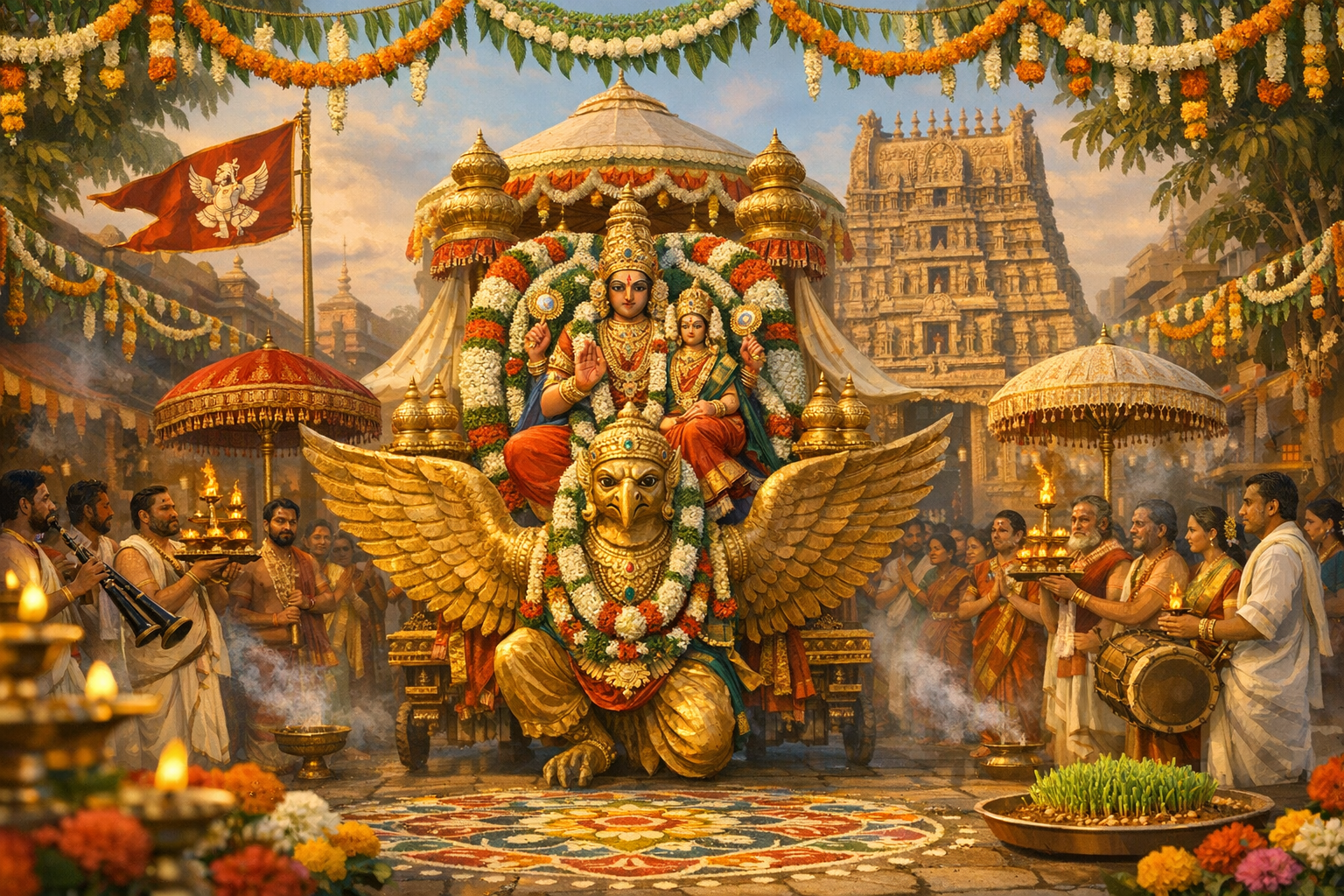
With the raising of the dhvaja (sacred flag) at the outset of the Brahmotsavam, the temple ritually declares the commencement of the festival to the cosmos and to the community. Over the next days, morning and evening vahana processionstraditionally including Sesha, Hamsa, Hanumantha, Gaja, and Garuda vahanams as per local traditioncarry the utsava-murti through the streets, bringing darshan to all. Each vahanam bears a distinct theological meaning, teaching, for instance, steadiness of mind, selfless service, and the protection afforded by dharma.
Garuda Seva on June 1 stands as the emotional and theological centerpoint for many devotees. When Sri Kalyana Venkateswara Swamy is taken in procession on Garuda, the vahana is venerated as the emblem of the Vedas and unwavering devotion. The visual impact of the deity on Garuda, accompanied by Vedic chanting and temple music, impresses upon the community the protective, guiding, and uplifted nature of bhakti. Devotees typically arrive early, as Garuda Seva draws especially large crowds due to its spiritual prominence.
Kalyanotsavam on June 4 resonates uniquely at Narayanavanam, where the kalyana motif animates the temple’s very identity. The ritual wedding reenactment, complete with mantras that consecrate mutual vows, symbolizes the union of the divine masculine and feminine principles and is invoked by families seeking blessings for harmony, health, and prosperity. In this context, Kalyanotsavam becomes a public expression of values cherished across dharmic traditionscommitment, compassion, and the pursuit of a balanced, ethical life.
Across all nine days, the Brahmotsavam weaves together temple music, Vedic recitation, flower and lamp offerings, and darshan opportunities. The sensory and devotional atmospherefragrance of sandal and tulasi, rhythmic percussion, alankara of the utsava-murtinurtures a collective experience of sacred time. Visitors typically remark on the sense of community: elders guiding younger pilgrims in traditional etiquette, families sharing prasadam, and volunteers assisting with crowd flow and basic amenities.
The festival’s closure brings the dhvaja down and restores the temple to its daily cycle of worship. Theologically, the arc from dhvajarohanam to dhvajavarohanam articulates a return from the extraordinary to the ordinary, carrying the festival’s transformative insights back into everyday duties. In Narayanavanam, where the kalyana story is foundational, this closure also serves as a reminder to sustain the wedding’s virtuestrust, charity, and mutual carethroughout the year.
For pilgrims planning a visit, practical considerations enhance the experience. Narayanavanam is accessible from the Tirupati–Puttur corridor in Chittoor district, Andhra Pradesh, and late May to early June conditions are typically warm; light, modest clothing and adequate hydration are advisable. Given the footfall during Garuda Seva and Kalyanotsavam, reaching early for good darshan vantage points is prudent. Families often plan their visit around these two focal days, while those seeking a quieter devotional rhythm may choose the opening or closing days.
The Brahmotsavam also embodies values common across Hindu, Buddhist, Jain, and Sikh traditions: ahimsa, seva, and the recognition of a shared moral fabric. Many visitors describe the festival as a living classroom of dharmawhere communal cooperation, respectful conduct, and mindful celebration illustrate how spiritual plurality can thrive in harmony. This inclusive ethos deepens the festival’s contemporary relevance and aligns it with a broader, pan-dharmic commitment to unity in diversity.
Key reference points for 2026 are thus clear: Koil Alwar Tirumanjanam on May 24, Ankurarpanam on May 27, Brahmotsavam from May 28 to June 5, Garuda Seva on June 1, and Kalyanotsavam on June 4. As with all major temple festivals, exact timings for individual sevas and processions are announced locally and may be refined as the festival approaches, ensuring smooth coordination and safe participation for devotees.
Anchored in sacred memory and animated by disciplined ritual, the Narayanavanam Kalyana Venkateswara Swamy Brahmotsavam offers an immersive encounter with living heritage. Its choreography of purification, invocation, procession, and closure provides a blueprint for personal and collective renewalan invitation to carry the festival’s clarity, compassion, and commitment into everyday life.
Inspired by this post on Hindu Pad.