Mewar Festival 2026 in Udaipur, Rajasthan, will be celebrated from March 21 to March 23, aligning with the auspicious Gangaur period and symbolizing the ceremonial arrival of spring in the Mewar region. Centered around devotion to Lord Isar (Shiva) and Goddess Gauri (Parvati), the festival blends ritual practice with regal pageantry, lakeside processions, and Rajasthani folk arts. For travelers and culture enthusiasts, it stands among Rajasthan’s most evocative celebrations, uniquely staged against the backdrop of Lake Pichola, the City Palace, and the old city’s havelis.
While Gangaur is observed widely across Rajasthan, Udaipur’s Mewar Festival is the city’s signature expression of this tradition. The observance honors conjugal harmony, prosperity, and the cyclical renewal associated with spring. The name Gangaur itself fuses reverence for Gauri (Parvati) and Isar (Shiva), expressing a devotional ideal that embraces family life, community cohesion, and the aesthetic of sacred celebration.
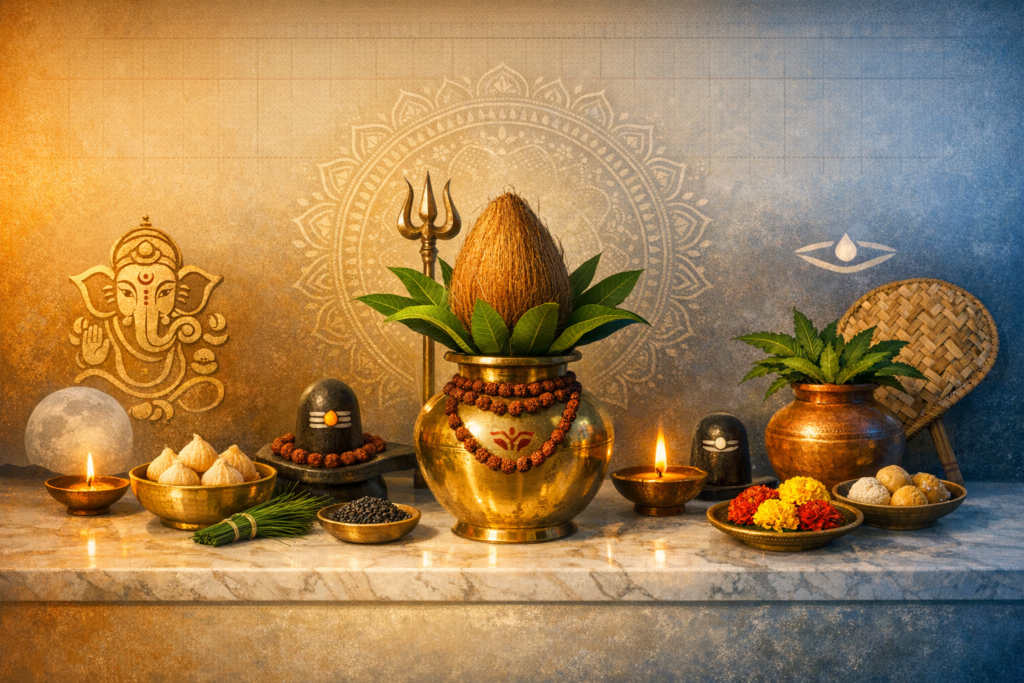
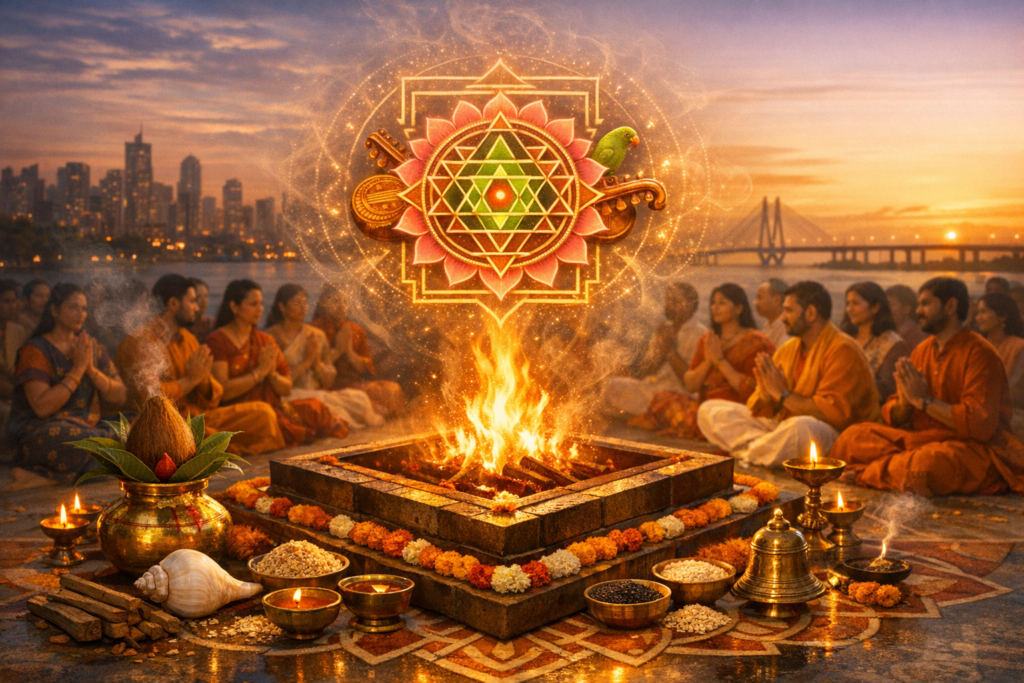
The ritual core centers on the veneration of Lord Isar and Goddess Gauri. Married women traditionally pray for the well-being of their spouses and households, while unmarried women invoke blessings for harmonious futures. Decorated clay or wooden images of Isar and Gauri are installed in homes and neighborhood shrines, anointed with turmeric and vermilion, and adorned with flowers. Community songs, seasonal offerings, and collective aarti create a serene devotional atmosphere that anchors the festival’s public grandeur in intimate household rites.
Observances unfold over several days, culminating in public processions and communal gatherings. Mehendi adornment, traditional attire, and the preparation of festive foods enhance the sensory landscape. Residents frequently recount that family elders and children participate together, transmitting stories, songs, and ritual know-how—an intergenerational continuity that keeps the intangible cultural heritage vivid and living.
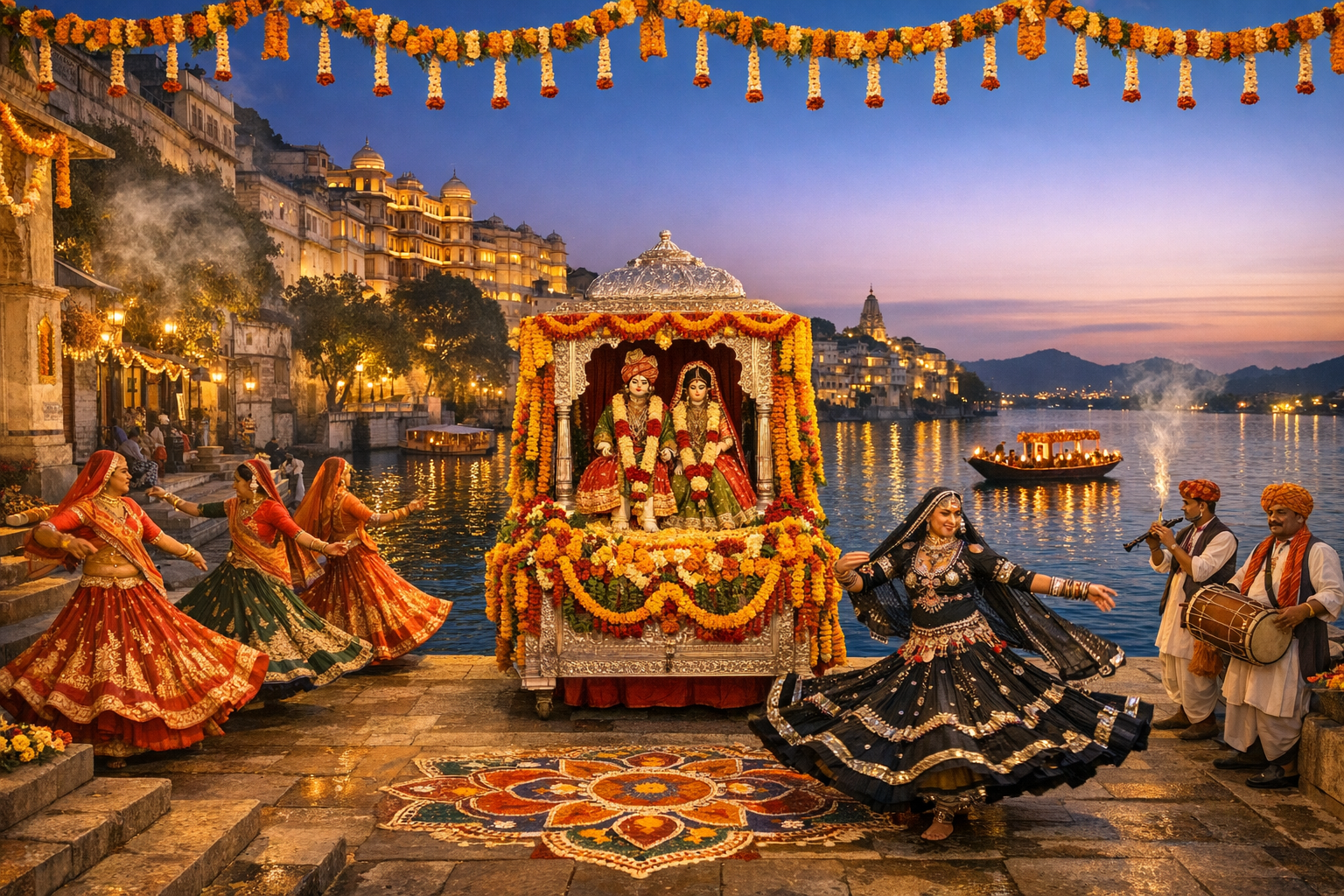
The Gangaur procession is the defining spectacle of the Mewar Festival. Idols of Isar and Gauri are placed on elaborately decorated palanquins and carried through Udaipur’s old city, accompanied by shehnai, dhol, and folk troupes. Routes typically thread through lanes such as Jagdish Chowk and Bada Bazar toward Gangaur Ghat, with heritage facades draped in marigold garlands and traditional toranas. Visitors consistently remark on the processional cadence—the rhythmic confluence of music, color, and devotion that animates narrow streets into a moving, sacred theater.
At Gangaur Ghat on Lake Pichola, the festival attains its emblematic lakeside form. A ceremonial presentation—often including a dignified boat procession—unfolds against the shimmering silhouettes of the City Palace and the Aravalli ridgelines. The luminous evening reflections, incense, and conch calls heighten a sense of collective reverence. Popular vantage points include Gangaur Ghat itself for immersive proximity, and Ambrai Ghat across the lake for panoramic views of the boats and palace lights.
Cultural programs throughout the festival feature Rajasthani folk arts that draw both residents and travelers. Ghoomar and Kalbelia dances, puppet theater, and evocative folk singing are regularly programmed, with Kalbelia—recognized by UNESCO as an element of Intangible Cultural Heritage—serving as a mesmerizing emblem of Rajasthan’s artistic lineage. Performances typically intersperse narrative themes of spring renewal, divine love, and regional identity, offering an accessible introduction to Mewar’s cultural vocabulary.
Artisanal showcases and culinary pop-ups complement the performances. Markets frequently feature miniature painting in the Mewar style, hand-block textiles, silverwork, and lac bangles. Culinary stalls highlight regional snacks and sweets, enabling visitors to experience Rajasthan’s gastronomic traditions alongside its ritual and performative arts. Local organizers increasingly emphasize fair pricing and authenticity, underscoring the festival’s role in sustaining living craft economies.
For 2026, the principal dates are March 21, March 22, and March 23. Core ritual observances occur each morning, while processions and major cultural programs generally intensify from late afternoon into evening, with the peak lakeside moments often scheduled around twilight. Final program timings are announced locally closer to the event; arriving early to secure comfortable viewing positions is strongly advised, particularly near Gangaur Ghat and along key old-city corridors.
Mobility planning is essential. Road closures and diversions are common around the old city, especially near the City Palace, Jagdish Temple, and Gangaur Ghat. Walking is often the most efficient way to navigate narrow lanes; visitors regularly combine short walks with e-rickshaws or ferries where permitted. Lodging within or adjacent to the old city (e.g., around Lal Ghat and Chandpole) reduces transit friction during peak hours.
Respectful participation enhances the experience for all. Modest attire is recommended, particularly when entering shrines or standing close to rituals. Photography is widely welcomed in public areas, yet requesting consent before close-up portraits—and avoiding intrusive flash during aarti—reflects good etiquette. Locals frequently share that patience, courtesy, and a willingness to let processions flow naturally result in memorable, unhurried encounters.
Health and safety considerations are straightforward but important. Late-March afternoons in Udaipur can be warm, so hydration, sun protection, and comfortable walking footwear are prudent. Families with children often break the day into manageable segments—morning darshan, an afternoon rest, and an evening return for the procession—balancing immersion with comfort.
The festival’s social fabric naturally supports unity across dharmic traditions—Hinduism, Buddhism, Jainism, and Sikhism—reflecting India’s civilizational ethic of shared sacred spaces and mutual respect. In and around Mewar, Jain heritage sites and Sikh communities participate as appreciative audiences and cultural interlocutors, highlighting values such as ahimsa, seva, family harmony, and collective well-being. This inclusive spirit strengthens intercultural understanding and underscores the festival’s role in social cohesion.
As an emblem of Cultural Heritage in Rajasthan, the Mewar Festival frames devotion through lived art. It bridges household puja and public performance, ritual symbolism and urban spectacle, past and present. Visitors frequently describe a sense of continuity—hearing ancestral songs beside 16th-century facades while watching contemporary artists reinterpret time-honored forms—that illustrates how intangible heritage evolves without losing identity.
Sustainability awareness is growing within the event ecology. Many stakeholders encourage refillable water bottles, minimal single-use plastics, and responsible waste disposal. Choosing locally made crafts over mass-produced souvenirs further supports artisans and reduces environmental footprints, aligning visitor practices with the festival’s ethos of reverence for life and place.
In synthesis, Mewar Festival 2026 offers a carefully layered experience—ritual depth, Gangaur processions, lakeside ceremony on Lake Pichola, and the expressive power of Ghoomar and Kalbelia. Those planning thoughtfully—bookings near the old city, early arrivals at vantage points, and considerate engagement with local customs—consistently report a profoundly rewarding encounter with Udaipur’s living heritage and Rajasthan’s festive soul.
Inspired by this post on Hindu Pad.