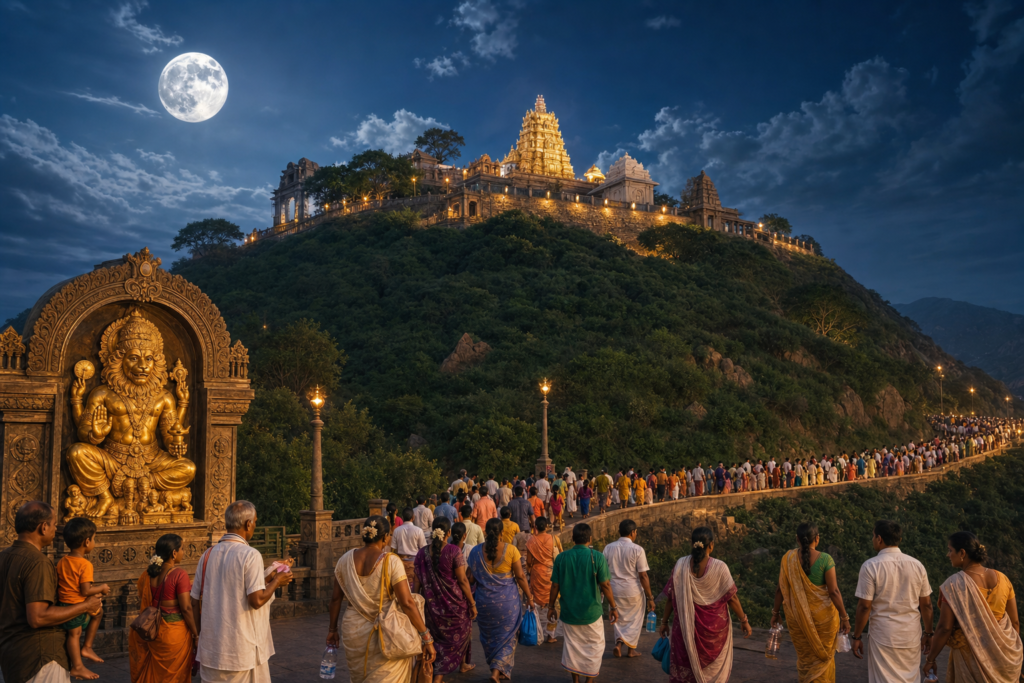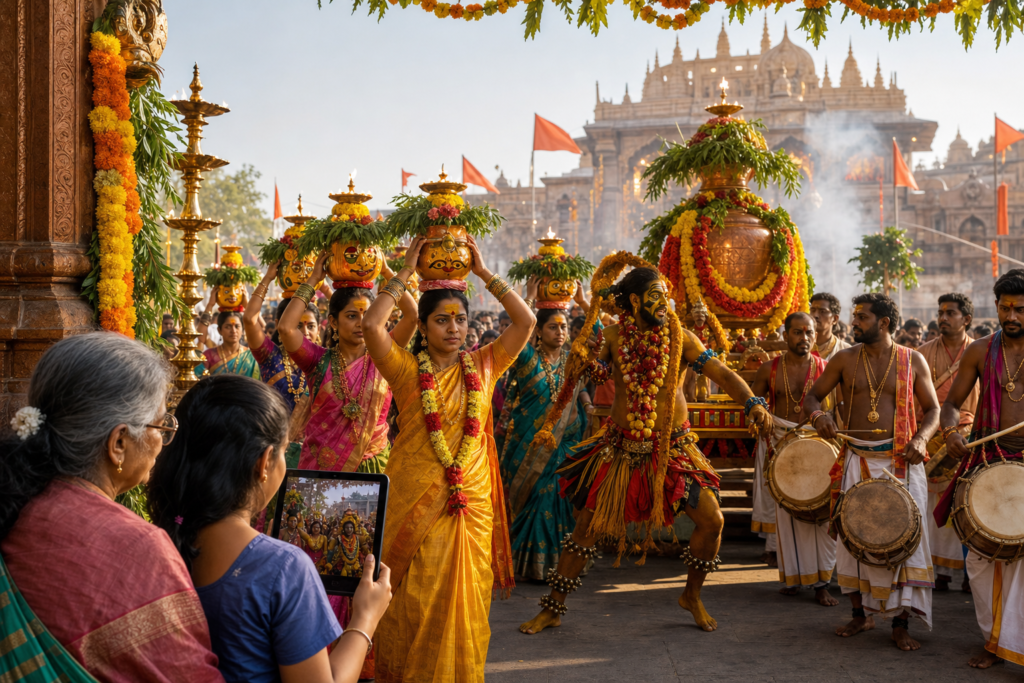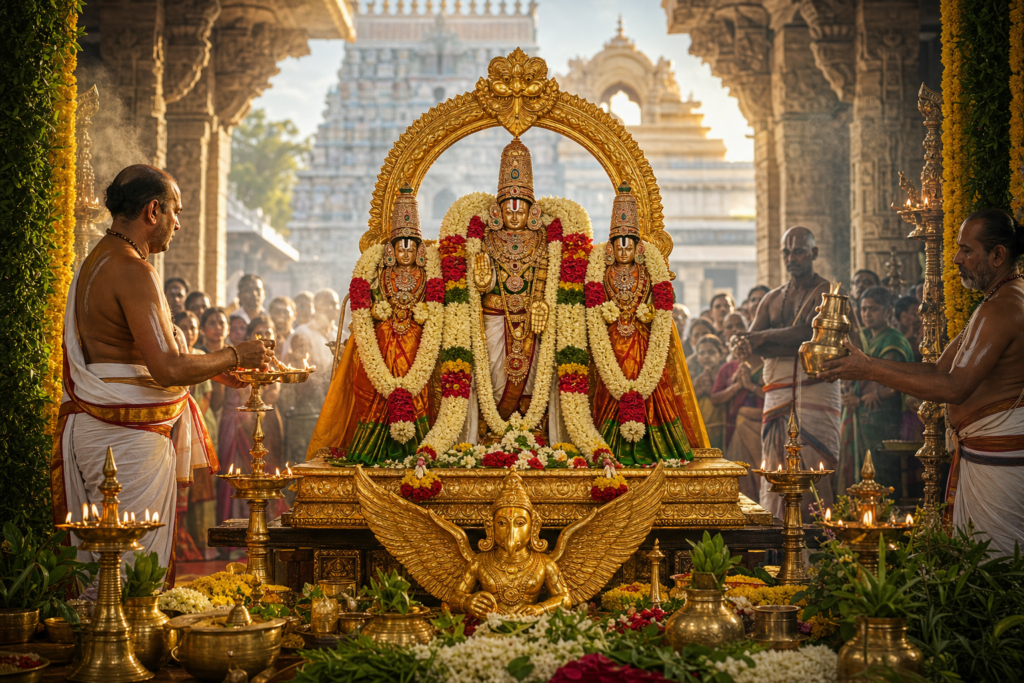
Chaitra Navratri 2026 begins on 19 March and opens with the worship of Devi Shailaputri, the first manifestation of the Nava-Durga. The first day (Chaitra Shukla Pratipada) is traditionally reserved for Ghatasthapana (Kalasha Sthapana), sankalpa (vowed intention), and the establishment of a simple but steady daily rhythm of puja, japa, and vrata (fasting) for the nine nights of adhyatmic (spiritual) renewal.
Across India and the global Hindu diaspora, calendars can differ slightly due to local sunrise, tithi overlap, and regional parampara (custom). A practical rule of thumb is to perform Ghatasthapana after sunrise while Pratipada prevails and to avoid Amavasya. Local panchang guidance is recommended if Pratipada straddles sunrise or if Vaidhriti Yoga and Chitra Nakshatra coincide with the chosen window.
At its heart, Navratri is a civilizational celebration of shaktiinner resilience, clarity, and compassion. These nine days foreground practices that resonate across dharmic traditions: disciplined mindfulness and ethical restraint in Hindu vrata, ahimsa and aparigraha in Jain sadhana, maitri (loving-kindness) and samma-vayama (right effort) in Buddhist training, and seva and sangat (community fellowship) in Sikh practice. The focus remains unity in diversity, with reverence for multiple paths that cultivate inner strength and social harmony.
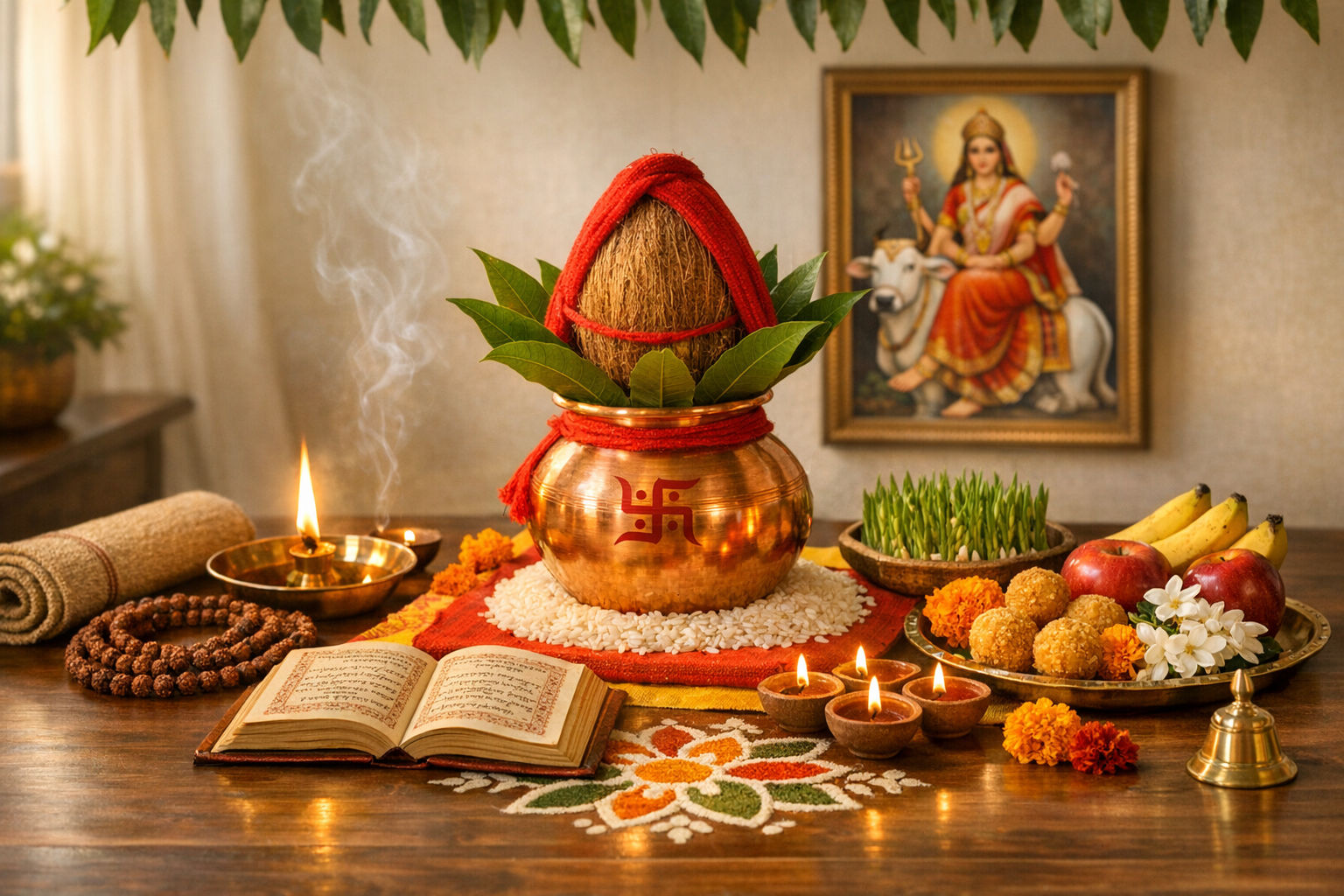
1) Prepare a sanctified space and mindset: Begin by cleaning the altar and the immediate puja area. A small asana (mat) facing east or north, a fresh toran of mango leaves, and a simple rangoli enhance pavitrata (sacredness). A few rounds of deep, even breathing help establish one-pointedness before commencing puja and japa.
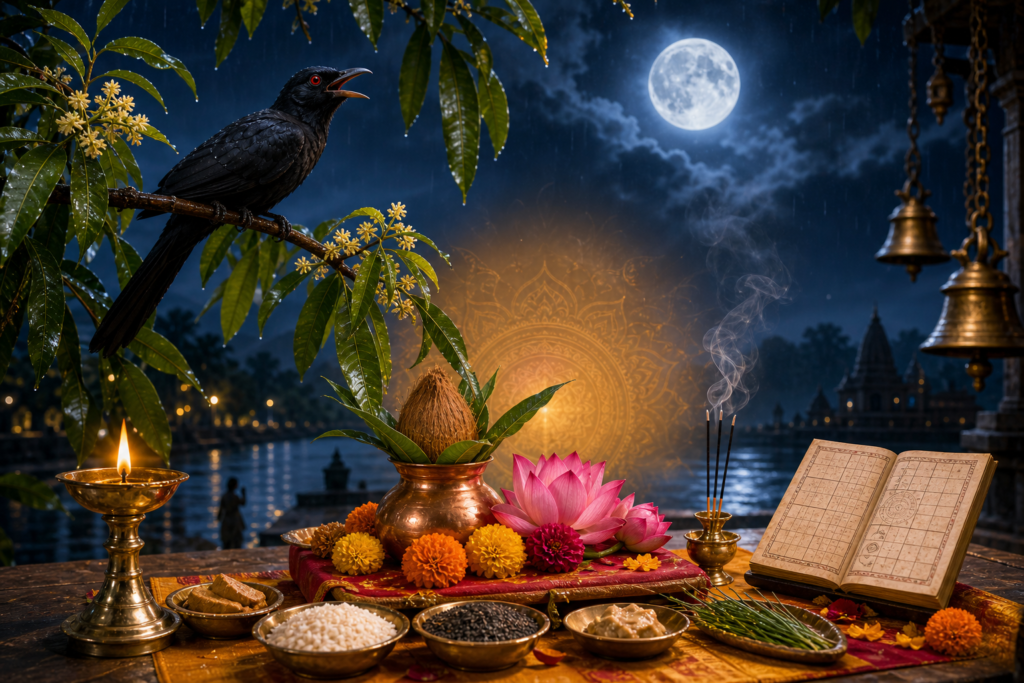
2) Ghatasthapana (Kalasha Sthapana): Place a clean earthen or copper kalasha on a red or yellow cloth over a layer of unbroken rice. Fill the kalasha with clean water and optionally add akshata (rice), a coin, a cardamom pod, durva, and a small pinch of camphor. Tie a mauli (red thread) around the neck of the vessel and draw a Swastika (an ancient auspicious symbol) with kumkum or sandal paste.
For the mouth of the kalasha, use panchapallava (often five mango leaves) and rest a whole coconut on top, its fiber wrapped in red cloth. Many households also sow barley (jau) or wheat seeds nearbythese green shoots (jaware) are observed through the nine days as a symbolic indicator of auspicious growth and inner renewal.
3) Light the Akhand Jyot: A steady ghee or sesame-oil lamp kindled on Day 1 and maintained throughout Navratri signifies unwavering awareness. Place the diya on a stable, fire-safe surface, keep it away from drafts and drapes, and assign family members to supervise and replenish the wick and oil with care.
4) Take a clear sankalpa (vow): State the intention to observe Navratri vrata for inner purification and loka-kalyana (well-being of all). A simple formulation can be spoken mentally and softly: “Navaratri-vratam kariṣye, sarva-maṅgala-siddhyartham.” Conclude with a short japa of “Om Dum Durgāyai Namaḥ,” letting the mantra anchor attention.
5) Perform Shailaputri Puja: Day 1 honors Shailaputri, who symbolizes grounded strength and new beginnings. Offer water, akshata, flowers (commonly white or yellow in many regions), incense, a ghee-lamp, and naivedya as per family tradition. Recite, with devotion and steadiness, “Om Devi Shailaputryai Namah” and the refrain “Ya Devi Sarva Bhuteshu Shakti Rupena Samsthita, Namastasyei Namastasyei Namastasyei Namo Namah.”
6) Begin a text-based sadhana: The Durga Saptashati (Devi Mahatmyam) is foundational for many practitioners during Navratri. A practical schedule is to read select portions daily across the nine days, preceded by Kavacham, Argala, and Keelakam as time allows. When schedules are tight, the Saptashloki Durga serves as a concise daily recitation while preserving the text’s central bhava (essence).
7) Observe the Navratri vrata mindfully: Common observances include phalahara (fruit-based), dudh-vrat (milk-based), or ek-bhojan (one-sattvic-meal) fasts. Regional norms often include kuttu (buckwheat), samak (barnyard millet), sabudana, potatoes, ghee, rock salt, and simple dairy; onion, garlic, meat, alcohol, and stimulants are avoided. Individuals managing medical conditions should consult a qualified professional and adapt vrata with self-compassion and prudence.
8) Establish daily japa, dhyana, and pranayama: A steady count such as 108 repetitions of “Om Dum Durgāyai Namaḥ” supports antar-mouna (inner quietude). Simple breathwork like nadi shodhana (alternate-nostril breathing) before or after japa stabilizes attention, aligning body, breath, and mantra.
9) Satsang, bhajans, and community harmony: Devotional singing, quiet recitation of stotra, and listening to dharmic discourses enrich Day 1 and set a gracious tone for the remaining nights. Where cultural forms like garba or dandiya are observed, the intention is bhakti and togetherness, practiced with consideration for neighbors and local guidelines.
10) Plan ahead for Kanya Pujan and Havan: Although traditionally performed on Ashtami or Navami, planning on Day 1 helps source eco-conscious samagri and coordinate annadanam. Preparations can include simple gift packs for young girls (kanyas) and arrangements for a brief homa (where appropriate) with responsible ventilation and fire safety.
Technical guidance on muhurta selection: Authoritative traditions recommend establishing the kalasha during Pratipada after sunrise, avoiding Amavasya; many also prefer steering clear of Vaidhriti Yoga and Chitra Nakshatra. When tithi overlaps create ambiguity, prioritizing the period when Pratipada prevails at local sunrise is a widely accepted convention. Local temple guidance or a trusted panchang remains the best standard for specificity.
Suggested puja-samagri checklist for Day 1: A clean kalasha (copper or earthen), red/yellow altar cloth, rice for the base, pure water, mauli (red thread), kumkum, sandal paste, flowers, incense, ghee or sesame oil, cotton wicks, panchapallava (mango leaves), a whole coconut, fruits/sweets for naivedya, and barley/wheat seeds if sowing jaware. Where possible, prefer biodegradable offerings and avoid single-use plastics.
Navratri colours in practice: Colour associations for each day (including Day 1) vary by region and parampara and are sometimes derived from the weekday of Pratipada. Many households choose yellow or orange for Shailaputri as symbols of vitality and auspicious beginnings; choosing the colour observed by one’s family or local community preserves continuity and shared meaning.
Dietary and wellness considerations: Sattvic, light, and freshly prepared foods support clarity during vrata. Hydration, balanced electrolytes, and adequate sleep matter as much as mantra and puja. Those engaged in physically demanding work may opt for a moderated fast aligned with safety and long-term sustainability of the practice.
Eco-conscious observance: Favor earthen diyas over paraffin candles, avoid chemical colours in rangoli, compost flower offerings when feasible, and minimize noise and waste. Such choices reflect the dharmic ethic of careseva toward the living environment that sustains all.
Shared dharmic ethos and unity: The first day’s emphasis on intention, restraint, and compassion is a shared current across Hindu, Buddhist, Jain, and Sikh traditions. Whether expressed through mantra and kavacham, metta-bhavana, anuvrata, or langar, the practical spirit is one: deepen inner strength and extend kindness to all beings.
Closing perspective: Day 1 of Chaitra Navratri 2026 is an excellent time to align the home, the schedule, and the inner life. Beginning with clean preparation, precise Ghatasthapana, steady sankalpa, and measured vrata practices builds momentum for the full nine-night sadhana. In honoring Shailaputri, practitioners honor the clarity to start well, the patience to continue with care, and the devotion to conclude in gratitude and service.
Inspired by this post on Hindu Pad.