
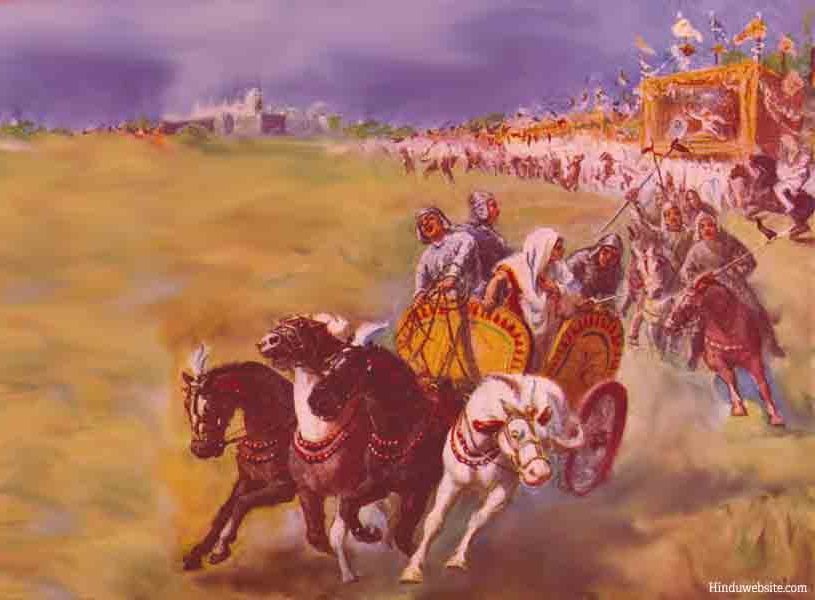
The origins of the Indo-European languages, which include many of the world’s major language families, have been the subject of much debate and speculation among scholars for over a century. Three theories have emerged to explain the origins of the Indo-European languages in the context of India: the Aryan Invasion Theory, the Indo-Aryan Migration Theory, and the Indigenous Aryan Theory. Each theory proposes a different origin story for the Aryans, a group of people who are believed to have played a significant role in the development of Indian civilization. In this blog post, we will explore these three theories and their supporting evidence, and examine the ongoing scholarly debate over the origins of the Indo-European languages in the context of India.
But before we jump into it, a TL; DR; version of what we know so far.
- Aryan Invasion Theory: This theory suggests that the Aryans were a group of people who migrated into the Indian subcontinent around 1500 BCE and displaced the indigenous Dravidian-speaking peoples. The theory was popular in the early 20th century but has since been largely discredited due to a lack of archaeological or historical evidence to support it.
- Indo-Aryan Migration Theory: This theory suggests that the Indo-European-speaking peoples, including the Aryans, originated in the region that includes present-day Iran, Central Asia, and the northern parts of the Indian subcontinent. They migrated to other parts of the world, including India, around 2000 BCE, and brought their language and culture with them. This theory is currently the most widely accepted theory among western and Indian-Marxist-woke-liberal scholars.
- Indigenous Aryan Theory: This theory suggests that the Aryans were originally from the Indian subcontinent and that their language and culture developed there independently of any external influence. This theory is supported by linguistic and genetic evidence, as well as the ancient texts of India, but is currently a minority view among scholars.
Aryan Invasion Theory (AIT)
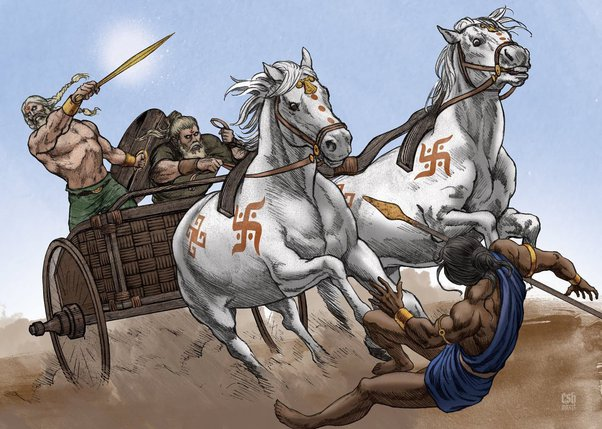
The AIT has been debunked and done-with so we will not spend a lot of time discussing it. However, here are some reasons why and how the Aryan Invasion Theory was debunked:
- Lack of archaeological evidence: One of the primary arguments against the Aryan Invasion Theory is the lack of archaeological evidence to support it. Despite extensive excavations and research in the Indian subcontinent, no evidence of a large-scale migration or invasion by an Aryan group has been found. Archaeological findings have instead shown a continuity of material culture and settlement patterns from the Indus Valley Civilization to the Vedic period.
- Contradictory linguistic evidence: Linguistic evidence has also been used to support the Aryan Invasion Theory, as Sanskrit, the language of the Vedas, is closely related to other Indo-European languages. However, recent linguistic research has suggested that the similarities between Sanskrit and other Indo-European languages may be the result of a common ancestral language rather than a result of migration or invasion.
- Colonial biases: The Aryan Invasion Theory was first proposed in the 19th century by British colonial scholars who viewed Indian civilization as inferior and primitive. The theory was based on racial and cultural prejudices, rather than actual evidence, and was used to justify British colonial rule in India. The theory has been criticized for perpetuating these biases and for ignoring the complexity and diversity of Indian history and culture.
- Alternative explanations: Scholars have proposed alternative explanations for the similarities between Sanskrit and other Indo-European languages, such as a shared cultural and linguistic heritage among the peoples of Central Asia and the Indian subcontinent. These alternative explanations challenge the idea that the Indo-European languages originated outside of India and were brought in by an invading Aryan group.
Overall, the lack of archaeological and linguistic evidence, as well as the colonial biases that underpinned the Aryan Invasion Theory, have led many scholars to reject it as a valid explanation for the origins of the Indo-European languages in the context of India.
Indo-Aryan Migration Theory (IAMT)

The Indo-Aryan Migration Theory is currently the most widely accepted theory among scholars for the origin of the Indo-European languages in the context of India. However, there are some scholars who have challenged or criticized aspects of this theory. Here are some of the main criticisms:
- Lack of archaeological evidence: While the Indo-Aryan Migration Theory is supported by linguistic and genetic evidence, some scholars have argued that there is a lack of archaeological evidence to support the theory. They argue that the archaeological record does not show a clear break or migration event in the archaeological record that would suggest a large-scale migration of Indo-European speakers into the Indian subcontinent.
- Alternative linguistic interpretations: While linguistic evidence is a key supporting factor of the Indo-Aryan Migration Theory, some scholars have argued that the linguistic evidence is not necessarily conclusive. They argue that alternative linguistic interpretations, such as the possibility that the Indo-European languages originated in the Indian subcontinent itself, cannot be ruled out.
- Overemphasis on language: Some scholars have criticized the Indo-Aryan Migration Theory for placing too much emphasis on language and not enough on other cultural factors. They argue that the similarities between Indo-European-speaking cultures could have arisen from other cultural and societal interactions rather than a large-scale migration event.
Despite these criticisms, the Indo-Aryan Migration Theory remains the most widely accepted theory among scholars.
Indigenous Aryan Theory (IAT)
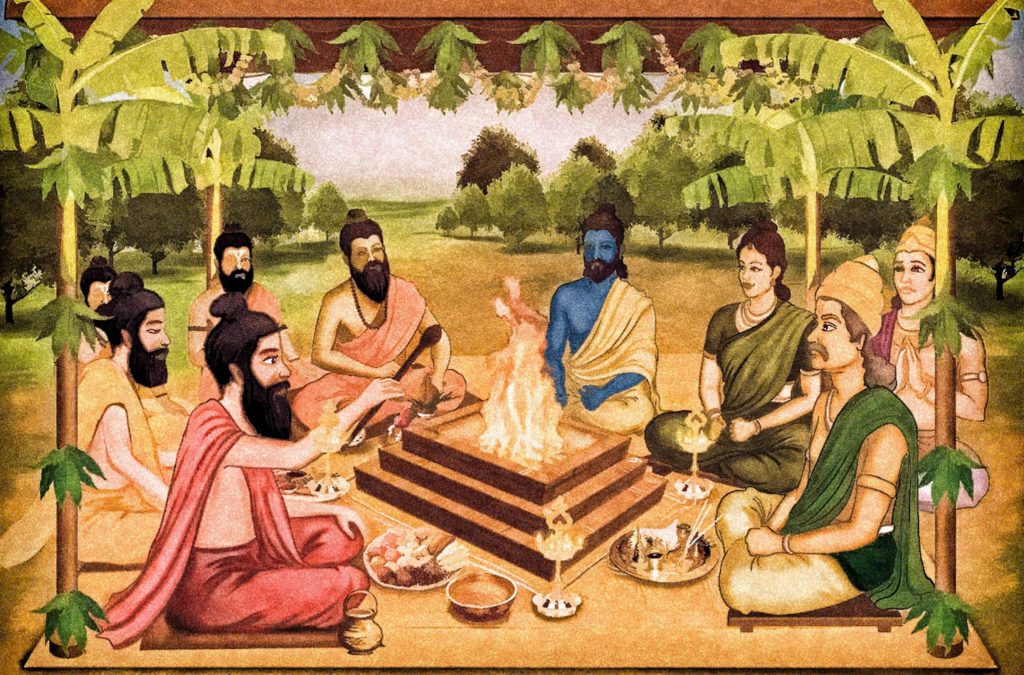
The question of where the Indo-European languages originated has been a subject of debate for over two centuries. One of the most controversial hypotheses is the Indigenous Aryan theory, which suggests that the Aryans, the speakers of the Indo-European languages, originated in India and spread out from there to other parts of the world. This theory is supported by linguistic, cultural, genetic, and historical evidence, although it remains controversial among scholars.
Arguments in favor of IAT
Linguistics
One of the strongest arguments in favor of the Indigenous Aryan theory is the linguistic evidence. Supporters of the theory point to the fact that many of the oldest and most conservative forms of Indo-European languages, such as Sanskrit, are still spoken in India today. The Sanskrit language has a rich literary tradition and is the language of the Vedas, the oldest sacred texts of Hinduism. According to the Indigenous Aryan theory, the Aryans composed the Vedas in India and then spread out to other parts of the world, taking their language and culture with them.
The Sanskrit language has a complex grammar and a rich vocabulary that is closely related to other Indo-European languages. The similarities between Sanskrit and other Indo-European languages have been noted by scholars for centuries. The German philologist Max Muller, who is credited with coining the term “Aryan,” wrote in 1854 that “Sanskrit and Zend [the ancient language of Iran] are sister languages, and have sprung from a common source.” (Muller, 1854, p. 18) The linguist Joseph H. Greenberg, in his classification of the world’s languages, included Sanskrit in the Indo-European language family along with other languages such as Latin, Greek, and Slavic.
Cultural Evidence
Another argument in favor of the Indigenous Aryan theory is the cultural evidence. Proponents of the theory point to the similarities between early Indian culture and the cultures of other Indo-European-speaking peoples. For example, the worship of gods such as Indra, Agni, and Varuna is found not only in India but also in other Indo-European cultures, such as the ancient Greeks and the ancient Persians. The similarities between the myths, rituals, and symbols of these cultures suggest a common origin.
Genetic Evidence
Recent genetic studies have provided support for the Indigenous Aryan theory. These studies have shown that there is a genetic link between the people of India and the ancient populations of Central Asia and Europe. The genetic evidence suggests that the Indo-European languages originated in the region that includes present-day Iran, Central Asia, and the northern parts of the Indian subcontinent. The Aryans are believed to have migrated from this region to other parts of the world, taking their language and culture with them.
One of the key genetic markers used to support the Indigenous Aryan theory is the Y-chromosome haplogroup R1a. This haplogroup is found in high frequencies among the Indo-European-speaking peoples of India, Central Asia, and Eastern Europe. Studies have shown that the R1a haplogroup is most diverse in India, which suggests that this is where it originated (Kivisild et al., 2003; Underhill et al., 2015).
Historical Evidence
The historical evidence for the Indigenous Aryan theory is based on the ancient texts of India, such as the Vedas and the Puranas. These texts describe the origins of the Aryans and their migration to other parts of the world. According to the Vedas, the Aryans were a pastoral people who lived in the region that is now Pakistan and Afghanistan. They migrated to India around 1500 BCE and established themselves as the dominant cultural and political force in the region.
Arguments Against IAT
Counterarguments to the linguistic evidence for the Indigenous Aryan theory have focused on the fact that Sanskrit is not the oldest language and does not support the theory. The linguist Colin Renfrew, for example, has argued that the Indo-European languages originated in the Pontic-Caspian steppe region and that the spread of these languages was linked to the spread of agriculture. Renfrew has also pointed out that Sanskrit is not the oldest language and that the similarities between Sanskrit and other Indo-European languages can be explained by contact and borrowing rather than common origin (Renfrew, 1987).
The cultural evidence for the Indigenous Aryan theory has been challenged by counterarguments that suggest these similarities can be explained by contact and borrowing rather than common origin. The historian Michael Witzel, for example, has argued that the similarities between Indian and other Indo-European cultures are the result of a process of cultural diffusion, in which ideas and practices spread from one culture to another (Witzel, 2005). Witzel has also pointed out that many of the supposed similarities are superficial and can be explained by convergent evolution or coincidence.
Counterarguments to the genetic evidence for the Indigenous Aryan theory have focused on the fact that genetic data can be subject to interpretation and that there are other possible explanations for the similarities between the genetic profiles of the Indo-European-speaking peoples. The geneticist Luigi Luca Cavalli-Sforza, for example, has argued that the genetic similarities between the Indo-European-speaking peoples can be explained by the spread of agriculture and the migration of people across the continents (Cavalli-Sforza, 2000).
The historical evidence for the Indigenous Aryan theory has been challenged by counterarguments that suggest that the ancient texts are unreliable and that there is no independent evidence to support the theory. The historian Romila Thapar, for example, has argued that the ancient texts are based on myth and legend rather than historical fact and that they cannot be used as evidence to support the Indigenous Aryan theory (Thapar, 2002).
Conclusion
The Indigenous Aryan theory remains a controversial hypothesis, with both supporters and critics. Proponents of the theory point to the linguistic, cultural, genetic, and historical evidence that supports it. They argue that the similarities between the Indo-European-speaking peoples suggest a common origin in India and that the Aryans migrated to other parts of the world, taking their language and culture with them. Critics of the theory argue that the evidence can be interpreted in different ways and that there are other possible explanations for the similarities between the Indo-European-speaking peoples.
It would take considerable focused effort from Bhartiya researchers to validate and popularize the IAT.
References
- Anthony, D. W. (2007). The Horse, the Wheel, and Language: How Bronze-Age Riders from the Eurasian Steppes Shaped the Modern World. Princeton University Press.
- Bryant, E. F. (2001). The Quest for the Origins of Vedic Culture: The Indo-Aryan Migration Debate. Oxford University Press.
- Daniélou, A. (2003). A Brief History of India. Inner Traditions/Bear & Company.
- Deshpande, M. (2011). Indian Linguistic Traditions. Motilal Banarsidass.
- Elst, K. (1999). Update on the Aryan Invasion Debate. Aditya Prakashan.
- Frawley, D. (1999). The Rigveda and the History of India. Aditya Prakashan.
- Jha, D. N. (2002). The Myth of the Holy Cow. Verso.
- Kak, S. (2000). The Wishing Tree: The Presence and Promise of India. Munshiram Manoharlal Publishers.
- Lal, B. B. (2002). The Sarasvati Flows On: The Continuity of Indian Culture. Aryan Books International.
- Mallory, J. P., & Adams, D. Q. (2006). The Oxford Introduction to Proto-Indo-European and the Proto-Indo-European World. Oxford University Press.
- Masica, C. P. (1993). The Indo-Aryan Languages. Cambridge University Press.
- Misra, V. N. (2004). Ancient Indian Civilization. Anmol Publications Pvt Ltd.
- Possehl, G. L. (2002). The Indus Civilization: A Contemporary Perspective. AltaMira Press.
- Renfrew, C. (1987). Archaeology and Language: The Puzzle of Indo-European Origins. Cambridge University Press.
- Scharfe, H. (2002). Education in Ancient India. Brill.
- Sharma, R. S. (2002). India’s Ancient Past. Oxford University Press.
- Shendge, M. A. (1997). The Civilized Demons: The Harappans in Rigveda. Abhinav Publications.
- Singh, G. P. (2008). The Aryan Debate. Concept Publishing Company.
- Talageri, S. G. (1993). Aryan Invasion Theory and Indian Nationalism. Voice of India.
- Thapar, R. (2003). The Penguin History of Early India: From the Origins to AD 1300. Penguin Books.
- Agarwal, Vishal. (2019). The Indus Sarasvati Civilization: Origins, Problems, and Issues. Springer.
- Frawley, David. (2001). Gods, Sages and Kings: Vedic Secrets of Ancient Civilization. Lotus Press.
- Lal, B.B. (1998). India 1947-1997: New Light on the Indus Civilization. Aryan Books International.
- Oak, P. N. (1990). Some Missing Chapters of World History: A Study in the Historical Records From the Time of Jesus Christ to the Present. Aditya Prakashan.
- Shrikant G. Talageri. (2000). The Rigveda: A Historical Analysis. Aditya Prakashan.
- Talageri, Shrikant G. (2008). The Rigveda and the Avesta: The Final Evidence. Aditya Prakashan.
- Witzel, Michael. (2001). Autochthonous Aryans? The Evidence from Old Indian and Iranian Texts. Electronic Journal of Vedic Studies, Vol. 7.
- Elst, Koenraad. (1999). Update on the Aryan Invasion Debate. Aditya Prakashan.
- Kazanas, Nicholas. (2002). The Aryan Debate: Beyond the Evidence of Language. Aditya Prakashan.