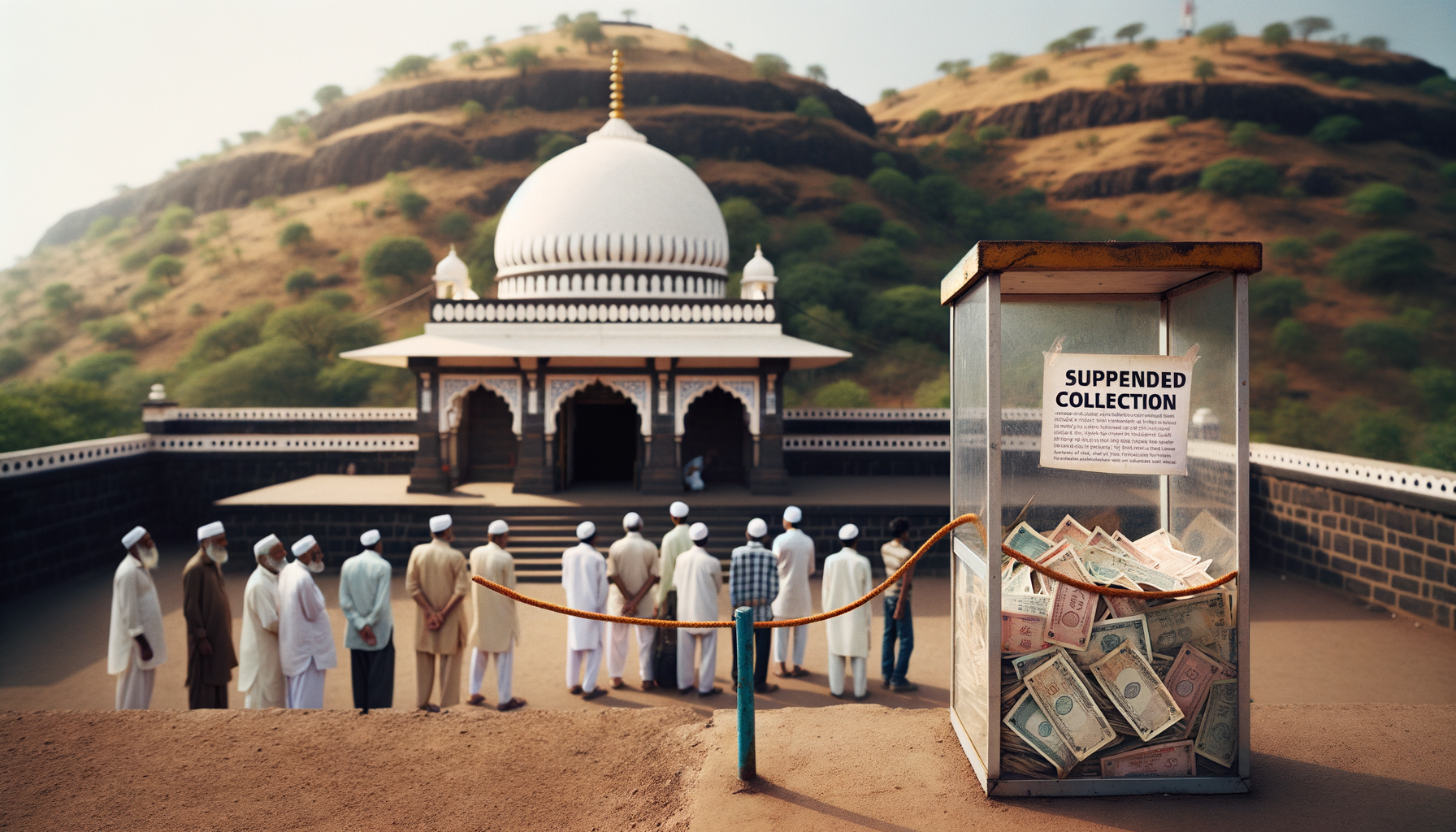
On 13 March 2025, the Waqf Court cancelled the Waqf registration of Shri Pir Haji Malang Saheb Dargah Trust (E-60). Despite this order, reports and on-ground observations indicate that donations continue to be collected at Shri Malanggadh in Maharashtra. This situation raises serious questions about court-order compliance, the governance of religious endowments, and the protection of community trust.
In terms of law and society, the cancellation of a Waqf registration typically requires immediate and visible compliance from managing bodies, including the suspension of activities that rely on that registration—such as organized donation collection. Continued fundraising at the site, if occurring under the cancelled framework, may contravene the Waqf Court’s decision. Clear, public-facing notifications from the competent authorities are essential to avoid ambiguity and to ensure alignment with Religious Endowments regulations and broader norms of religious governance.
Visitors, devotees, and local stakeholders express understandable confusion when legal status and on-site practices diverge. Many community members want transparency, predictability, and reassurance that sacred spaces are administered with integrity and accountability. Malanggadh attracts diverse communities, and preserving harmony requires that administrative processes remain transparent and respectful, so that faith, culture, and civic order reinforce each other rather than come into tension.
It is reported that earlier complaints to the police have not led to visible corrective action, intensifying concerns about follow-through. Effective coordination between the Waqf administration, district authorities, and law enforcement is crucial to uphold the court’s directions. Such coordination should prioritize due process, clarity, and timely communication to all stakeholders.
A constructive path forward would include: issuing explicit public notices about the Waqf Court’s order; temporarily suspending donation collection mechanisms linked to the cancelled registration; conducting an independent audit and inventory of funds and assets; and establishing a transparent, legally compliant interim management process if required. A formal grievance redressal channel and public helpline can further reduce confusion. These steps, grounded in good governance, can strengthen interfaith relations, uphold unity in diversity, and protect the sanctity of Shri Malanggadh.
Resolving the matter promptly and lawfully will reinforce accountability, safeguard community trust, and demonstrate that religious institutions, civil administration, and the justice system can work in tandem. Aligning site practices with the Waqf Court’s decision is not only a legal imperative but also a moral and social commitment to fairness, transparency, and harmony.
Inspired by this post on Hindu Jagruti Samiti.