Tag: Religious Governance

  • Sikhs of Punjab: Khalsa Nationhood, Miri-Piri Sovereignty, and the Sacred Homeland

    Sikhs of Punjab: Khalsa Nationhood, Miri-Piri Sovereignty, and the Sacred Homeland

    This comprehensive essay examines the Sikhs of Punjab through three lenses: historical nationhood (qaum), religious sovereignty (miri-piri), and the homeland of the Khalsa. It traces the arc from Guru Nanak’s foundational institutions to the Khalsa discipline of 1699, through the Sikh misls and the inclusive statecraft of Maharaja Ranjit Singh, to modern constitutional arrangements and…

  • Safeguarding the Sacred in Goa: A Strong Policy Case to Rename Deity-Named Liquor Shops

    Safeguarding the Sacred in Goa: A Strong Policy Case to Rename Deity-Named Liquor Shops

    The Gomantak Mandir Mahasangh has urged Goa Chief Minister Dr Pramod Sawant to bar liquor outlets from using names of Hindu deities and to require existing shops to rename. A carefully designed, religion-neutral policy that covers sacred signifiers across Hindu, Buddhist, Jain, and Sikh traditions can protect sanctity while preserving business freedoms. Constitutionally, a narrow…

  • Vaishno Devi video controversy: why ritual protocols matter and how temples must respond

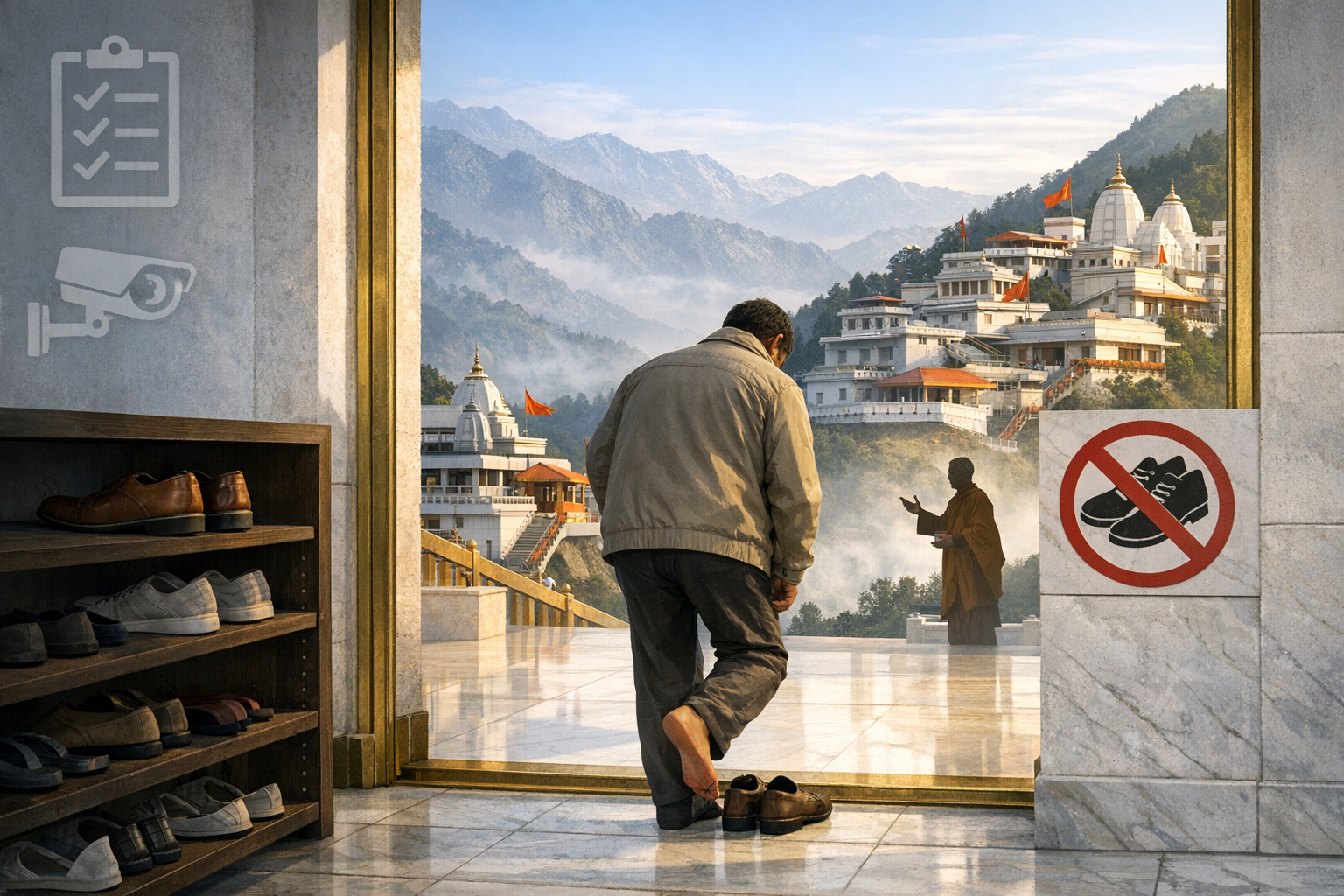
    Vaishno Devi video controversy: why ritual protocols matter and how temples must respond

    A viral video allegedly showing a Shri Mata Vaishno Devi Shrine Board official wearing footwear during a ritual has sparked public concern and debate. This analysis explains why footwear protocols are central to Hindu rituals, rooted in pavitrata, sthala-shuddhi, and maryada, and shared across Sikh, Buddhist, and Jain traditions. It outlines the Shrine Board’s legal…

  • Char Dham 2026: BKTC Safeguards Sanctum, Reassures Access for All at 47 Uttarakhand Temples

    Char Dham 2026: BKTC Safeguards Sanctum, Reassures Access for All at 47 Uttarakhand Temples

    BKTC has clarified that, ahead of Char Dham Yatra 2026, non-Hindu visitors are restricted only from the sanctum sanctorum at 47 Uttarakhand temples, while remaining fully welcome in outer halls, courtyards, and public service zones. The decision preserves Agama-defined ritual sanctity at the altar without imposing a blanket ban on temple access. Readers will find…

  • Malanggadh Donations Continue After Waqf Court Cancellation: Urgent Questions on Accountability

    Malanggadh Donations Continue After Waqf Court Cancellation: Urgent Questions on Accountability

    On 13 March 2025, the Waqf Court cancelled the Waqf registration of Shri Pir Haji Malang Saheb Dargah Trust (E-60), yet donations reportedly continue at Shri Malanggadh in Maharashtra. This post clarifies why visible compliance matters for court-order enforcement and religious governance. It highlights the need for transparent notices, lawful suspension of collection mechanisms, and…

  • Uttarakhand Abolishes Madrasa Board, Launches Minority Education Authority for Unified Standards

    Uttarakhand Abolishes Madrasa Board, Launches Minority Education Authority for Unified Standards

    Uttarakhand has abolished the Madrasa Board and announced a Minority Education Authority effective 1 July 2026, requiring minority educational institutions to affiliate with the Uttarakhand Board of School Education. The reform seeks to deliver uniform quality standards, transparent accreditation, and statewide recognition of certifications. Students are expected to benefit from enhanced mobility and parity in…

  • ISKCON Constitution FAQ: Clear, Trust-Building Answers for Unity and Dharmic Harmony

    ISKCON Constitution FAQ: Clear, Trust-Building Answers for Unity and Dharmic Harmony

    The ISKCON Constitution Drafting Committee presents a concise FAQ that clarifies key principles of the ISKCON Constitution. This accessible resource centralizes authoritative answers, reducing ambiguity and promoting informed participation. Its structured, reliable format supports devotees, community organizers, and researchers alike. By modeling transparent and ethical governance, it also strengthens interfaith dialogue and unity in spiritual…

  • Rajasthan’s Anti-Conversion Law: Prior Permission, Ghar-Wapsi, and Religious Freedom

    Rajasthan’s Anti-Conversion Law: Prior Permission, Ghar-Wapsi, and Religious Freedom

    Rajasthan’s anti-conversion law requires prior Government permission for any change of religion, while exempting ‘ghar wapsi’—a return to one’s original faith. The policy distinguishes new affiliation from reversion, aligning the latter with continuity of identity. For families, the process encourages clarity and documentation, while institutions may benefit from greater transparency. Reactions vary: some see safeguards,…

  • Tamil Nadu Temple Governance Standoff: Devotees Challenge HR&CE at Pachaivazhi Amman near Vadalur

    Tamil Nadu Temple Governance Standoff: Devotees Challenge HR&CE at Pachaivazhi Amman near Vadalur

    A measured protest unfolded in Abatharanapuram near Vadalur as villagers and members of Hindu Munnai opposed a proposed HR&CE takeover of the Pachaivazhi Amman Temple. The gathering emphasized community stewardship, transparent administration, and continuity of village-based traditions. Organizers framed their stance as a call for due process and consultation rather than confrontation. The episode highlights…

  • How Operation Polo Aborted a Pakistan in South India

    How Operation Polo Aborted a Pakistan in South India

    The article explores the historical intricacies behind the liberation of Hyderabad, shedding light on the oppressive regime of the Nizams and the atrocities committed by the Razakars against the Hindu populace. It discusses the missed opportunity of the Marathas to dismantle the Nizam’s rule, attributing it to historical factors that allowed the Nizams’ sustained dominance.…