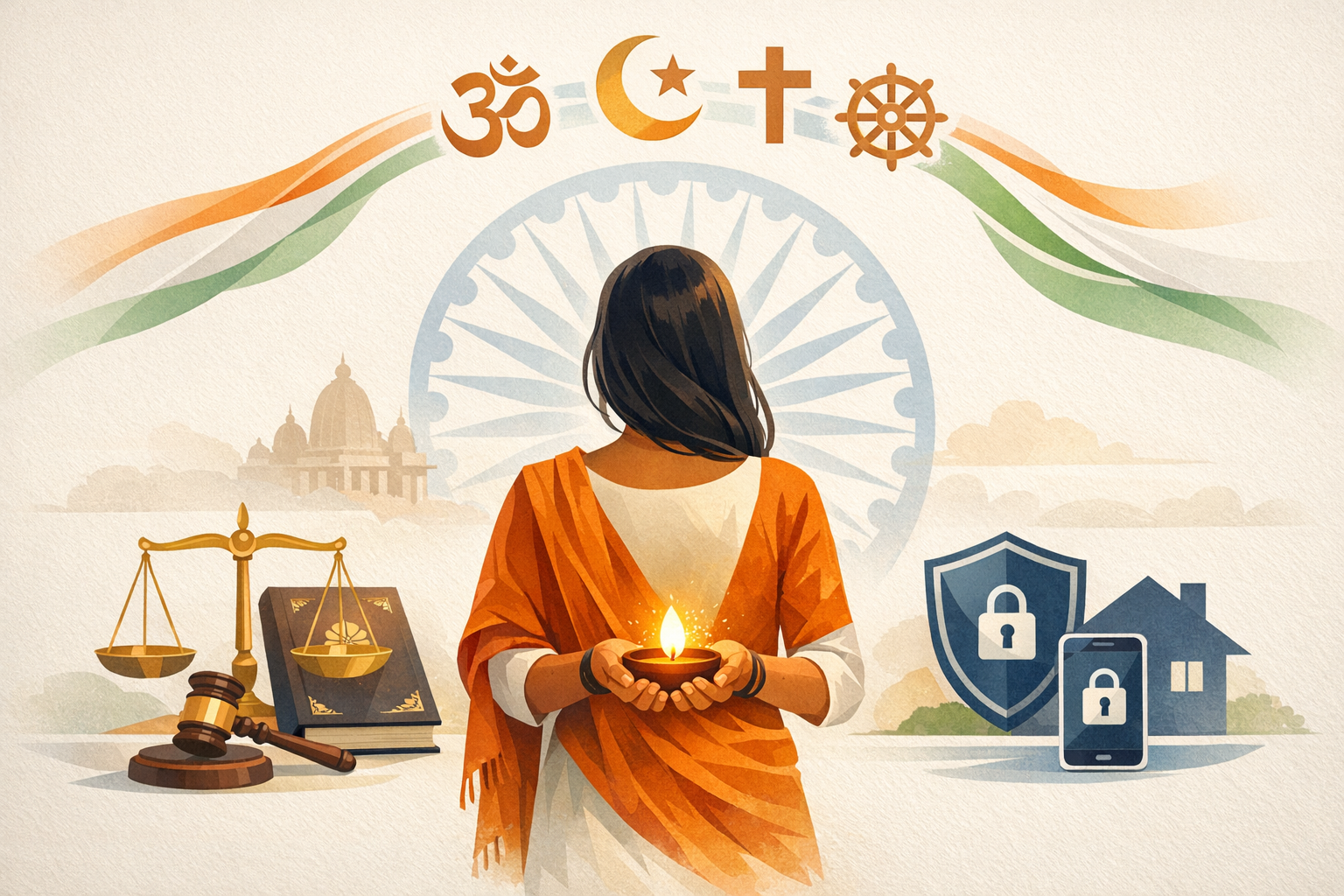
Former Miss India Earth 2019, Sayali Survenow known publicly as Aadya Survehas alleged prolonged physical and psychological abuse within her interfaith marriage, characterizing her experience as “love jihad” and announcing a reconversion to Hinduism (Ghar-Wapsi). These serious assertions demand a survivor-centric response, anchored in due process and India’s legal protections, while avoiding any communal generalizations that harm interfaith harmony.
The term “love jihad” is highly contested and politically charged in public discourse. Regardless of terminology, what requires careful attention is the core claim of coercion and abuse. A responsible approach centers on legality, human dignity, and survivor safety, while maintaining the constitutional promise of equality (Article 14), dignity and life (Article 21), and freedom of conscience and religion (Article 25).
Interfaith marriage in India is a constitutionally protected personal choice and is facilitated by the Special Marriage Act, 1954 (SMA). The SMA provides a secular framework for solemnization and registration, ensuring that couples can marry without religious conversion. When allegations of abuse arise in any marriageinterfaith or otherwisethe legal system provides civil and criminal remedies to protect the survivor and ensure accountability.
Abuse often manifests as a pattern of coercive control, not just discrete incidents. Such patterns may include isolation, intimidation, threats, financial control, humiliation, and physical violence. Recognizing these behaviors as elements of coercive control helps situate the allegations within an evidence-based, trauma-informed lens that prioritizes immediate safety and long-term well-being.
The Protection of Women from Domestic Violence Act, 2005 (PWDVA) offers broad civil remediesprotection orders, residence orders, custody arrangements, monetary reliefs, and compensationwithout requiring criminal prosecution as a precondition. Access points typically include Protection Officers, One Stop Centres (OSC/Sakhi), service providers, and the local Magistrate’s court. These mechanisms are designed for swift, survivor-centric relief.
Section 498A of the Indian Penal Code (IPC) criminalizes cruelty by a husband or his relatives, encompassing physical and mental cruelty. Depending on the facts, additional IPC provisions may be implicated. Survivors commonly employ a dual-track strategy: civil relief under PWDVA for safety and sustenance, alongside criminal proceedings under relevant IPC sections where warranted.
Family law pathways may also include maintenance (under Section 125 CrPC or personal law/statutory provisions), interim maintenance during proceedings, and residence rights independent of property title. Family Courts can sequence these issues to ensure immediate support while larger questionssuch as dissolutionare litigated.
Documentation is crucial. Medical records, dated photographs of injuries, contemporaneous messages or emails, call records, and witness statements can corroborate claims. Digital trails must be preserved in original form; screenshots should be accompanied by metadata and, where possible, server-side logs or certified copies. Thoughtful evidence curation strengthens both civil and criminal cases.
Digital safety forms part of survivor protection. Changing passwords, enabling multi-factor authentication, securing devices, and documenting online harassment through formal complaints can prevent further harm. The Information Technology framework and existing cybercrime cells offer recourse when harassment or threats escalate online.
Regarding religious identity, reconversion to Hinduismoften referred to as Ghar-Wapsiengages the constitutional right to freedom of conscience (Article 25). Procedural requirements may vary across states that have enacted “freedom of religion” legislation, which typically addresses allegations of coercion or inducement. Where such rules exist, voluntary declarations and procedural compliance help ensure transparency and legal clarity.
Preserving interfaith harmony is essential. An individual’s allegations of abuse should never be transposed onto entire communities. Hindu, Buddhist, Jain, and Sikh traditions alike uphold values such as Ahimsa (non-violence), Karuna (compassion), Seva (service), and Satya (truth). These shared dharmic principles call for empathy toward survivors, respect for freedom of conscience, and rejection of collective blame or stigmatization.
Ethical communication by media and civil society can mitigate harm. Responsible reporting avoids sensationalism, protects survivor privacy, uses precise legal language, and foregrounds due process. It is critical to distinguish between the specific facts of a case under investigation and broader narratives that can inflame community tensions or erode trust in interfaith relations.
From a public policy perspective, several measures can strengthen protections across society: premarital counseling and legal literacy for interfaith couples under the Special Marriage Act; routine, trauma-informed training for police, Protection Officers, and magistracy; robust OSC/Sakhi capacity; and clear standard operating procedures for rapid issuance of PWDVA protection and residence orders.
Community organizations can play a constructive role by building non-partisan, survivor-first support networks that provide safe housing referrals, psychosocial counseling, legal aid navigation, and accompaniment during court visits. Faith leaders across dharmic traditions can further reinforce a culture of non-violence and dignity, encouraging couples to seek early intervention and dialogue before conflicts escalate.
Trauma-informed care recognizes that survivors may display fragmented recall, ambivalence, or delayed disclosure due to fear and coercion. Psychosocial interventionsgrounded in evidence-based modalitiessupport recovery, reduce shame, and promote agency. When courts and law enforcement integrate trauma science with legal standards, adjudication tends to be both fairer and more protective.
At the same time, due process safeguards everyone. Allegations must be investigated by competent authorities, facts must be weighed impartially, and any adjudication must be based on law and evidence. This constitutional discipline protects survivor rights and ensures that criminal culpability or civil liability is determined justly.
In sum, the public statements attributed to Aadya Surve underscore an urgent social and legal imperative: to respond to domestic abuse decisively while maintaining interfaith harmony and religious freedom. The path forward lies in survivor-centered protections under PWDVA, judicious use of criminal law where appropriate, meticulous evidence practices, and unwavering commitment to the dharmic ethos of non-violence, compassion, and truth. This balanced, rights-affirming approach strengthens both individual safety and the plural fabric of Indian society.
Inspired by this post on Hindu Jagruti Samiti.