Chapter 2 of the Bhagavad Gita, traditionally titled Sankhya Yoga, functions as a complete philosophical blueprint for human existence. It distills the Gita’s central insights into a coherent path that integrates knowledge, duty, and inner composure, offering a structured map for spiritual evolution and practical living.
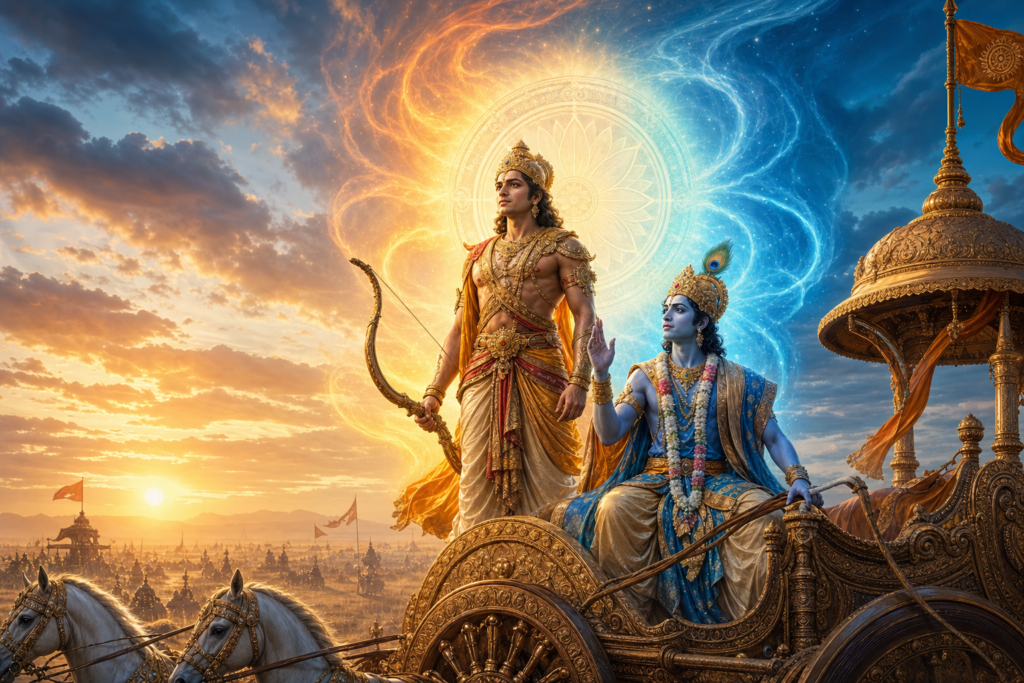
Set on the battlefield of Kurukshetra, the chapter opens with Arjuna’s profound moral and emotional crisisan archetype of human bewilderment when values collide. This scene frames universal questions: What is right action (dharma)? How should one act amid grief, doubt, and conflict? Chapter 2 answers by grounding conduct in a clear vision of reality.
The Sankhya perspective clarifies that the embodied self (atma) is unborn, undying, and unbroken, while the body is transient. Recognizing this distinction reframes fear and loss, transforming grief into understanding and impulsive reaction into measured responsibility. The teaching does not deny emotion; it places emotion within a larger, liberating view of human consciousness.
From this vision flows the doctrine of svadharma: act according to one’s role and responsibility, not from avoidance or attachment. In Chapter 2, dharma is not blind conformity but intelligent alignmentchoosing necessary action in the service of order, compassion, and truth. This alignment cultivates steadiness in the midst of uncertainty.
Karma Yoga, introduced here with lasting influence, instructs: perform action without clinging to outcomes. Equanimity (samatva) becomes the measure of wisdom, and Buddhi Yogathe yoga of disciplined understandingguides choices. The Gita praises “skill in action” as a union of clarity and compassion, where intention is purified even as engagement in the world remains vigorous.
Chapter 2 also portrays the sthitaprajnathe person of steady wisdomwho is free from compulsive desire, fear, and anger. Such a person is inwardly content, senses well-governed, and mind composed like a calm ocean into which rivers flow without disturbance. This ideal is not escapism; it is stability in motion, enabling wise action under pressure.
These teachings resonate across Dharmic traditions. The Gita’s equanimity and non-attachment echo Buddhist insight into balanced awareness; its discipline and non-violence align with Jain principles of ahimsa and aparigraha; its call to selfless action harmonizes with Sikh ideals of nishkam seva and remembrance of the Divine. Seen together, these streams reflect a shared civilizational ethos: inner clarity guiding responsible action.
Practically, many readers recognize how Sankhya Yoga reframes daily life. Professional dilemmas become opportunities to practice non-attachment to results; family duties become expressions of svadharma; and moments of stress become training grounds for steady attention. Over time, this approach reduces inner friction, sharpens judgment, and deepens compassion.
As a summary of the Gita’s core wisdom, Chapter 2 unites metaphysical insight with ethical guidance and psychological resilience. It shows how right understanding (atma and impermanence), right intention (dharma), and right engagement (karma yoga) can coexist harmoniously. This integration makes Sankhya Yoga not only a philosophy to contemplate but a way of being to practice.
In its enduring relevance, Chapter 2 invites continuous reflection: to see clearly, to act responsibly, and to remain inwardly free. As a complete roadmap for inner peace and outer duty, it offers a luminous pathone that connects personal well-being with the well-being of society.
Inspired by this post on Hindu Blog.