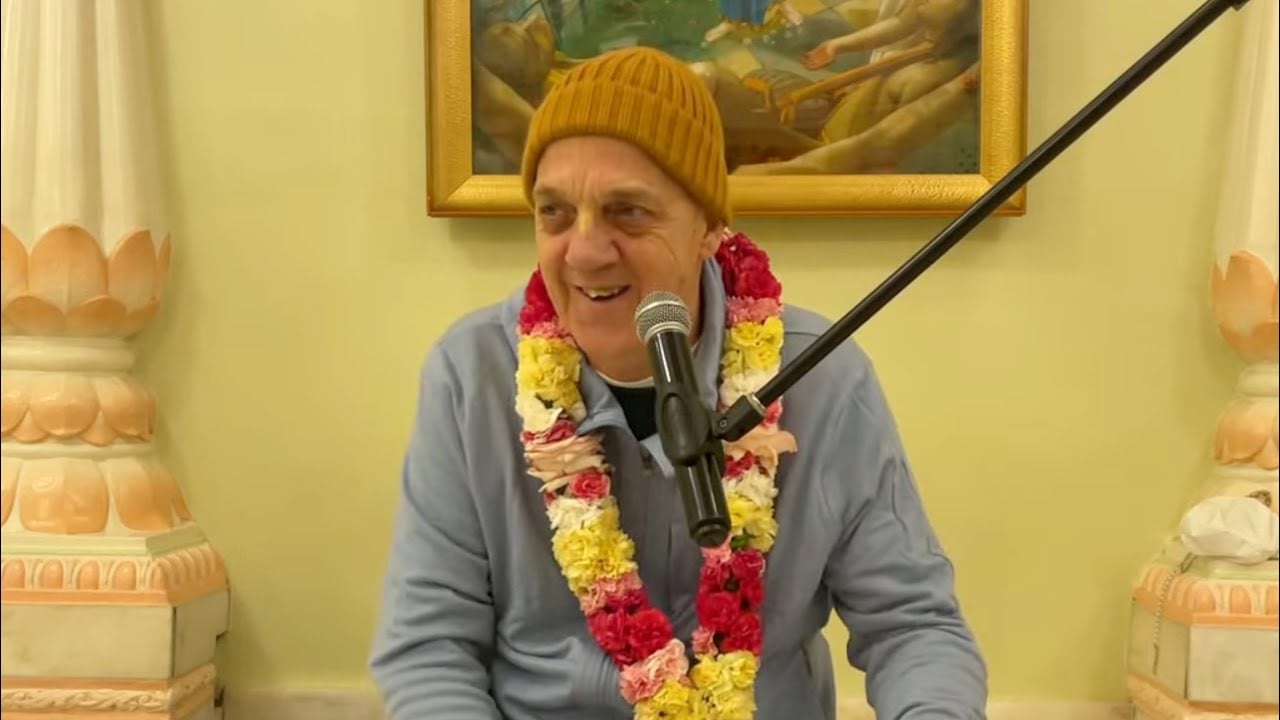
This morning class on Srimad-Bhagavatam (SB 9.21.8–11), presented by HG Nrsimha Kavaca Prabhu, revisits the renowned episode of King Rantideva, whose radical compassion and devotion to dharma transform a meager meal into a profound spiritual lesson. The narrative unfolds as the king extends hospitality to every guest, honoring each with respect and reverence, and elevating service (seva) to an act of worship. It is a striking meditation on how bhakti, dana (charitable giving), and ahimsa (non-harming) converge in lived practice.
After enduring long austerities, King Rantideva receives a small quantity of food. One by one, unexpected guests arrive. Each is received with humility, served with care, and sent away nourished. The most moving moment occurs when the balance of the food is offered to the dogs and to the master of the dogs, who are treated as honored guests. The king offers obeisances and all respects, demonstrating a dharmic ethic that recognizes divinity present in all beings, regardless of status, species, or circumstance.
When only a little drinking water remainsbarely enough for one personthe king is on the verge of quenching his own thirst. Even at this threshold, his commitment to compassionate service does not waver. The narrative emphasizes how genuine dharma is tested at the edge of personal need, and how Rantideva’s conduct shifts the center of spiritual life from formal entitlement to selfless hospitality. In this way, the passage frames compassion not as sentiment, but as disciplined, unwavering practice.
King Rantideva’s choices illuminate the heart of bhakti: seeing every visitor as atithi-devo-bhava (the guest as divine), honoring life in all forms, and relinquishing the urge to prioritize the self. Such conduct dissolves social hierarchies and species barriers, elevating everyday actsoffering a meal, sharing waterinto spiritual milestones. The story further underscores the Bhagavatam’s universal message: devotion matures when empathy, humility, and responsibility converge in concrete action.
Read through a wider dharmic lens, this episode resonates deeply with Buddhism’s karuṇā (compassion) and dāna (generosity), Jainism’s ahiṃsā and aparigraha (non-possessiveness), and Sikhism’s seva and langar (egalitarian sharing of food). The convergence of these principles highlights unity in spiritual diversity across Hinduism, Buddhism, Jainism, and Sikhism. By centering service to all beings, the narrative models a shared ethical horizon where devotional love and social responsibility become inseparable.
For contemporary readers, the image of sharing the last morsel with animals and the last sip of water at a moment of personal thirst evokes powerful reflections: hospitality in scarcity, dignity in service, and courage at the cusp of one’s own limits. Many find parallels in community kitchens, food banks, and relief work, where compassionate action becomes the measure of collective well-being. The king’s example encourages a reframing of daily lifetreating small choices as opportunities to practice dharma.
Practical takeaways are clear and actionable: cultivate reverence in greeting others; integrate dana and seva into routine life; honor animals and nature as part of the moral community; and approach consumption with restraint and gratitude. These practices are neither abstract nor remote; they are forms of accessible sadhana that deepen bhakti, strengthen social harmony, and uphold the spirit of Sanatana Dharma.
In SB 9.21.8–11, King Rantideva’s compassion becomes a teaching method: it invites reflection, widens empathy, and builds unity across traditions. By embodying humility and universal hospitality, the narrative offers a timeless blueprint for personal transformation and communal concordwhere the sacred is recognized in every being, and where devotion is proven not by possession, but by generosity.
Inspired by this post on Dandavats.