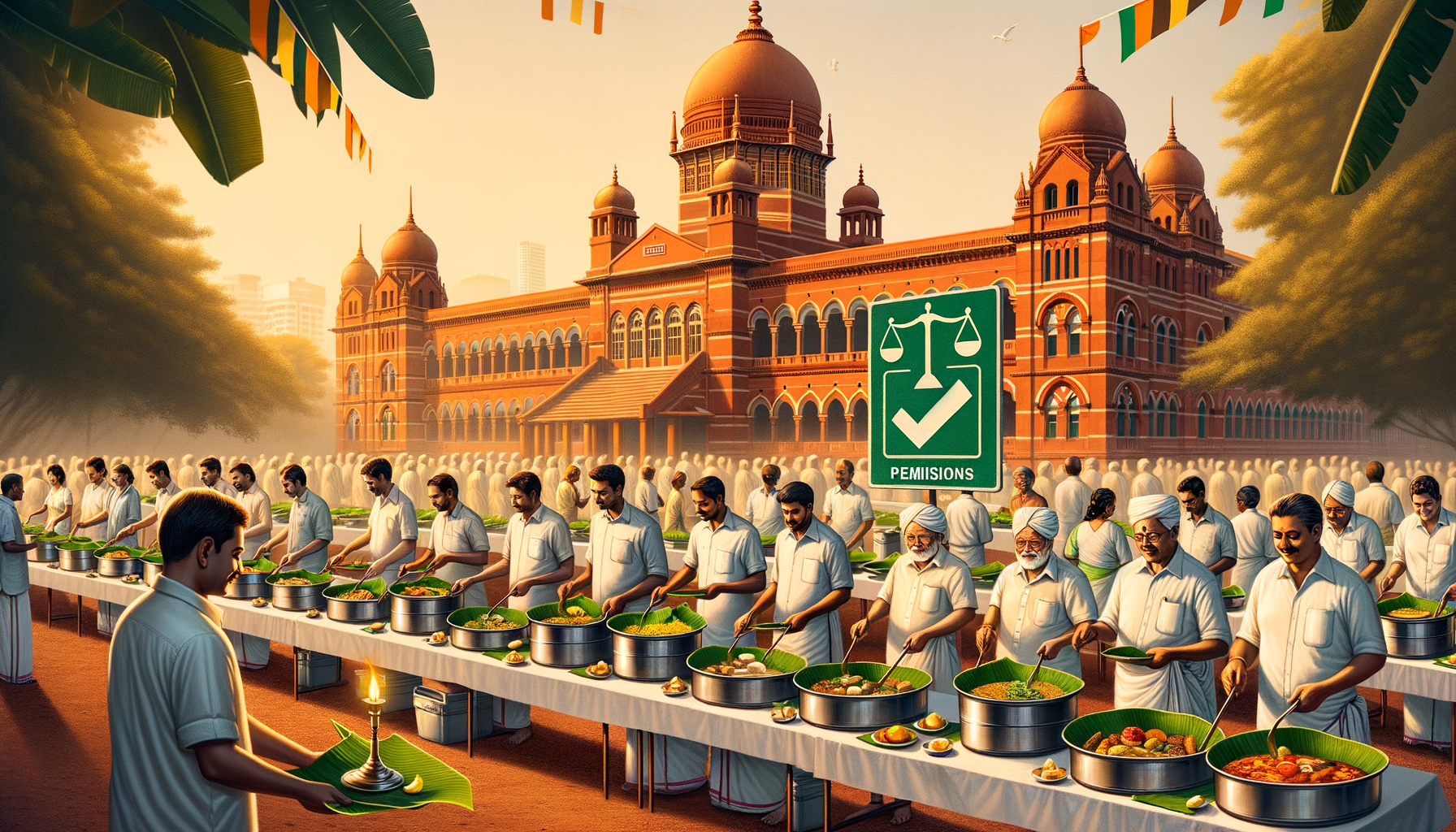
Madras High Court has permitted the Hindu community feast, Annadhanam, to be conducted on a government-owned public ground that has long hosted Easter events. In allowing a writ petition filed by K Rajamani, Justice GR Swaminathan underscored that public spaces administered by the State must be available on equal, transparent terms to all communities. The decision affirms a balanced approach to event permissions and reinforces the principles of fairness, secular governance, and religious freedom in India.
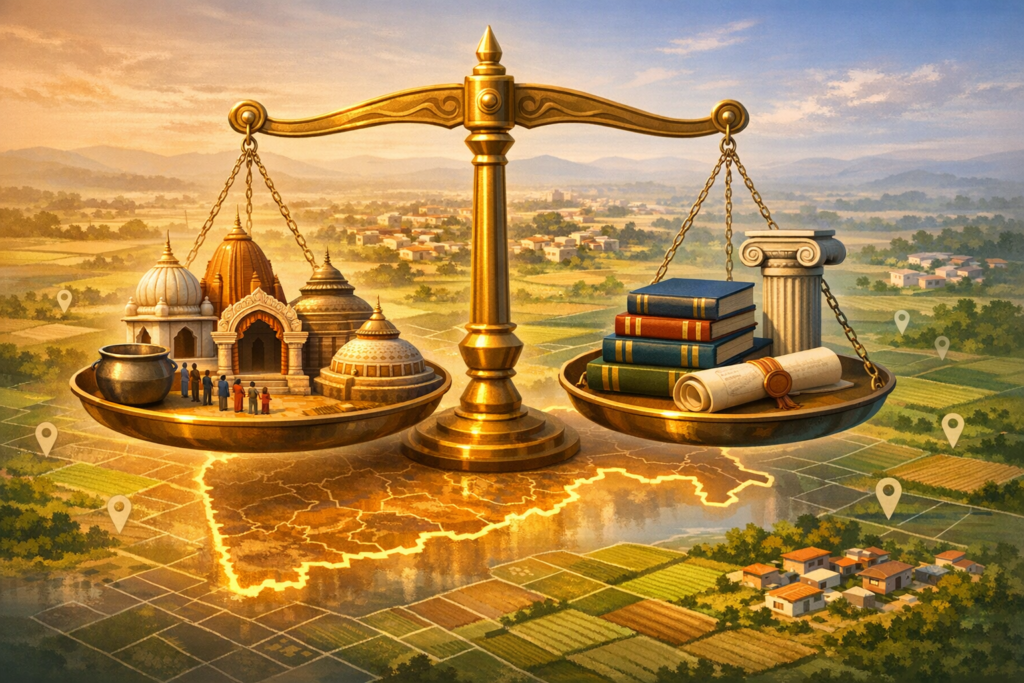
The case centered on access to a public ground historically used for Easter observances, raising a vital question of parity in the use of civic spaces. Justice GR Swaminathan’s order recognizes that a government-owned venue cannot be perceived as exclusive to one tradition when sought for a lawful, peaceful community purpose such as Annadhanam. By upholding equal access, the Court aligned administrative practice with the constitutional ethos of neutrality and non-discrimination.
This ruling strengthens the wider framework of equality and freedom of worship by ensuring that permissions for public grounds reflect inclusive governance. It also provides guidance to local authorities to adopt time-bound, non-arbitrary processes for approvals. Such clarity reduces uncertainty, prevents avoidable conflict, and helps communities plan events responsibly while respecting public order and logistical constraints.
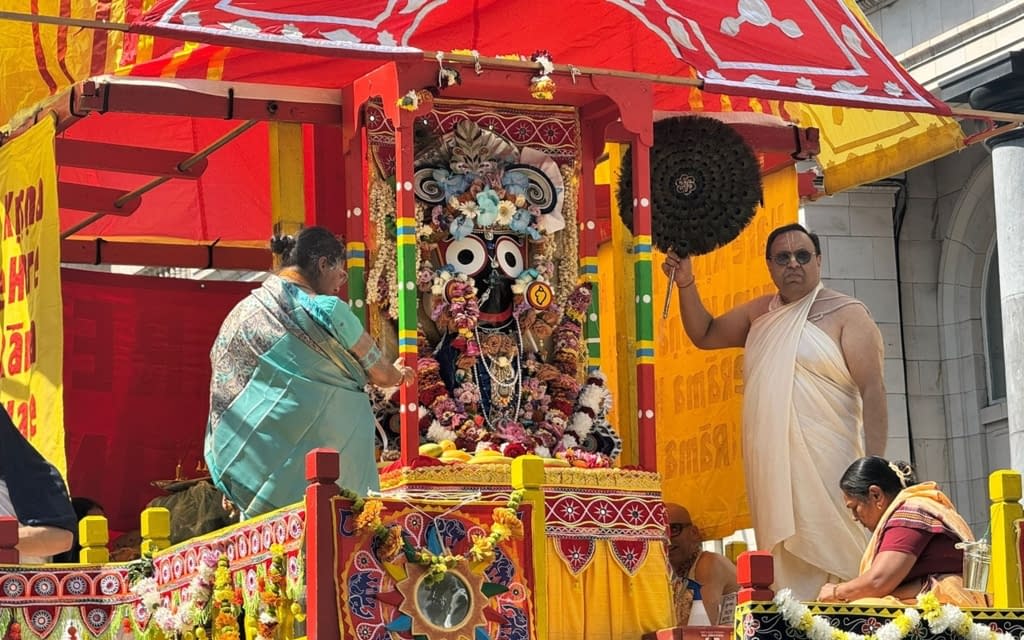
Annadhanam, a service-oriented practice centered on sharing food without distinction, resonates with the broader spirit of communal harmony. Communities across India have long relied on public spaces for collective observances that nurture social cohesion, kindness, and mutual respect. When access is granted on equal terms, it affirms that civic infrastructure belongs to all residents and must serve the common good.
The decision has meaningful implications for dharmic traditions—Hinduism, Buddhism, Jainism, and Sikhism—whose shared emphasis on compassion, seva, and peaceful coexistence is enriched by fair access to public venues. Equal opportunities to organize cultural and religious gatherings help build trust among communities, encourage interfaith understanding, and foster unity in diversity. This approach reflects India’s civilizational commitment to pluralism and inclusivity.
For administrators and event organizers, the path forward is pragmatic: adopt clear criteria, communicate timelines, and coordinate with local stakeholders to ensure minimal disruption and maximum safety. Transparent, content-neutral rules for public grounds—applied consistently—support both citizens’ rights and orderly civic life. The Madras High Court’s order thus serves as a practical template for equitable governance.
Ultimately, by affirming equal access to a public ground, the Court has advanced a principled vision of justice that benefits all faith communities. It safeguards religious freedom, strengthens communal harmony, and exemplifies how law can be a bridge to unity. In this spirit, Annadhanam on public ground becomes not only a celebration of tradition but also a living testament to India’s shared values.
Inspired by this post on Struggle for Hindu Existence.