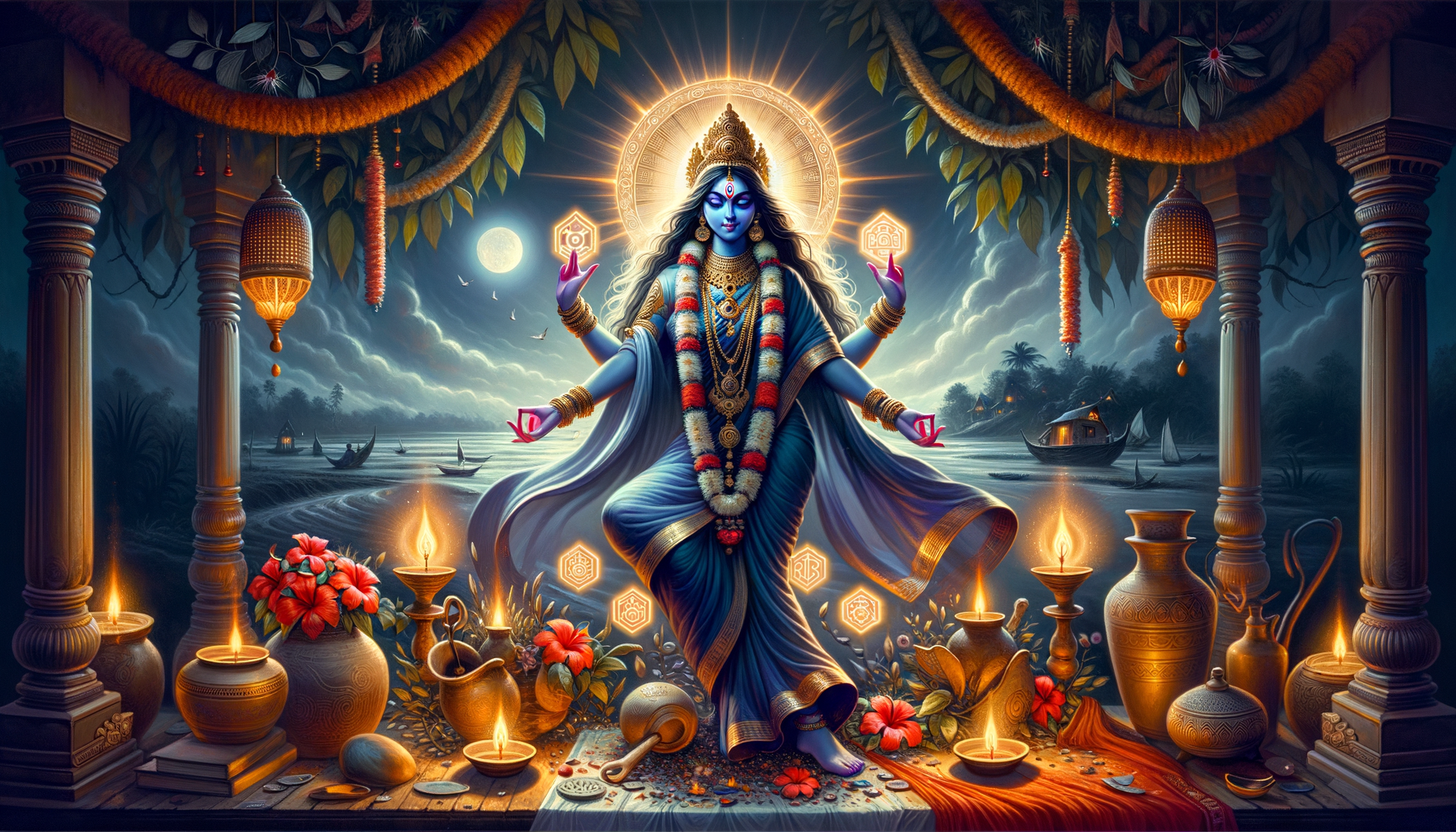
Dakat Kali, often called the Bandits’ Kali, occupies a distinctive place in South Asian cultural memory as the fierce mother who confronts injustice and catalyzes transformation. In regional lore, groups likened to Robin Hood figures sought courage through Kali worship when opposing exploitative local rulers, zamindars, and colonial police. This devotional frame did not romanticize violence; rather, it reflected a quest for moral courage under conditions perceived as oppressive.
During the British era, dacoit bands in Bengal and adjoining regions invoked the Hindu Goddess Kali for fortitude before confronting well-armed British troops. Historically, such ritual practice functioned as morale-building, a means of collective focus, and a spiritual aid that reinforced solidarity. In this context, Kali worship provided a disciplined psychological anchor more than a tactical licensestrengthening resolve while subject to the community’s ethical norms.
The symbolism and meaning associated with Kali clarify why devotees turned to her in moments of peril. As a form of Shakti, Kali embodies time (kāla), the dissolution of adharma, and the birth of new ethical order. Iconography such as the garland of severed heads (often interpreted as the spectrum of Sanskrit phonemes) and the khadga (sword) signify the cutting of ego and ignorance, while her maternal presence asserts protection for the vulnerable. In this frame, Dakat Kali represents the fierce compassion that dismantles injustice so that balance may emerge.
From a psychological perspective, Kali worship served as a proven method for transforming fear into purposeful courage. Collective rites, mantras, and vigil rituals created a shared rhythm and meaning that reduced anxiety and clarified intent. Many devotees describe the experience of standing before Kali’s murti as a transition from turmoil to steadinessan affective shift that reframes threat as an opportunity for ethical action.
Viewed through the wider lens of dharmic traditions, the impulse to confront injustice while cultivating inner transformation resonates across Hinduism, Buddhism, Jainism, and Sikhism. Buddhist traditions honor Mahākāla as a protective manifestation that subdues obstacles; Jain practice emphasizes rigorous self-discipline and the transformation of inner passions; Sikh ardas centers courage and justice guided by compassion. These streams differ in method yet converge in the principle that true strength must be ethically grounded and oriented to the welfare of all.
Ethically, the figure of Dakat Kali is best understood as a symbol of protective justice rather than a sanction for harm. In dharmic reasoning, righteous action seeks to restrain adharma and safeguard the weak, aligning courage with accountability and compassion. Historical narratives of dacoits are thus read not as a universal model but as a localized expression of a broader ethical aspiration: to transform suffering without perpetuating cycles of injury.
In contemporary life, Kali’s meaning extends beyond the frontier between rulers and rebels to the inner landscape where fear, complacency, and injustice take root. Many practitioners find that meditating on Kali or engaging in seva (selfless service) channels her transformative energy into everyday choicesstanding up for fairness at work, advocating for vulnerable neighbors, or confronting ingrained biases. The Bandits’ Kali becomes a mirror for personal courage and communal responsibility.
Ultimately, Dakat Kali synthesizes fierce compassion and protective justicekey values shared across dharmic traditions. Her worship historically offered morale and spiritual aid under colonial pressure; symbolically, she continues to guide the difficult work of transforming adharma within and without. Read in this light, the Bandits’ Kali is not a celebration of transgression, but a call to align strength, ethics, and service for the common good.
Inspired by this post on Hindu Blog.