When life feels unclear—often in the late hours when thought loops intensify—many instinctively imagine boarding a train to an unfamiliar place. This impulse aligns with a long-standing insight in Hinduism and other Dharmic traditions: purposeful movement can untangle mental knots. Rather than escapism, travel becomes a disciplined method for regaining perspective, a quiet practice of reorienting attention and rediscovering inner order.
Ancient Hindu wisdom treats travel as sādhanā. The figure of the parivrajaka (the wandering seeker) appears throughout the intellectual history of India, signaling a pedagogy of movement. In this view, the “sacred art of getting lost” is less about losing direction and more about loosening rigid assumptions. By stepping outside habitual contexts, cognition resets; perception widens; and subtle, often-neglected questions rise to the surface with new clarity.
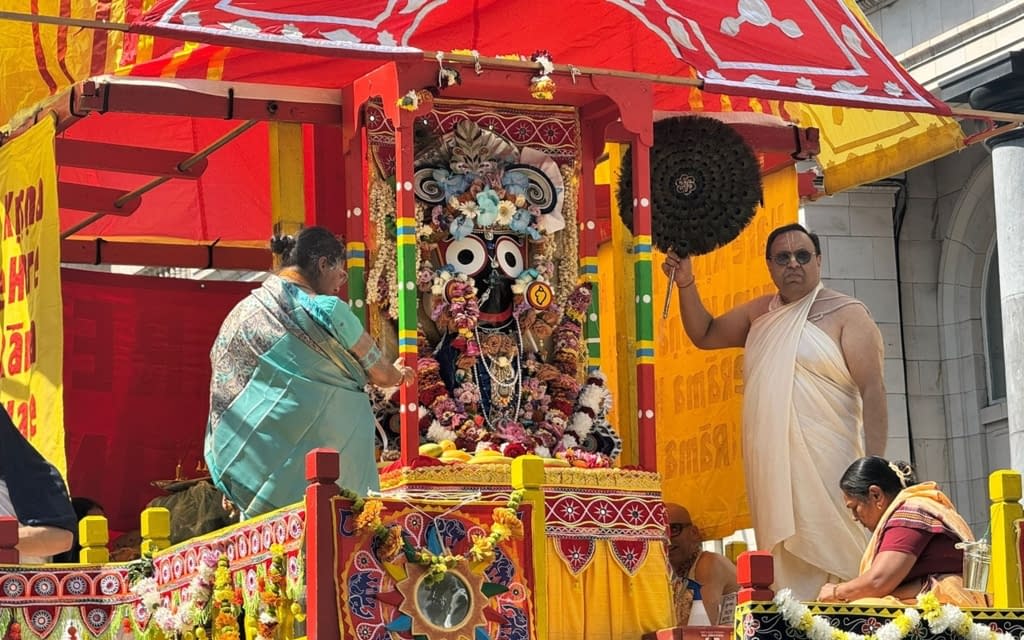
Within the Hindu way of life, tirtha-yātra—pilgrimage to crossing-places—is a disciplined journey to sites that help the mind cross from confusion to insight. Classics and commentarial traditions distinguish this from leisure travel: the intention (sankalpa) is inquiry, not consumption. Whether a route passes through Kashi, a riverside ghat, a forest path, or a village shrine, the essential movement is inward, facilitated by outward motion. In this sense, travel embodies dharma by aligning conduct, attention, and environment.
The textual ethos also values movement as a principle for learning. The refrain Charaiveti charaiveti (“keep moving, keep moving”)—frequently associated with the early Vedic corpus—captures an ethic of ongoing inquiry. The Bhagavad Gita praises equanimity and non-attachment, dispositions that are naturally exercised when one leaves the familiar and practices mindful composure amid changing conditions. The Upanishadic temperament of questioning—seeking the nature of self, world, and meaning—finds a practical ally in the itinerant discipline of yātra.
This traditional insight resonates with contemporary cognitive science. Novel environments heighten attention, disrupt unhelpful mental ruts, and support neuroplastic change. Walking unfamiliar streets reintroduces one to direct perception; the mind becomes more present, less preoccupied. Viewed through this lens, the parivrajaka’s path is a time-tested method of resetting default patterns, enhancing mindfulness, and enabling self-discovery.
Importantly, the broader Dharmic family affirms this approach. In Buddhism, mendicant wandering and pilgrimage cultivate mindfulness and compassion; in Jainism, the disciplined movement of munis and the ethics of aparigraha (non-possessiveness) shape a life of careful, intentional travel; in Sikhism, yatra and sangat (community) ground devotion and service. Across Hinduism, Buddhism, Jainism, and Sikhism, the journey is not a flight from life but a structured return to essentials—clarity, responsibility, and care for all beings.
When confusion arises, a clear, ethical protocol can transform a trip into sādhanā. Establish a sankalpa: articulate a sincere question—such as how to act with integrity in a current dilemma—and dedicate the journey to understanding it. Choose routes with contemplative potential, including tirtha in nature or cultural sites with a learning ethos. Travel light to practice aparigraha, and schedule windows for meditation, japa, or silent walking. Keep a brief travel journal to observe recurring thoughts, emotions, and insights with honesty and compassion.
Seva (service) grounds travel in responsibility. Volunteering en route or supporting local conservation aligns the journey with ahimsa (non-violence) and restores a sense of reciprocity between traveler and place. Ethical choices—respecting sacred spaces, minimizing waste, and engaging local communities with humility—convert movement into stewardship. This orientation elevates travel from personal therapy to dharmic participation in the well-being of the world.
On returning, integrate insight deliberately. Revisit the original question and note what changed: perception, priorities, or capacities for patient action. Small practices—daily mindfulness, periodic nature walks, simplified routines—extend the benefits of yātra into ordinary life. In this cycle, the journey and the home reinforce each other: travel clarifies, and home anchors.
Thus, the “sacred art of getting lost” is a paradox only on the surface. In the Dharmic view, stepping beyond the familiar opens a crossing: from scattered thought to focused awareness, from restlessness to equanimity, from indecision to dharma-aligned action. In times of doubt, moving with intention—charaiveti charaiveti—becomes a proven, humane, and unifying path to inner renewal.
Inspired by this post on Hindu Blog.