The Art of Simple Living: Finding Inner Peace Through Hindu Wisdom
Contemporary life often equates happiness with accumulation, yet the resulting cycle of acquisition rarely yields lasting fulfillment. This essay examines how Hindu wisdomresonant with broader dharmic traditionsoffers an academically grounded and practicable pathway to inner peace by reorienting attention toward sufficiency, presence, and the appreciation of the little things.
Modern consumer culture conditions individuals to pursue novelty and status through possessions and experiences, a pattern akin to a hedonic treadmill. Hindu teachings diagnose this cycle as an intensification of craving (trishna), which, if left unexamined, amplifies restlessness. By reframing well-being as an inner competency rather than an external accumulation, these teachings provide a coherent alternative to material-centric models of happiness.
Foundational principles such as santosha (contentment) and aparigraha (non-hoarding) encourage measured desire, ethical restraint, and mindful use of resources. Complementing these virtues, the Bhagavad Gita advocates nishkama karmaacting skillfully without attachment to outcomesthereby stabilizing attention and emotions. When integrated with ahimsa (non-harm), these principles nurture a value system aligned with personal well-being and social harmony.
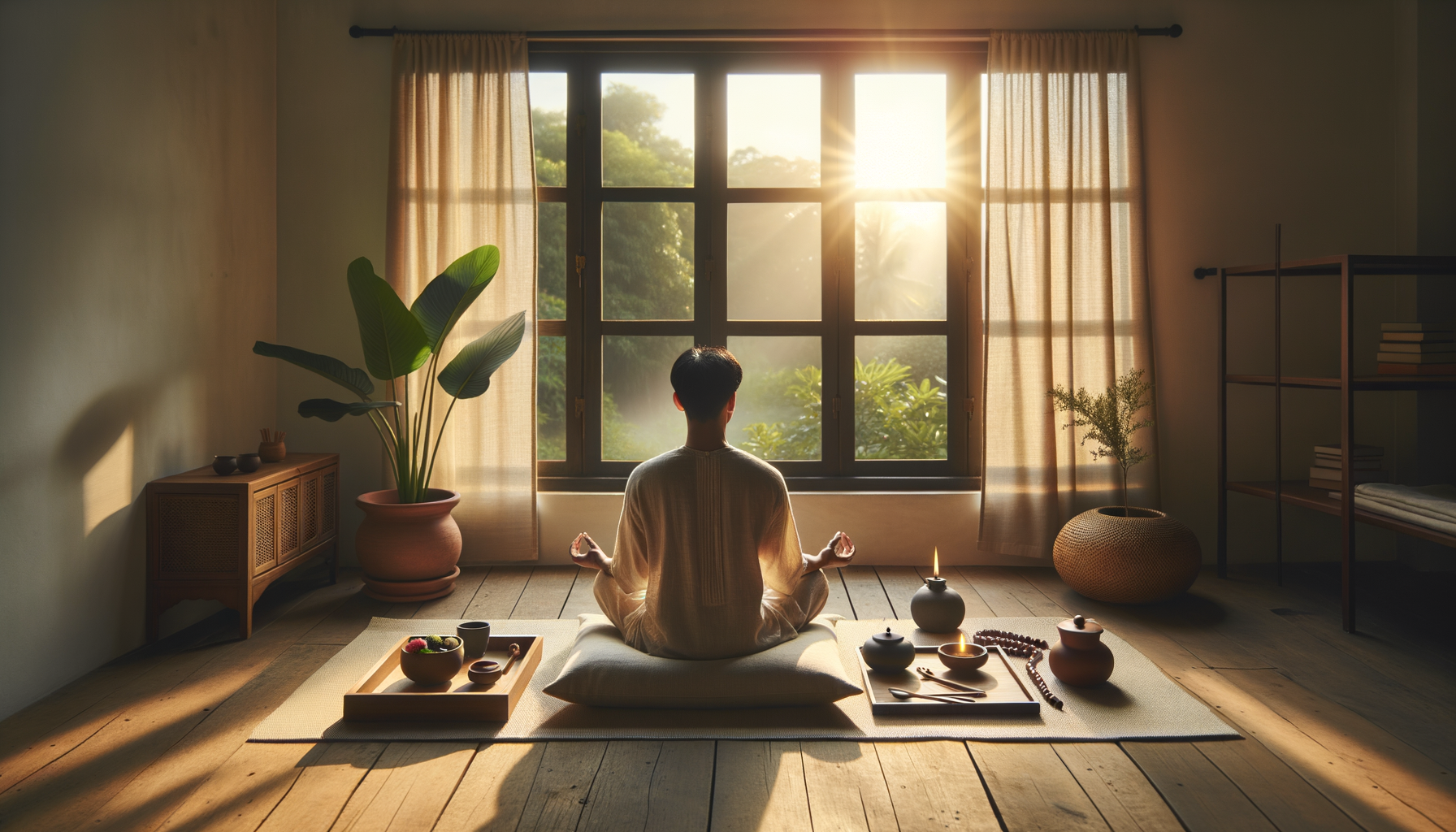
Practical methods translate ideals into daily life. Meditation and Mindfulness cultivate present-moment awareness, while breath-centered practices (pranayama) and quiet repetition (japa) regulate attention and physiology. Consider the quiet of early morning: a few minutes of Breath awareness or a focused mantra can recalibrate the mind before the day’s demands. These small, repeatable practices support Mindful living and reduce reactive consumption.
The dharmic family of traditions converges on this ethos of simplicity and inner stability. Buddhism underscores mindfulness and the cessation of craving; Jainism emphasizes aparigraha as an ethical imperative; Sikhism highlights seva (selfless service) and contentment as pathways to balanced living. This Unity in spiritual diversity demonstrates that inner peace is a shared civilizational insight, not a sectarian prescription.
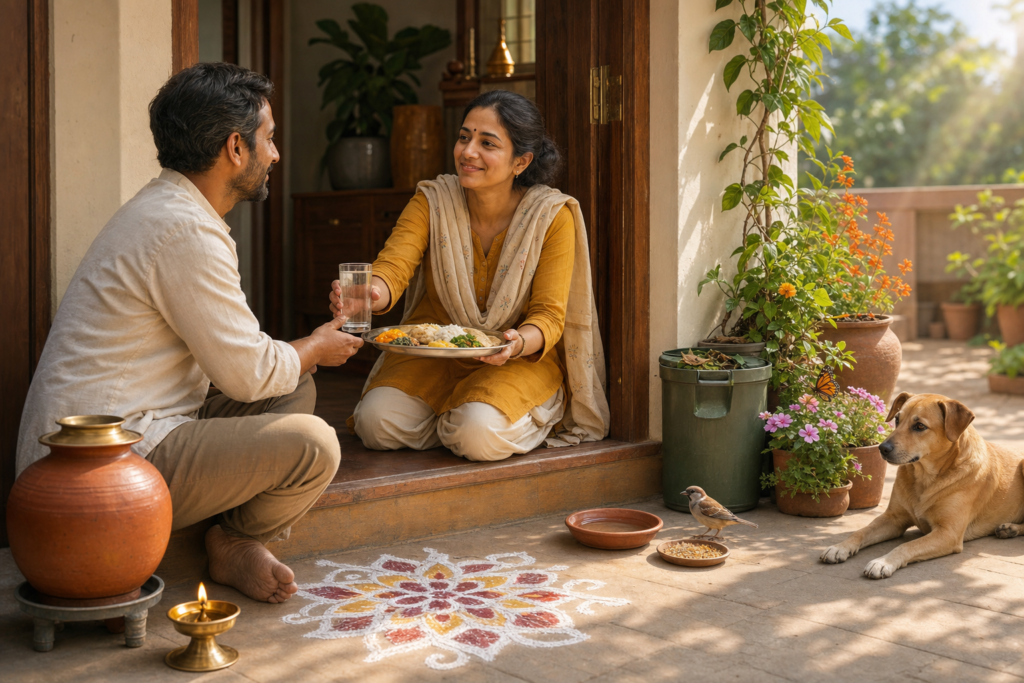
Appreciating the little things functions as both method and outcome. A simple meal eaten with gratitude, the cadence of footsteps during a mindful walk, the warmth of conversation with family, or the first light at dawnall become objects of attentive awareness. Such micro-moments build the habit of contentment, replacing restless seeking with a felt sense of sufficiency.
Empirical benefits align with these practices. Regular Meditation and Mindfulness are associated with reduced stress reactivity, improved emotional regulation, and enhanced cognitive clarity. Ethically, aparigraha and ahimsa promote Harmonious living and community trust, while scaled behaviorsrepairing, reusing, and thoughtful purchasingadvance ecological responsibility without moral grandstanding.
In sum, inner peace emerges less from acquiring more and more from relating differently to what already is. By adopting santosha, aparigraha, and nishkama karma, and by practicing Meditation, Breath awareness, and Mindful consumption, individuals cultivate a stable inner posture. Across Hinduism, Buddhism, Jainism, and Sikhism, the message is consistent: master attention, simplify intention, and discover that serenity often resides in life’s smallest, most unassuming details.