
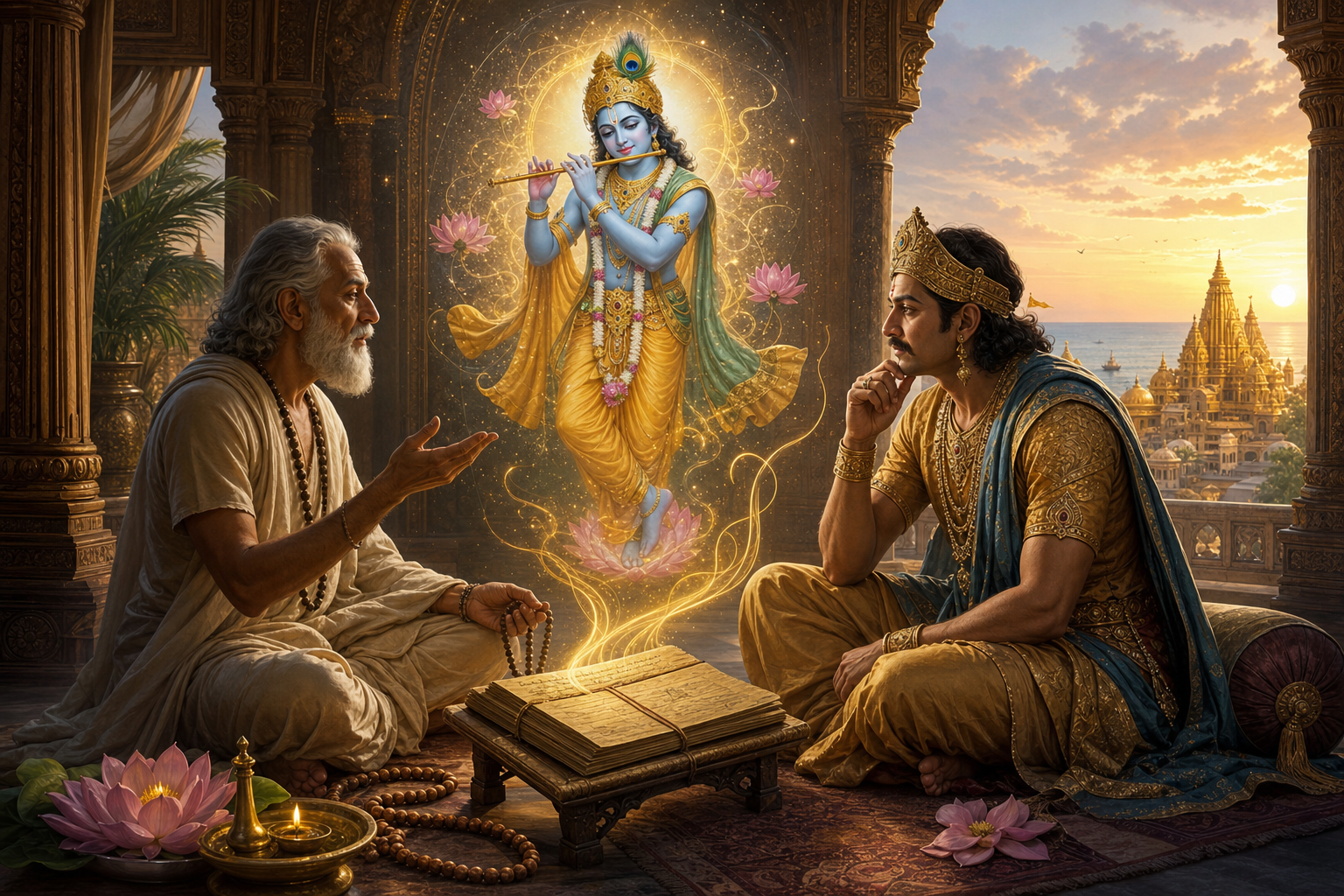
How to meditate on Krishna’s form through Śrīmad-Bhāgavatam 1.13.11-16
Śrīmad-Bhāgavatam 1.13.11-16 appears, at first glance, to be a historical passage about Vidura’s return to Hastinapura, Yudhiṣṭhira’s inquiry about Dvārakā, and the delicate emotional condition of the Pāṇḍavas after the Kurukṣetra war. Yet the passage also offers a refined theology of meditation. It shows that meditation on Krishna’s form is not merely a technique of mental visualization. It is a disciplined transformation of memory, affection, ethical speech, spiritual hearing, and daily responsibility into Krishna consciousness.
The central phrase in Śrīmad-Bhāgavatam 1.13.11 is kṛṣṇa-devatāḥ, referring to those whose life, loyalty, and inner orientation are centered on Lord Śrī Kṛṣṇa. This expression is technically important because it does not limit devotion to external renunciation alone. The Yādavas in Dvārakā, the Pāṇḍavas in royal administration, and Vidura in pilgrimage and counsel all represent different social locations, yet each is measured by absorption in Krishna. The heart of meditation, therefore, is not escape from the world but the reordering of consciousness around the divine person.
In the broader Vaishnava tradition, Krishna’s form is not treated as a symbolic aid invented by the mind. It is understood as sac-cid-ānanda-vigraha, the eternal form of being, knowledge, and bliss. Meditation on Krishna’s form therefore means bringing the mind into contact with a reality considered higher than the restless stream of sensory impressions. The practitioner is not asked to manufacture a private fantasy. Rather, the mind is trained to receive the revealed form of Krishna through śravaṇam, hearing; kīrtanam, sacred recitation; smaraṇam, remembrance; and sevā, service.
Yudhiṣṭhira’s question to Vidura is revealing. He does not first ask about politics, wealth, military strength, or dynastic influence. He asks about the welfare of the Yādavas and Dvārakā because they are connected with Krishna. This is a psychology of sacred attention. The mind naturally returns to what it loves. When love is scattered among anxieties, ambitions, resentments, and social comparisons, meditation becomes difficult. When love is refined through remembrance of Krishna, the mind begins to return to the divine form with less resistance.
This is one reason meditation on Krishna’s form begins with hearing. In many modern discussions, meditation is reduced to silence, breath, or mental emptiness. These practices may calm the nervous system and support focus, but Bhakti Yoga gives the mind a sacred object rather than leaving it with a vacuum. The form of Krishna, the sound of Krishna’s name, the stories of Krishna’s devotees, and the memory of Krishna’s qualities become the content through which attention is purified.
Śrīmad-Bhāgavatam 1.13.12 deepens this point through Vidura’s narration. Vidura speaks from experience, not speculation. He describes what he has lived and witnessed, but he withholds the painful news of the Yadu dynasty’s destruction. This restraint is not dishonesty; it is compassionate timing. In spiritual communication, truth is not merely data. Truth must be joined with maturity, context, and care. Meditation on Krishna’s form is therefore inseparable from ethical speech, because a disturbed tongue produces a disturbed mind.
Verse 1.13.13 presents Vidura as compassionate and unable to increase the distress of the Pāṇḍavas unnecessarily. This gives a practical criterion for inner life. A person may chant, study, or visualize Krishna, yet if speech becomes harsh, careless, or self-righteous, meditation remains incomplete. The form of Krishna is beautiful, but that beauty must educate perception. It should make the practitioner more careful with another person’s sorrow, more restrained in judgment, and more aware that spiritual maturity includes timing, tenderness, and responsibility.
For many practitioners, this is where the passage becomes emotionally relatable. The mind often wants to speak everything immediately, especially when it possesses difficult information. Vidura shows another path. He understands that calamity arrives by its own force and that compassion should not add unnecessary weight to another heart. In devotional practice, meditating on Krishna’s face, smile, flute, and lotus feet should gradually soften the internal habit of aggression. The proof of contemplation is not theatrical sentiment; it is refined conduct.
Śrīmad-Bhāgavatam 1.13.14 then shows Vidura remaining in Hastinapura for a period, honored like a saintly personality, with the purpose of elevating Dhṛtarāṣṭra. This is a crucial shift. Meditation is not presented as private escape from difficult relationships. Vidura enters the house of a morally compromised elder, not to enjoy hospitality, but to awaken spiritual intelligence. His presence is corrective, healing, and purposeful. In academic terms, the passage links contemplative realization with social responsibility.
The Bhāgavatam repeatedly presents hearing from realized souls as a transformative practice. In this passage, Vidura’s words attract the attention of the family because genuine spiritual discourse carries vitality. The mind learns meditation by repeated exposure to meaningful sound. This has practical implications. A practitioner seeking to meditate on Krishna’s form should not rely only on a brief visual exercise. Study, satsanga, kirtan, japa, and reflection form the intellectual and emotional environment in which Krishna’s form becomes steady in the mind.
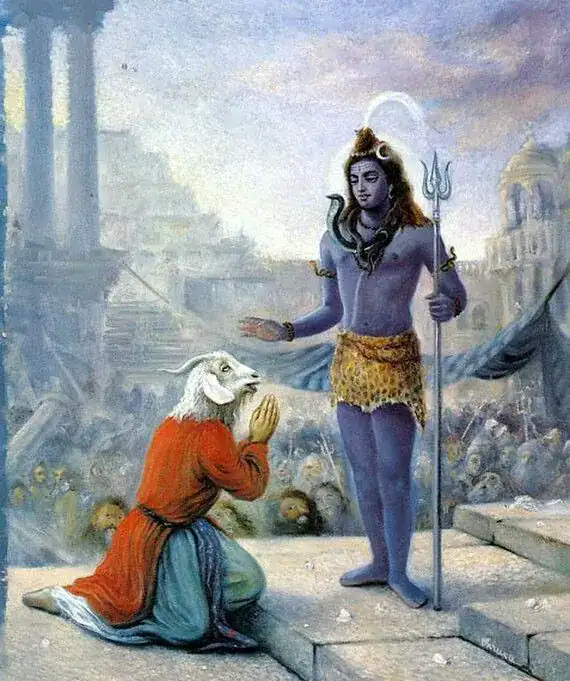
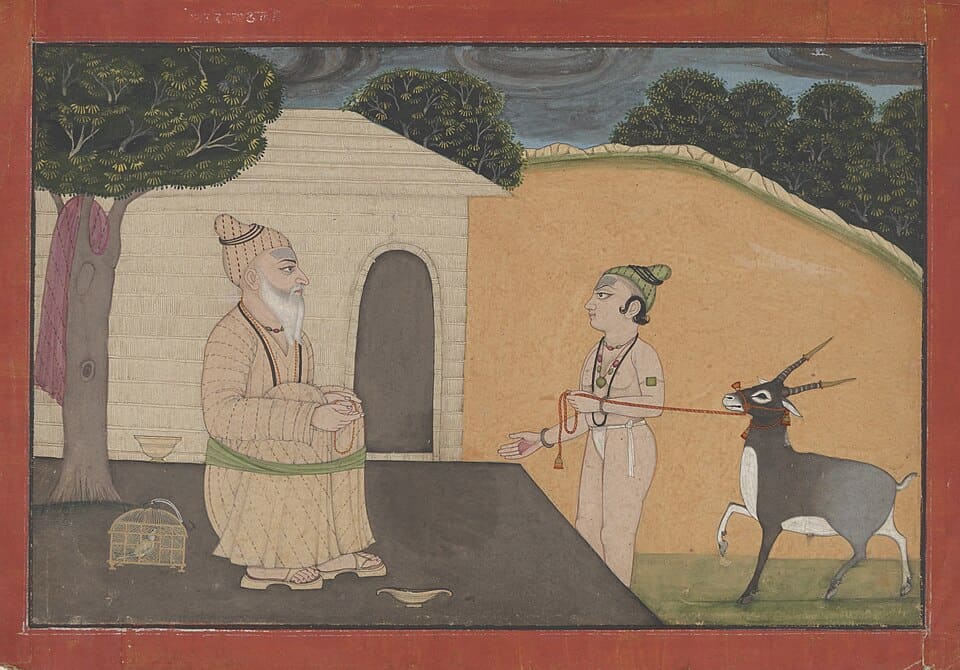
Śrīmad-Bhāgavatam 1.13.15 introduces the theological identity of Vidura as connected with Yamarāja and the curse of Maṇḍūka Muni. The verse also raises an important spiritual principle: birth and social designation do not limit access to transcendental knowledge. In the Vaishnava understanding, eligibility for spiritual guidance rests on realization, devotion, and knowledge of the divine, not merely on external social identity. This principle supports the wider dharmic ideal that sincere seekers across Hindu, Buddhist, Jain, and Sikh traditions should be approached with respect when they pursue truth, discipline, compassion, and liberation.
This inclusive principle is especially relevant for meditation. One may approach Krishna through traditional deity worship, mantra japa, scriptural study, kirtan, contemplative visualization, or service to devotees. The diversity of practice does not weaken dharma; it reveals the adaptability of dharma to different temperaments. The goal is not sectarian superiority but purified consciousness. Krishna meditation becomes most authentic when it deepens humility, steadiness, and reverence for sincere spiritual striving wherever it appears.
Śrīmad-Bhāgavatam 1.13.16 returns to Yudhiṣṭhira’s reign, his brothers, and the survival of Parīkṣit. The context is important. The kingdom has been restored, the dynasty has a future, and peace has returned after unbearable loss. Yet the text does not present material order as ultimate. Yudhiṣṭhira’s peace is meaningful because it exists under Krishna’s will and protection. The birth and survival of Parīkṣit are not merely dynastic events; they are signs of divine preservation within history.
From these verses, meditation on Krishna’s form can be understood in five disciplined movements. First, the mind hears about Krishna from reliable śāstra and saintly teachers. Second, the heart forms attachment to Krishna’s devotees and Krishna’s sacred places, just as Yudhiṣṭhira’s mind moves toward Dvārakā. Third, speech becomes compassionate, following Vidura’s restraint. Fourth, spiritual understanding becomes service, as Vidura stays to uplift Dhṛtarāṣṭra. Fifth, worldly duty is performed with remembrance, as Yudhiṣṭhira governs without losing his devotional orientation.
A practical meditation may begin with posture, breath, and reverence. The practitioner sits steadily, allows the breath to settle, and mentally offers respect to the guru-paramparā and to all sincere dharmic seekers. The form of Krishna may then be contemplated gradually: lotus feet, yellow garments, gentle smile, flute, peacock feather, compassionate eyes, and the beauty of Vṛndāvana or Dvārakā according to one’s devotional mood. The purpose is not to force imagery but to invite remembrance through scripturally grounded details.
Mantra then gives structure to the meditation. The Hare Krishna mahā-mantra, names such as Govinda, Gopāla, Mādhava, and Śyāmasundara, or verses from Bhagavad Gita and Śrīmad-Bhāgavatam may be used according to one’s tradition and guidance. Sound protects the mind from drifting into vague imagination. When attention wanders, the practitioner returns gently to the name, then to the form, then to the quality of Krishna being remembered. This rhythm of name, form, quality, and service is central to Bhakti Yoga.
The technical term smaraṇam should not be confused with ordinary memory. Ordinary memory is often involuntary and fragmented. Smaraṇam is cultivated remembrance, shaped by śāstra, purified by repetition, and warmed by devotion. It joins cognition and affection. In this sense, meditation on Krishna’s form is both theological and psychological. It trains attention, regulates emotion, and gives the practitioner a sacred center that can remain present amid family duties, professional responsibilities, and social uncertainty.
The passage also warns against reducing meditation to external status. Vidura is honored, but he does not seek honor. Yudhiṣṭhira rules, but rule is not his ultimate identity. The Yādavas live in Dvārakā, but their glory lies in being kṛṣṇa-devatāḥ. Dhṛtarāṣṭra has royal background, yet he needs spiritual correction. These contrasts teach that meditation is measured by inner orientation rather than social appearance. A quiet householder absorbed in Krishna may be spiritually advanced, while a publicly religious person may still be ruled by attachment and fear.
For contemporary readers, the relevance is direct. Many people attempt meditation while carrying overstimulation, grief, family tension, and information overload. Śrīmad-Bhāgavatam 1.13.11-16 does not deny these realities. It presents a world of war trauma, fragile peace, hidden sorrow, moral responsibility, and intergenerational duty. Into that world, Krishna remembrance enters as an organizing force. Meditation on Krishna’s form becomes a way to see life through divine relationship rather than through anxiety alone.
This meditation is not sentimental avoidance. Vidura eventually confronts Dhṛtarāṣṭra with hard truths in the continuation of the chapter. Compassionate restraint does not mean permanent silence. It means that truth should be spoken in the right mood, at the right time, for the other person’s spiritual benefit. Krishna meditation should therefore produce courage as well as softness. The same heart that avoids needless harm must also become strong enough to guide, correct, and serve.
The unity of dharmic traditions can be appreciated here through shared values: disciplined attention, compassion, renunciation of ego, respect for realized guidance, and the pursuit of liberation from ignorance. Vaishnava meditation on Krishna’s form has its own theological specificity, yet it can coexist respectfully with Buddhist mindfulness, Jain restraint, Sikh nām-simran, and broader Hindu dhyāna. The shared civilizational insight is that the uncontrolled mind causes suffering, while a purified mind becomes a vehicle for wisdom and service.
Krishna’s form gives Bhakti Yoga its distinctive sweetness. The divine is not only an abstract principle, cosmic law, or metaphysical ground. Krishna is remembered as a person who protects Parīkṣit, guides the Pāṇḍavas, receives the love of Dvārakā, and draws the mind of devotees into intimate remembrance. This personalism is central to the emotional power of Krishna consciousness. The practitioner does not merely calm the mind; the practitioner offers the mind.
Thus, the lesson of Śrīmad-Bhāgavatam 1.13.11-16 is both subtle and practical. To meditate on Krishna’s form is to become kṛṣṇa-devatāḥ in orientation: to hear about Krishna, remember Krishna, love Krishna’s devotees, speak with compassion, accept guidance from realized souls, and perform worldly duties without forgetting the divine center. The form of Krishna is contemplated in the mind, but it must also become visible in character. Where remembrance produces humility, steadiness, service, and tenderness, meditation has begun to mature.
Inspired by this post on Dandavats.







Leave a Reply
You must be logged in to post a comment.