
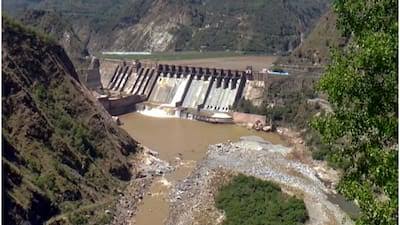
The Indus Waters Treaty is often described as one of the world’s most durable water-sharing arrangements, but its endurance has also concealed a serious strategic weakness. Signed in 1960 after the trauma of Partition, the treaty divided the Indus river system between India and Pakistan in a way that turned geography, hydrology, agriculture, engineering, and national security into a single diplomatic problem. India received unrestricted use of the eastern rivers, namely the Ravi, Beas, and Sutlej, while Pakistan received priority over the western rivers, namely the Indus, Jhelum, and Chenab, subject to specific Indian rights for non-consumptive use, run-of-the-river hydropower, limited irrigation, and other carefully defined purposes.
The difficulty has never been merely that two states share rivers. The deeper problem is that political borders were drawn across a living and continuous river basin. Canals, headworks, glacial melt, silt loads, flood pulses, seasonal storage, and agricultural dependence do not obey the emotional finality of a border line. The Indus basin remains an engineering organism split by sovereignty, and that is why every dam design, spillway gate, intake level, and pondage calculation can become a strategic argument.
In the first decades of the twenty-first century, a distinctive pattern became visible. India would plan or build a treaty-permitted hydropower project on the western rivers. Pakistan would raise technical objections. The matter would move through the Permanent Indus Commission, then toward a Neutral Expert or a Court of Arbitration. India would often succeed on the central legal or technical point, but the project would already have absorbed years of delay, financial uncertainty, diplomatic energy, and political controversy. In that sense, delay itself became a form of leverage.
The treaty’s structure created the opening
The Indus Waters Treaty was built for a different era. Its negotiators were trying to prevent a water crisis after Partition, not to manage twenty-first-century climate volatility, militant violence, infrastructure contestation, or institutional lawfare. The treaty created the Permanent Indus Commission as the first forum for technical dialogue, and it also created escalation routes for unresolved questions, differences, and disputes. In theory, this structure was meant to keep conflict technical and peaceful. In practice, it created procedural instruments that could be used repeatedly against Indian projects without the objecting party bearing comparable costs for delay.
The distinction between a Neutral Expert and a Court of Arbitration is central. A Neutral Expert is designed to handle technical differences, especially those involving engineering specifications. A Court of Arbitration is meant for broader legal disputes. This distinction may appear procedural, but it has major consequences. A technical review can clarify whether a design meets treaty criteria; arbitration can open wider questions, expand timeframes, and create uncertainty around construction. When every design issue is escalated as a major legal battle, the process can become a strategic weapon even if the treaty’s language is formally respected.
The resulting dynamic is asymmetric. India, as the upper riparian on the western rivers within Jammu and Kashmir, must design projects under treaty restrictions and submit information. Pakistan, as the lower riparian beneficiary of the western rivers, can object to technical features and seek internationalized adjudication. Where India’s loss is measured in construction delays, cost escalation, power deficits, and reduced developmental confidence, Pakistan’s loss from an unsuccessful objection is often limited. This imbalance makes procedural obstruction attractive.
Baglihar became the first major precedent
The Baglihar Hydroelectric Project on the Chenab was the first major test of the treaty’s dispute mechanism in the modern era. The project was designed as a 450 MW run-of-the-river plant in Jammu and Kashmir. Pakistan objected to several features, including freeboard, pondage, spillway gates, and the height of power intakes. These were not minor engineering preferences. In Himalayan rivers, such design choices determine whether a project can safely handle floods, manage sediment, preserve turbine efficiency, and generate power reliably during peak demand.
The World Bank appointed Professor Raymond Lafitte as Neutral Expert in 2005. His 2007 determination upheld the overall design of Baglihar and recognized India’s right to use modern technology within the treaty framework. The Ministry of External Affairs noted that the Neutral Expert treated state-of-the-art dam design, sediment control, and safety as legitimate considerations under the treaty. The decision required limited design adjustments, including a reduction in freeboard and pondage and a raising of power intakes, but it rejected the core Pakistani argument that India’s design was fundamentally unlawful. Public details of the Indian position and the determination are available in the MEA release on Baglihar Dam cleared by neutral expert.
Baglihar mattered because it established that the treaty could not be frozen in 1960 engineering assumptions. Himalayan hydropower faces heavy sediment loads, high flood discharges, and demanding safety requirements. A rigid interpretation that denies modern spillway and sediment-management practices would shorten project life, undermine safety, and weaken India’s treaty-recognized development rights. The Neutral Expert’s reasoning therefore protected a practical principle: the treaty must be interpreted through sound engineering, not through political suspicion alone.
Yet Baglihar also exposed the weakness of the system. India prevailed on the core design issue, but the project still became a prolonged diplomatic and legal contest. The precedent was double-edged. It proved that India’s technical case could withstand scrutiny, but it also showed that objections could slow infrastructure even when they failed on substance. For communities in Jammu and Kashmir, this was not an abstract legal victory; it affected electricity generation, regional development, and the broader sense that local resources were being held hostage by external procedural battles.
Kishanganga expanded the battlefield
The Kishanganga Hydroelectric Project introduced another layer of complexity. It involved a 330 MW project on the Kishanganga, known downstream in Pakistan-administered territory as the Neelum, with diversion of water for power generation before release into the Jhelum system. Pakistan challenged the project before a Court of Arbitration, arguing that India’s diversion and certain design features violated treaty obligations.
The arbitration did not produce a complete Pakistani victory. The Court allowed India to proceed with the project and recognized the permissibility of the diversion for hydropower generation under the treaty. At the same time, it required India to maintain a minimum downstream flow and restricted depletion below dead storage for sediment flushing. The Permanent Court of Arbitration’s case record for Indus Waters Kishenganga Arbitration and the 2013 final award show how the dispute moved beyond simple engineering into treaty interpretation, environmental flow, and operational limits.
Kishanganga demonstrated that Pakistan’s legal strategy could impose costs even where India’s essential right to build survived. Hydropower projects depend on sequencing: surveys, clearances, financing, tunnelling, civil works, electro-mechanical installation, commissioning, and grid integration. A legal interruption at any major stage can create cascading delay. When a project is located in a sensitive border region, the economic cost is accompanied by a political cost: the affected region sees development slowed by a dispute in which local welfare is not always the decisive consideration.
The case also sharpened the argument over environmental flow. Pakistan framed downstream flow as a treaty and ecological issue. India defended the right to generate power within treaty limits. The resulting balance showed that future disputes would not be limited to old categories of control and ownership. They would increasingly involve ecology, climate stress, sediment management, and technical definitions embedded in treaty annexures drafted decades earlier.
Ratle and the problem of parallel proceedings
The Ratle Hydroelectric Project on the Chenab pushed the dispute mechanism into an even more contentious phase. Pakistan objected to design features such as pondage, intake configuration, and low-level outlets. India favored a Neutral Expert route for technical differences, while Pakistan sought a Court of Arbitration. The disagreement over forum became almost as important as the disagreement over design.
This forum conflict is not a procedural technicality. If the same or overlapping questions are placed before a Neutral Expert and a Court of Arbitration at the same time, the treaty’s dispute-resolution hierarchy becomes unstable. It creates the possibility of inconsistent reasoning, institutional rivalry, and strategic forum shopping. For India, the concern has been that Pakistan can transform technical design differences into international arbitration even when an expert mechanism would be more appropriate.
The World Bank’s role has also come under scrutiny because the treaty gives it specific appointing functions but does not make it a general supervisor of India-Pakistan water relations. When the Bank facilitates appointments under competing requests, the larger question becomes whether procedure is clarifying the treaty or multiplying disputes. This is where the idea of weaponisation becomes most precise: the treaty is not weaponised by stopping water, but by converting every technical step into a pressure point.
Why sediment, gates, and pondage matter
Public debate often treats dam design as if it were a political symbol. In reality, the contested features are deeply technical. Freeboard is linked to flood safety. Pondage determines how a run-of-the-river plant can meet daily or weekly power variation. Spillway gates and low-level outlets help manage floods and sediment. Power intake levels affect turbine protection, efficiency, and reservoir operation. In the young Himalayan geology of the Indus system, sediment is not incidental; it is one of the core engineering facts.
If sediment cannot be managed, reservoirs lose capacity, turbines suffer damage, power generation becomes unreliable, and project life is shortened. If flood design is under-calculated, downstream and upstream safety can be compromised. If pondage is interpreted unrealistically, a plant may exist on paper but fail to deliver power when demand peaks. Therefore, the technical dispute is not a side issue. It is the practical heart of hydropower development under the Indus Waters Treaty.
This is why the Baglihar determination was so important. It recognized that treaty interpretation must account for modern science and engineering. A treaty designed to allocate rivers cannot be read in a way that makes safe river engineering impossible. Such an approach would turn a peace instrument into a development veto.
Legal warfare as strategic patience
The pattern across Baglihar, Kishanganga, and Ratle suggests a form of legal warfare based on time. Pakistan does not need to win every claim. It only needs to make every Indian project slower, riskier, and more expensive. This is especially consequential in Jammu and Kashmir, where hydropower is tied to employment, state revenue, grid stability, and the perception of national integration. Infrastructure delay in such a region is never merely administrative.
From India’s perspective, the injury is cumulative. Each individual dispute may appear manageable, but repeated challenges alter the investment environment. Contractors price risk differently. Lenders become cautious. Project authorities build in legal contingencies. Political opponents convert technical disputes into suspicion. Over time, the treaty’s dispute mechanism can become a deterrent against full utilization of rights that the treaty itself grants.
There is also a narrative dimension. Pakistan has frequently framed Indian hydropower projects as threats to downstream water security. India has argued that the projects are run-of-the-river schemes permitted under the treaty and do not amount to water seizure. The public phrase water war often obscures this distinction. Most of the disputes are not about India diverting western rivers away from Pakistan in violation of the treaty; they are about whether India may build technically viable projects within the permissions the treaty already provides.
Climate change makes the old bargain weaker
The Indus basin is becoming harder to manage because climate change is altering the assumptions behind old hydrological planning. Glacial retreat, erratic precipitation, sudden floods, heat stress, and changing snowmelt patterns are making water availability less predictable. A treaty designed around mid-twentieth-century engineering and diplomatic assumptions now has to operate in a century of climatic instability.
This strengthens the case for technically updated interpretation. Projects in the western Himalayan river system require better flood handling, sediment management, and operational flexibility, not less. If every modern engineering adaptation is treated as strategic misconduct, the basin becomes less safe for both sides. The downstream state may fear manipulation, but the upstream state must still build infrastructure that can withstand new hydrological realities.
Climate stress also increases the political temptation to internationalize water anxiety. In Pakistan, where the Indus system is central to agriculture and national identity, water insecurity can be politically mobilized. In India, frustration grows when treaty-permitted projects are repeatedly challenged while terrorism and hostile state behavior continue to shape the broader security environment. A stable river regime cannot survive indefinitely if it is insulated from one side’s security concerns but constantly available for the other side’s procedural objections.
India’s strategic dilemma
India faces a difficult policy balance. It has an interest in appearing treaty-compliant, technically credible, and diplomatically responsible. It also has an obligation to defend the developmental rights of its citizens, especially in Jammu and Kashmir. Excessive restraint can be read as maturity, but it can also become a habit of under-utilization. Excessive retaliation, on the other hand, can damage India’s reputation as a responsible upper riparian and complicate relations with other neighbours in South Asia.
The strongest Indian response is therefore not theatrical escalation but disciplined capacity. India needs faster project preparation, stronger technical documentation, transparent hydrological data where appropriate, better legal coordination, and a standing expert infrastructure capable of defending every design feature from the earliest stage. Treaty rights become meaningful only when a state has the institutional capacity to use them.
India also needs to distinguish between genuine technical engagement and obstruction dressed as technical concern. A treaty mechanism should resolve real differences, not reward repetitive delay. The answer is not to reject expertise; the answer is to prevent expertise from being converted into an endless procedural maze. In any mature system, objections must be specific, timely, evidence-based, and proportionate.
The human dimension behind the treaty
For many readers, the Indus Waters Treaty appears distant: a matter of diplomats, engineers, lawyers, and international institutions. Yet the consequences are intimate. A delayed hydropower project can mean less reliable electricity, weaker local industry, fewer jobs, and slower regional development. A poorly managed river can mean flood risk, sediment damage, and agricultural uncertainty. A politicized treaty can turn water, which should sustain life, into another arena of mistrust.
This is why the debate must remain factual and civilizationally grounded. Water in the Indian subcontinent has never been merely a commodity. It carries agricultural memory, sacred geography, community life, and ecological responsibility. A dharmic approach to river systems would emphasize stewardship, restraint, truthfulness, and the welfare of all communities. Such an ethic does not require strategic naivety. It requires clarity that cooperation cannot mean unilateral vulnerability, and peace cannot mean accepting endless obstruction.
What weaponisation really means
The weaponisation of the Indus Waters Treaty does not necessarily mean the dramatic use of water as a battlefield weapon. It is subtler and more institutional. It means using the treaty’s own procedures to impose recurring costs on lawful development. It means converting engineering disagreements into diplomatic pressure. It means using time as leverage when the underlying legal case is uncertain. It means forcing India to win the same principle repeatedly while projects wait.
Baglihar showed that India’s engineering position could be vindicated. Kishanganga showed that India could preserve core project rights even under arbitration. Ratle shows that the forum itself can become a battlefield. Together, these cases reveal a treaty under strain not because water-sharing is impossible, but because dispute resolution can be manipulated when political trust collapses.
The Indus Waters Treaty remains historically significant, but durability should not be confused with fairness or adequacy. A pact that survived wars may still require modernization. A mechanism designed for cooperation may still be abused. A lower riparian’s legitimate water concerns do not erase an upper riparian’s treaty-recognized development rights. The future of the Indus basin depends on restoring that balance with technical seriousness, legal firmness, and strategic patience rooted in national interest.
The central lesson is clear: India cannot treat the Indus Waters Treaty as a static inheritance. It must treat it as a living strategic framework requiring engineering excellence, legal preparedness, diplomatic resolve, and ecological responsibility. Rivers connect people before politics divides them, but when institutions are weaponised, responsible states must defend both cooperation and sovereignty with equal seriousness.
Inspired by this post on Hindu Post.











Leave a Reply
You must be logged in to post a comment.