
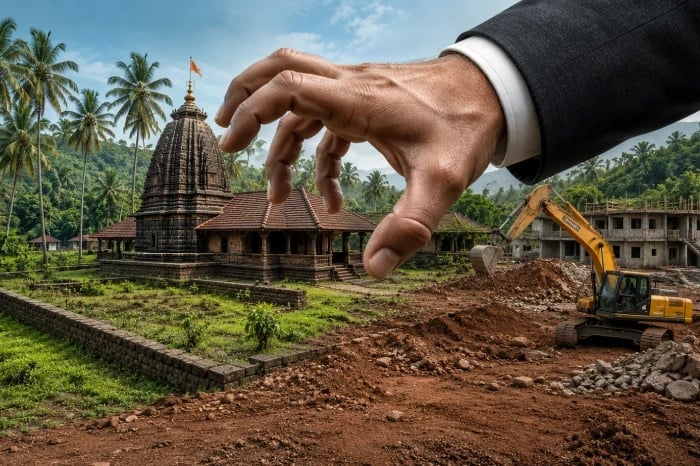
The Maharashtra Government’s decision to order an inquiry into the alleged transfer of thousands of acres of Konkan’s sacred Devrai forest land into the State’s name has opened a significant debate about land records, religious heritage, community stewardship, and environmental governance. The immediate trigger, according to the available report, was the objection raised by Maharashtra Mandir Mahasangh against actions attributed to the revenue department. At this stage, the matter remains an inquiry, not a final finding of illegality; nevertheless, the scale of the allegation makes it important for the State to examine the facts with transparency and technical care.
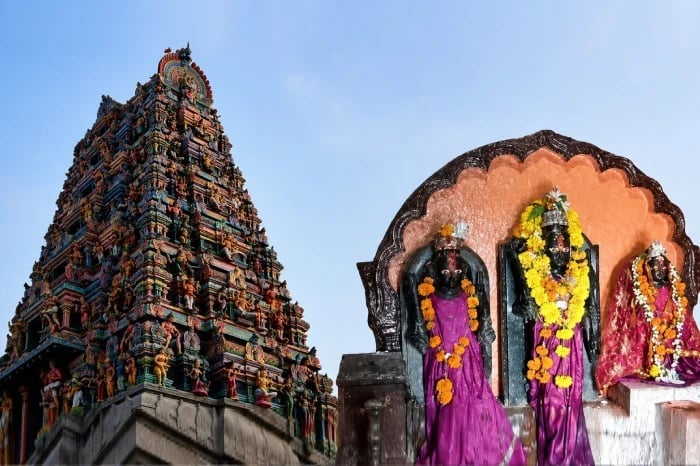
Devrai, often translated as sacred grove, is not merely a patch of trees. In the Konkan cultural landscape, a Devrai is a living institution where ecology, village memory, temple tradition, ancestral discipline, and local faith converge. These groves are commonly protected by religious norms that discourage tree felling, hunting, extraction, and casual disturbance. For many communities, the sanctity of a Devrai is not symbolic alone; it is a practical conservation ethic transmitted through festivals, vows, village rules, oral histories, and reverence for the presiding deity or sacred presence associated with the grove.
The inquiry therefore carries importance beyond a routine revenue correction. If sacred forest land has been transferred, reclassified, or mutated without proper legal authority, the consequences may affect temple rights, village-level traditions, biodiversity, water security, and public trust in land administration. Conversely, if the entries were made under a lawful process, the government must explain the basis, scope, and implications of that process clearly. Either way, the issue demands a record-based investigation rather than slogans, assumptions, or selective political framing.
Konkan’s geography makes the matter especially sensitive. The region lies between the Arabian Sea and the Sahyadri ranges, within the larger Western Ghats ecological system. UNESCO describes the Western Ghats as one of the world’s major biodiversity hotspots, with exceptional levels of endemism and globally threatened species. This wider ecological context matters because sacred groves often function as small but resilient refuges inside fragmented landscapes. Even when they are not large enough to resemble a formal wildlife sanctuary, they may preserve old-growth trees, medicinal plants, seasonal water flows, insects, reptiles, birds, fungi, and soil organisms that have disappeared from nearby disturbed land.
The traditional protection of sacred groves also offers a valuable example of dharmic environmental ethics. Hindu, Buddhist, Jain, and Sikh traditions differ in theology and practice, but all preserve deep civilisational respect for restraint, reverence, interdependence, and responsible use of the natural world. A Devrai represents this shared moral grammar in local form: the forest is not treated only as a commodity, but as a sacred trust. That idea deserves careful protection because it builds unity across dharmic traditions while grounding environmental conservation in lived community practice.
The term “transfer” needs precise scrutiny in this case. In revenue administration, land may be affected by mutation entries, ownership changes, classification changes, survey corrections, acquisition proceedings, forest notifications, tenancy claims, inam abolition records, trust property records, or government vesting provisions. Each category has different legal consequences. A mutation entry, for example, may record a change for fiscal purposes, but it is not always conclusive proof of title. A government entry in the record of rights may be valid in one context and contestable in another. The inquiry must therefore identify exactly what was changed, when it was changed, who ordered it, under which provision, and whether affected religious or community stakeholders were heard.
A serious inquiry should begin with the village-level record. The 7/12 extract, property cards where applicable, mutation registers, old survey maps, forest maps, temple trust documents, inam records, village form entries, and earlier gazette references should be compared. If the land was historically attached to a deity, temple, village institution, or community-managed sacred grove, the legal chain must be reconstructed from the earliest available record. If it was treated as forest, common land, temple land, or revenue land at different points, the inquiry must explain why these changes occurred and whether the statutory process was followed.
The role of the revenue department will be central because land identity in Maharashtra is often shaped by decades of administrative entries. Errors can occur through clerical mistakes, outdated survey categories, overlapping jurisdiction between forest and revenue authorities, or misunderstanding of customary land use. However, when thousands of acres are allegedly involved, the possibility of systemic misclassification must also be examined. The inquiry should not limit itself to one file or one local office if the pattern extends across multiple villages or talukas in the Konkan region.
Maharashtra Mandir Mahasangh’s objection places the issue within a broader concern over temple property and religious endowment lands. Temple lands in India frequently carry layered histories: royal grants, community donations, service tenures, ritual obligations, agricultural income arrangements, and later statutory interventions. In many cases, the deity is treated as a juristic person, and property dedicated to the deity is expected to be used for the purpose of worship, maintenance, festivals, charity, and related religious obligations. Where sacred groves form part of this ecosystem, their value cannot be reduced to market price or revenue convenience.
At the same time, legal clarity must be maintained. Not every sacred grove is necessarily temple-owned land, and not every community-protected forest has identical title history. Some Devrai lands may be recorded as private, some as trust property, some as forest land, some as government land, and some as village commons. This diversity is precisely why the inquiry should be evidence-led. The purpose should be to protect legitimate sacred and ecological interests while correcting defective entries, if any, through due process.
The emotional force of the issue comes from the way Devrai landscapes are remembered by local communities. In many villages, elders speak of these groves with a seriousness that differs from ordinary land discussion. The trees are associated with vows, seasonal worship, ancestral warnings, and the belief that restraint protects the village. Such memory should not replace legal proof, but it should guide investigators toward a more sensitive method of fact-finding. Oral testimony, temple customs, village festivals, and community boundaries may help explain why a grove was historically protected even when formal paperwork is incomplete or ambiguous.
From an ecological standpoint, Devrai protection is also rational. Sacred groves often preserve native species, stabilize soil, moderate local temperatures, retain moisture, support pollinators, and protect springs or seasonal streams. In a coastal region exposed to intense monsoon patterns, lateritic soils, slope instability, and development pressure, such groves can serve as micro-watersheds. Their conservation is not only a religious question; it is also a climate resilience question, a biodiversity question, and a rural sustainability question.
The inquiry should therefore include ecological mapping along with land-record verification. Satellite imagery, old cadastral maps, ground surveys, tree inventories, biodiversity notes, water-source mapping, and community boundary walks can create a more reliable picture. If the State’s records show one thing while the landscape and village memory show another, the discrepancy should be documented rather than ignored. Modern governance has the tools to reconcile geospatial data with historical records; this case is an opportunity to use them responsibly.
There is also a governance lesson here. Sacred natural sites often fall between administrative categories. A forest department may focus on notified forest areas. A revenue office may focus on title and classification. A charity commissioner or trust authority may focus on temple administration. A gram panchayat may hold local memory but lack technical authority. This fragmentation can leave sacred groves vulnerable. A Devrai may be culturally protected for generations and still remain legally fragile if no single institution is clearly responsible for safeguarding it.
A credible inquiry should answer several core questions. First, what exact parcels are alleged to have been transferred into the State’s name? Second, what was their earlier recorded status? Third, were they identified locally as Devrai, temple land, community sacred grove, forest, or common land? Fourth, which officials approved the change? Fifth, were notices issued to trustees, villagers, affected institutions, or traditional custodians? Sixth, did any law require government vesting, and if so, was the process correctly applied? Seventh, what interim safeguards are needed to prevent encroachment, sale, diversion, or ecological damage while the inquiry is pending?
Interim protection is particularly important. Once land records become uncertain, opportunistic pressure can increase. Encroachment, road widening, quarrying, plantation conversion, speculative claims, and unauthorized construction often emerge in zones where ownership and classification are disputed. The government should ensure that no irreversible activity takes place on the affected Devrai lands until the inquiry is complete. Preservation during investigation is not a punishment; it is a basic precaution.
The case also raises the larger question of how Maharashtra should document sacred groves. A district-wise Devrai register, prepared through collaboration among revenue officials, forest experts, temple representatives, gram sabhas, environmental researchers, and local elders, could help prevent future disputes. Such a register should not casually disturb existing title, but it can record cultural and ecological status, local names, associated deities, approximate boundaries, present threats, and conservation needs. Documentation is often the first defence against erasure.
Legal protection should be equally nuanced. Some sacred groves may qualify for conservation-linked mechanisms, while others may require protection as temple trust property, village commons, heritage landscapes, biodiversity heritage sites, or community-managed ecological zones. A single rigid formula may not work across Konkan. What is needed is a layered approach that respects title, tradition, ecology, and local participation. The State should avoid treating sacred groves as empty land simply because they are not built-up or commercially exploited.
The dharmic perspective adds moral depth to this legal discussion. In the Indic imagination, land is not an inert asset. Rivers, mountains, groves, animals, and trees are integrated into ritual life because they sustain life. Jain emphasis on ahimsa, Buddhist respect for interdependence, Sikh ideals of seva and shared responsibility, and Hindu reverence for sacred geography all point toward a disciplined relationship with nature. Protecting Devrai lands can therefore become a unifying civilisational project rather than a narrow sectarian dispute.
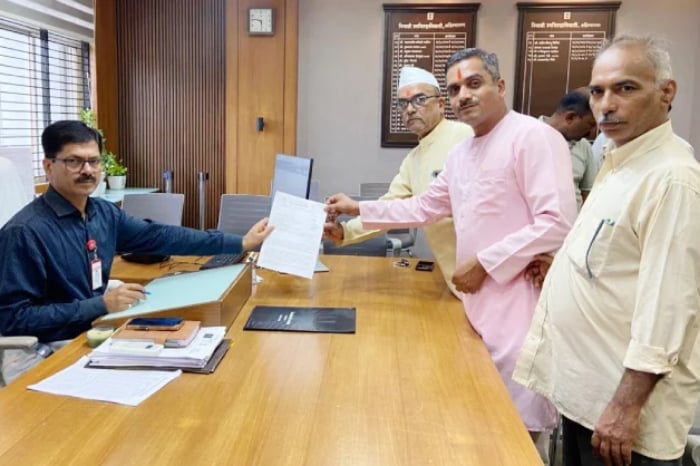
The Maharashtra Government’s inquiry should be welcomed insofar as it creates an official path for verification. But the value of the inquiry will depend on its independence, scope, and public accountability. A brief internal note will not be enough if thousands of acres are involved. The findings should identify the affected lands, the legal basis for each disputed entry, the officials responsible for any irregularity, the remedy proposed, and the mechanism for long-term protection. Where mistakes are found, correction should be timely and enforceable.
The public conversation should also remain careful. Allegations of unlawful transfer must be investigated without presuming guilt before records are examined. At the same time, bureaucratic language should not be allowed to obscure cultural loss. A sacred grove can disappear in law before it disappears on the ground; once the record changes, the next generation may find it difficult to prove what the village always knew. That is why transparency in this inquiry matters so deeply.
For Konkan, Devrai protection is inseparable from heritage preservation. These groves are archives without paper: they store ecological memory, ritual continuity, community discipline, and ancestral restraint. The present inquiry is therefore more than a dispute over entries in government records. It is a test of whether modern administration can recognize older forms of wisdom and protect them through contemporary law.
If handled well, the inquiry can become a model for Maharashtra. It can clarify land records, strengthen temple and community rights where legally established, identify vulnerable sacred groves, and create a framework for environmental conservation rooted in local tradition. If handled poorly, it may deepen mistrust and leave Devrai lands exposed to further confusion. The responsible path is clear: verify the records, protect the land during the process, hear the communities, publish the findings, and treat sacred ecology as a public trust.
The controversy over Konkan’s Devrai land ultimately asks a simple but profound question: can a society that inherited sacred forests preserve them with the seriousness they deserve? Maharashtra’s answer will be watched not only by temple bodies and revenue officials, but by every community that understands land as heritage, ecology as duty, and conservation as dharma.
Inspired by this post on Hindu Jagruti Samiti.









Leave a Reply
You must be logged in to post a comment.