
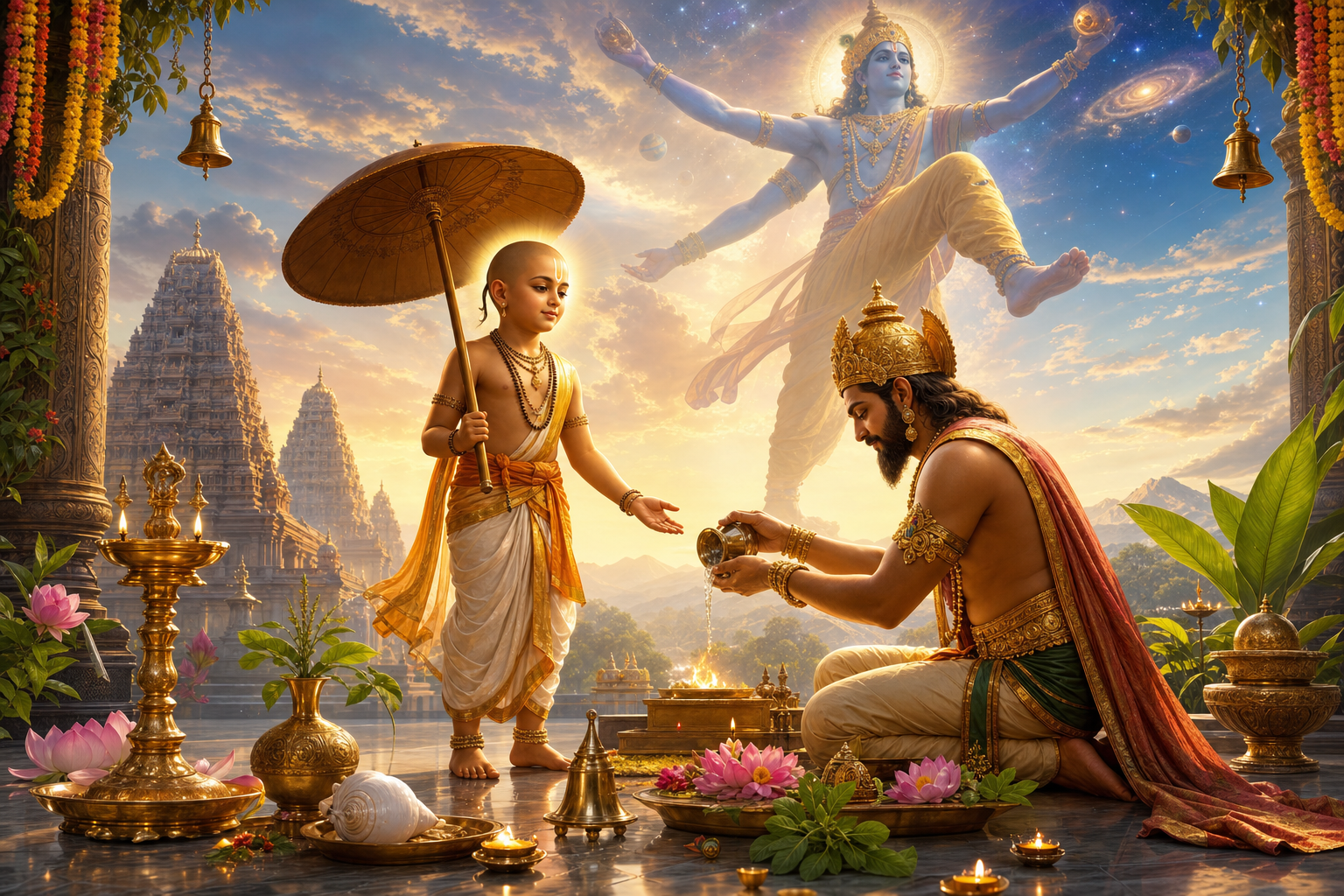
Vamana Dwadashi 2026 will be observed on July 26, 2026, according to the Ashada Shukla Dwadashi tradition associated with Lord Vishnu worship. This sacred observance is also known in many devotional listings as Maha Dwadashi or Vasudeva Dwadashi, and it follows Devshayani Ekadashi, the important Vaishnava observance that marks the beginning of Chaturmas. For devotees, this day is not merely a calendar entry; it is a disciplined moment of remembrance, humility, gratitude, and renewed alignment with dharma.
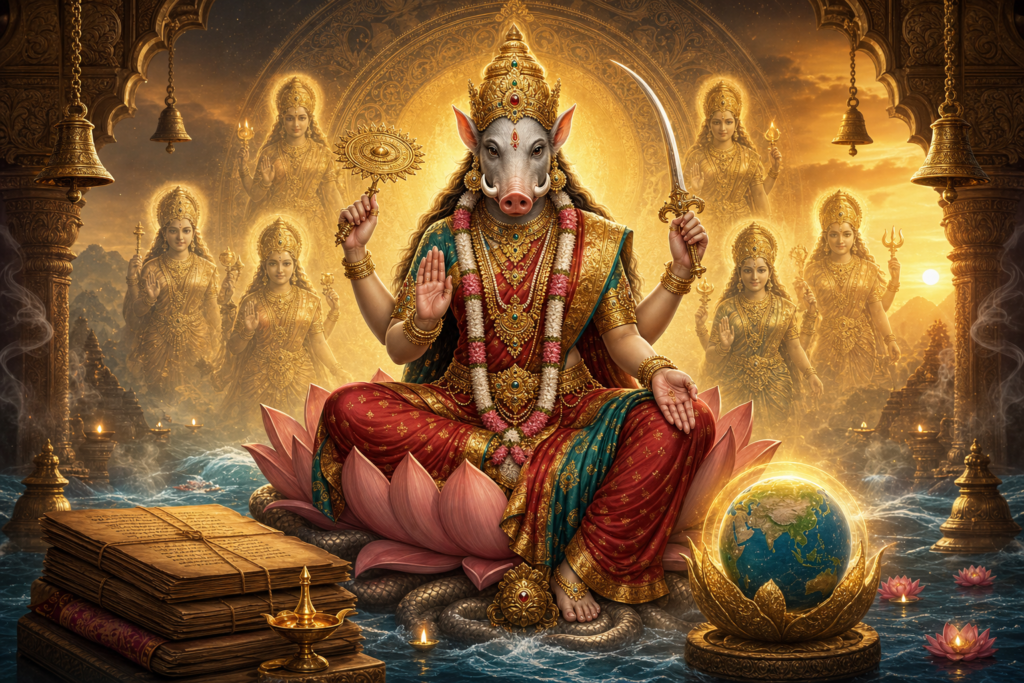
In Hindu tradition, Lord Vamana is revered as the fifth avatar of Lord Vishnu and is often described as the first avatar of Vishnu in the Treta Yuga. He is also remembered as the first fully human-form incarnation of Vishnu, appearing as a young Brahmachari dwarf whose spiritual radiance concealed immeasurable cosmic power. The Vamana narrative is one of the most elegant theological accounts in the Vaishnava tradition because it presents divine strength not through weaponry or spectacle, but through restraint, wisdom, and perfectly measured speech.
The central story of Vamana is closely connected with King Mahabali, a generous and powerful ruler whose fame grew across the worlds. In the Purāṇic imagination, Bali represents both virtue and excess: he is charitable, disciplined, and devoted to truth, yet his expanding authority unsettles the cosmic balance guarded by the devas. Lord Vishnu, responding to this imbalance, appears as Vamana and approaches Bali during a sacrificial rite. The request is modest: three paces of land. Bali grants it, and Vamana then expands into Trivikrama, the cosmic form whose steps encompass the earth, the heavens, and the realm beyond ordinary perception.
This episode is often read as a profound meditation on humility. Bali is not portrayed simply as a villain; he is a complex figure whose generosity becomes spiritually meaningful when it is purified of pride. Vamana, likewise, does not defeat him in a crude political sense. Instead, the avatar reveals the limits of possession and the sacred truth that all power, land, wealth, and status are ultimately held within the order of dharma. The emotional force of the story lies in this transformation: a king who thought he could give three steps of land discovers that the giver, the gift, and the ground itself belong to the Divine.
Vamana Dwadashi therefore carries a strong ethical message for householders, students, leaders, and spiritual aspirants. It invites reflection on the difference between generosity and ego, between rightful ambition and domination, and between ritual performance and inner surrender. In contemporary life, where success is often measured through accumulation, influence, and visibility, the Vamana avatara offers a counter-cultural lesson: true greatness may arrive quietly, speak gently, and still reorder the universe.
The observance of Vamana Dwadashi is especially significant for devotees of Lord Vishnu and for families who maintain Ekadashi and Dwadashi discipline. Since it falls immediately after Devshayani Ekadashi, the day is placed within the devotional atmosphere of Chaturmas, a four-month period traditionally associated with restraint, vrata, scriptural study, pilgrimage discipline, and inward refinement. Devshayani Ekadashi recalls the symbolic beginning of Lord Vishnu’s yogic rest upon Shesha in the cosmic ocean, while the following Dwadashi deepens the mood of worship through remembrance of Vishnu’s Vamana form.
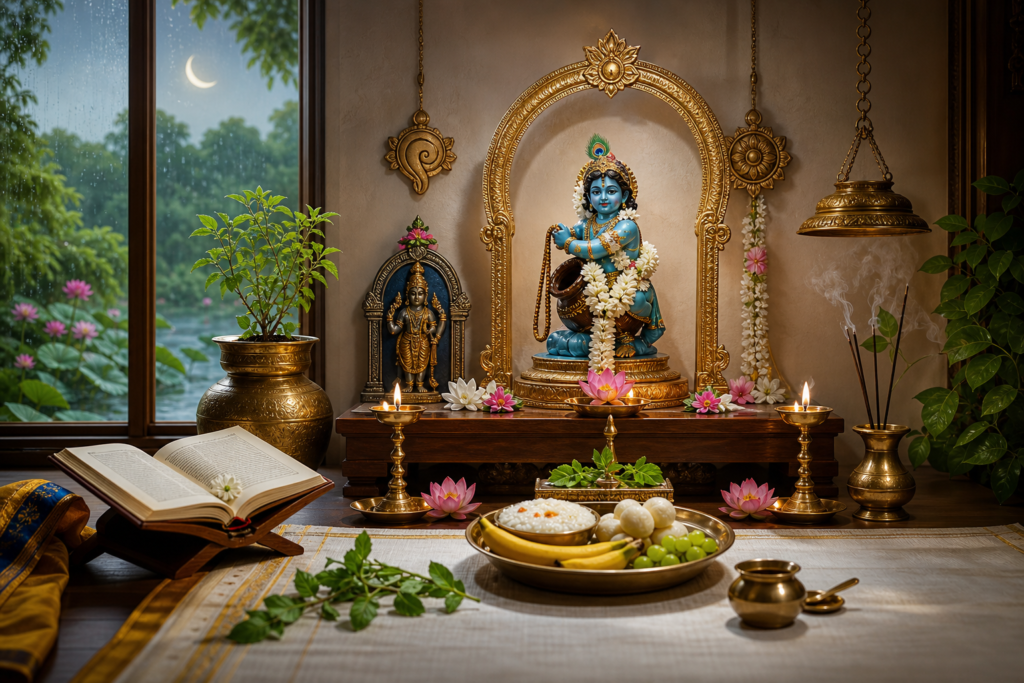
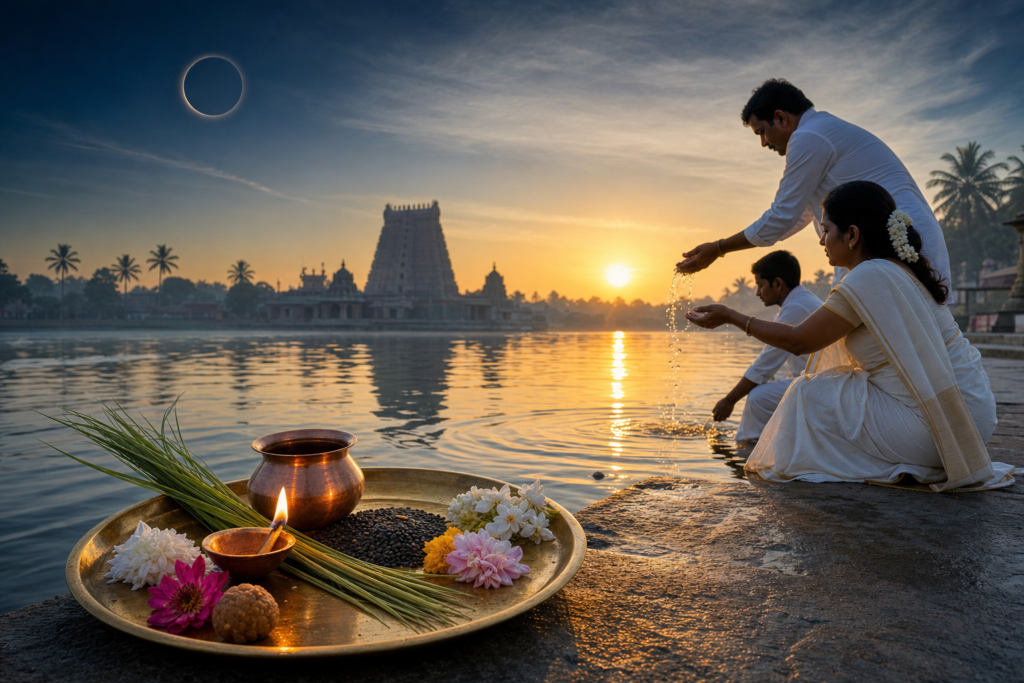
Traditional worship on Vamana Dwadashi may include bathing early, cleaning the puja space, offering prayers to Lord Vishnu, lighting a lamp, reciting Vishnu Sahasranama or Vishnu stotras, offering Tulasi leaves where appropriate, and performing simple satvik worship with devotion. Some devotees observe fasting or continue the discipline connected with the previous Ekadashi, while others perform Dwadashi parana according to local panchang guidance. Since tithi timings vary by location, families generally consult a reliable regional panchang for the precise puja and parana details.
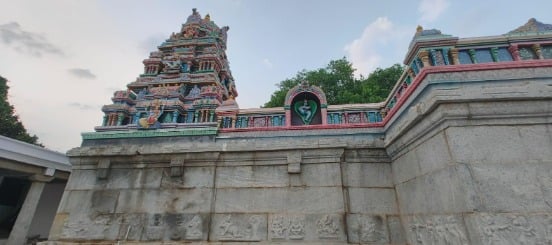
Temples dedicated to Lord Vishnu and Lord Vamana mark this occasion with special puja, alankara, archana, and recitation. Among the well-known Vamana temples are the Vamana shrine at Thrikakkara near Kochi in Kerala, the Vamana Temple near the Kamakshi temple in Kanchipuram, Tamil Nadu, and the Vamana Mandir at Khajuraho in Madhya Pradesh. These sacred sites demonstrate the regional breadth of Vamana worship and show how a single avatar tradition can be preserved through diverse architectural, liturgical, and community practices.
It is useful to distinguish this Ashada Shukla Dwadashi observance from Vamana Jayanti traditions that are often associated with Bhadrapada Shukla Dwadashi in many calendars. Hindu calendrical practice is rich and regionally layered, and names such as Vamana Dwadashi, Vasudeva Dwadashi, Maha Dwadashi, and Vamana Jayanti may appear differently across communities. This diversity should not be treated as confusion; rather, it reflects the living nature of Hindu ritual culture, where local sampradaya, temple tradition, lunar calculations, and family practice all contribute to sacred time.
The day also has a unifying significance for dharmic traditions because its central themes are not sectarian. Humility, ethical restraint, reverence for cosmic order, gratitude for divine grace, and the purification of pride are values that resonate across Hinduism, and they also find meaningful parallels in Buddhist, Jain, and Sikh reflections on ego, discipline, service, and truth. Vamana Dwadashi can therefore be understood not only as a Vaishnava festival, but also as a broader dharmic reminder that spiritual maturity begins when human power bows before a higher moral order.
For many families, the beauty of Vaman Pujan lies in its simplicity. A small lamp before Lord Vishnu, a few Tulasi leaves, a sincere prayer, and a quiet reading of the Vamana narrative can create a powerful devotional atmosphere at home. Children can understand the story as a lesson in humility; elders may see in it a reminder that wealth and authority should be used responsibly; seekers may contemplate the three steps as symbols of body, mind, and soul being offered back to the Divine.
The three steps of Vamana remain one of the most memorable images in Hindu sacred literature. The first step may be contemplated as the sanctification of the physical world, the second as the consecration of the celestial and mental realms, and the third as the surrender of the ego. In devotional practice, this symbolism can become deeply personal: every action, every thought, and every possession may be placed under the guidance of dharma. In that sense, Vamana Dwadashi is not only a festival of remembrance; it is a disciplined practice of reorientation.
Vamana Dwadashi 2026, falling on July 26, offers devotees an opportunity to honor Lord Vishnu as Vamana, reflect on the story of King Mahabali, and renew the ethical foundations of daily life. Its relevance remains enduring because it addresses a universal human challenge: the need to remain humble even when one is capable, prosperous, or influential. The festival teaches that surrender is not weakness, that restraint is not passivity, and that the smallest form of the Divine may carry the widest vision of cosmic balance.
Inspired by this post on Hindu Pad.





Leave a Reply
You must be logged in to post a comment.