
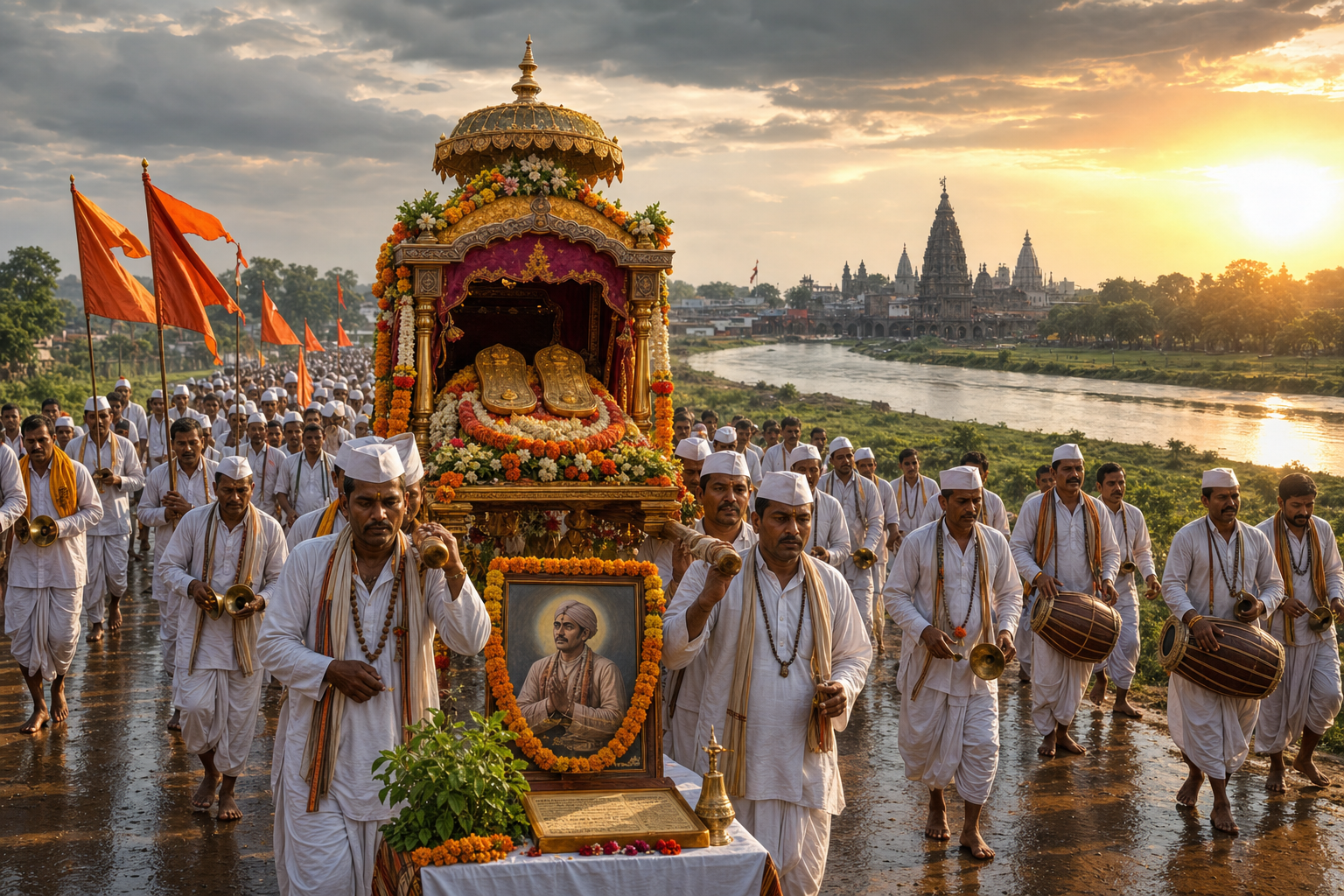
Sant Chokhamela Palkhi 2026 belongs to the wider spiritual landscape of the Ashadhi Wari, one of Maharashtra’s most enduring devotional traditions. In 2026, Ashadhi Ekadashi falls on July 25, and the Wari will culminate at Pandharpur, the sacred town of Shri Vitthal and Rakhumai. The major Sant Tukaram Maharaj Palkhi is scheduled to depart from Dehu on July 7, 2026, while the Sant Dnyaneshwar Maharaj Palkhi is scheduled to depart from Alandi on July 8, 2026. Within this broader movement of devotion, the remembrance of Sant Chokhamela carries a distinct moral and spiritual force.
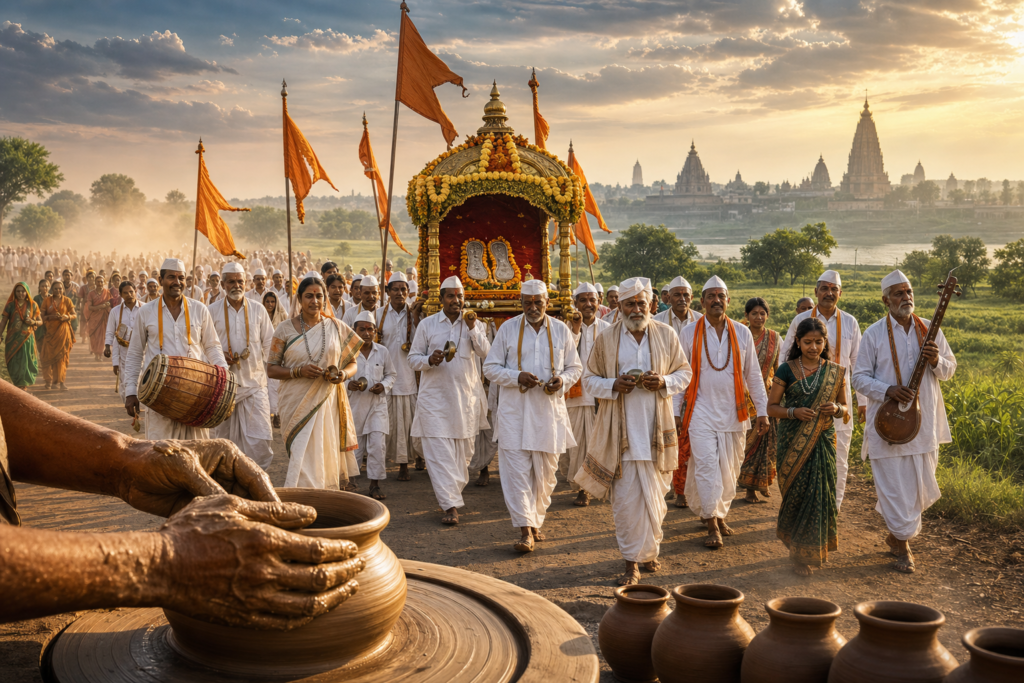
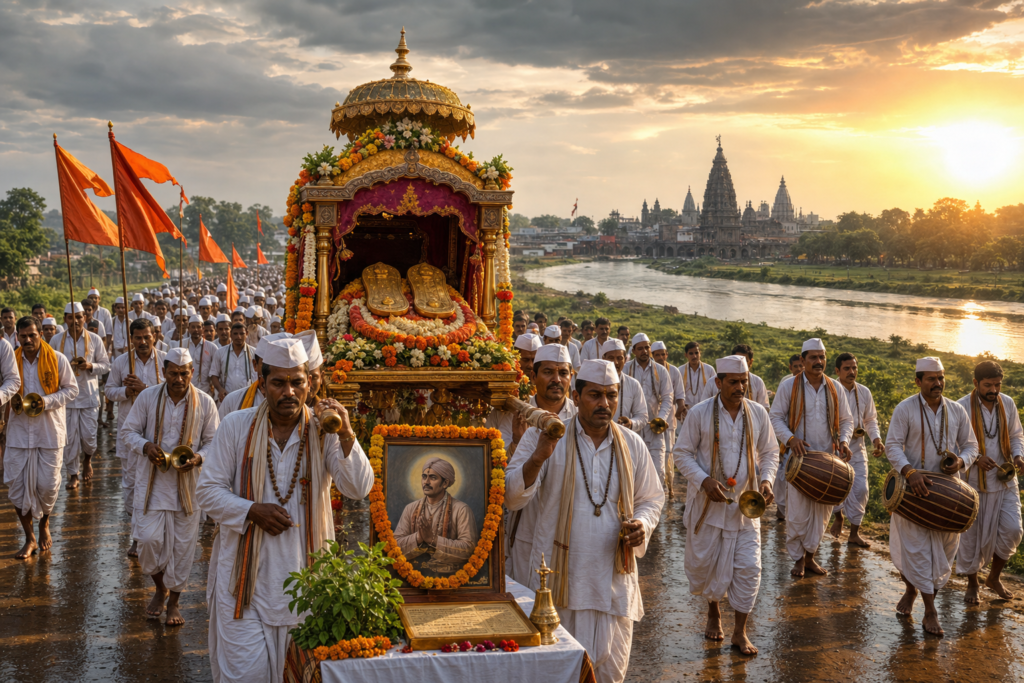
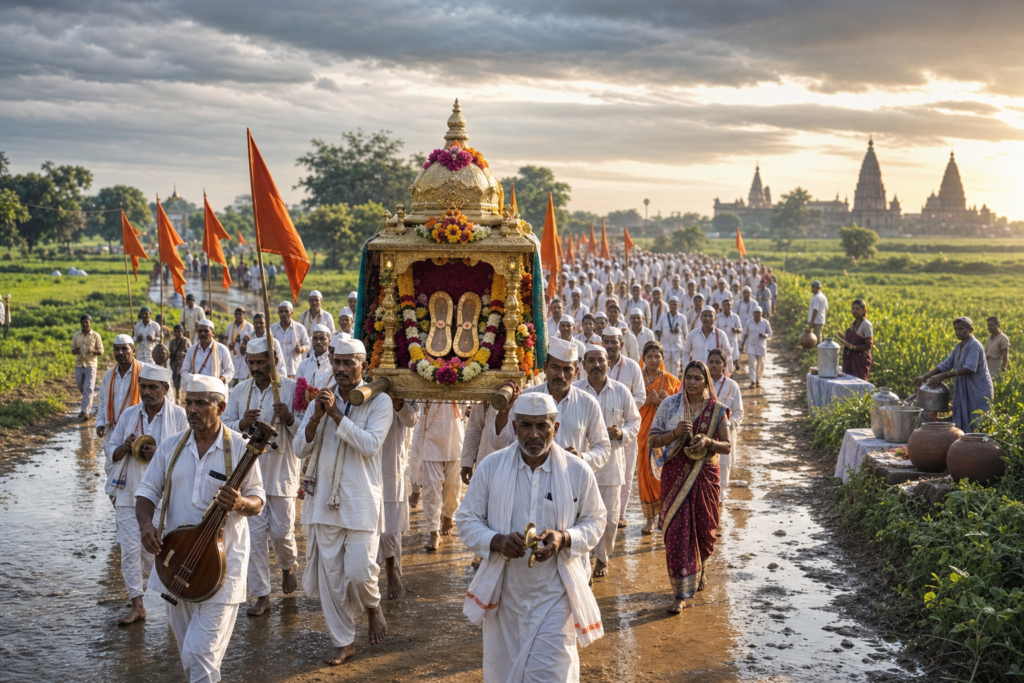
The Sant Chokhamela Palkhi Sohala is not merely a ceremonial procession. It is a public expression of bhakti, social memory, and spiritual equality. The word palkhi refers to a palanquin, often carrying the symbolic presence, paduka, or sacred memory of a saint. In the Varkari tradition, such a procession is not understood as a spectacle alone; it is a moving discipline of humility, song, collective walking, and surrender to Vitthal.
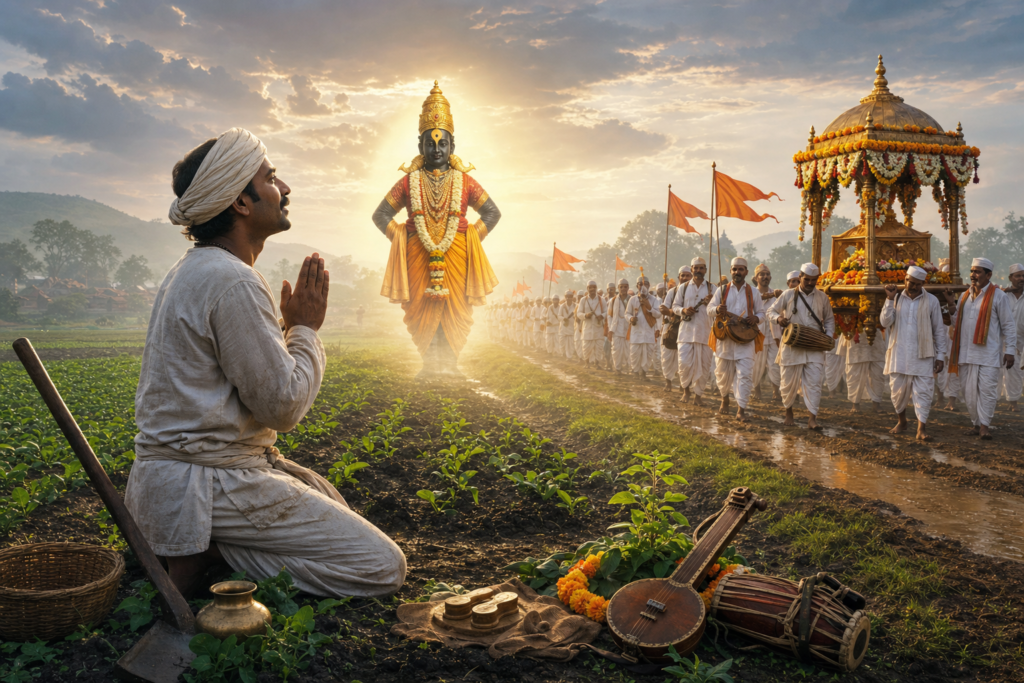
Sant Chokhamela occupies an important place in the Varkari sampradaya because his life brings together devotion, social pain, and spiritual dignity. He is remembered as a 13th-14th century saint of Maharashtra, associated with Mangalvedha and Pandharpur, and revered as one of the earliest Marathi saint-poets from a socially marginalized community. His abhangas are still valued because they speak in a voice that is intimate, direct, and morally clear. They show how devotion to Vitthal can become a way of affirming the dignity of every human being.
The 2026 observance should be understood against this background. Ashadhi Wari brings together lakhs of Varkaris who walk toward Pandharpur through heat, rain, fatigue, and crowded roads. Their rhythm is shaped by taal, mridang, abhang, namasmaran, dindi discipline, and the repeated remembrance of Vitthal. For many devotees, the journey is physically demanding, but it is also emotionally clarifying. The act of walking becomes a form of inner purification, community service, and shared faith.
The date of July 25, 2026 is especially significant because Ashadhi Ekadashi, also known as Devshayani Ekadashi, marks the beginning of Chaturmas in many Vaishnava traditions. Devotees worship Lord Vishnu, observe vrata, practice self-restraint, and seek spiritual discipline. In Pandharpur, this theology becomes deeply local and embodied through devotion to Vithoba, who is lovingly approached as Vitthal Mauli. The word Mauli itself carries tenderness, suggesting a divine presence experienced not as distant authority but as compassionate nearness.
The Sant Chokhamela tradition adds a profound ethical dimension to this pilgrimage. Chokhamela’s life is remembered through narratives of exclusion, longing, and unbroken devotion. His samadhi near the Vitthal temple in Pandharpur is a powerful reminder that the spiritual geography of Pandharpur is also a geography of social conscience. The pilgrim who bows at this memory encounters a saint whose devotion refused to be limited by social hierarchy.
This is why Sant Chokhamela’s legacy remains deeply relevant in 2026. His bhakti does not separate spiritual realization from human dignity. It teaches that the path to Vitthal is not owned by birth, status, wealth, or ritual privilege. In the wider dharmic vision, this insight supports unity across Hindu, Buddhist, Jain, and Sikh traditions, all of which preserve strong streams of compassion, discipline, humility, and liberation from ego. Chokhamela’s memory therefore strengthens a shared civilizational ethic: devotion must deepen humanity, not narrow it.
The Wari is technically complex as well as spiritually moving. A palkhi procession requires route planning, halting points, food arrangements, medical support, sanitation, traffic management, security, and coordination among local administrations and devotional institutions. Larger processions such as those of Sant Tukaram Maharaj and Sant Dnyaneshwar Maharaj have widely circulated schedules, while smaller or locally organized commemorative palkhis may follow route details announced closer to the event. Devotees planning to participate in the Sant Chokhamela Palkhi Sohala in 2026 should therefore verify local schedules, starting points, halts, and registration guidance from the relevant organizing committees before travel.
The devotional grammar of the Wari is built around disciplined simplicity. Varkaris traditionally emphasize vegetarian food, abstinence from intoxicants, humility in conduct, collective singing, reverence for saints, and remembrance of the divine name. The pilgrim does not walk as an isolated individual seeking private merit alone. The pilgrim walks in a shared field of service, where water, food, rest, song, and encouragement are exchanged constantly. This makes the Wari one of India’s most striking examples of living community spirituality.
Sant Chokhamela’s abhangas also help explain why his palkhi matters beyond ritual observance. Abhang poetry is not decorative literature in the Varkari world; it is theology sung in the language of ordinary people. Through abhang, saints such as Dnyaneshwar, Namdev, Chokhamela, Eknath, Tukaram, Janabai, Soyarabai, and others made spiritual reflection accessible to farmers, laborers, householders, women, and communities outside formal centers of learning. This literary democratization is one of the great contributions of the Bhakti Tradition.
Chokhamela’s family also belongs to this sacred memory. Sant Soyarabai, his wife, is remembered as a saint-poet whose compositions carry deep devotion and a powerful critique of social impurity as a bodily illusion rather than a truth of the soul. Their son Karmamela, and associated figures such as Nirmala and Banka, are part of the devotional orbit through which the Varkari tradition preserved voices from the margins. The Sant Chokhamela Palkhi therefore evokes not only one saint but an entire moral archive of bhakti, struggle, and spiritual equality.
Pandharpur itself gives this tradition its sacred center. The town stands on the banks of the Chandrabhaga, also associated with the Bhima River, and is regarded as the home of Shri Vitthal-Rukmini. During Ashadhi Ekadashi, the town becomes a convergence point for pilgrims from across Maharashtra and beyond. The atmosphere is shaped by devotional sound, saffron flags, tulsi malas, shared meals, long queues, and the collective cry of Vitthal’s name. For observers, the sight can be emotionally overwhelming because it shows religion as movement, endurance, and public fellowship.
The Sant Chokhamela Palkhi in 2026 should be approached with this layered understanding. It is a devotional event connected to Ashadhi Wari, but it is also a reminder of the inclusive promise within Hindu spirituality. The Varkari path has long emphasized that God resides in all beings and that the devotee must cultivate humility, compassion, and moral discipline. When Sant Chokhamela is remembered in this context, the message becomes sharper: bhakti must recognize the sacredness of those whom society has historically ignored.
For pilgrims, practical preparation is essential. Participants should plan for monsoon weather, long walking stretches, basic medical needs, simple footwear or traditional walking discipline according to personal capacity, hydration, and crowd conditions. Elderly devotees, children, and first-time participants should travel with known groups or dindis when possible. Since the final days near Pandharpur attract extremely large crowds, accommodation, transport, and darshan planning should be arranged early and adjusted according to official advisories.
For those who cannot physically join the procession, the Sant Chokhamela Palkhi Sohala still offers a meaningful spiritual lesson. One may observe Ashadhi Ekadashi through namasmaran, reading abhangas, studying the lives of Varkari saints, supporting pilgrims with food or water, or practicing acts of compassion in daily life. In this sense, the Wari is not limited to the road. Its deeper path runs through conduct, speech, service, and the willingness to see divinity in every person.
The lasting power of Sant Chokhamela lies in the way his life transforms pain into devotion without losing moral clarity. His memory does not encourage bitterness; it calls for a more truthful and compassionate society. His bhakti belongs to Vitthal, but its ethical appeal reaches every seeker who believes that spiritual traditions must uplift human dignity. That is why the Sant Chokhamela Palkhi 2026 is best understood as a journey of remembrance, equality, and living faith.
As Ashadhi Ekadashi approaches on July 25, 2026, Pandharpur will again become the heart of Maharashtra’s devotional imagination. The great palkhis of Sant Tukaram Maharaj and Sant Dnyaneshwar Maharaj will draw vast attention, yet the remembrance of Sant Chokhamela will continue to speak with quiet force. His legacy reminds devotees that the path to Vitthal is walked not only with feet, but with humility, courage, and reverence for the divine presence in all.
Inspired by this post on Hindu Pad.



Leave a Reply
You must be logged in to post a comment.