
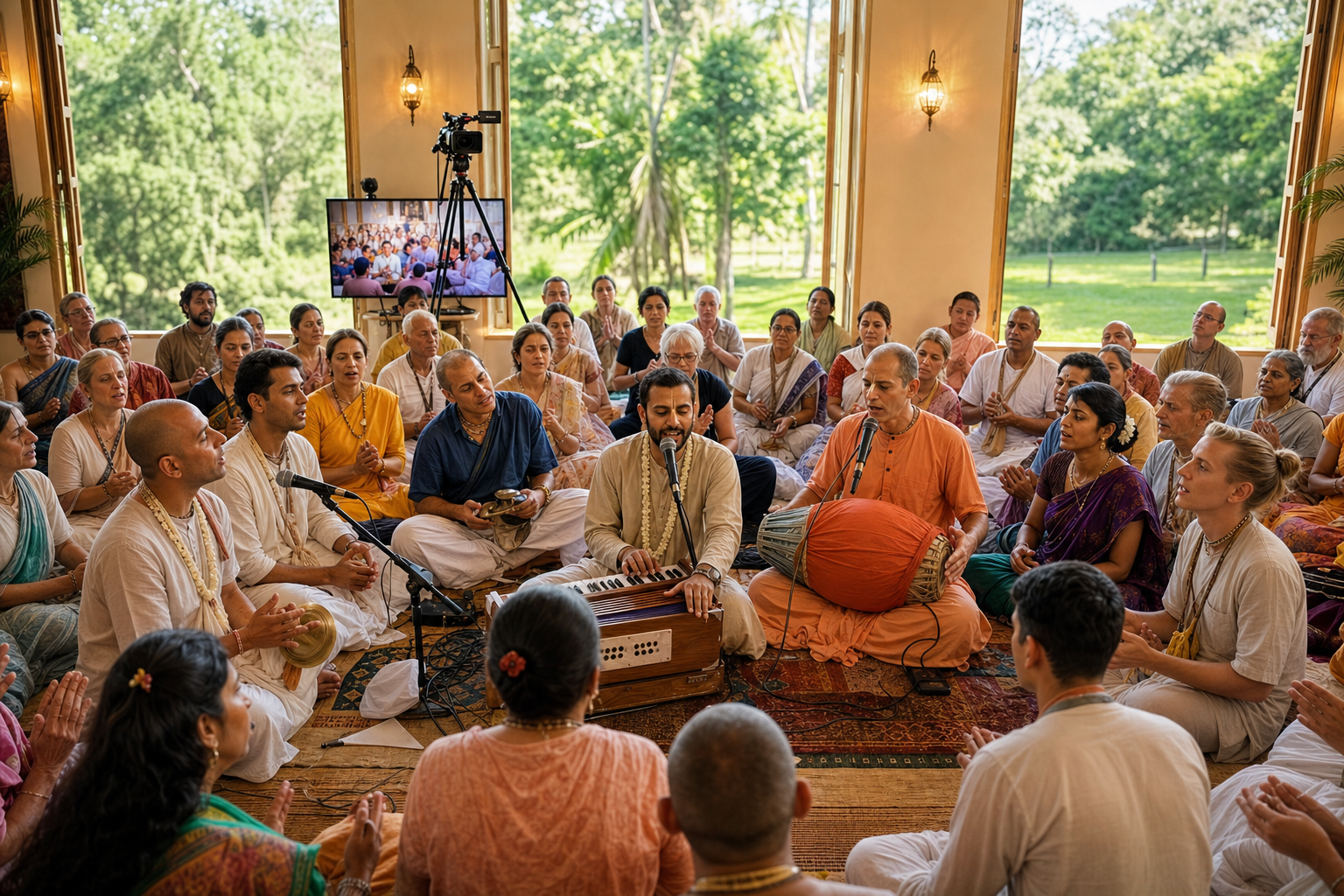
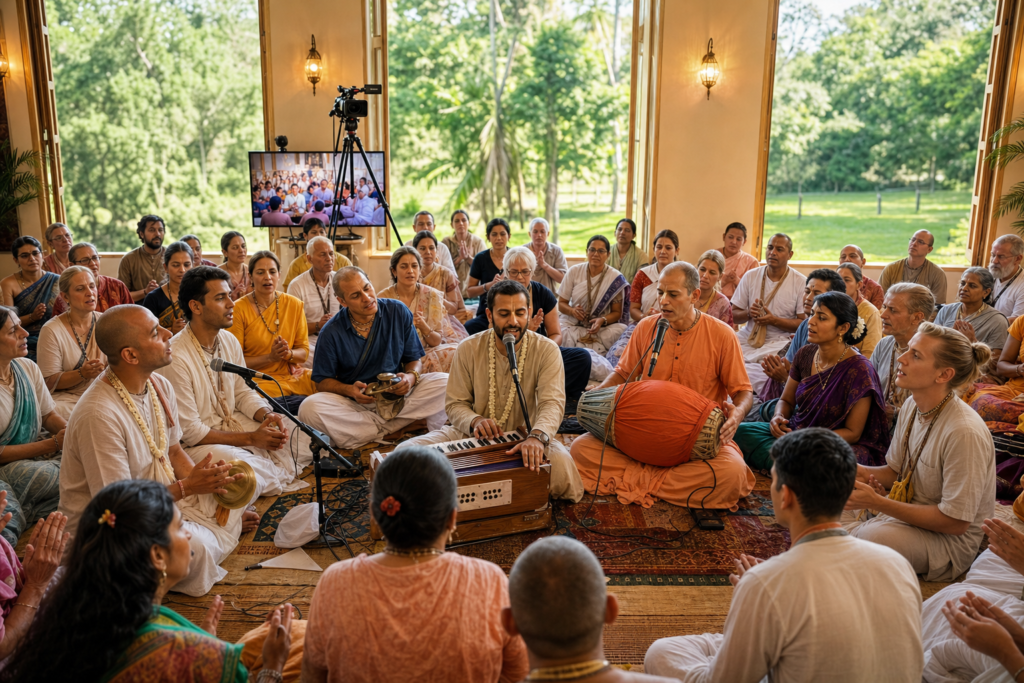
The June 2026 six-hour kirtan live broadcast from ISKCON Alachua Hare Krishna Temple stands as more than a recording of devotional music. It offers a concentrated view into the living discipline of bhakti, the shared culture of congregational chanting, and the continuing global presence of Gaudiya Vaishnava Hindu spirituality in North America. Even when encountered through a screen, such a broadcast can carry the atmosphere of temple life: voices rising together, mridanga rhythms steadying the pace, kartals marking time, and the maha-mantra becoming the central point around which attention, emotion, and theology converge.
ISKCON Alachua, also known through its association with New Raman Reti, is one of the most significant Hare Krishna communities in the United States. The temple describes itself as the largest Hare Krishna community in North America, situated on a rural 127-acre property in Alachua, Florida, north of Gainesville. Its setting is important because it frames devotion not merely as a Sunday activity but as a lived ecosystem: temple worship, cow protection, gardens, community education, prasadam, family life, and regular festivals all coexist as expressions of Krishna consciousness.
Kirtan occupies a central place in this devotional world. In the Gaudiya Vaishnava tradition, sacred sound is not treated as ornamental music or religious performance alone. It is understood as a means of remembrance, purification, and relationship with the Divine. The repeated chanting of the Hare Krishna maha-mantra, “Hare Krishna Hare Krishna Krishna Krishna Hare Hare, Hare Rama Hare Rama Rama Rama Hare Hare,” functions as both theology and practice: the name of Krishna is approached as spiritually potent, accessible, and capable of gathering diverse participants into a shared devotional rhythm.
A six-hour kirtan is therefore significant because duration changes the experience. A short chant may inspire, but extended kirtan gradually reshapes attention. The mind, often restless and fragmented in ordinary life, is invited into repetition until the chant becomes less like an external sound and more like an inner current. Listeners may notice how the same mantra carries different emotional textures across time: quiet reverence, communal joy, contemplative steadiness, festive intensity, and finally a sense of surrender. This is one reason long-form kirtan remains a powerful devotional format in ISKCON communities.
The Alachua temple’s regular worship structure gives context to the broadcast. Its daily schedule begins early with mangala arati, followed by Tulasi puja, japa, deity darshan, guru puja, Srimad-bhagavatam class, Raja bhoga arati, Dhupa arati, Sandhya arati, and Sayana arati before the temple closes at night. This rhythm reveals the theological discipline behind the music. Kirtan is not isolated entertainment; it is woven into arati, scripture, deity worship, community gathering, and the daily cultivation of devotional consciousness.
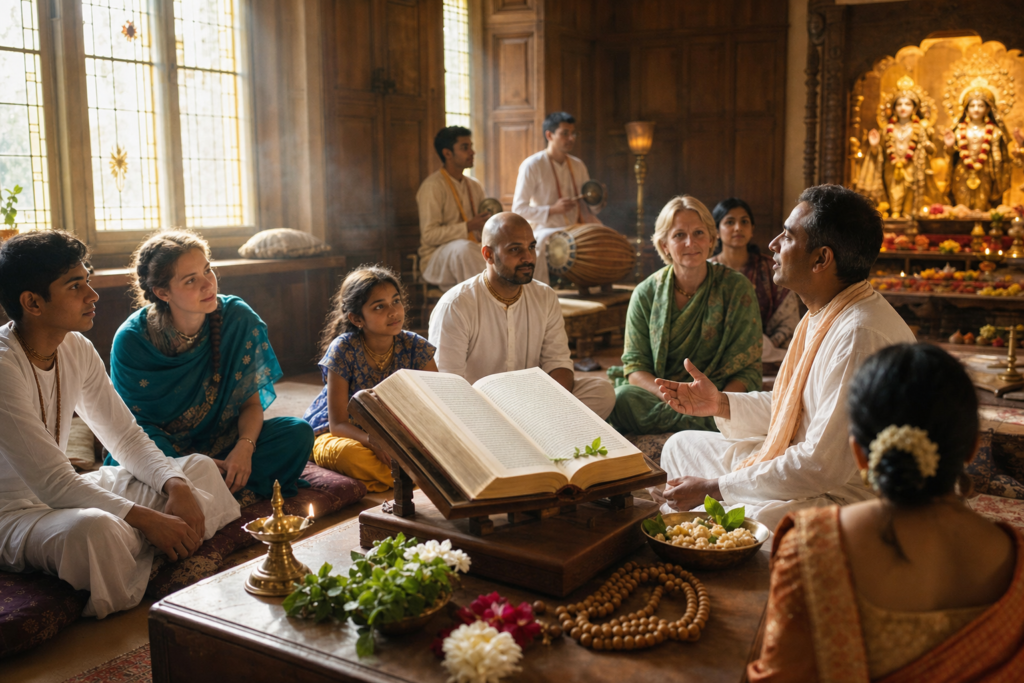
From an academic perspective, kirtan may be studied as congregational ritual, oral transmission, embodied theology, and devotional aesthetics. The call-and-response structure encourages participation rather than passive observation. Musical leadership rotates or develops through trained singers, but the essential act belongs to the community. The mridanga and kartals do not merely accompany the chant; they help organize collective time, allowing participants to breathe, clap, move, and respond as one devotional body.
The live broadcast dimension adds a contemporary layer to an ancient practice. Digital media allows devotees, seekers, and curious observers far from Florida to enter the temple’s soundscape in real time or through recorded viewing. This does not replace physical pilgrimage, temple association, or direct communal participation, but it extends access. For diaspora Hindus, students of Indian spirituality, and intergenerational families spread across different cities, a live kirtan can become a way to remain connected to temple culture despite distance.
The emotional appeal of such a broadcast is partly rooted in familiarity. Many people encounter sacred sound during moments of transition, grief, gratitude, exhaustion, or spiritual searching. The steady repetition of the maha-mantra can feel grounding because it does not demand intellectual performance. It asks for listening, attention, and gradual participation. Even those approaching from outside the Hare Krishna tradition can observe how sound, devotion, and community combine to create a disciplined atmosphere of peace.
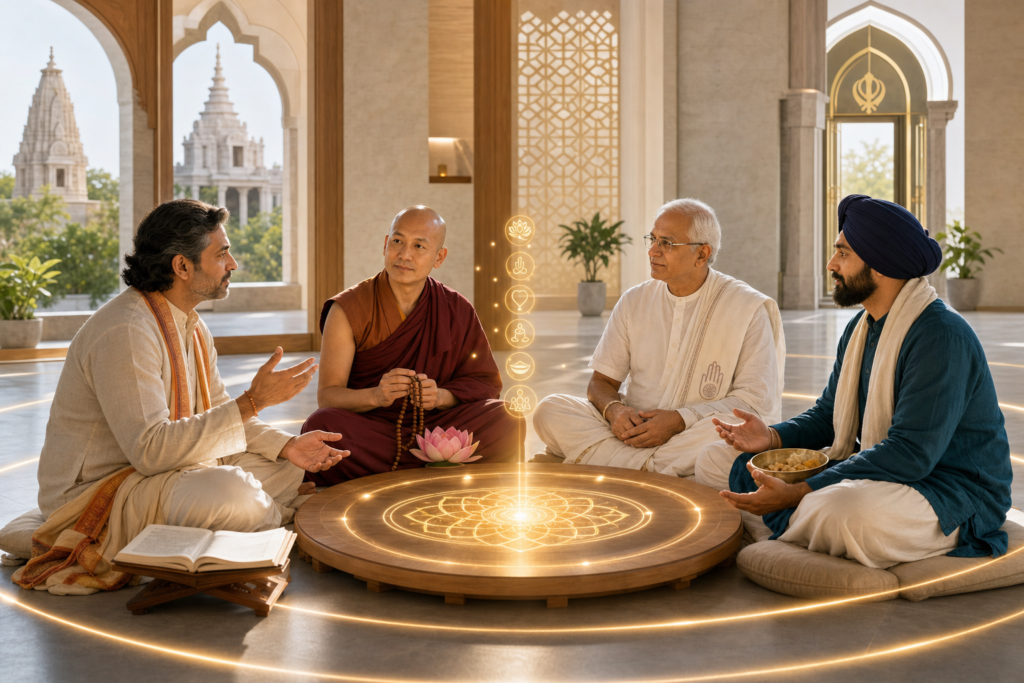
At the same time, the kirtan should be understood within the broader dharmic landscape. Bhakti has deep roots across Hindu traditions, and the practice of sacred singing also resonates with devotional currents in Sikh kirtan, Jain stavan, and Buddhist chanting traditions. Each tradition has its own theology, discipline, and sacred vocabulary, yet all demonstrate that sound can become a vehicle for memory, humility, ethical refinement, and collective upliftment. Seen in this wider frame, ISKCON Alachua’s kirtan contributes to a shared dharmic appreciation for disciplined devotion through sacred sound.
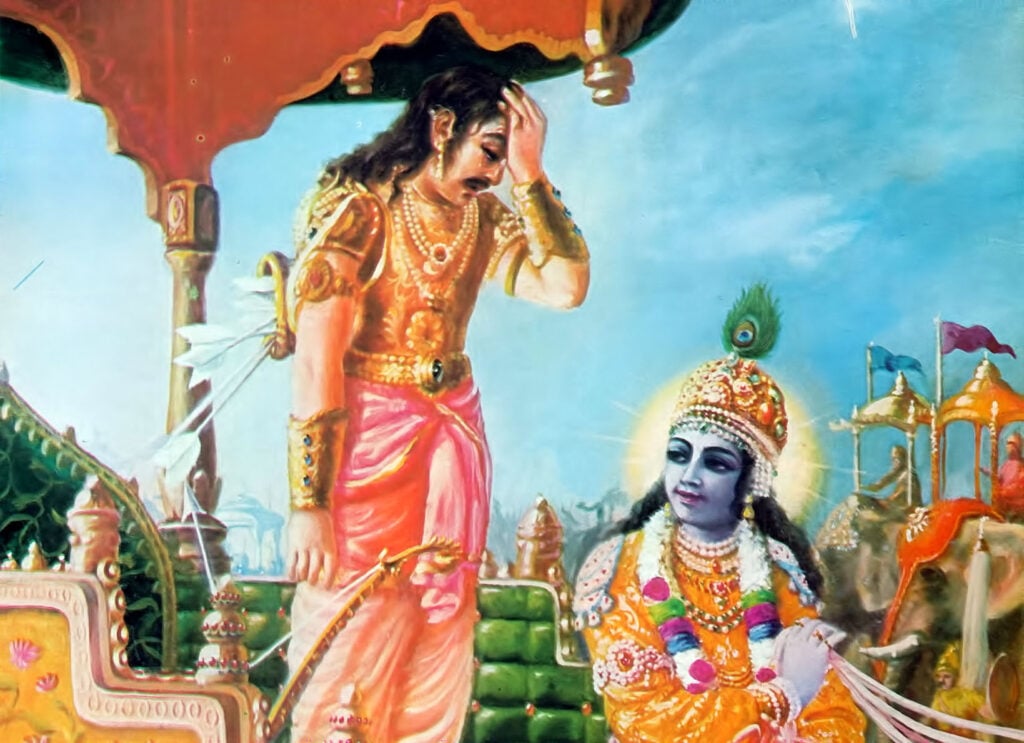
ISKCON’s public identity is inseparable from the work of His Divine Grace A.C. Bhaktivedanta Swami Prabhupada, who founded the International Society for Krishna Consciousness in New York in 1966 and carried Gaudiya Vaishnava teachings into a global context. His emphasis on chanting, Bhagavad Gita study, prasadam, deity worship, and devotional service shaped communities such as Alachua. The June 2026 kirtan broadcast reflects that legacy in a practical form: not as abstract doctrine, but as voices gathered around the holy name.
What makes the Alachua setting especially meaningful is the integration of temple worship with rural community life. The presence of cow protection, farm education, food distribution, family participation, and festival culture suggests a model of spirituality that is both contemplative and social. Kirtan in such a place is not simply a musical event placed on a calendar; it emerges from a larger environment where devotional practice is meant to shape daily conduct, food ethics, education, relationships, and service.
The six-hour format also reveals the discipline of collective endurance. Devotional music may sound effortless to an outside listener, but sustained kirtan requires vocal strength, attentive musicianship, sensitivity to mood, and the ability to support a congregation without turning the event into personal performance. The best kirtan leaders balance musical skill with humility. Their task is to keep attention centered on Krishna rather than on individual artistry.
For viewers, the most valuable approach is not to treat the broadcast as background audio alone. It can be approached as a contemplative practice: listening attentively, following the mantra, observing how the mind responds to repetition, and noticing the relationship between sound and inner state. The broadcast can also serve as an educational resource for understanding Hindu devotional traditions, especially for those studying bhakti yoga, Hindu temples abroad, ISKCON, or the role of music in religious community formation.
There is also a subtle cultural lesson here. In an age of fragmented attention, short-form media, and constant distraction, a six-hour kirtan quietly challenges modern habits. It suggests that depth still matters, that repetition can be transformative rather than monotonous, and that community can gather around sacred sound without needing spectacle. This is one of the enduring strengths of the Hare Krishna movement: it makes a sophisticated devotional theology accessible through a mantra that anyone can hear, repeat, and contemplate.
The June 2026 live broadcast from ISKCON Alachua is therefore best understood as a window into living bhakti. It documents a temple community, preserves a devotional moment, and offers viewers a practical encounter with Krishna consciousness. Its value lies not only in the duration of the kirtan but in what that duration reveals: discipline, joy, surrender, shared sacred memory, and the continuing relevance of dharmic spiritual practice in contemporary life.
Inspired by this post on Dandavats.




Leave a Reply
You must be logged in to post a comment.