
Inside the life, discipline, and global vision of Yogi Dileep Kumar
Dileep Kumar Thangappan, widely known as Yogi Dileep or simply Guruji, occupies a distinctive place in the contemporary history of yoga. His public contribution is associated with the global recognition of the United Nations’ International Day of Yoga, observed annually on June 21, yet his personal life is marked less by spectacle than by restraint, simplicity, and long discipline. His story moves from Kerala’s interfaith social world to New York’s multicultural wellness spaces, from handwritten posters in Tripunithura to deliberations linked with the United Nations, and from inherited family struggle to an expansive vision of human unity.
The significance of his journey lies not only in institutional recognition. International Yoga Day became a historic diplomatic milestone after Prime Minister Narendra Modi proposed the observance at the United Nations General Assembly in 2014, and the resolution received extraordinary support from 177 countries before the first global celebration in 2015. Yet such international moments rarely emerge from one leader or one speech alone. They are often prepared quietly by decades of teaching, persuasion, relationship-building, and cultural confidence. Yogi Dileep’s life belongs to that quieter history.
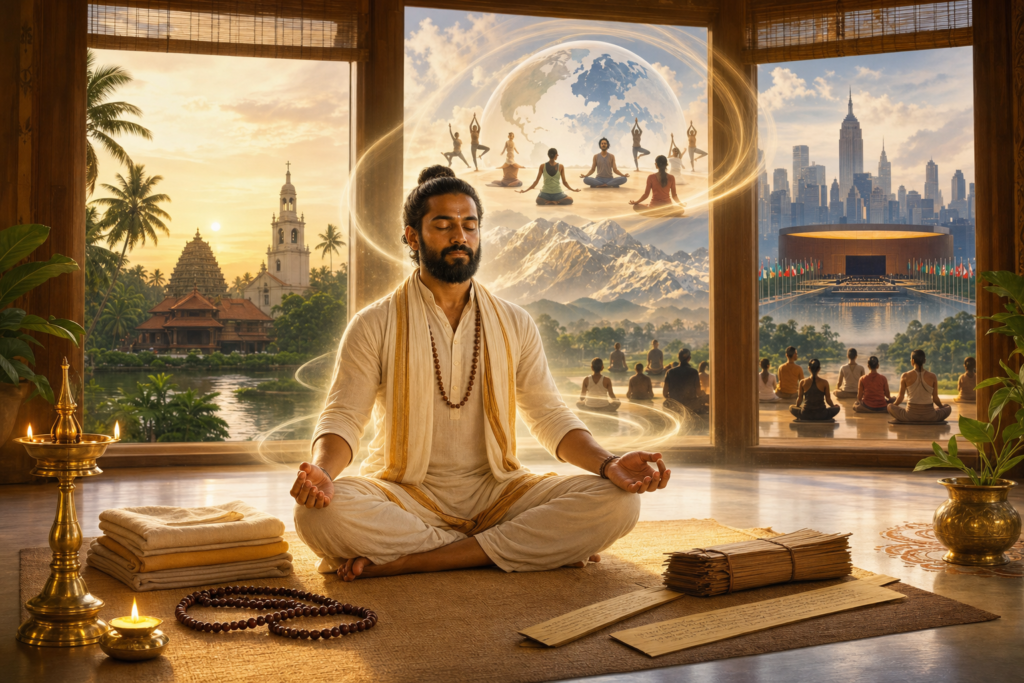
The conversation around his life begins at Yogabhavan, his residence in Kochi, a place that functions as both home and spiritual workspace. The setting itself reflects the central feature of his teaching: yoga is not treated as an ornamental philosophy, a weekend wellness trend, or a performance of bodily skill. It is lived through routine, hospitality, discipline, humility, and service. The spacious hall where classes are conducted carries the atmosphere of a practical sadhana space, where seekers gather not merely to stretch the body but to reshape habits, attention, and inner orientation.
In academic terms, his biography illustrates how yoga travels across social boundaries without losing its civilizational roots. It also shows how a dharmic practice can speak to people shaped by different religious, cultural, and national identities. The language of Sanatana Dharma and Vasudhaiva Kutumbakam in his reflections does not appear as a narrow claim of ownership. It appears as a vocabulary for human interdependence, spiritual hospitality, and the ethical insight that the world is one family.
Kerala, interfaith life, and the early grammar of belonging
Yogi Dileep’s early life was shaped by an unusual family inheritance. His father came from a Christian family, while his mother belonged to a Hindu family. Their marriage, according to his account, faced strong opposition from both communities. Instead of producing bitterness, this resistance appears to have strengthened the household’s moral character. He often describes his parents as people formed under pressure, like diamonds subjected to intense force.
This background is central to understanding his later emphasis on interfaith respect. He grew up moving between church and temple without experiencing the two spaces as enemies. The teachings of Jesus remained worthy of admiration to him, while organized religious identity never became the final measure of spiritual truth. His later commitment to universal spirituality was therefore not an abstract intellectual position. It emerged from childhood experience, family courage, and the daily practice of coexistence.
Equally important was the role of community care. As the youngest among relatives and friends, he was often watched over by neighbors and extended family networks while his parents worked and siblings attended school. This form of childhood, common in many older Indian neighborhoods, created a lived sense of interdependence. A child raised by more than one household learns that identity is not only private. It is relational, social, and sustained by trust.
This experience gives emotional depth to his later teaching. When he speaks of humanity as interconnected, it is not simply a philosophical proposition. It carries the memory of being cared for by many hands, of belonging to a community larger than the nuclear family, and of understanding that human life survives through mutual responsibility.
The fire that remained in memory
One childhood incident stands out as decisive. At the age of three and a half, he was nearly killed in a fire in a rented building. According to his recollection, the landlord’s son set the house ablaze to force tenants out and increase rent. A paint shop below accelerated the spread of flames. In the confusion, the family fled, but the small child was left behind.
His sister remembered him at the last moment, ran back into the burning building, caught hold of his leg, and dragged him out. Such an event can become more than a traumatic memory. It can become an ethical wound, forcing questions about greed, cruelty, money, and the capacity of human beings to harm one another for material gain. In 1989, when a spiritual master reportedly asked him, “Do you still carry the fire in your head?” the question recognized that memory not as mere fear, but as an unresolved moral imprint.
From a psychological perspective, this incident helps explain the seriousness of his later spiritual search. Yoga, in his life, did not arise as an escape from suffering. It became a way of examining suffering, disciplining the mind, and transforming a memory of danger into a commitment to healing. Many practitioners can recognize this pattern: the path often begins not in comfort, but in a confrontation with vulnerability.
Parents as first gurus and yoga as household practice
Yogi Dileep identifies his parents as his first gurus. His mother’s health crisis played a formative role in this understanding. She had a serious heart condition, and doctors reportedly gave her only a short time to live. His father encouraged her to adopt yoga, remove sugar, salt, and oil from her diet, and follow simple homeopathic remedies. She lived for another twenty-seven years, and Yogi Dileep was born after this transformation.
This family history is important because it frames yoga first as a health practice, then as a way of life. In his childhood home, yoga was not introduced as a separate subject or institutional discipline. It was woven into daily routine. The body, diet, breath, mind, and faith were not treated as isolated compartments. This holistic understanding is central to traditional Yoga philosophy, Ayurveda, and broader dharmic approaches to well-being.
His later training reflected a wide range of influences. He explored magnetotherapy, nature-cure movements, Vivekananda Kendra in Kanyakumari, and Sivananda Ashram programmes. He spent time with Dr. H.R. Nagendra, worked as staff in different centres, taught in Pune, and participated in the practical work of building halls and institutions. This experience gave him both philosophical exposure and administrative discipline.
Yet he did not confine himself to a single lineage. His statement that the entire universe is the guru captures a broad Indic sensibility: truth is received through teachers, scriptures, nature, experience, suffering, silence, and service. Such a view does not reject the Guru-Shishya Tradition. Rather, it expands the student’s humility before the many forms through which knowledge may appear.
The three voices before birth
One of the most striking elements in his life story concerns the circumstances before his birth. His parents already had two children, and the family’s finances were strained. According to his account, his father suggested abortion when his mother conceived again. His mother refused.
Through a devotee doctor close to the family, she sought guidance from Sathya Sai Baba. The message she received was direct: “Do not kill this child. He will become a yogi.” Yogi Dileep states that the same message came independently from Guru Nithyanidhi, his mother’s cousin, and from Prabhaakara Siddha Yogi, a silent saint who lived near the Poornathrayeesa temple in Tripunithura.
These accounts belong to the domain of spiritual testimony, and they should be understood with the care such testimony requires. Their importance lies not in demanding external verification for every detail, but in showing how Yogi Dileep interprets his own life: as protected, purposeful, and bound to a vocation larger than personal ambition. Within many dharmic traditions, such stories are not merely biographical decoration. They shape the seeker’s sense of duty.
Prabhaakara Siddha Yogi holds a special place in this memory. Yogi Dileep describes him as a saint whose eyes communicated more powerfully than words. This emphasis on silent transmission is deeply familiar within Indian spirituality. Knowledge is not always argumentative or verbal. At times it is embodied in presence, conduct, stillness, and the discipline of a realized life.
Swami Bua and the discipline of hatha yoga
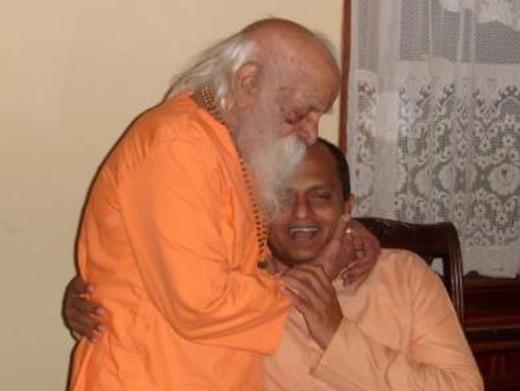
Yogi Dileep’s association with Swami Bua further connects his biography to the older world of hatha yoga masters. He first met Swami Bua as a child in Tripunithura and later encountered him again after moving to the United States. Swami Bua reportedly recognized him through a rare birthmark and accepted him closely.
Swami Bua’s life, as remembered by disciples and admirers, is presented as an example of extraordinary yogic vitality. He is described as a cousin of Swami Sivananda, a teacher of hatha yoga to many early Sivananda disciples, a teacher of Sanskrit and yoga to Sathya Sai Baba, a palace teacher to the Shah of Iran, and a world traveler who crossed continents many times. Yogi Dileep recalls that even past 120, signs of unusual vitality remained visible in him.
In 2008, in New York, Swami Bua gave Yogi Dileep formal sanyasa initiation. According to Yogi Dileep, he was the only person initiated by Swami Bua. This event is significant because it connects his public work not merely to activism or diplomacy, but to a line of spiritual discipline rooted in renunciation, self-control, and the classical demands of hatha yoga.
Hatha Yoga, in its deeper meaning, is not reducible to posture. It includes the disciplined refinement of the body, breath, senses, and mind so that higher awareness becomes possible. In modern global culture, yoga is often marketed through flexibility and fitness. Yogi Dileep’s association with Swami Bua reminds readers that the older tradition treated the body as a sacred instrument, not as a display object.
From torn posters to a global observance
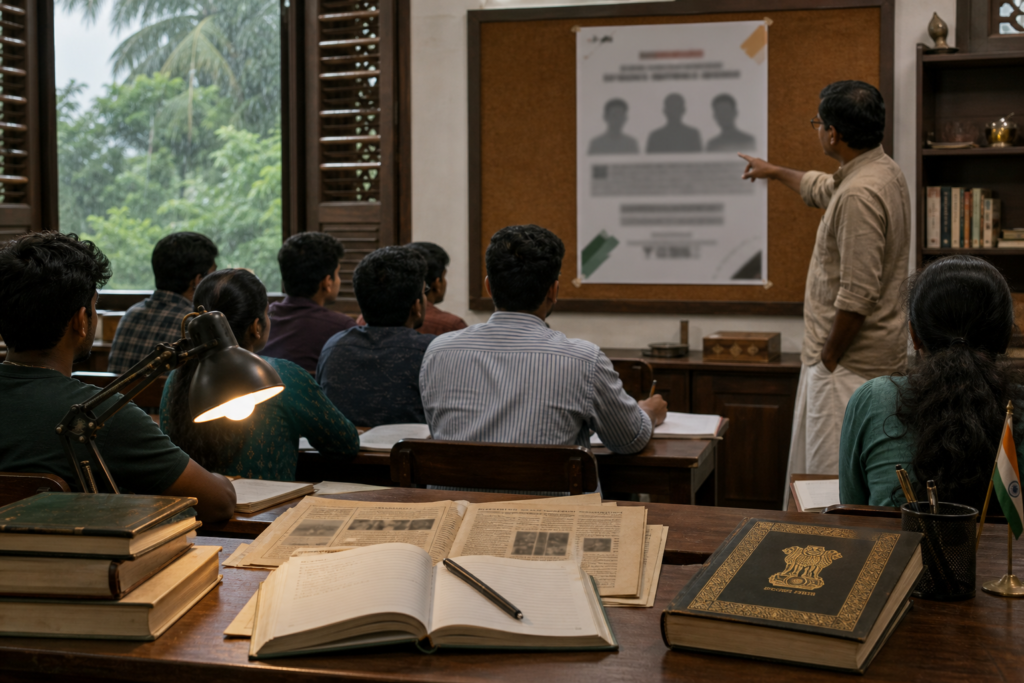
The early public phase of Yogi Dileep’s work was modest and difficult. In the late 1980s and early 1990s, he pasted handwritten posters in Tripunithura announcing yoga classes. People often tore them down. Yoga was still viewed with suspicion in some social circles, either as religiously unfamiliar, culturally misunderstood, or impractical for ordinary life.
His strategy was patient. Instead of beginning with heavy philosophical claims, he emphasized health benefits. Small groups formed. A few people stayed. Trust grew through experience. Only after practitioners felt tangible improvements did philosophical curiosity emerge. This sequence remains one of the most effective methods for transmitting yoga in plural societies: practice first, explanation later.
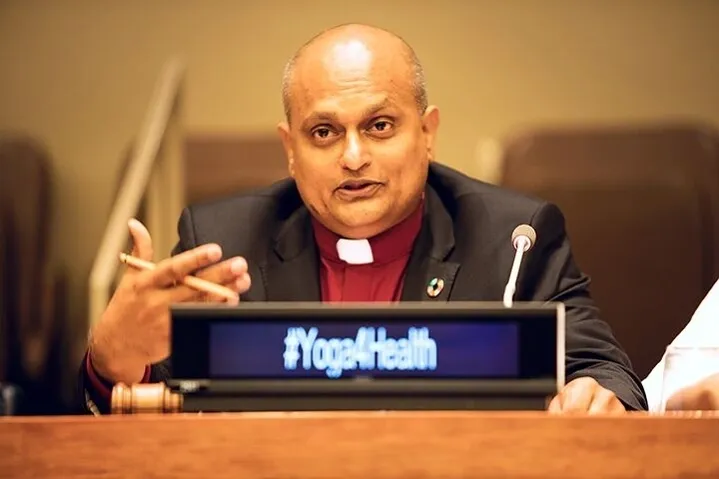
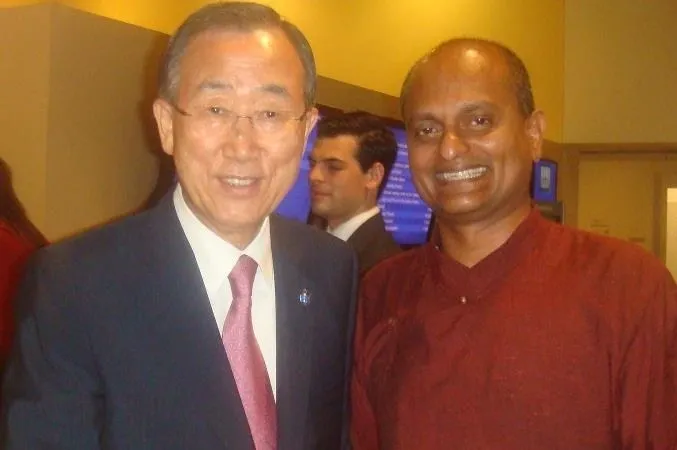
Years later, while teaching in New York, Yogi Dileep became convinced that yoga deserved formal global recognition through the United Nations. He began mobilizing support, reaching out to public figures, administrators, and yoga leaders, including D.R. Karthikeyan, former CBI Director, and Dr. H.R. Nagendra. This phase demonstrates an important truth about cultural diplomacy: spiritual traditions reach global institutions when practitioners combine conviction with organization.
The 2014 proposal by Prime Minister Narendra Modi at the United Nations General Assembly transformed this long aspiration into a diplomatic reality. The adoption of the resolution with support from 177 nations gave yoga unprecedented international legitimacy. The first International Day of Yoga on June 21, 2015, marked a turning point in India’s soft power and in the global understanding of yoga as a holistic discipline for health, harmony, and inner balance.
The West, legitimacy, and the problem of reduction
After UN recognition, yoga’s global visibility expanded dramatically. Yogi Dileep notes that formal recognition brought legitimacy. He conducted yoga sessions in unusual and symbolically powerful spaces: inside Egyptian pyramids, with Muslim participants, in churches and cathedrals, and across different continents. Such settings reveal that yoga can travel across religious and cultural boundaries when it is presented with sensitivity and confidence.
The Western reception of yoga, however, contains both achievement and risk. On one hand, millions of people now approach yoga for stress management, mobility, breath awareness, emotional balance, and mental clarity. On the other hand, modern culture often reduces yoga to fitness, branding, and visual performance. This reduction weakens the philosophical depth of the tradition.
Yogi Dileep’s method offers a corrective. Let people practice first. Let the body experience steadiness, the breath become calmer, and the mind discover space. Once benefit is experienced, deeper inquiry arises naturally. This is pedagogically sound and spiritually respectful. It avoids aggressive preaching while also refusing to empty yoga of its civilizational meaning.
Universal spirituality and dharmic unity
Yogi Dileep’s reflections on spirituality should be read as a plea for depth beyond rigid identity. Institutional religions and social communities have historical forms, boundaries, and inherited memories. Spirituality, in his view, points to a more fundamental reality: the inner search for truth, compassion, self-mastery, and unity. This approach does not require disrespect toward any tradition. It requires humility before the possibility that truth may be expressed through different languages and disciplines.
The dharmic framework is especially relevant here. Hinduism, Buddhism, Jainism, and Sikhism differ in doctrine, practice, metaphysics, and historical formation, yet they share a civilizational concern with discipline, compassion, self-transformation, ethical living, and liberation from ignorance or bondage. Yoga can serve as a bridge across these traditions when it is presented not as sectarian possession, but as a disciplined path toward clarity and harmony.
Concepts such as Sanatana Dharma and Vasudhaiva Kutumbakam offer a vocabulary for this unity. Sanatana Dharma points toward enduring principles rather than temporary ideological fashion. Vasudhaiva Kutumbakam expresses the insight that the world is one family. Together, they support a vision in which spiritual diversity need not lead to fragmentation. Diversity can become a field of mutual reverence when rooted in dharma, restraint, and truthfulness.
This vision also explains his admiration for interfaith dialogue. Dialogue succeeds when it does not flatten traditions into sameness, and when it does not weaponize difference. The great masters of many ages spoke to different communities in different idioms, but the ethical summons was often similar: overcome ego, cultivate compassion, serve others, discipline the senses, and recognize the sacredness of life.
Yoga as holistic health and civilizational responsibility
At the heart of Yogi Dileep’s message is the claim that yoga is holistic health. This includes the body, mind, breath, emotions, conduct, relationship with nature, and orientation toward the sacred. Such a framework aligns with growing contemporary interest in integrative health, but it is older than modern wellness vocabulary. The yogic tradition has long recognized that physical imbalance, mental agitation, ethical disorder, and spiritual forgetfulness are connected.
His insistence that science and spirituality must walk together is particularly important. Yoga need not be defended by rejecting scientific inquiry. Nor should science be used to strip yoga of its philosophical foundations. A mature approach allows clinical research, lived experience, textual tradition, and disciplined practice to illuminate one another. Breathwork, meditation, asana, nervous system regulation, stress reduction, and emotional resilience can all be studied while remaining connected to Yoga philosophy.
His message is also ecological. To live simply, stay connected to nature, protect the earth, and protect humanity is not merely moral advice. It is a practical application of yoga. If yoga means union, then exploitation of the earth, social cruelty, and restless consumption are signs of disconnection. The practice of yoga must therefore extend beyond the mat into food, speech, economics, relationships, and public responsibility.
The quiet force behind a global movement
Yogi Dileep’s life is compelling because it joins three levels of history. The first is intimate: a child saved from fire, shaped by interfaith parents, protected by community, and drawn toward spiritual discipline. The second is institutional: a teacher who built classes, networks, and advocacy across India and the United States. The third is civilizational: a practitioner who understood that yoga could become one of India’s most powerful gifts to the world when presented with humility and universality.
His journey also challenges modern assumptions about influence. Not every major contribution begins with visibility. Some begin with torn posters, small classes, neglected halls, and conversations held far from public attention. Some are carried by people who do not seek spectacle, but who persist until a cultural idea finds its historical moment.
International Yoga Day is now observed across nations, languages, and communities. Its success should not obscure the deeper responsibility it creates. The day must not become a mere annual performance of postures. It should remain a reminder of yoga’s integrated vision: personal discipline, social harmony, dharmic unity, respect for all sincere paths, and a reverent relationship with the earth.
In that sense, Yogi Dileep’s message remains concise and demanding. Money, degrees, and status do not guarantee happiness. Simplicity, humility, nature, discipline, and human connection remain essential. Everything else, as he suggests, unfolds in its own time.
Inspired by this post on Indica Today.



Leave a Reply
You must be logged in to post a comment.