
Meditation is often presented as a method for calming the mind, reducing stress, or improving concentration. Those benefits are real, yet the deeper dharmic understanding of meditation reaches beyond psychological quietude. In the traditions of Hindu spirituality, and in conversation with the contemplative disciplines of Buddhism, Jainism, and Sikhism, meditation becomes a disciplined movement from external dependency toward inner realization. It asks the human being to examine the source of longing, the limits of worldly satisfaction, and the possibility of discovering a love that is not exhausted by time, disappointment, possession, or loss.
The central insight is simple but profound: human beings often search outside themselves for unconditional love and lasting happiness, yet external objects, relationships, roles, and achievements remain subject to change. This does not make worldly life meaningless. Family, friendship, service, art, study, and community all have value. The problem arises when the changing world is expected to provide what only the eternal can provide. In that misplacement of expectation, ordinary affection becomes burdened with impossible demands, and the heart experiences the familiar cycle of hope, attachment, fear, disappointment, and grief.
Dharmic philosophy approaches this condition with remarkable diagnostic clarity. The mind seeks permanence in impermanent things because it has not yet stabilized its awareness in the deeper Self. In Vedantic language, the atman is not the fluctuating personality, the anxious mind, or the body moving through time. It is the enduring principle of consciousness. The Bhagavad Gita repeatedly directs attention toward this distinction between the perishable body and the imperishable Self, not as an abstract doctrine alone, but as a practical foundation for freedom from fear. Meditation, when properly understood, is the training by which this insight becomes lived experience.
Atma Kriya Yoga expresses this movement through its very name: action with awareness of the soul. The term suggests that spiritual practice is not an escape from action but a transformation of action. Breath, mantra, concentration, devotion, posture, and service are not isolated techniques; they become ways of refining awareness so that daily life is gradually reoriented toward the Divine. In this sense, meditation is not confined to a cushion, a room, or a scheduled session. It becomes a discipline of remembering what is eternal while moving through what is temporary.
The phrase “Divine Love is never fading, ever-growing, and there is nothing higher” captures the devotional heart of this practice. In bhakti traditions, Divine Love is not treated as a sentimental feeling. It is a metaphysical and spiritual reality, the deepest relationship between the soul and the Divine. Human love often fluctuates because it is filtered through fear, expectation, memory, and self-interest. Divine Love, by contrast, is understood as unconditional because it arises from the eternal source itself. Meditation becomes a way of clearing the inner field so that this love can be recognized rather than merely imagined.
This is why the movement from mind to heart is so important. The mind analyzes, compares, remembers injuries, anticipates loss, and constructs identity around preference and aversion. The heart, in the dharmic spiritual sense, is not merely the emotional center; it is the inner shrine where the presence of the Divine is intuited. The journey from the mind to the heart may be described poetically as short in distance but immense in discipline. It requires steadiness, humility, repetition, and sincerity. It also requires the willingness to stop treating inner emptiness as a problem that external consumption can solve.
Modern life makes this discipline both difficult and necessary. The contemporary mind is trained toward speed, comparison, display, and constant stimulation. Even spiritual language can be absorbed into the marketplace of self-improvement, where meditation is reduced to productivity, emotional management, or aesthetic lifestyle. Dharmic meditation offers a deeper correction. It does not deny mental health benefits such as stress reduction, emotional balance, and improved attention, but it refuses to stop there. Its higher purpose is self-realization, spiritual growth, and the awakening of a devotional relationship with the Divine.
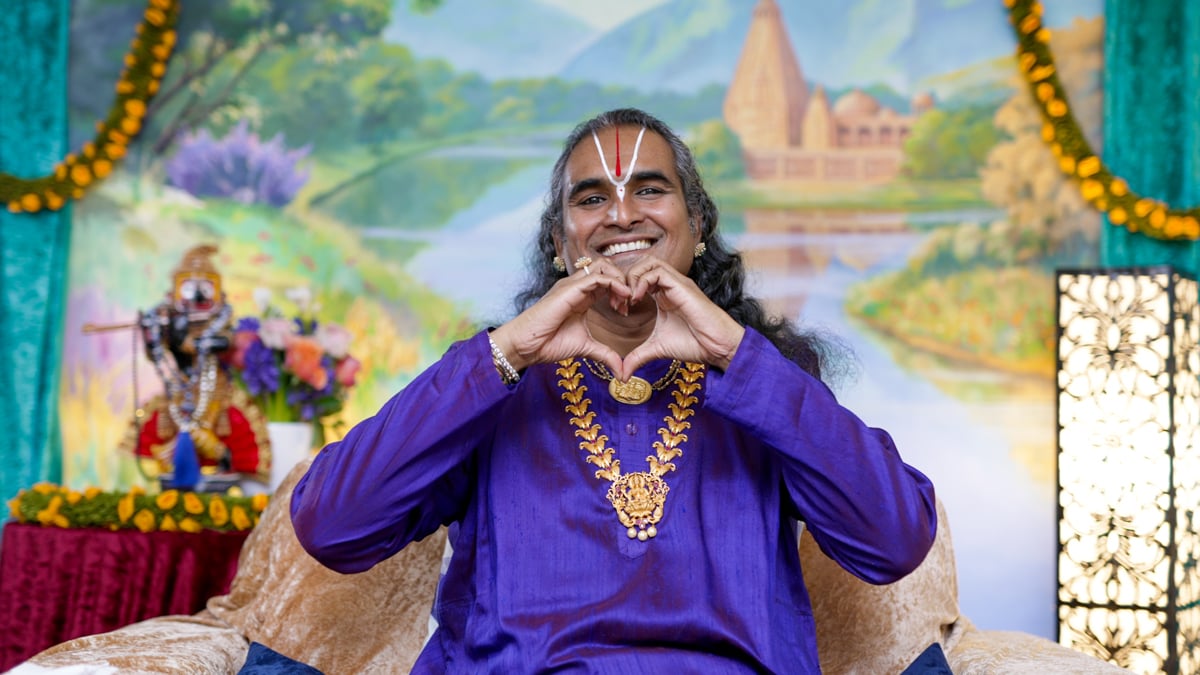
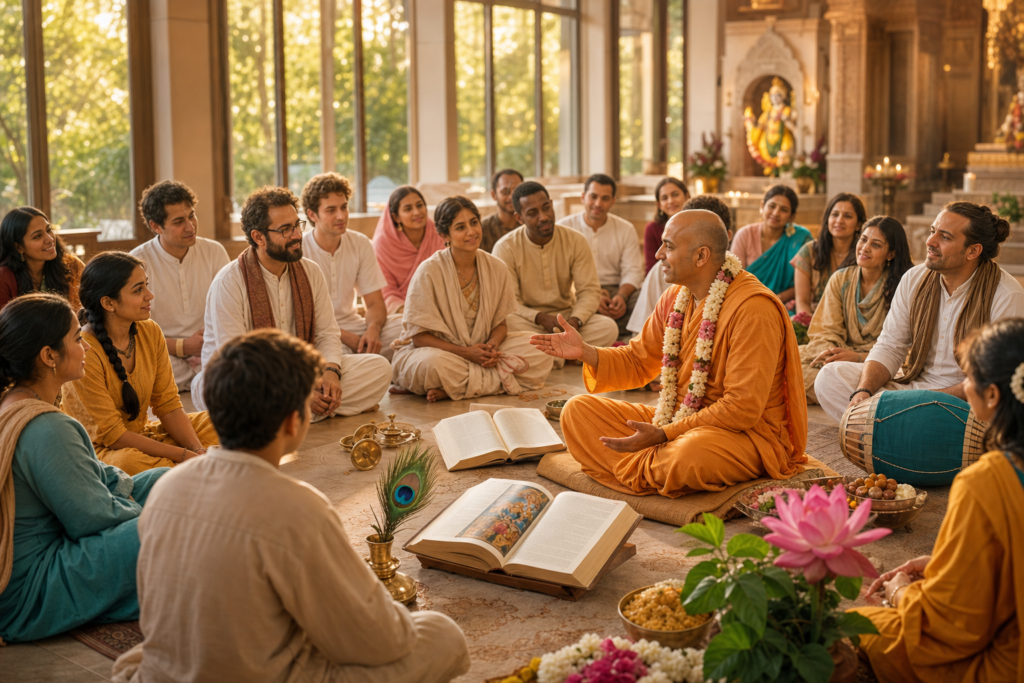
Atma Kriya Yoga places particular emphasis on bhakti, or love and devotion. The language of the lover and the beloved is central to many Hindu devotional traditions because it captures intimacy without reducing the Divine to an object of possession. In ordinary speech, people say they fall in love. In bhakti, the more precise movement is to rise in love. The devotee rises from self-centered longing toward surrender, from emotional dependence toward sacred relationship, and from possessive affection toward reverence. This devotional ascent is not opposed to knowledge; it gives knowledge warmth, direction, and existential force.
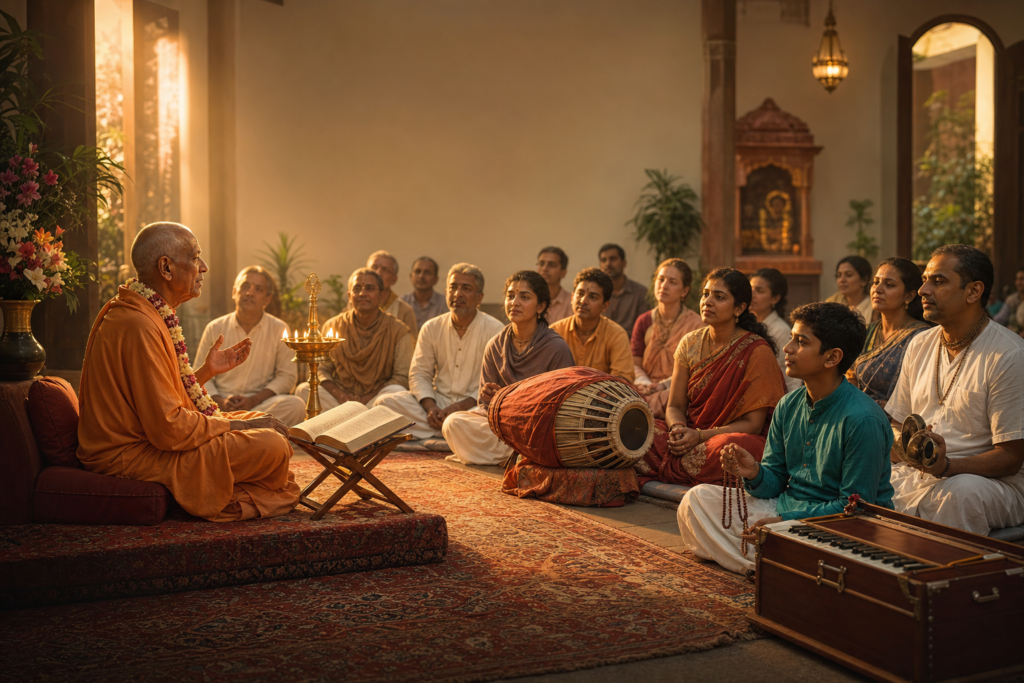
The concept of Navadha-bhakti, the nine forms of devotion, provides a sophisticated framework for understanding how love can be cultivated through different modes of practice. Shravana-bhakti involves listening to the glories of the Divine and the saints. Kirtana-bhakti expresses devotion through singing and sacred sound. Smarana-bhakti deepens remembrance of the Divine. Padaseva-bhakti directs the practitioner toward service. Archana-bhakti refines worship. Vandana-bhakti cultivates humility through reverential bowing. Dasya-bhakti transforms duty into service. Sakhya-bhakti nurtures intimate friendship with the Divine. Atmanivedana-bhakti culminates in self-offering.
These nine forms are not merely ritual categories. They describe a complete psychology of spiritual transformation. Listening reshapes attention. Singing reorganizes emotion. Remembrance interrupts forgetfulness. Service dissolves self-importance. Worship sanctifies perception. Bowing disciplines pride. Duty becomes sacred when offered without egoistic attachment. Friendship with the Divine softens alienation. Self-offering completes the movement from isolated individuality toward spiritual surrender. Together, these practices make bhakti a lived discipline rather than an occasional mood.
Such a framework also helps build unity among dharmic traditions. While vocabulary and theological interpretation differ across Hinduism, Buddhism, Jainism, and Sikhism, each tradition recognizes that untrained craving produces suffering and that disciplined awareness opens the possibility of liberation, compassion, and inner freedom. Buddhist mindfulness emphasizes insight into impermanence and non-attachment. Jain dhyana is inseparable from self-restraint, purification, and non-violence. Sikh simran centers remembrance of the Divine Name within a life of service and devotion. Hindu yoga and bhakti integrate meditation, mantra, surrender, and knowledge of the Self. The shared civilizational insight is that inner transformation must be practiced, not merely believed.
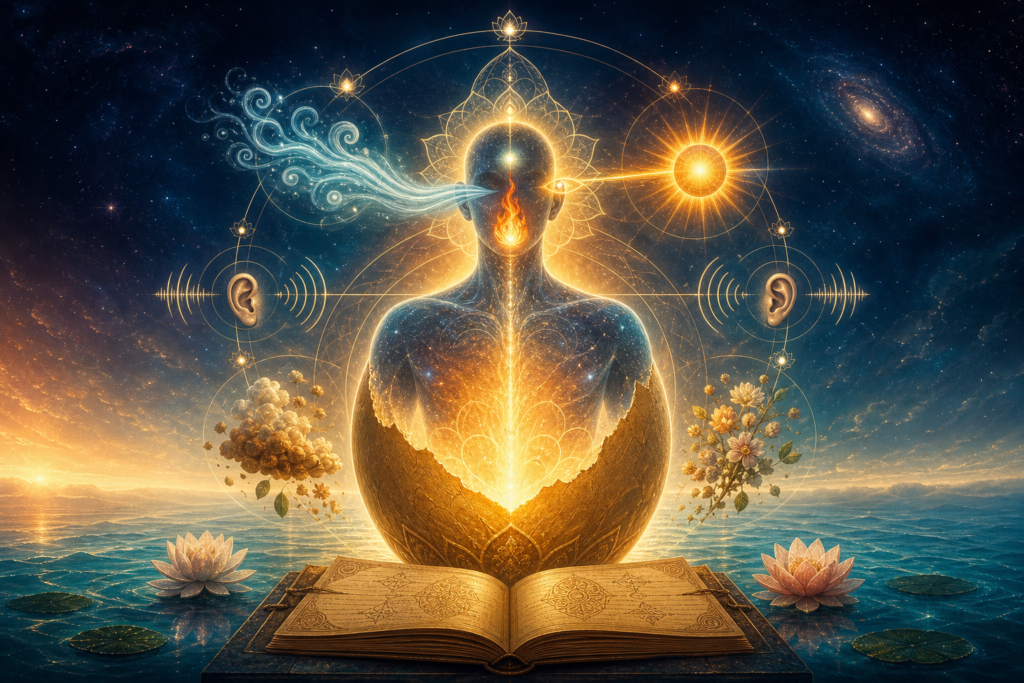
The role of breath in meditation is especially important from a technical perspective. Breath is both physiological and subtle. It reflects the nervous system, emotional state, and mental rhythm, while also serving as a bridge to prana, the vital energy described in yogic anatomy. Pranayama and conscious breathing help regulate attention because the breath is always available, embodied, and immediate. When breath is joined with mantra or sacred sound, practice becomes both somatic and devotional. The body is not rejected; it is refined into an instrument of awareness.
Chakra-based language in Kriya Yoga should be understood with care. In yogic traditions, chakras are subtle centers associated with psycho-spiritual functions, not merely physical organs. Practices that work with breath, mantra, and focused awareness are intended to purify, stabilize, and elevate consciousness. Whether interpreted traditionally as subtle energy centers or phenomenologically as disciplined points of embodied attention, the practical significance remains clear: meditation trains the practitioner to move from scattered reactivity toward integrated awareness.
The claim that lasting happiness cannot be found outside oneself should not be misunderstood as emotional isolation or indifference toward others. Dharmic spirituality does not require the rejection of human love. Rather, it asks that human love be rooted in something deeper than demand. When a person seeks ultimate completion from another finite person, love becomes anxious and possessive. When love is grounded in awareness of the soul and the Divine, relationships can become freer, kinder, and more resilient. The other person is no longer forced to play the role of God.
This insight is emotionally significant because many people come to meditation through suffering. Grief, loneliness, burnout, disappointment, and inner restlessness often reveal the limits of external achievement. A person may have social recognition and still feel empty. Another may be surrounded by family and still feel unseen. Someone may practice religious customs yet remain inwardly agitated. Meditation gives such experiences a disciplined direction. Instead of turning pain into cynicism, distraction, or resentment, the practitioner learns to treat it as a call to return inward.
The academic study of religion often distinguishes between doctrine, ritual, ethics, and experience. Atma Kriya Yoga and related bhakti practices show how these categories interpenetrate. Doctrine explains the eternal nature of the soul and the presence of the Divine. Ritual gives form to reverence. Ethics transforms action into service. Experience gives existential confirmation to what doctrine teaches. A mature spiritual practice does not isolate these dimensions. It integrates them into a coherent way of living.
One of the strongest practical features of this approach is that it does not require withdrawal from society. The older image of the meditator fleeing to a cave in the Himalayas has symbolic power, but it is not the only model of spiritual life. For householders, students, professionals, parents, and community leaders, the essential pilgrimage is interior. The task is to bring awareness into speech, work, conflict, care, and responsibility. When action is performed with remembrance of the soul, ordinary life becomes a field of sadhana.
Sadhana implies commitment. It is not a temporary experiment undertaken only when convenient. The discipline of meditation matures through repetition, patience, and sincerity. Immediate results are not always visible, and the mind often resists stillness. Yet the slow training of attention produces cumulative change. Reactivity softens. Judgment becomes less compulsive. The need to control every outcome weakens. Gratitude becomes more accessible. A person becomes less dependent on constant external validation because awareness has begun to rest in a deeper center.
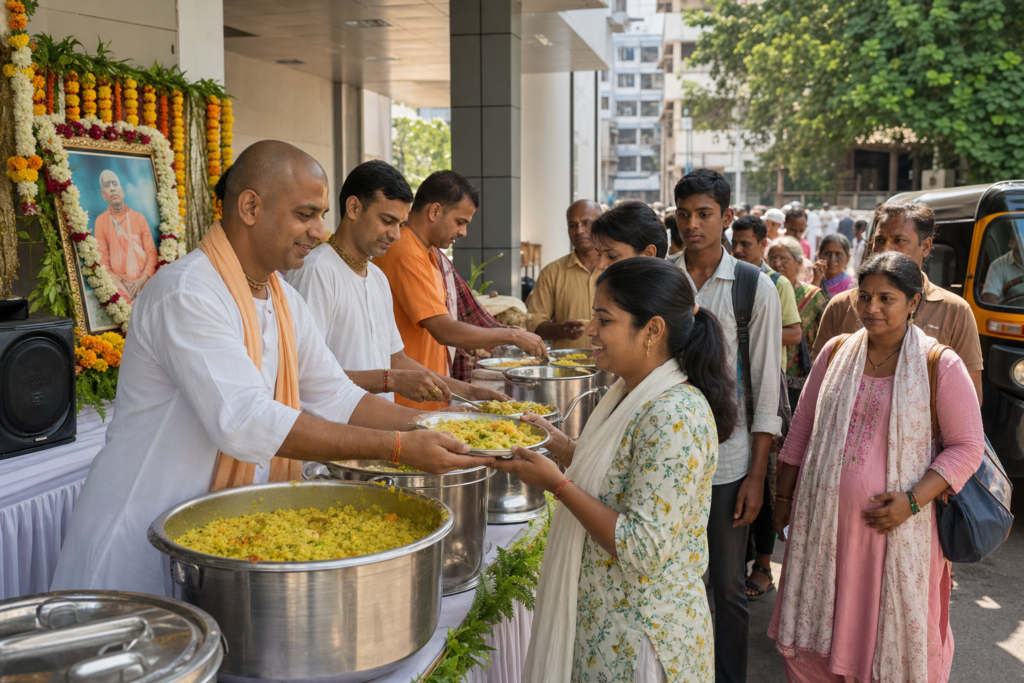
This transformation also has social implications. A person who recognizes divinity within oneself and others is less likely to reduce people to utility, identity, ideology, or conflict. Padaseva-bhakti, understood as service to humanity, makes this point especially clear. Spiritual realization is incomplete if it produces indifference to suffering. The heart of meditation must express itself as compassion, ethical action, humility, and responsibility. In this respect, bhakti and seva are not separate paths but mutually reinforcing disciplines.
The unity of dharmic traditions becomes visible here as well. Hindu seva, Sikh seva, Jain ahimsa, and Buddhist karuna all insist that inner realization must shape conduct. Meditation that does not refine behavior remains incomplete. Devotion that does not increase humility becomes emotional self-absorption. Knowledge that does not reduce ego becomes intellectual pride. The dharmic test of spiritual practice is therefore practical: does it produce greater clarity, compassion, self-control, reverence, and freedom from destructive craving?
From a technical standpoint, meditation develops through several interrelated capacities. The first is attention, the ability to remain present without being dragged away by every thought. The second is discernment, the ability to distinguish the changing contents of the mind from the witnessing consciousness. The third is regulation, the ability to work with breath, posture, and mantra so the body-mind system becomes stable. The fourth is devotion, the ability to direct the heart toward the Divine with love rather than mere effort. The fifth is integration, the ability to carry meditative awareness into daily action.
These capacities explain why meditation cannot be reduced to relaxation. Relaxation may occur, but it is not the final aim. The deeper aim is realignment. The practitioner gradually learns that thoughts are not sovereign, emotions are not permanent, and the ego is not the whole of identity. This realization does not make life painless, but it changes the relationship to pain. Challenges can still arise, yet they are met with a steadier awareness and a stronger sense that one is not spiritually abandoned.
In bhakti-oriented meditation, the Divine is not an abstraction outside life. The Divine is remembered as present in the heart, present in the breath, present in sacred sound, and present in the beings one serves. This orientation gives meditation warmth. It prevents inner discipline from becoming dry self-control. Love becomes both the path and the fruit. The practitioner does not merely seek to silence the mind; the practitioner seeks to awaken the heart to its deepest relationship.
The language of unconditional love must also be handled with philosophical precision. Unconditional love does not mean the absence of ethics, boundaries, discernment, or accountability. Dharmic traditions do not ask human beings to accept harm passively in the name of spirituality. Rather, Divine Love is unconditional because it is not dependent on egoistic bargaining. It can coexist with truth, discipline, and moral clarity. In daily life, this means that love becomes less possessive and more grounded, less dramatic and more luminous, less demanding and more capable of service.
The heart of meditation, then, is not a sentimental inwardness. It is an exacting discipline of returning to what is real. It recognizes impermanence without despair, honors human love without idolizing it, values action without being enslaved by results, and seeks the Divine without rejecting the world. Atma Kriya Yoga gives one vocabulary for this journey, especially through bhakti, breath, mantra, and awareness of the soul. Other dharmic traditions articulate parallel insights through their own practices of remembrance, restraint, compassion, and liberation.
Lasting happiness becomes possible when happiness is no longer confused with stimulation, possession, or emotional dependence. Inner peace becomes possible when the mind is trained to rest in the heart. Spiritual growth becomes possible when practice is performed with sincerity rather than performance. Divine Love becomes recognizable when the soul turns toward its eternal source. In that turning, meditation is no longer merely a technique. It becomes a pilgrimage from restlessness to remembrance, from longing to devotion, and from fragmentation to wholeness.
Inspired by this post on Bhakti marga blog.





Leave a Reply
You must be logged in to post a comment.