
Bhadrakali Vrata, observed on Kartik Shukla Pratipada, is a solemn Hindu discipline of fasting, worship, and introspection dedicated to Goddess Bhadrakali—an auspicious yet fiercely protective manifestation of Shakti (Pārvatī). The observance aligns with the first lunar day of the bright fortnight in Kartik, immediately following Amavasya, and symbolically marks the passage from darkness to the waxing light. Devotees undertake this vrata to invite protection, inner courage, clarity of purpose, and auspicious beginnings as the moon begins to gain strength.
Kartik Shukla Pratipada denotes the first tithi (lunar day) after the new moon in the Hindu lunar month of Kartik. Because it immediately follows Amavasya—associated in many regions with Deepavali and, in eastern India, Kali Puja—this vratam harmonizes the transition from a night of profound stillness to a fortnight of renewal. The day often coincides with Annakut or Govardhan Puja in some Vaishnava traditions, enabling households to celebrate devotion to both Shakti and Vishnu in a spirit of dharmic unity.
The epithet “Bhadrakali” integrates bhadra (auspicious, benevolent) with kali (the time-transcending, fierce dispeller of negativity). Bhadrakali thus represents compassion conjoined with indomitable power, a form simultaneously protective and grace-bestowing. This integrated vision of the Divine Mother is central to Shakta practice and broadly resonates with the pan-Indian understanding of Devi as both nurturing and invincible.
Textual and puranic strands describe multiple origins for Bhadrakali. In narratives surrounding Daksha’s sacrifice, Bhadrakali and Vīrabhadra manifest from Shiva’s wrath to restore cosmic order and defend dharma. Shakta traditions also celebrate Bhadrakali in the context of the Devi Mahatmya (Markandeya Purana), Devi Bhagavata Purana, and regional Sthala-Purāṇas, where the Goddess appears to subdue adharma and establish auspiciousness (mangalam).
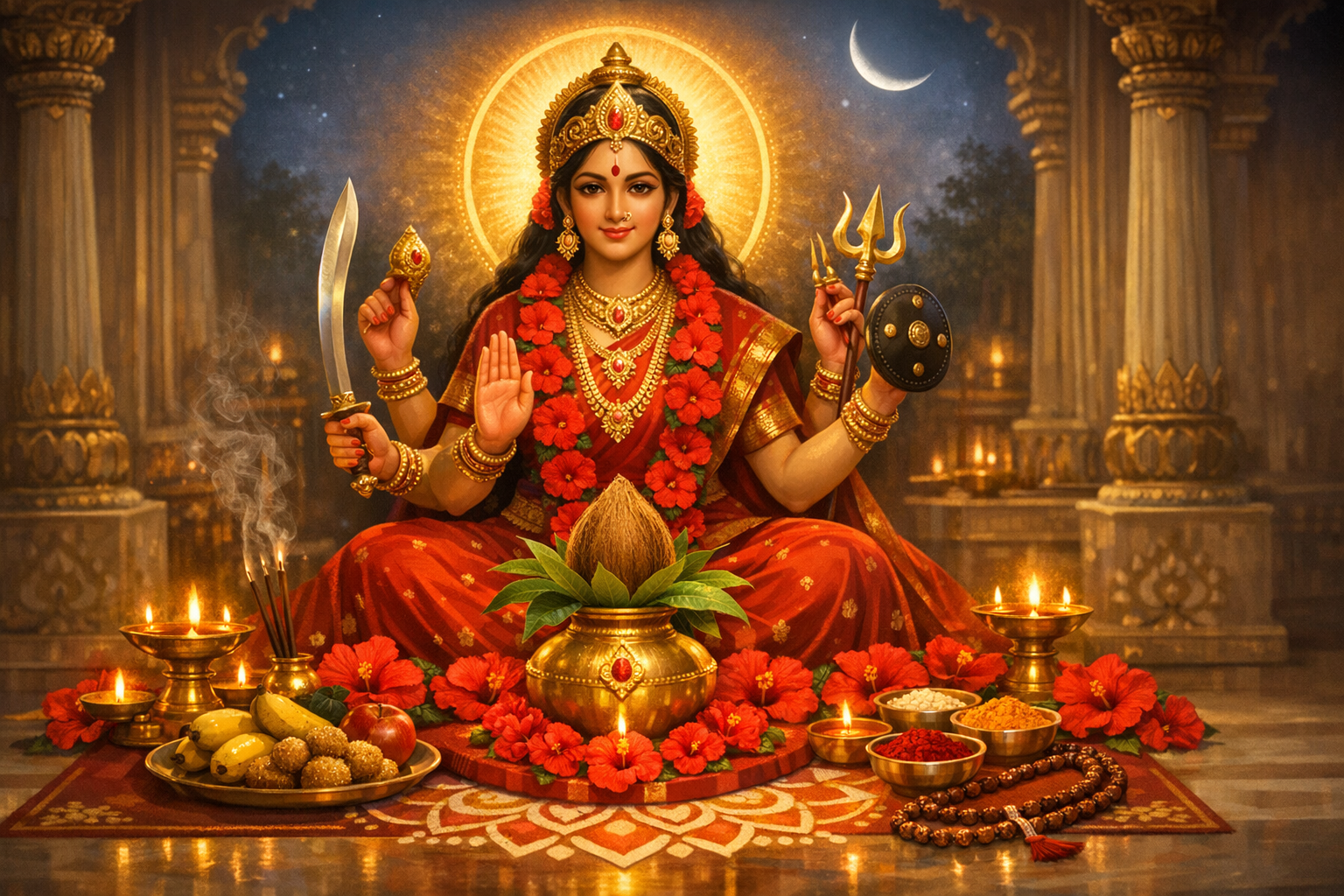
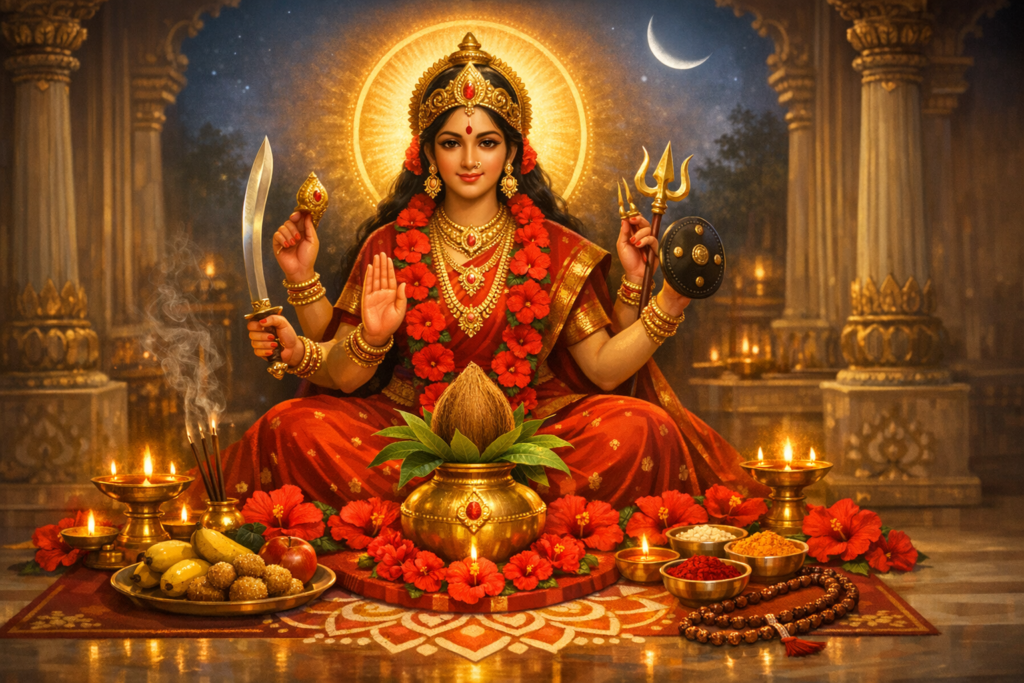
Iconographically, Bhadrakali is depicted as radiant and formidable, typically with multiple arms bearing weapons (such as khadga, trishula, and khetaka) alongside boons and blessings. Red and deep crimson hues, hibiscus blossoms, and a luminous aureole emphasize her power to dispel tamas (inertia) and protect devotees. The visual language is didactic: the implements signify the triumph of discernment, discipline, and devotion over fear and moral ambiguity.
The timing of Bhadrakali Vrata on Shukla Pratipada is spiritually strategic. As the moon waxes, practitioners align austerity (upavāsa) and worship (pūjā) with an ascending lunar rhythm, reinforcing sankalpa (intention) and inner steadiness. The vrata thus becomes an inflection point for new undertakings, study, and sādhana in the luminous half of the month.
Panchang practice generally follows the sunrise rule (udaya-tithi) for vrat observance unless a lineage prescribes otherwise. If Shukla Pratipada spans two civil dates, common guidance is to observe the vrata when the tithi prevails at local sunrise. Regional calendars may provide additional muhurtas (e.g., morning, midday, or evening windows); households are encouraged to consult their local panchang and family tradition for precision.
Preparation is both external and internal. Homes and shrine spaces are cleaned, sattvic meals are planned for after the fast, and devotional materials are readied. Internally, practitioners cultivate non-violence, truthfulness, clarity, and gratitude. The day’s discipline supports concentration, reduces distraction, and directs awareness toward the Goddess’s protective presence.
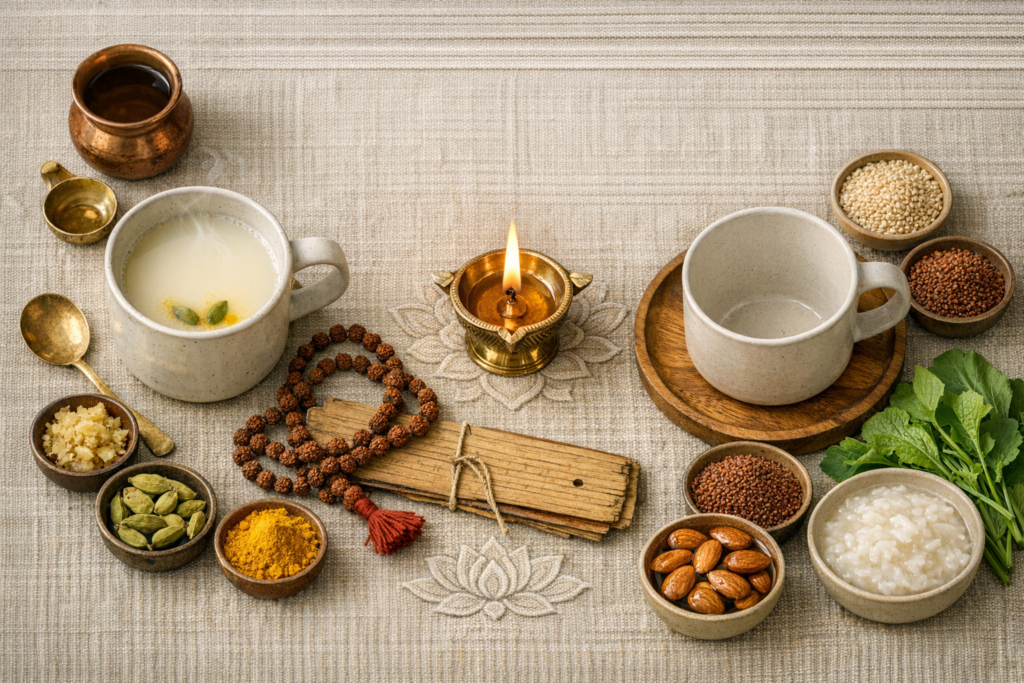
Fasting may be adapted according to health and tradition: nirjala (waterless), upavasa with only water, phalahara (fruits and milk), ekabhukta (a single light meal), or nakta (evening meal). The spirit of vrata—self-restraint, mindfulness, and ethical refinement—remains paramount. Individuals with medical needs should choose a safe form of observance.
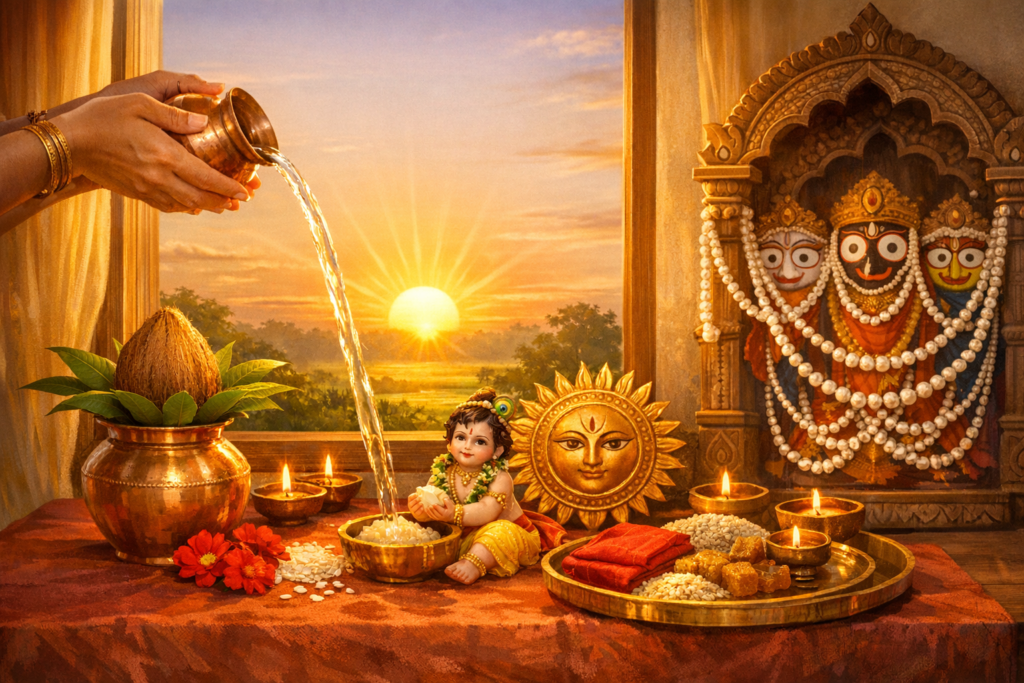
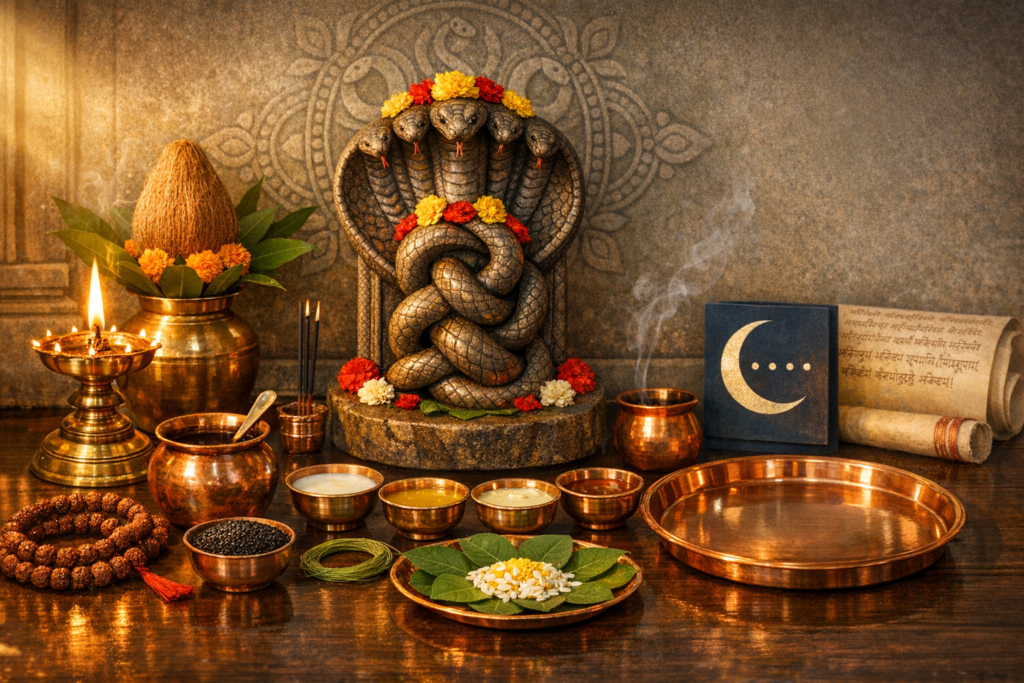
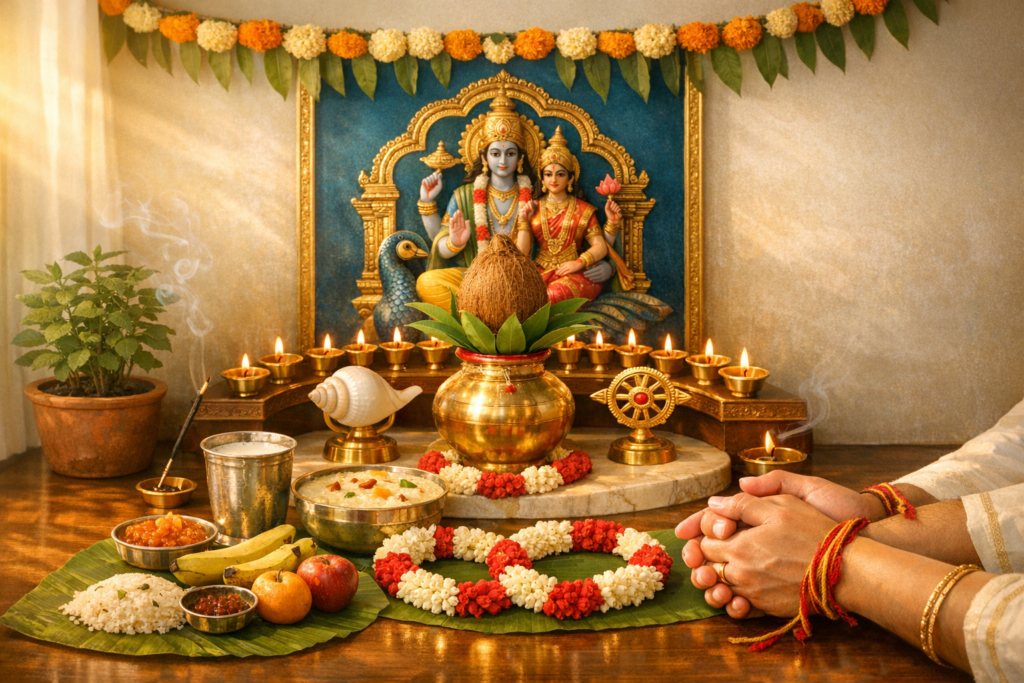
Customary puja samagri includes a picture or murti of Bhadrakali, a clean red cloth, kumkum and turmeric, sandal paste, incense, ghee or sesame oil lamps, red hibiscus or other red flowers, betel leaves and nuts (where customary), akshata (unbroken rice), fruits, coconuts, sweets made with jaggery and sesame, and water for purification. A kalasha with mango or betel leaves and a coconut may be installed as a symbol of the living presence of Shakti.
A concise sankalpa in simple Sanskrit transliteration can anchor intention: “Mama upatta samasta durita-kshaya dvara Shri-Bhadrakalyai prityartham Kartika-mase Shukla-Pratipadayam Bhadrakali-vratam aham karishye.” This affirms the resolve to perform Bhadrakali Vrata on Kartik Shukla Pratipada for the Goddess’s grace and for the attenuation of accumulated shortcomings.
After ācamana and purification, kalasha-sthapana and ghanta-nāda (bell) open the worship. Simple avāhana invites the presence of Bhadrakali. A dhyana (visual meditation) presents the Goddess in the heart’s altar: radiant, compassionate, and fear-dispelling, adorned in crimson, bestowing protection and inner strength.
Mantra-japa is central. Widely honored Devi mantras include: “Om Bhadrakalyai Namah” and the Navarna mantra “Om Aim Hrim Klim Chamundayai Vicche.” Practitioners often complete 108 repetitions on a japa-mala, maintaining a steady breath and one-pointed attention. Where family tradition prescribes, hymns to Kali, Durga, or the Devi Mahatmya may also be recited.
Offerings proceed in a gentle sequence: gandha (fragrance), pushpa (flowers), dhupa (incense), deepa (lamp), naivedya (food), and a sweetened drink such as panakam. The hibiscus is particularly beloved in Bhadrakali worship for its color and connotation of auspicious energy. Lamps of ghee or sesame oil are lit with the intent that inner and outer obstacles be dispelled.
Many households add protective recitations such as portions of the Devi Kavacham or select stotras from the Durga Saptashati, reflecting the Goddess’s role as a guardian of dharma. Where available, regional Bhadrakali stotras are included to preserve local heritage and family memory.
A brief kshama-prarthana (prayer for forgiveness) and arati complete the worship. A time-honored verse invoking the Goddess’s magnanimity reads: “Jayanti mangala kali, bhadrakali kapalini, durga kshama shiva dhatri, swaha swadha namo’stu te.” The verse salutes the Goddess as ever-auspicious, compassionate, and sustaining, reaffirming a devotee’s reliance on her protection and grace.
Dana (charity) is integral to vrata-dharma. Offerings to support women’s education and welfare, the feeding of guests and neighbors, and contributions to temples or community kitchens express Bhadrakali’s benevolence in social life. Acts of service reinforce the vrata’s ethical intent and extend its benefits beyond the household.
On concluding the vrata, udyapana (formal completion) may be observed with satvik foods such as kheer, sesame-jaggery preparations, or seasonal fruits. In some regions, the next morning includes distributing prasada to friends and relatives and offering lamps at nearby Devi shrines. The emphasis remains on gratitude, restraint, and continuity of practice.
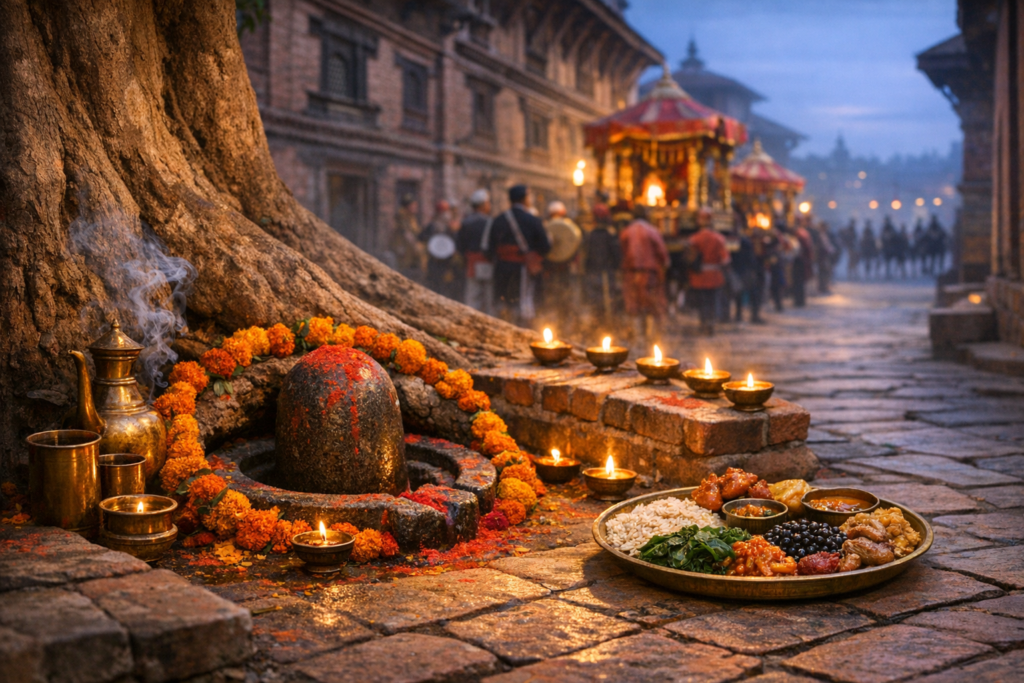
Regional practice varies while retaining theological continuity. In Telangana, the historic Bhadrakali Temple of Warangal witnesses heightened devotion in the Kartik season. In Kerala, Bhadrakali is celebrated across Bhagavati temples and in ritual performance traditions such as Theyyam, where the ferocious-yet-auspicious Mother is propitiated for communal well-being. Kathmandu’s Bhadrakali Temple near Tundikhel bears witness to a shared Indic devotion in the Himalaya. Kurukshetra’s Bhadrakali Mandir carries legends linking the Goddess to epic-era sanctity. The Itkhori complex in Jharkhand—where Hindu, Buddhist, and Jain heritage intersect—offers a living testament to dharmic plurality around the veneration of the sacred feminine.
Households outside South Asia adapt the vrata meaningfully with locally available samagri, modest home altars, and community recitations. The Kartik bright fortnight is also a season of collective temple visits; participation in shared aratis and satsangs amplifies the devotional current and fosters intergenerational transmission of practice.
Bhadrakali Vrata aligns naturally with broader dharmic values across Hinduism, Buddhism, Jainism, and Sikhism. Vows (vratas), ethical discipline, and compassion-centered worship are common threads in these traditions. The feminine principle of wisdom and protection resonates in Buddhist veneration of Tara and Vajrayogini; in Jain devotion to Ambika and Padmavati as shasanadevis; and in Sikh literary tradition, where compositions such as Chandi di Var valorize divine courage and the defeat of injustice. This vrata can thus be embraced as a celebration of the sacred feminine that strengthens unity across dharmic paths.
The vrata’s inner psychology is practical and contemporary. Fasting cultivates restraint; mantra and puja regulate attention; charity expands empathy; and the sankalpa clarifies priorities. In this integrative framework, Bhadrakali protects not only from external hazards but also from the inner dispersions of fear, doubt, and lethargy—inviting a moral clarity indispensable to everyday life.
Ethically, the observance is rooted in ahimsa and sattva. Where historical customs included tamasic offerings, contemporary guidance in most communities favors purely vegetarian, symbolic, and non-violent substitutes (such as red-hued water offerings), ensuring that devotion to the fierce Mother is expressed through compassion, discipline, and service.
Common practical questions admit clear, tradition-sensitive answers. Anyone may observe the vrata with sincerity; when the tithi spans two civil dates, the day when Shukla Pratipada prevails at sunrise is generally preferred; those with health needs adapt the fast safely; and households follow their inherited parampara for matters of ritual nuance. In all cases, the vrata’s essence—devotion, ethical living, and the remembrance of Shakti—remains the reliable guide.
By aligning with the lunar uplift of Kartik Shukla Pratipada, Bhadrakali Vrata offers a coherent sadhana to renew intention, deepen courage, and kindle auspicious momentum. The day’s worship honors the Mother who is at once bhadra (benevolent) and kāli (time-transcending), and affirms a shared civilizational insight: that the union of compassion and strength is the surest protection for individuals, families, and society.
Inspired by this post on Hindu Pad.





Leave a Reply
You must be logged in to post a comment.