
Ananta Phala Saptami—also referenced as Anandsaphal Saptami in later vernacular usage—is a sacred observance described in the Puranas as the Saptami that bestows “ananta phala,” or immeasurable spiritual merit. In contemporary practice it is most widely known as Santan Saptami or Muktabharana Saptami. It falls on Bhadrapada Shukla Saptami, the seventh lunar day of the bright fortnight of Bhadrapada (typically August–September in the Hindu calendar), and is observed for lineage well-being (santāna-kṣema), family prosperity, and enduring auspiciousness.
Within the Hindu calendar (Purnimanta and Amanta systems), the tithi of Saptami is identified at sunrise for vrata purposes, so regional almanacs (panchāṅgas) may list slightly different civil dates while still agreeing on the same ritual window. Devotees prioritize the Saptami prevailing at sunrise for sankalpa and for offering Surya Arghya, harmonizing practice across regions despite calendrical nuance.
Across Hindu scriptures, Saptami is traditionally associated with Surya. The Skanda Purana and Padma Purana, among other Puranas, extol Saptami vratas dedicated to the Sun, praising their power to purify, to restore vitality (ojas), and to nurture righteous continuities in family life. While Ratha Saptami (Magha Shukla Saptami) is the best-known Surya vrata, Bhadrapada’s Ananta Phala Saptami holds a distinct place for its santan-centered intent and its emphasis on sustained blessings through disciplined devotion.
The very names in circulation illuminate its scope. Santan Saptami foregrounds aspirations for progeny and the protection of children; Ananta Phala Saptami highlights inexhaustible punya; and Muktabharana Saptami reflects a regional emphasis—especially in Jagannath traditions—on ornamentation (bhūṣaṇa) and the resplendent darśana of the deity. Together, these names present a devotional landscape where scriptural ideals and local customs cohere.
Classical vrata manuals (vrata-paddhati) describe a familiar structure for Ananta Phala Saptami: pre-dawn purification, clear sankalpa for santan-kṣema, Surya Arghya at sunrise, a focused puja to Surya or to Santana Gopala (Krishna as the divine protector of children), and dana (charity) that sustains the spirit of gratitude. The vrata’s heart is disciplined remembrance: aligning body, breath, and intention with the rhythm of a Saptami sunrise.
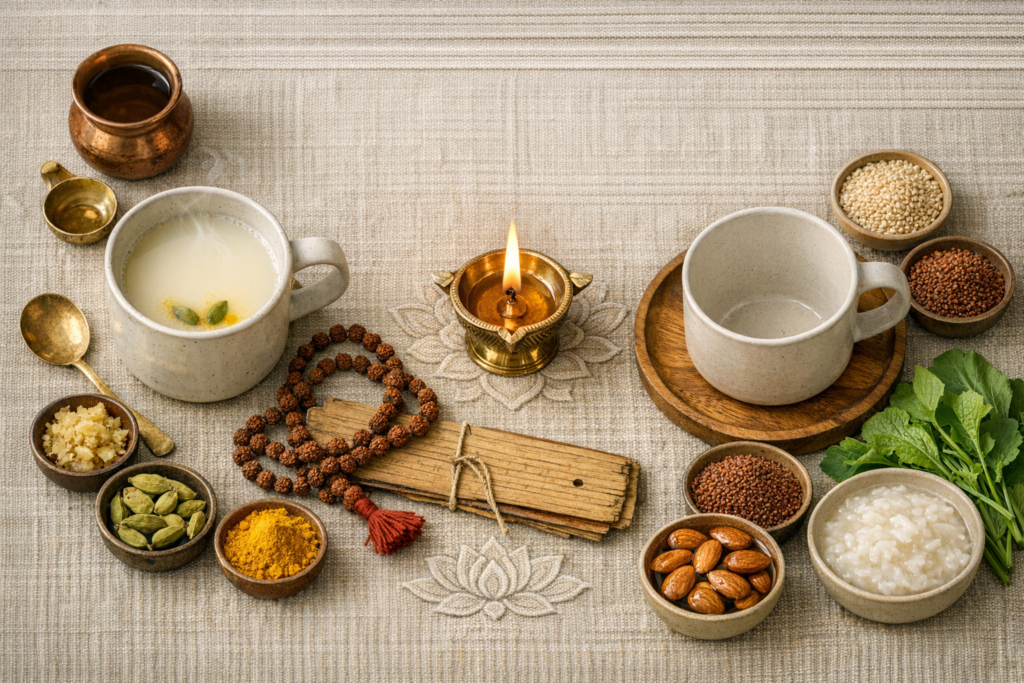
In Santan Saptami observances, married couples—particularly those praying for healthy progeny or the protection of existing children—undertake a simple or moderate fast (upavāsa). Many choose phalahara (fruit-and-milk fast) through the day and a sattvic meal after evening worship. The vrata is accessible and inclusive: elderly devotees, nursing mothers, or those with medical needs may undertake a sankalpa of restraint, prayer, and dana without harsh fasting, upholding the dharmic principle that sincerity supersedes austerity for its own sake.
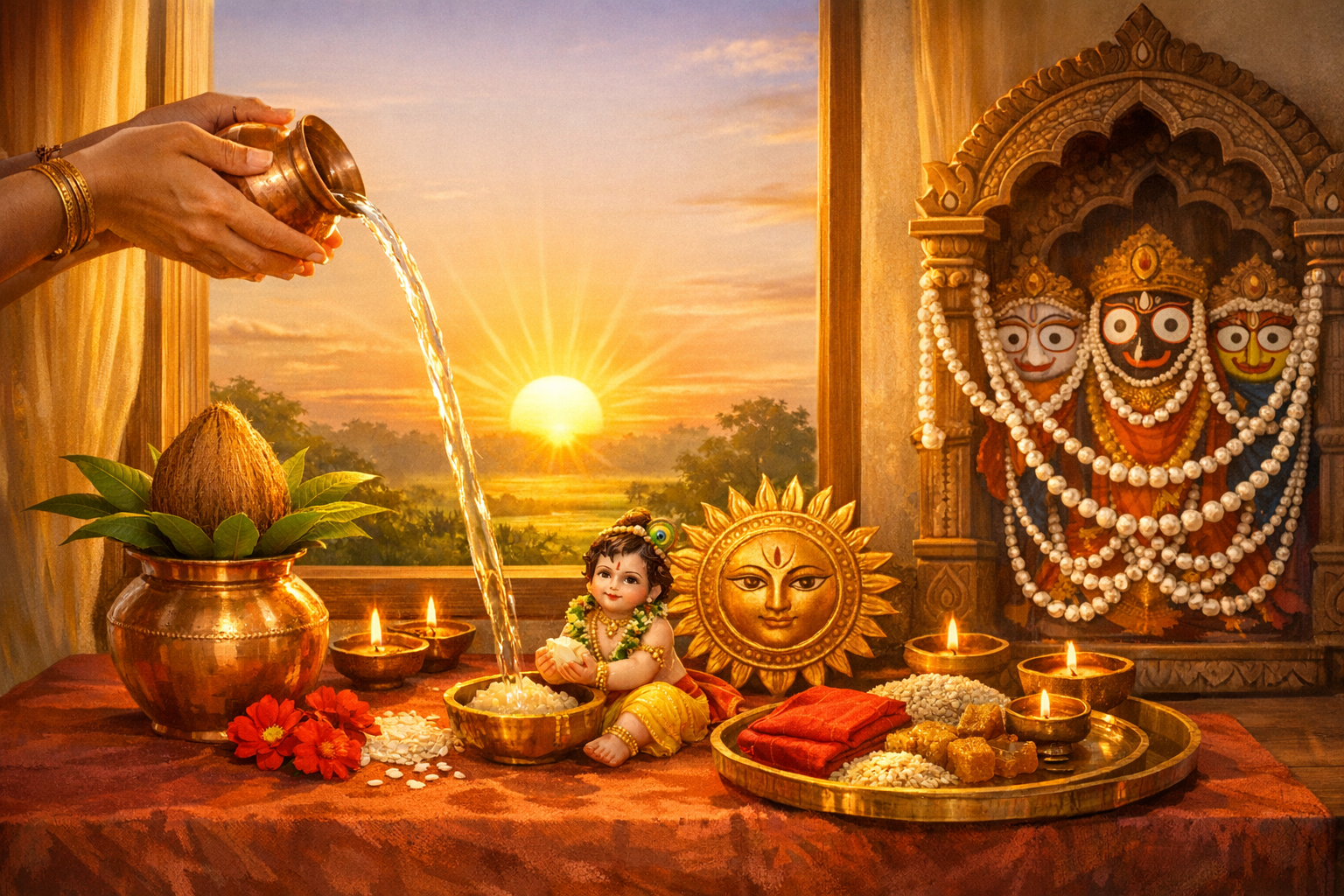
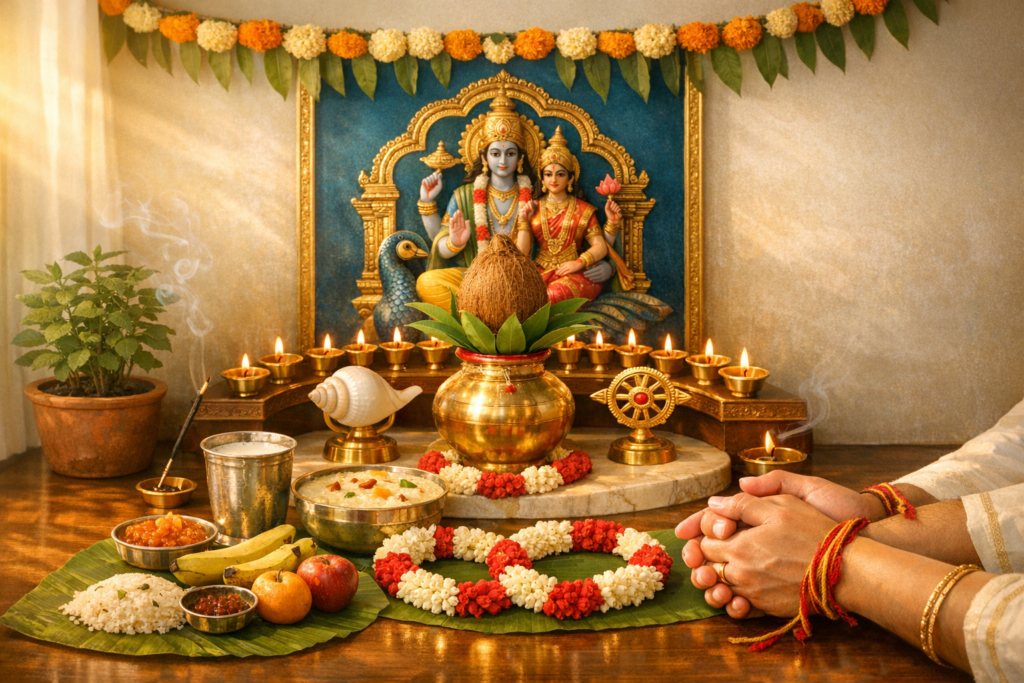
Sunrise is pivotal. After bathing, devotees prepare a clean altar. A small kalasha may be established, or a Surya image placed on a red or ochre cloth. Arghya is offered to the Sun with water poured from a lota or vessel held at chest height, often mixed with akshata (unbroken rice), red flowers, and a touch of jaggery or honey. The offering is accompanied by Surya mantras—many recite Aditya Hridayam verses, the Gayatri Mantra, or the Navagraha mantras—affirming Surya as the life-giver who illuminates both outer and inner vision.
Where Santana Gopala worship is central, a Balakrishna murti or picture is bathed (if feasible) with pañcāmṛta (milk, curd, ghee, honey, and sugar), wiped clean, and adorned with tulasi. Offerings include homemade sweets, kṣīra (milk preparations), and butter, alongside the gentle recitation of the Santana Gopala mantra. The mood is tender and familial, reflecting a prayer that children—and the lineage of virtues they carry—may be sustained and safeguarded.
In many Smarta and Vaishnava homes, the puja sequence moves from sankalpa to Surya Arghya, then to the main deity worship, and finally to naivedya and dīpa. A simple sankalpa may be spoken in one’s own language, stating the date as Bhadrapada Shukla Saptami and the intent as santan-kṣema, āyuḥ (longevity), and ārōgya (health) for the family. The vrata concludes with pradakshina (circumambulation), a brief meditation, and distribution of prasada.
Mantric recitations vary by tradition. Common choices include Surya’s dvādaśa-nāma stotra, Aditya Hridayam excerpts, and the Gayatri Mantra at sunrise and noon. For the santan aspect, many recite “Om Devaki-suta Govinda Vasudeva Jagatpate, Dehi me tanayam Krishna tvaamaham sharanam gatah,” expressing a humble plea for the blessing and protection of children, framed within bhakti and trust.
Dana (charitable giving) is emphasized in the Puranic framing of Saptami vratas. Grains, jaggery, red cloth, copper vessels, and lamps are commonly donated, alongside annadāna where feasible. The ideal is compassion in action: supporting those in need while concluding the vrata with udyāpana (a simple, heartfelt completion rite) that shares merit with family and community.
Regional traditions enrich the day’s texture. In Odisha’s Jagannath tradition, the term Muktabharana Saptami evokes the luminous darśana of Śrī Jagannath, Balabhadra, and Subhadra adorned with pearls (muktā-bhūṣaṇa). While attire calendars at the Puri Srimandir are detailed and vary across the year, local devotional discourse and regional panchāṅgas recognize a Saptami in Bhadrapada that shines with the aesthetics of ornamentation and the longing for familial grace. Households in coastal and inland Odisha alike often blend Surya Arghya with devotion to the Jagannath triad, keeping the focus on santan kalyāṇa.
In northern and western India, Santan Saptami is observed with Surya-centric puja and readings of vrata-kathā that narrate the transformative power of disciplined vows. These narratives typically describe couples who, through faith and ethical living, overcome obstacles to conceive or to protect their children, underscoring a broader ethical arc: tapas (discipline), dāna (generosity), and dayā (compassion) align human effort with divine grace.
Philosophically, Saptami is Surya’s tithi. The Puranas frame Surya not merely as a physical luminary but as a principle of awareness that dispels metaphorical darkness. By choosing Bhadrapada Shukla Saptami for a santan-focused vrata, the tradition implicitly links fertility, health, and family continuity to inward light—clarity in choices, steadiness in conduct, and a daily renewal of gratitude at sunrise.
Calendrically, Bhadrapada lies at a liminal juncture for many agrarian regions, transitioning from monsoon vigor to autumnal steadiness. Ananta Phala Saptami resonates with this seasonal turning: the sankalpa to protect children and nourish family echoes the farmer’s hope that the year’s growth will ripen well. In this way, the vrata’s metaphysics harmonizes with environmental rhythm.
Health-aware observance is integral. Traditional texts never demand self-harm in the name of austerity. Individuals facing medical constraints can adopt a thoughtful sankalpa—lite fasting or dietary restraint, extended mantra-japa, mindful Surya Namaskara within capacity, and increased dana—ensuring the vrata remains a source of well-being rather than strain.
Practitioners often integrate a modest sequence of Surya Namaskara on this day, aligning breath with movement at dawn. Beyond devotional symbolism, this practice honors circadian balance, supports musculoskeletal health, and nurtures mental clarity—an embodied reminder that dharma attends to both soul and soma.
Ananta Phala Saptami offers a bridge across dharmic traditions. While the vrata itself is a Hindu observance rooted in the Puranas, its key disciplines—fasting with intention, sunrise gratitude, compassionate giving, and familial solidarity—resonate with Buddhist uposatha reflections, Jain anuvrata ethics and tithi fasts, and Sikh commitments to seva and family stewardship. In this shared ethical vocabulary, the day affirms a civilizational unity: diverse paths converging on compassion, self-restraint, and community care.
Frequently asked clarifications help situate practice accurately. Ananta Phala Saptami in Bhadrapada is distinct from Ratha Saptami in Māgha; both are Surya-linked but serve different ritual emphases. The sunrise rule for tithi selection governs sankalpa timing. Couples without children, parents seeking protection for their young, and extended families alike may observe the vrata. Those unable to fast fully may anchor the day in mantra, Surya Arghya, and dana. Households often keep the altar simple—clean cloth, lamp, flowers, and sincerity are sufficient.
For those who track temple traditions, Jagannath Puri’s liturgical calendar remains a luminous reference point throughout the year. While specific beshas (attire forms) and festival timetables are set by the Puri Srimandir administration and change with the lunar year, devotees associate Santan Saptami’s mood with the grace of ornamentation and the wish for children to be “adorned” with virtues—mukta-like, pure, and lustrous.
In practical terms, the day’s observance can be summarized as intentional simplicity: a clean beginning at dawn, water offered to the East with a quiet mind, a short but sincere puja to Surya or Santana Gopala, and a gesture of generosity. The concluding lamp at dusk gathers the day’s efforts into warmth and continuity, carrying the prayer that families flourish in health, wisdom, and mutual respect.
Ultimately, Ananta Phala Saptami (Anandsaphal Saptami)—honored as Santan Saptami and Muktabharana Saptami—invites a return to essentials: a sunrise of gratitude, a day of mindful discipline, and an evening of shared joy. Rooted in the Puranas and enlivened by regional traditions from the heartland to Jagannath Puri, the vrata affirms the enduring promise of dharma: where intention is steady, compassion generous, and practice sincere, blessings deepen across generations.
Inspired by this post on Hindu Pad.





Leave a Reply
You must be logged in to post a comment.