
Dashtoddharana Panchami is a specialized Hindu vrata dedicated to the spiritual upliftment (uddhārana) of those who have suffered an untimely, unnatural death due to snakebite. It stands alongside, yet distinct from, broader ancestor rites and Naga Devata worship, offering a focused path of compassion, remembrance, and prayer for liberation (moksha). While many regions align its observance with the auspicious Shukla Paksha Panchami that often coincides with Naga Panchami in Śrāvaṇa, local calendrical traditions may vary; consultation of the regional pañcāṅga ensures accuracy. As a practice, it integrates Vedic mantras, Naga Devata pūja, and pitṛ-tarpana to direct accrued merit toward the deceased, embodying the Hindu ideal of karuṇā (compassion) for all beings who meet apamṛtyu (untimely death).
Etymologically, the name expresses its intent with clarity: Dashta (दष्ट), “bitten” (especially by a serpent); Uddhārana (उद्धारण), “to raise up, deliver, or redeem”; and Pañcamī, “the fifth lunar day.” Framed as a vrata, the sankalpa explicitly prays for the dashta-jana-uddhārana, the elevation of a departed person whose life ended through envenomation. This aim is firmly rooted in Dharmaśāstra and puranic sensibilities that counsel special prayashcitta (expiatory) rites for apamṛtyu, reflecting the conviction that specific karmic obstructions can be lightened through directed worship, charity, and mantra-japa.
Classical sources, including the Garuda Purana’s reflections on posthumous rites, emphasize that souls departing through violent or unnatural means may require additional spiritual assistance to transit peacefully. In that horizon, Dashtoddharana Panchami complements, rather than replaces, established expiations like Narayanabali and specialized śrāddha performed under the guidance of an ācārya. The vrata centers compassion upon a concrete cause—snakebite—by invoking Naga Devatas, reciting life-protective mantras such as the Mahāmṛtyuñjaya, and offering tarpaṇa with black sesame (til) and kuśa as acts of directed merit.
Calendrically, most lineages observe the vow on a Shukla Paksha Panchami; in many regions this is Śrāvaṇa Shukla Panchami (the day of Naga Panchami), while elsewhere it may be situated differently depending on local siddhānta and temple tradition. Observances generally follow the Panchami tithi prevailing at sunrise; householders and temple priests often refine the timing by consulting auspicious muhurtas. Because regional almanacs differ (nirayana calculations, sunrise conventions, and local latitude/longitude), a locally issued pañcāṅga or guidance from the family priest is the most reliable authority for date and time.
Who may undertake this vrata? Family members commonly do so on behalf of a specific departed relative, invoking name and gotra in the sankalpa. Yet many communities also expand the intention to include all beings who have met such an end, thereby cultivating universal compassion. This broad, non-sectarian spirit resonates across Dharmic traditions—Hindu, Buddhist, Jain, and Sikh communities share practices of remembrance, almsgiving, and prayer for those who departed in distress—affirming a shared commitment to alleviate suffering and to honor the sanctity of life.
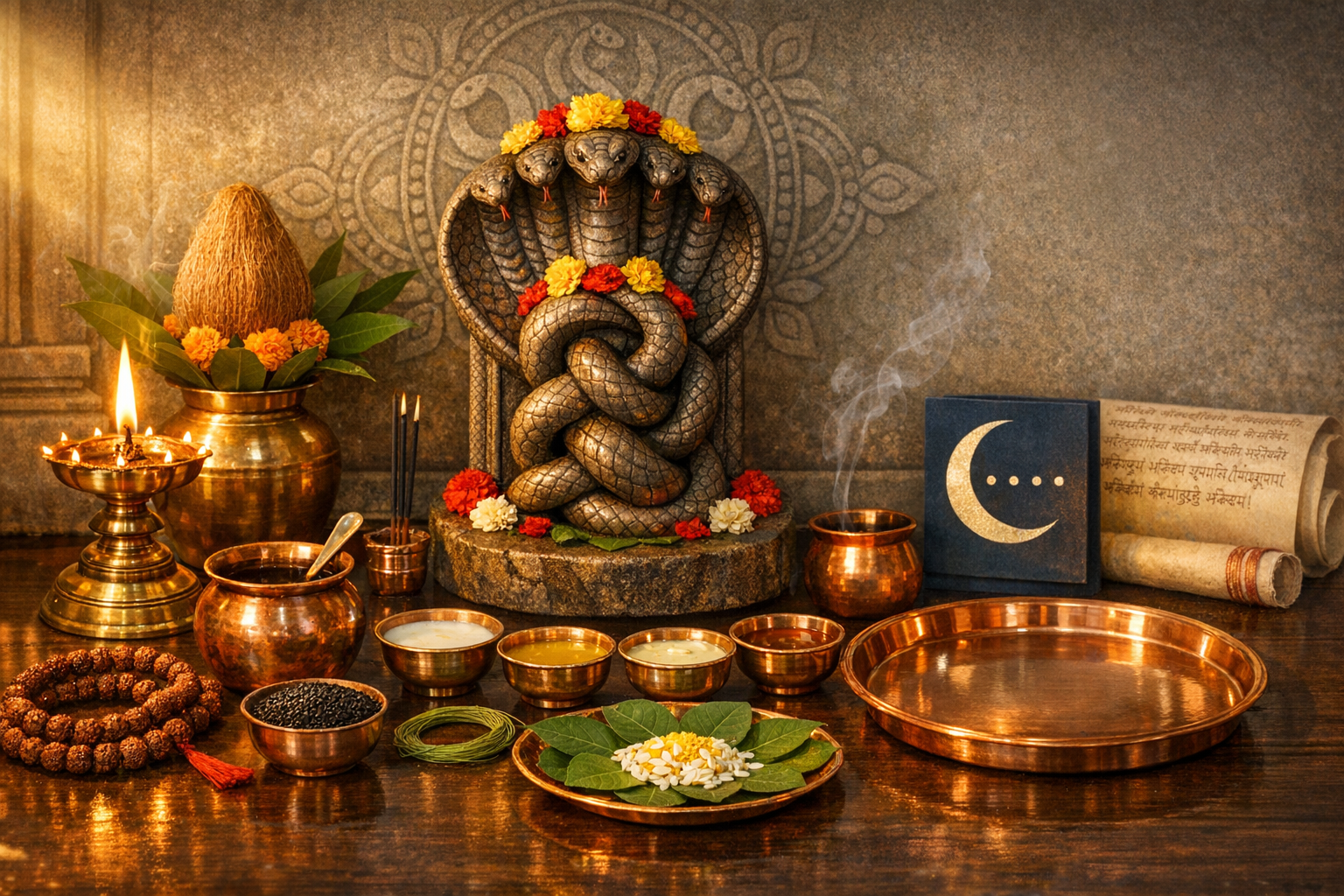
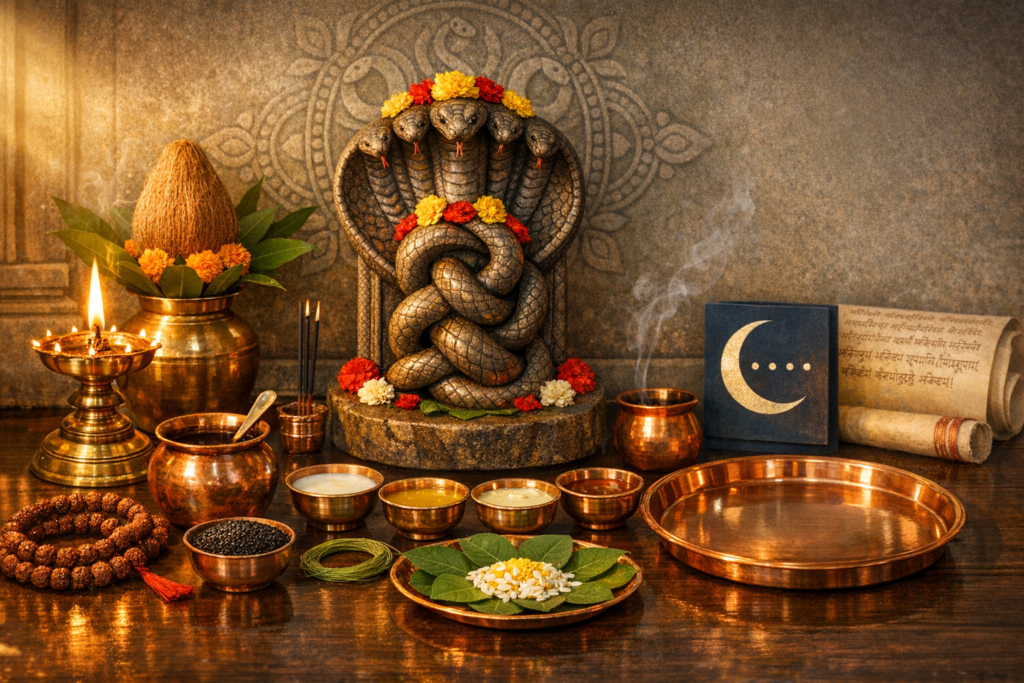
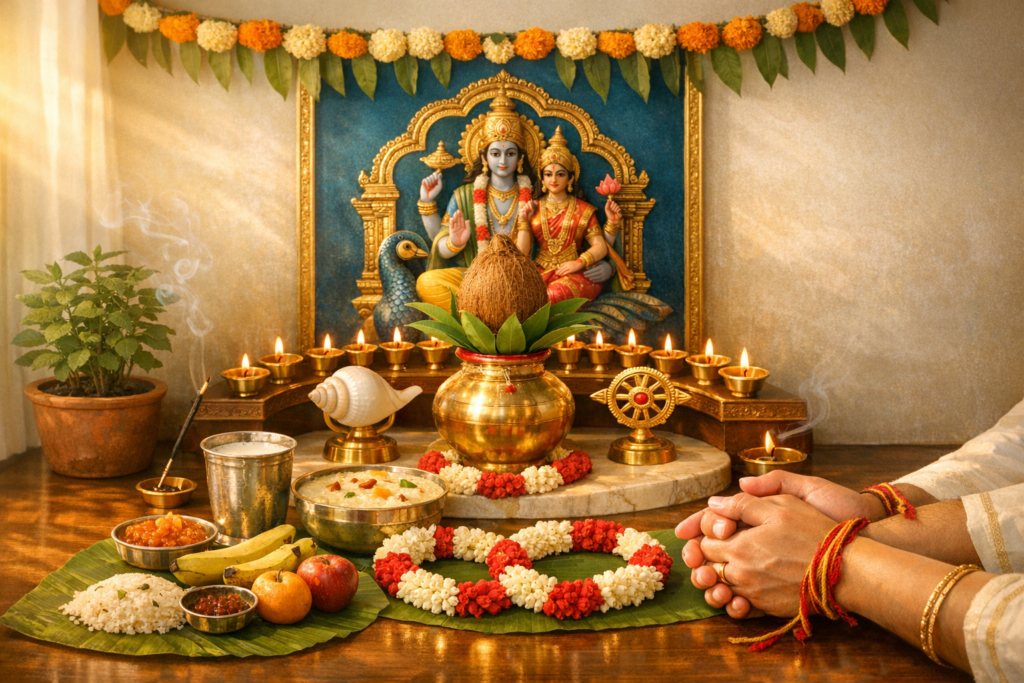
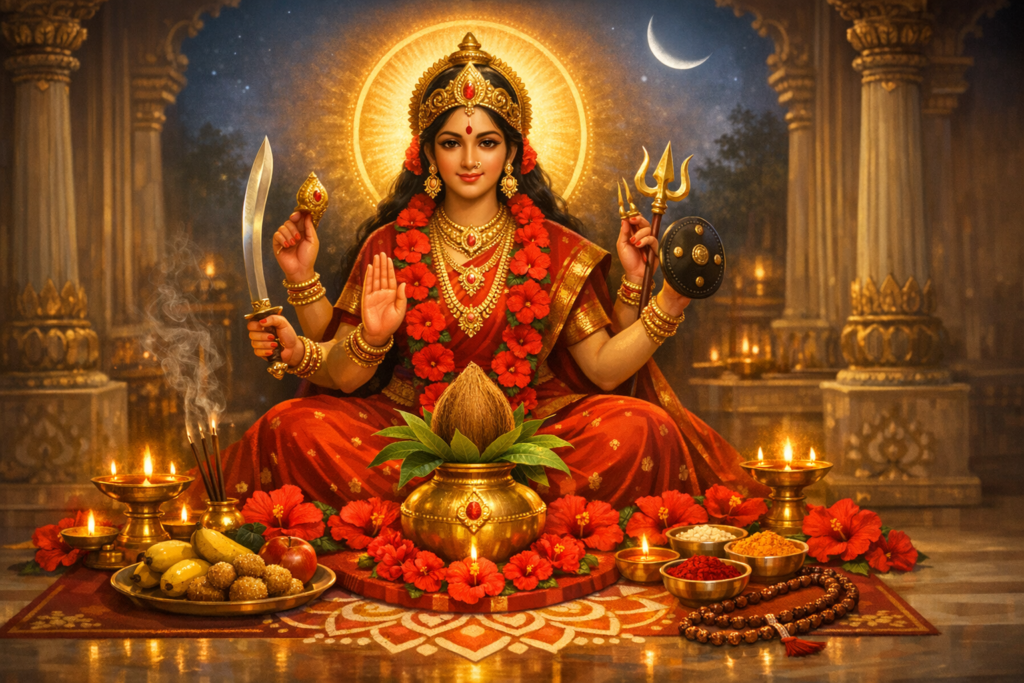
Preparations generally emphasize śauca (purity) and sattvika discipline: an early bath, a clean altar, simple vegetarian meals or fasting according to capacity, truthfulness, and austerity in speech and conduct for the day. A small shrine is arranged with an image or painting of the Naga Devatas (or a clay/metal murti), a kalasha if prescribed by the family tradition, flowers, turmeric-kumkum, akshata (unbroken rice), incense, a ghee deepa, Panchamrita (milk, curd, ghee, honey, sugar) for abhiṣeka to the deity’s image (not to living snakes), black sesame for tarpaṇa, and naivedya suited to one’s sampradāya. Where possible, a temple priest or family ācārya guides the sequence; in their absence, a simplified home observance can be performed with diligence and humility.
The pūjā often begins with Gaṇeśa dhyāna and a formal sankalpa stating time, place, and purpose, along with the name and gotra of the departed. The worshipper then invokes the Naga Devatas—traditions commonly remember the aṣṭa-nāgas (Ananta/Śeṣa, Vāsuki, Takṣaka, Karkoṭaka, Padma, Mahāpadma, Kulika, and Śaṅkha/Śaṅkhapāla)—offering flowers, fragrance, light, and naivedya. Where taught, one recites nāga-stotras and protective hymns; many also undertake japa of the Mahāmṛtyuñjaya mantra (Tryambakaṁ yajāmahe …) for a fixed count (often 108), directing the fruit (phala-samarpana) to the named soul and to all beings who have suffered similar fates.
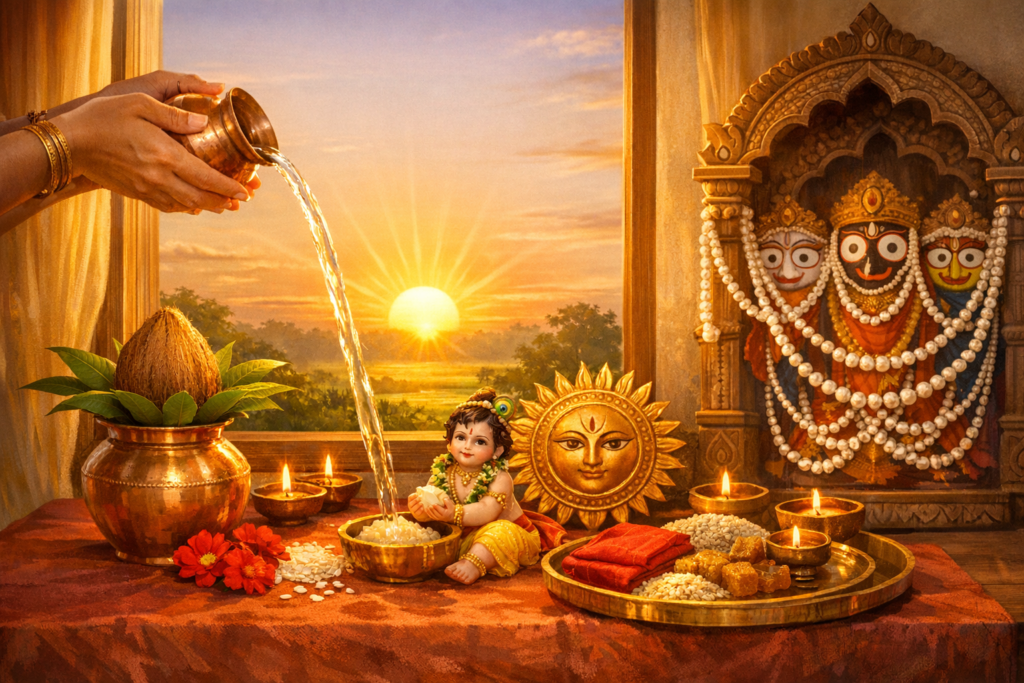
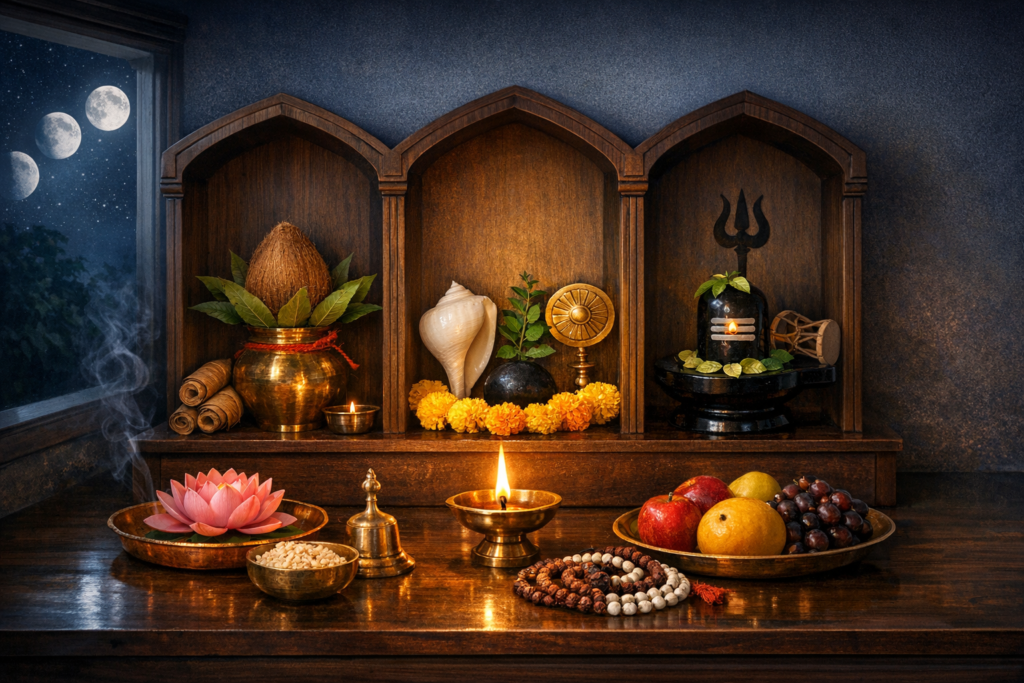
A core element of Dashtoddharana Panchami is pitṛ-oriented worship that channels merit to the departed. With a pavitri (ring) of kuśa on the ring finger as per family custom, water mixed with black sesame is offered in tarpaṇa for the person who died from snakebite, accompanied by simple pitṛ-mantras or silent prayer for peaceful ascent. Some households also offer a brief Śiva-pūjā (Bilva leaves, water, and akshata) recalling Śiva’s compassionate aspect as Apattodharana Murti, the Rescuer in Distress, and conclude with arghya to Sūrya, reflecting the Vedic intuition that sunlight, truth, and clarity dispel darkness and fear.
Where facilities and guidance exist, a homa may be performed—often a Mahāmṛtyuñjaya homa or a sarpa-śānti homa—under a qualified priest. Offerings of ghee and grains are made with mantras for protection from apamṛtyu, explicitly dedicating the rite to the deceased. As with all fire rituals, adherence to lineage procedures (vidhi) and careful mantra pronunciation are important; when proficiency is uncertain, a simple pūjā and heartfelt japa are preferable to improvised complexity.
Charity (dāna) completes the observance and is as vital as mantra. Traditional recommendations include dāna of food (anna-dāna), sesame, ghee, and cloth, offered to the needy or to those engaged in learning and service. In a modern spirit aligned with dharma, support for emergency care, wildlife protection, or community health can also be dedicated as puṇya to the departed—a living expression of abhaya-dāna, the gift of safety. Such acts embody the inclusive, service-oriented core of the vrata.
Ethically and ecologically sensitive practice is integral. Traditional texts envision offerings to consecrated images or to ant-hill shrines symbolically associated with serpent deities, not to live snakes. Modern wildlife experts caution that pouring milk or other substances into habitats harms animals and ecosystems. Responsible worship therefore favors temple murtis and clean symbolic offerings, aligning devotion with environmental stewardship—an ethos long cherished within Sanātana Dharma.
Regional expressions vary. In parts of the Deccan and coastal Karnataka, families may pair this vrata with visits to Subrahmaṇya temples renowned for sarpa-related worship, while recognizing that rituals such as Aśleṣā Bali or Sarpa Saṁskāra are distinct ceremonies prescribed for other karmic remediations. In Andhra and Telangana, traditions associated with Nāgula Chavithi likewise focus on protection from envenomation and honor of Naga Devatas, yet the intention and calendrical setting of Dashtoddharana Panchami remain specific to the redemption of those already lost to snakebite.
Theologically, the rite illuminates Naga symbolism within Hindu thought: guardians of waters, fertility, and subterranean treasures; bearers of ancient knowledge; and companions to deities—Śeṣa bearing Viṣṇu, the nāga-ornament gracing Śiva. The legendary Garuḍa–Nāga polarity is ritually sublimated into protection and healing: the worship draws on Garuda Purana guidance for apamṛtyu and the salvific force of mantras and dāna, while honoring the Nāgas as deities whose propitiation removes fear and poison (viṣa) at subtle and psychological levels as well.
Practical questions recur. Who may perform it? In many lineages, any adult family member may undertake the vrata; some families invite a priest to lead, while others observe at home with simplicity and sincerity. What if the exact cause of death is uncertain? Practitioners may include a broader sankalpa—“for all who suffered apamṛtyu, especially by snakebite”—ensuring no one is excluded from remembrance. Can women observe the vow? Many traditions affirm full participation by women; local customs vary, so guidance from the family’s ācārya is appropriate.
A concise, respectful sankalpa (in one’s own language) may read: “On this Śukla Pañcamī, for the uddhārana of [Name], of [Gotra], who departed by snakebite, this Dashtoddharana Panchami vrata is undertaken with devotion, and the fruit is dedicated to the upliftment of the departed and to the welfare of all beings.” Where Sanskrit is customary, key intent-phrases such as “dashta-jana-uddhārana” and “apamṛtyu-śānti” can be included, keeping the wording aligned to the family tradition.
Relationship to Naga Panchami merits clarity. Naga Panchami primarily seeks protection, harmony with serpent powers, and the removal of fear; Dashtoddharana Panchami focuses on posthumous upliftment for those already lost to snakebite. In many households the observances are harmonized on the same Pañcamī when calendars align, combining nāga-pūjā, Mahāmṛtyuñjaya japa, and pitṛ-tarpaṇa into a single, coherent day of remembrance, healing, and hope.
Ultimately, Dashtoddharana Panchami demonstrates how Hindu practice integrates philosophy, ecology, and compassion. Its Vedic mantras, Naga Devata worship, and offerings of charity cohere around a single prayer: that those who met an unnatural end through snakebite find peace, release, and auspicious onward journey. Observed with care for scriptural guidance and respect for living ecosystems, the vrata offers consolation to families, channels communal empathy, and affirms the Dharmic conviction that sincere prayer, service, and remembrance possess transformative power.
Inspired by this post on Hindu Pad.



Leave a Reply
You must be logged in to post a comment.