

Within Hindu tradition, the guru embodies the movement from darkness to light, a role framed not as acquisition but as unconditional bestowal. Shakta lineages that honor Varahi underscore this orientation with a demanding ethical vision: the teacher’s vocation is to give knowledge, protection, and compassion without expectation, reflecting a non-transactional sanctity at the heart of spiritual transmission. This essay examines that vision through the prism of Varahi-oriented Tantrism, situating it within the wider Hindu ethos and in harmonious dialogue with the shared values of Buddhism, Jainism, and Sikhism.
Traditional exegesis renders guru as gu, that which dispels darkness, and ru, that which brings light. While philological debates register alternative readings, the pedagogical principle is consistent across the Guru–Shishya Tradition: wisdom is a trust to be stewarded and shared. The operative ethic is aparigraha, non-possessiveness, conjoined with dāna as the giving of what liberates. In this frame, the true guru orients every interaction toward the disciple’s wellbeing, not personal gain.
Varahi-centric Tantrism extends this principle through its theology of anugraha, grace as active bestowal. Varahi, the fierce, protective Mother, is understood to operate through the guru, whose task is to transmit mantra, method, and meaning so that the disciple’s innate luminosity becomes operative. Such transmission is not reducible to information. It is a calibrated conferral of adhikāra, the qualified capacity to practice, alongside safeguards that preserve integrity, psychological safety, and social responsibility.
In many Shakta paddhatis and oral paramparās, the guru is presented as the living mouth of the deity for the purposes of initiation, instruction, and correction. The giving that matters most is thus multidimensional: vidyā-dāna, the gift of liberating insight; śaktipāta, the carefully guided descent of empowering energy; kalyāṇa-saṅkalpa, an unwavering commitment to the disciple’s holistic benefit; and prāyaścitta-upadeśa, remedial counsel when practice goes astray. Each aspect is framed as service to dharma rather than as a transactional exchange.
Questions often arise about dakṣiṇā. Classical Hindu sources consistently treat guru-dakṣiṇā as an expression of gratitude and reciprocity, not a price tag attached to the incommensurable. In a dharmic economy, dakṣiṇā is symbolic and functional: it sustains the continuity of teaching, supports communal institutions, and protects the autonomy of spiritual life from market capture. When aligned with aparigraha, acceptance remains above compulsion and free of manipulation, ensuring that the sanctity of instruction is never commodified.
Ethically, the guru’s stance is anchored in yamas and niyamas, especially ahimsa, satya, and aparigraha. These are not abstract ideals but operational constraints that shape how dīkṣā is offered, how boundaries are held, and how power is exercised. The moral architecture of Tantrism adds samaya, the vows that bind teacher and disciple to transparent conduct, compassionate intent, and fidelity to method. A teacher guided by these disciplines does not take; such a teacher only gives, and even when receiving, does so in the spirit of stewardship.
From a Varahi perspective, initiation unfolds as a sequence of calibrated empowerments. Mantra-dīkṣā confers the seed of practice; nyāsa installs the mantric presence through ritual placement; mudrā encodes bodily remembrance; and upadeśa clarifies the phenomenology of practice so that experience is interpreted safely and fruitfully. The emphasis on giving is visible at each step: the guru confers capacity, context, and corrective feedback, while vigilantly avoiding dependence or domination.
Philosophically, this ethos coheres with Hindu theories of knowledge. Reliable teaching integrates pramāṇa, sources of valid cognition such as śruti and yukti, and situates them in upadeśa calibrated to the śiṣya’s adhikāra. The criterion of truth is not argument alone but transformation aligned with dharma. A guru’s generosity appears as a refusal to hoard interpretive authority, inviting the disciple into independent discernment supported by scriptural, rational, and experiential warrants.
Pluralism is a natural consequence of this stance. Authentic teachers honor the disciple’s ishta, the chosen form through which the Absolute is approached, and avoid forcing uniformity where diversity serves growth. Within the Shakta ambit, Varahi may be primary; within Vaiṣṇava, Śaiva, or Smārta settings, other deities or formless meditation may lead. The unifying thread is the guru’s responsibility to give what actually liberates, tailored to constitution, stage, and aspiration.
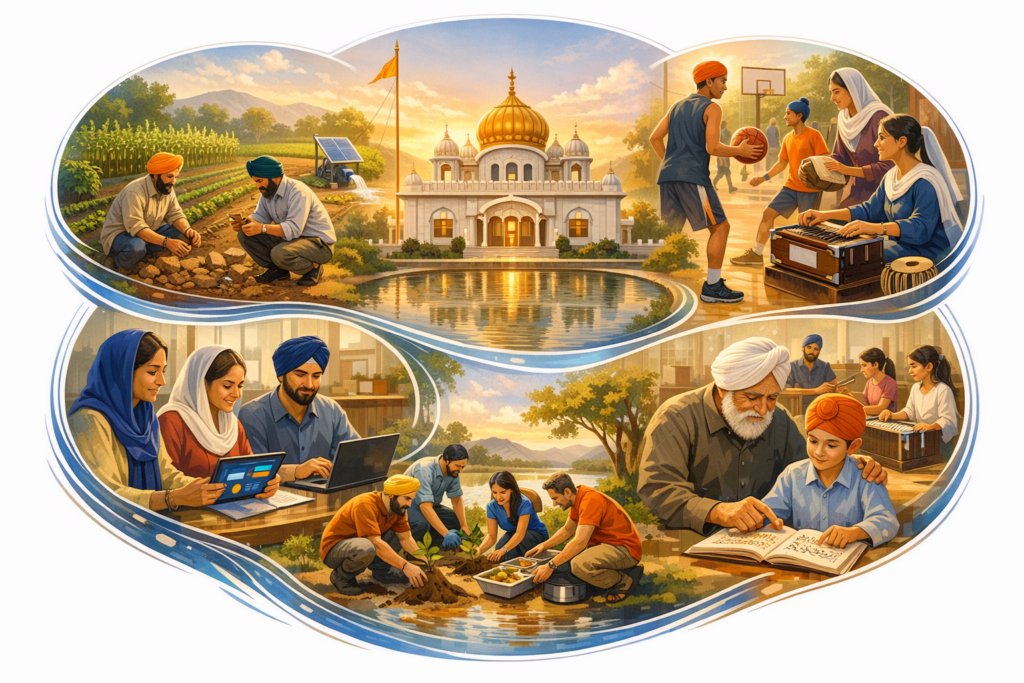
This ethic resonates across Dharmic traditions. In Buddhism, dāna-pāramitā sanctifies giving as a perfection; in Jainism, dāna and aparigraha ensure that guidance is non-extractive; in Sikhism, seva and dasvandh cultivate selfless service and transparent support for spiritual institutions. Taken together, these commitments offer a shared vocabulary of generosity that strengthens inter-Dharmic harmony while preserving the distinctiveness of each path.
Contemporary life tests these ideals through commercialization, personality cults, and digital scale. Traditional safeguards remain salient: teachings should be anchored in recognized lineages; financial practices must be transparent and voluntary; and oversight structures should empower seniors and peers to correct deviations. Healthy communities cultivate informed consent, clear grievance pathways, and collective learning so that the sanctity of the Guru–Shishya Tradition remains intact.
Markers of authenticity are both ethical and epistemic. Ethically, a true guru is consistent, humble, and non-coercive, with boundaries that protect vulnerable disciples. Epistemically, instruction maps to scriptural themes, withstands rational scrutiny, and yields measurable growth in equanimity, compassion, and clarity. The power of a teaching is seen in what it gives back to society: reduced harm, deepened responsibility, and expanded capacity for service.
Varahi practice highlights another facet of giving: protection. As Dandanātha, Varahi is the upholder of order, and the teacher’s stewardship includes preventing harm in subtle practice. This requires careful staging of methods, protection against premature exposure to intense techniques, and a preference for stabilization before intensification. The guru’s refusal to “take” the shortcuts of spectacle is precisely the generosity that ensures durable freedom.
Non-transactionality also reframes authority. In a giving-centric model, authority is functional and provisional: it persists only so long as it benefits the disciple and the community. This accords with a dharmic understanding of leadership as service. Authority without service becomes extraction; authority embedded in service becomes anugraha. The latter alone is consonant with aparigraha and with the teaching that wisdom cannot be bought or sold.
For seekers, practical discernment follows from these principles. It is prudent to observe how a teacher handles disagreement, how resources are stewarded, and how consent is secured for more advanced practices. It is also prudent to confirm that multiple avenues of study are available, that questions are welcomed, and that senior disciples model maturity rather than dependency. Where giving is central, independence grows; where taking predominates, dependency deepens.
Within the broader Hindu philosophy, the guru’s generosity integrates jñāna, bhakti, and karma. Jñāna clarifies the nature of reality and the self; bhakti orients the heart in humility and gratitude; karma yoga aligns action with service. In Tantrism, these streams are woven through embodiment, ritual, and meditative absorption, but the ethical constant remains the same: knowledge is gifted as a means to freedom, never as leverage for control.
Importantly, this ethos advances social trust. When teachers give without hidden extraction, communities reciprocate through voluntary charity and philanthropy, sustaining institutions that preserve texts, train future guides, and provide access regardless of economic means. Such an ecosystem keeps spiritual life accessible, dignified, and resilient, aligning personal liberation with collective uplift.
In an interconnected world, inter-Dharmic solidarity benefits from this very ethic. Shared commitments to generosity, non-possessiveness, and service enable Hindus, Buddhists, Jains, and Sikhs to collaborate on education, ethics, and the protection of sacred spaces. Honoring differences while centering these shared values nurtures unity without erasing diversity, echoing the classical Indian celebration of many paths converging on truth.
A widely loved śloka captures the reverence that sustains this ethic: Gurur Brahmā Gurur Viṣṇuḥ Gurur Devo Maheśvaraḥ; Gurur sākṣāt paraṁ brahma tasmai śrī-gurave namaḥ. The sentiment is not that the guru replaces the Divine, but that the guru’s function is divine because it gives what cannot be purchased: freedom, meaning, and loving discipline. That is why a real guru wishes to give and not to take.
Seen in this light, Varahi Tantra’s emphasis on compassionate protection and empowered practice reveals an ethic of guidance fit for both ancient sanctuaries and contemporary lives. Consonant with the best of Hindu spirituality, and in harmony with dharmic cousins, it invites teachers and seekers to co-create a culture where knowledge flows freely, service anchors authority, and the shared journey turns generosity into a way of life.
Inspired by this post on Hindu Blog.










Leave a Reply
You must be logged in to post a comment.