

Aadi Pirappu (also known as Aadi Pandigai) in 2026 falls on Friday, 17 July 2026, marking the first day of the Tamil solar month Aadi in the Tamil Panchangam. Observed widely across Tamil Nadu, Sri Lanka, and the global Tamil diaspora, the festival inaugurates the monsoon-facing season with prayers that symbolically “welcome the fresh water forces into the earth,” aligning ritual practice with ecological renewal and agrarian rhythms.
In the Tamil solar calendar, months begin with the Sun’s transit into successive rāśis (zodiac signs). Aadi commences with Karka Sankranti, the Sun’s entry into Karka (Cancer). While the civil festival is observed on Aadi 1 at sunrise, precise sankramana times vary by location and almanac school (panchangam), so households often consult a trusted Tamil Panchangam to identify the Punya Kāla for sankramana-related offerings.
Seasonally, Aadi coincides with the strengthening of the southwest monsoon across peninsular India. Rising river levels, aquifer recharge, and replenished irrigation tanks (eri) define the period. The cultural imagination of Aadi Pirappu captures this hydrological reality with rituals and community practices oriented toward gratitude for water, fertility, and sustenance.
Ritually and theologically, the month foregrounds śakti—the life-sustaining power manifest as Amman (Mariamman, Kali, Durga, and other local grāma-devatās). Vaishnava lineages simultaneously honor Andal during Aadi Pooram, while devotees of Subrahmanya (Murugan) observe Aadi Krithigai. The shared motif is a reverence for nature’s rejuvenation, agricultural preparedness, and social solidarity grounded in dharmic ethics.
Typical home observances on Aadi Pirappu begin at dawn with cleaning of thresholds, drawing kolam, and hanging a māvīlai thoranam (mango-leaf festoon). Lamps (agal vilakku) are lit, and a simple saṅkalpa expresses the intent to live harmoniously with the season. Puja customarily proceeds with obeisance to Ganesha, followed by worship of Amman. Families offer arghya to Surya (the Sun) and prepare naivedyam such as sweet pongal, payasam, vadai, and variety rices (e.g., coconut rice, lemon rice), sharing prasada and food with neighbors and those in need.
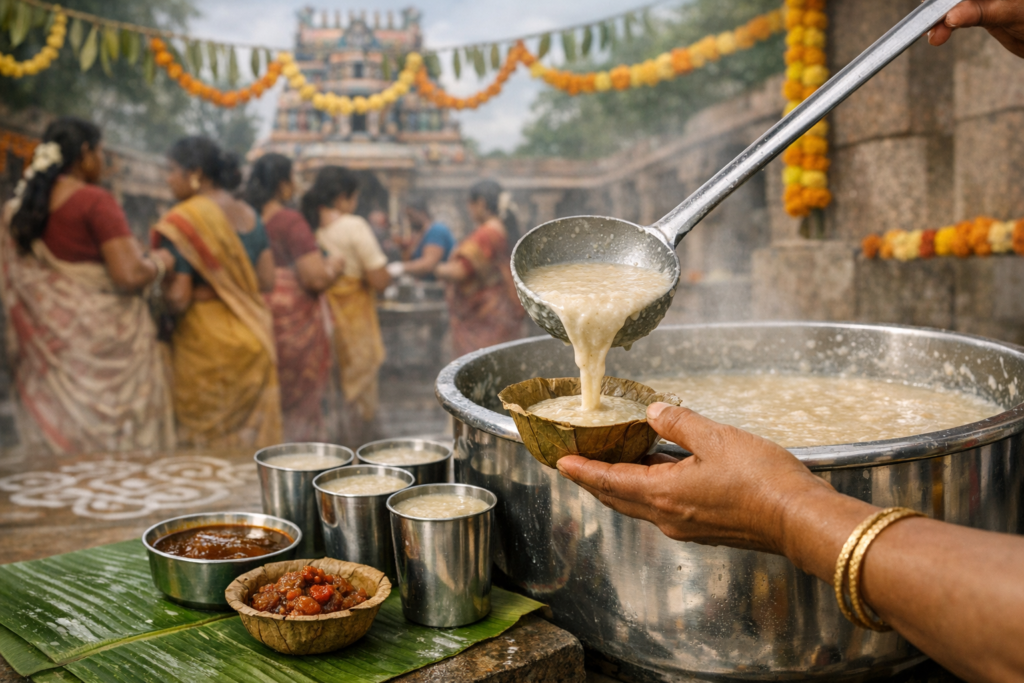
Fridays (Aadi Velli) and Tuesdays (Aadi Chevvai) of the Aadi month are widely kept for Amman worship. Many observe vrata, offer turmeric, kumkum, glass bangles, and thamboolam, and participate in annadānam. In rural Tamil Nadu, “Aadi koozh” (a nourishing millet-based porridge) is often prepared and distributed at Amman temples, blending the spiritual imperative of seva with seasonal dietary wisdom.
Aadi Perukku (Pathinettam Perukku), the eighteenth day of Aadi, venerates rivers and irrigation channels. Families visit riverbanks to tie yellow threads, float lamps, and offer “kattu sadam” (packed variety rices). With Aadi 1 on 17 July 2026, the eighteenth day aligns to 3 August 2026 for most locations, though local panchangam conventions may adjust observance by a day.
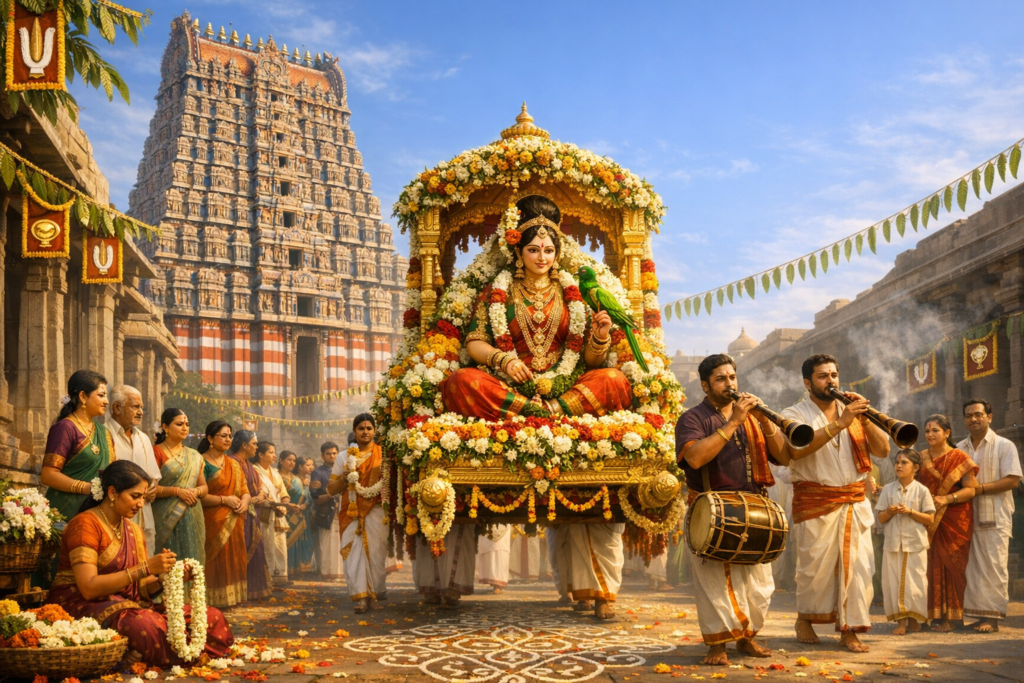
Aadi Pooram (Andal Thirunal) honors Andal, whose Pooram (Purva Phalguni) birth star in the month of Aadi inspires special utsavams and the symbolic Thirukalyanam in Vaishnava temples. The festival links bhakti devotion with monsoon renewal, emphasizing poetic love for the Divine and the fecundity of the season.
Aadi Amavasai in this month is dedicated to pitru tarpana (offerings to ancestors). Whether at riverbanks, the seaside, temple tanks, or at a home altar, the observance deepens intergenerational bonds and affirms the dharmic duty to remember and serve forebears.
Socially, Aadi has long been considered a period to defer major life-cycle celebrations such as weddings and griha pravesh. This is not a stigma on the month; rather, it reflects a community ethic that prioritizes agricultural focus and seasonal alignment. Newly married women traditionally spend part of Aadi at the maternal home, and seer varisai (customary gifts) strengthen kinship ties and household resilience.
From an agrarian perspective, “Aadi pattam” is significant for field preparation, bund strengthening, desilting tanks, and sowing rain-fed millets and paddy (based on regional advisories). Traditional ecological knowledge integrates ritual, labor, and water stewardship—combining contour bunding, seed selection, and maintenance of village water bodies to optimize monsoon benefits.
Temple observances during Aadi Thiruvizha vary regionally and may include kappu kattudhal (protective tying), paal kudam (milk pot processions), karagam, and in some locales thee midhi. Contemporary practice emphasizes safety, consent, and the welfare of participants while preserving the symbolic grammar of devotion and community protection.
For 2026, Aadi Pirappu is on Friday, 17 July. Many panchangams advise that sankramana-related rituals be performed within the Punya Kāla following the Sun’s ingress into Karka, but household celebrations generally take place in the morning hours. As sankramana timings are location-specific, consultation of a local Tamil Panchangam is prudent for precise guidance.
A practical home-puja outline includes bathing and setting a clean, decorated threshold; invoking Ganesha; performing a simple Amman puja with flowers, coconut, betel leaves, and seasonal fruits; chanting accessible Devi stotras or Lalita Sahasranama according to family tradition; preparing naivedyam; and sharing prasada. If a safe water body is nearby, a small arghya may be offered with a family resolve to conserve water, avoid plastic, and support local ecosystem health through the monsoon.
An eco-spiritual lens reveals how Aadi Pirappu encodes sustainable water ethics: preventing runoff through bund maintenance, enabling aquifer recharge by protecting infiltration zones, and minimizing pollution of rivers and tanks. Choosing biodegradable materials, returning organic offerings to the soil, and replacing single-use plastic with metal or leafware make ritual consonant with ecology.
Dharmic unity is evident in this season’s water-centered gratitude. Across Hindu, Buddhist, Jain, and Sikh lineages, reverence for rivers, lakes, and rains manifests through prayer, seva, restraint, and compassion. Neighborhood participation across traditions—cleaning water bodies, planting trees, and sharing food—strengthens social harmony without sectarian boundaries.
Common questions benefit from reframing. Is Aadi “inauspicious”? No. The month is deeply auspicious for worship, study, dana, and seva, even as certain ceremonies are postponed by convention. Can people outside Tamil regions observe Aadi Pirappu? Yes; wherever water sustains life—river, lake, temple tank, or even a community rain barrel—the intention and gratitude remain the same.
The Tamil solar calendar aligns months with rāśi transits—Chithirai (Mesha), Vaikasi (Vrishabha), Aani (Mithuna), Aadi (Karka), Avani (Simha), and so forth. Yet several Aadi observances follow lunar tithis and nakshatras (e.g., Amavasya, Pooram, Krithigai). This dual reference frame explains why households and temples consult both solar month boundaries and lunar elements to schedule rites accurately.
Terminology in practice varies: Aadi Pirappu and Aadi Pandigai both denote the first day of Aadi; Aadi Sankranti highlights the solar ingress; and Pathinettam Perukku (“eighteenth swelling”) poetically captures the expected rise of rivers under monsoon influence.
In essence, Aadi Pirappu 2026 renews a covenant with nature, ancestors, and community. By welcoming the “fresh water forces” on 17 July 2026, households weave ritual, ecology, and kinship into a living tradition—opening a season dedicated to learning, service, and collective well-being.
Inspired by this post on Hindu Pad.









Leave a Reply
You must be logged in to post a comment.