Across the living ecosystem of Ramayana traditions, the paired names Mahiravana and Ahiravana evoke a charged, liminal worldPatala, the subterranean realm of serpents, shadows, and sorcery. The question that reliably stirs curiosity among readers, performers, and scholars alike is deceptively simple: are Mahiravana and Ahiravana the same demon under different names, or two distinct antagonists coexisting in the folklore surrounding Rama-katha? Mapping this puzzle requires moving beyond a single canonical lens and reading the story as it circulates through medieval vernacular texts, performative genres, and regional devotional practice. When the strands are placed together, a coherent picture emerges of how narrative fluidity in the Ramayana tradition both preserves and transforms motifs to serve ethical, aesthetic, and spiritual aims.
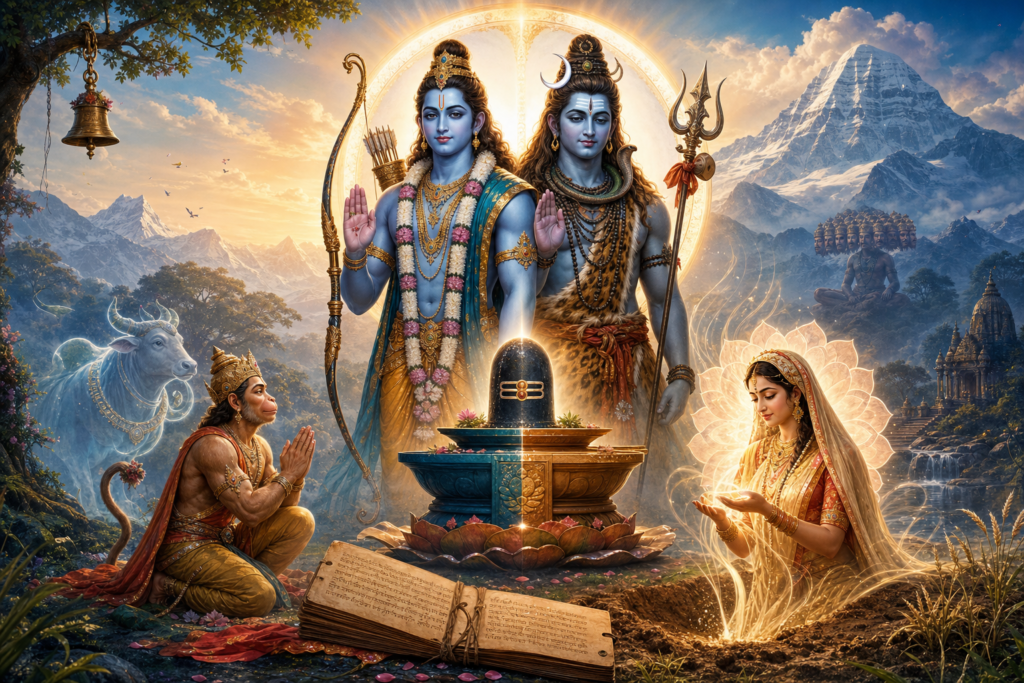
The underworld episode at the core of this debatethe abduction of Rama and Lakshmana to Patala and their dramatic rescue by Hanumandoes not occur in the Valmiki Ramayana. Instead, it crystallizes in later textual strata and folk Ramayanas, becoming a favorite of oral storytellers, temple bards, and regional theatres. Its enduring appeal lies in the fusion of suspense, magical craft, and theologically potent iconography: Hanuman’s assumption of the Panchamukhi form to overcome an enemy sustained by five constantly burning lamps lit across the horizons.
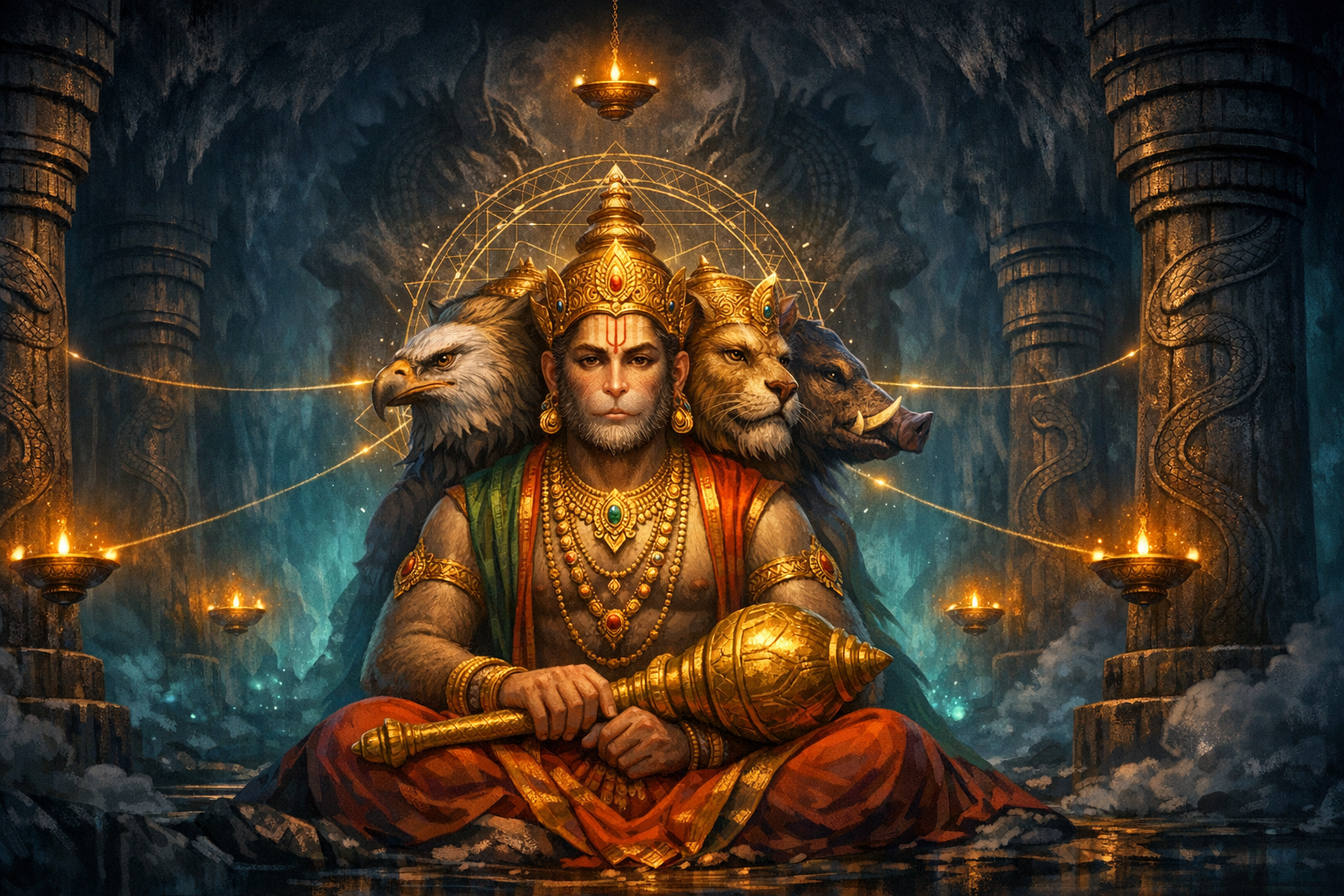
In the most widely told shape of the tale, an underworld lordnamed Mahiravana or Ahiravanadeceives the defenders of Rama’s camp (often by mimicking Vibhishana), spirits Rama and Lakshmana down to Patala for a sacrificial rite, and prepares to end the cosmic balance that Rama’s presence protects. Hanuman descends, outwits the guardian forces of Patala, and learns the secret of the demon’s invincibility: five lamps must be extinguished at the same instant. Assuming the Panchamukhi Hanuman formHanuman, Narasimha, Hayagriva, Garuda, and Varaha facing different directionshe snuffs the lamps simultaneously and ends the threat, restoring Rama and Lakshmana to Lanka’s battlefield.
Textual testimony for this episode is post-Valmiki and regionally diverse. North and east Indian retellings, particularly in Bengali and Odia spheres, foreground the Patala motif in printed chapbooks and Ramlila scripts. The Krittivasi Ramayana (Bengali, commonly attributed to the 15th century) is often cited in popular discourse as a locus for the Ahiravana narrative, though the tale also proliferates through localized print traditions and performative adaptations. Devotional compendia such as the Ananda Ramayana (a later, composite text frequently mined by Harikatha performers) narrate the episode with Ahiravana as the primary antagonist, further consolidating its place in bhakti storytelling.
In North India, Ramlila traditions regularly stage the rescue of Rama from Patala even when the base textual script (for example, the Ramcharitmanas of Tulsidas) does not include the episode. Ahiravana is the name most audiences expect in these productions, and “Hanuman’s Patal Vijay” has become a recognizable performance unit unto itself. Across the Gangetic plain, the episode’s spectacular stagingdarkened sets, masked guardians, and the climactic five-flame sequenceindexes a devotional logic as much as a dramaturgical one: Hanuman’s compassion, intelligence, and yogic power converge to preserve dharma.
In eastern India, Jatra and village Ramayanas cultivate a similar expectation. Oral exponents move fluidly between Ahiravana and Mahiravana, often treating them as alternate names for the same underworld sorcerer. In Odia retellings and temple-centric narratives, the plot structure is immediately familiar to devotees: a deceptive ruse, abduction, and a rescue that anchors Hanuman’s status as the vigilant guardian of Rama’s mission. Elders recount these episodes during festival nights, and childrenabsorbed by the imagery of five lamps and five facesinherit lessons about attention, integrity, and fearless service.
Southern textual canons such as Kamba’s Tamil Ramavataram do not include the Patala episode in their core narrative, yet performative cultures in Tamil Nadu and Karnataka often do. Therukoothu troupes and Yakshagana ensembles have long staged Patal Vijay stories, with Mahiravana sometimes presented as the chief antagonist. In the coastal Karnataka Yakshagana repertoire, “Mahīrāvana Charite” is a well-known prasanga, and depending on the troupe and script, the demon may appear alone or be paired with Ahiravana as a sibling or lieutenant. These choices reflect the living nature of the tradition, where stagecraft and local preference shape character lists without violating the ethical arc.
Beyond South Asia, the Thai Ramakien offers a compelling parallel: the demon Maiyarap (widely recognized as a cognate of Mahiravana) abducts Rama to the underworld, prompting Hanuman’s intervention. While the narrative logic and setting are indigenized to Thai aesthetics, the core motif remains legible to devotees across the Indic worldan underworld sorcerer, a sacrificial peril, and the rescue engineered through Hanuman’s strategic brilliance. Such Southeast Asian attestations underscore that the Patala episode is an organic, transregional elaboration of Rama-katha, not merely a discrete “later addition” in a single language area.
The onomastics of the two names point toward a shared semantic field. In Sanskrit and Indo-Aryan usage, ahi means serpent, an apt marker for the subterranean, nāga-inhabited Patala; mahī connotes earth, again evoking the underworld. Ravana, from the root √ru (to roar or cause to cry), frames the figure as a wailer or terrorizer. Ahiravana, then, is the “serpentine Ravana,” and Mahiravana is the “earth/underworld Ravana.” Both constructions are semantically credible for a Patala sovereign. Given the ease with which ahi/mahī could be preferred in different vernaculars or recitative meters, it is unsurprising that many communities have come to hear the names as interchangeable.
Two interpretive positions therefore coexist across the tradition. The firstperhaps the most widespread in printed folklore and devotional performancetreats Mahiravana and Ahiravana as one and the same demon, the name varying by dialect, meter, or performance lineage. In this view, the underlying story is robustly stable: the underworld abductor, his fivefold protection, and Hanuman’s Panchamukhi counter-strategy remain the scaffolding regardless of nomenclature.
The second position, visible in select stage scripts (for example, some Yakshagana and village theatre variants), distinguishes Mahiravana and Ahiravana as two figurescommonly brothers or closely allied sorcerers. Here, their doubling intensifies the challenge in Patala, permits richer scene-work, and elevates Hanuman’s tactical horizon. Rather than contradicting textual tradition, this choice is emblematic of folk dramaturgy: character multiplication deepens spectacle without altering the ethical center of the episode.
Across both positions, the climax is inseparable from the iconography of Panchamukhi Hanuman. The five facesHanuman (east), Narasimha (south), Garuda (west), Varaha (north), and Hayagriva (sky/upward)encode a sacred geometry of vigilance and knowledge. In temple worship and household shrines, Panchamukhi Hanuman images frequently memorialize this very episode, with devotees remembering that simultaneous attention to all directions, all at once, dissolves the stubbornest obstacles. The orientation of lamps and faces in narrative retellings visually educates as it inspires: the devotee is asked to cultivate a panoramic awareness grounded in devotion.
The five-lamp motif also invites contemplative reading in the broader Dharmic idiom. One popular exegesis views the flames as the five senses, whose undisciplined scattering sustains delusion; Panchamukhi Hanuman represents integrated awareness, capable of turning the senses toward dharma in a single, well-timed act. Others read the faces as a convergence of protective powersstrength (Hanuman), righteous ferocity (Narasimha), speed and clarity (Garuda), earth-stability (Varaha), and knowledge (Hayagriva)harmonized in service of compassion. Such readings resonate across Hindu, Buddhist, Jain, and Sikh sensibilities that honor disciplined attention, ethical action, and fearless service as the path to freedom from suffering.
Devotional life amplifies the scholarship. In many households, grandparents recount Hanuman’s Patal Vijay on monsoon evenings, the scene of five lamps etched in memory alongside the assurance that no darkness is final. Village theatres transform that assurance into shared emotion: audiences collectively hold breath as the lamps are extinguished and erupt in relief when Rama reappears. The story’s power persists because it is not merely “about” miraculous intervention; it is a parable of courage, presence of mind, and unwavering care for othersvirtues that communities across the Dharmic spectrum claim as their own.
Philologically and historically, the safest academic conclusion is this: Mahiravana and Ahiravana are best treated as two names for a single narrative rolethe Patala sorcerer whose defeat requires Panchamukhi Hanumanwhile also acknowledging that some regional performance lineages bifurcate the role into two antagonists for dramaturgical effect. This approach accounts for the overwhelming overlap in plot mechanics and iconography while respecting the autonomy of regional theatres and village Ramayanas that innovate within a recognizable ethical frame.
That ethical frame is crucial for understanding why the episode endures. The underworld is not a distant metaphysical locale alone; it stands for confusion, despair, and coercionthe states that “abduct” clarity and compassion in daily life. Hanuman’s fivefold attention and simultaneously extinguished flames symbolize the integration required to restore balance. Read this way, the folk Ramayanas are not digressions but living commentaries, bridging textual authority and community aspiration in a manner consistent with the inclusive spirit of Sanatana Dharma and congenial to the shared moral horizon of Buddhism, Jainism, and Sikhism.
Therefore, when the names Mahiravana and Ahiravana surface in Ramayana discussions, the prudent answer is both concise and capacious. In most printed and sung traditions they refer to the same Patala lord; in some playhouse genealogies and chapbooks they appear as a pair. Neither choice contradicts the larger tapestry of Rama-katha. Both preserve the narrative core that has inspired Panchamukhi Hanuman worship, energized Ramlila seasons, and invited generations to practice a vigilant, compassionate dharmaone that unites, rather than divides, the many paths within the Dharmic family.
Inspired by this post on Hindu Blog.