Tag: Yakshagana

  • Panjurli Daiva of Tulunadu: Sacred Boar, Agrarian Covenant, and the Living Bhuta Kola

    Panjurli Daiva of Tulunadu: Sacred Boar, Agrarian Covenant, and the Living Bhuta Kola

    Tulunadu’s Panjurli Daiva, the sacred boar guardian of coastal Karnataka and northern Kerala, embodies a living covenant between forest and farmland. This in-depth overview situates Panjurli within Bhuta Kola/Nema traditions, tracing historical continuities, ritual roles, costume language, and oracular justice. Readers gain an integrated view of how daivasthanas function as both sacred spaces and civic…

  • From Nataraja to Raas Leela: The Awe-Inspiring Science, Symbolism, and Legacy of Divine Dance

    From Nataraja to Raas Leela: The Awe-Inspiring Science, Symbolism, and Legacy of Divine Dance

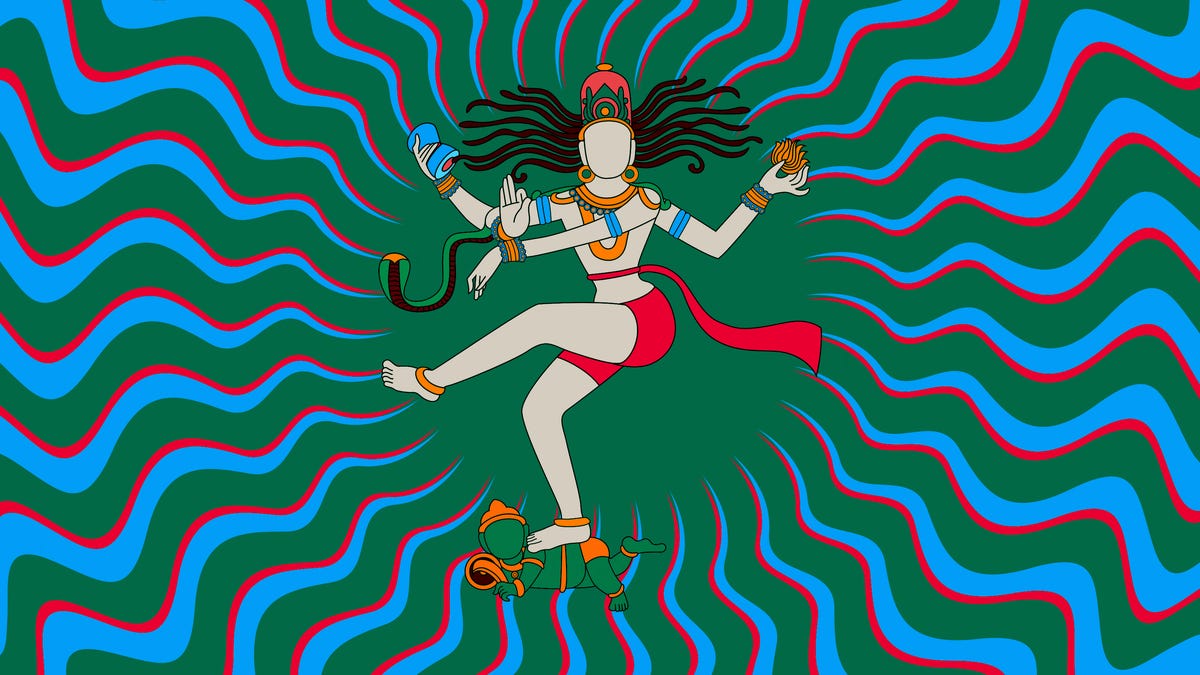
    Divine dance in the dharmic traditions is a precise language of cosmology and devotion. This article explains Shiva as Nataraja with technical iconography (damaru, agni, abhaya, Apasmara) and maps his pañcha-kṛtya to movement, clarifying how sound (nada) and rhythm underpin Sanskrit and ritual. It situates Bharatanatyam, Odissi, Kuchipudi, Kathak, Mohiniyattam, Sattriya, Chhau, Yakshagana, Chakyar Koothu,…

  • Millions on VFX, But Where Is Bhakti? Why Modern Ramayana Films Miss Sri Rama’s Soul

    Millions on VFX, But Where Is Bhakti? Why Modern Ramayana Films Miss Sri Rama’s Soul

    Modern Ramayana films often invest heavily in spectacle while missing the devotional and ethical essence associated with Bhagavan Sri Rama. This analysis explains how the Ramayana’s status as itihasa, the Natyashastra’s rasa-bhava science, and the lived grammar of bhakti must inform cinematic craft. It outlines practical methods—sadhana-informed acting, Sanskritic dramaturgy, iconographic fidelity, and sound design…

  • The Day Lanka Lost Its Clothes: Folk Humor, Hasya Rasa, and Hanuman’s Burning Tail

    The Day Lanka Lost Its Clothes: Folk Humor, Hasya Rasa, and Hanuman’s Burning Tail

    This long-form exploration shows how the humorous folk motif of ‘the day Lanka lost its clothes for Hanuman’ expands the canonical Lanka Dahan into a brilliant ethical satire. It explains why hasya rasa, as framed by the Nāṭyaśāstra, precedes the heroic blaze to make Ravana’s adharma legible through laughter. Readers see how oral and performance…

  • Behind the Tree or Face to Face? Unmasking Vali’s Death and Dharma Across Ramayanas

    Behind the Tree or Face to Face? Unmasking Vali’s Death and Dharma Across Ramayanas

    The contested question of whether Rama slew Vali from concealment or in open combat reveals a spectrum of ethical reasoning across Hindu scriptures and regional Ramayanas. By tracing Valmiki’s Kishkindha narrative alongside the Adhyatma Ramayana, Kamba Ramayanam, Ramcharitmanas, and eastern and southern vernacular retellings, the episode emerges as a sustained inquiry into rajadharma, sharanagati, and…

  • Awakening a Mountain: Comic Brilliance of Kumbhakarna in Folk Ramayanas Across Asia

    Awakening a Mountain: Comic Brilliance of Kumbhakarna in Folk Ramayanas Across Asia

    This essay explores how the waking of Kumbhakarna functions as a masterclass in hasya rasa across folk Ramayanas. It traces the episode’s classical kernel and shows how Ramlila, Yakshagana, Kathakali, Jatra, and Southeast Asian forms like wayang and the Ramakien expand it into an inclusive, communal highlight. Readers gain a clear view of the scene’s…

  • Kumara Vyasa (Naranappa): Architect of the Kannada Mahabharata and a Beacon of Dharma

    Kumara Vyasa (Naranappa): Architect of the Kannada Mahabharata and a Beacon of Dharma

    Kumara Vyasa (Naranappa) crafted the iconic Kannada Mahabharata, the Karnata Bharata Kathamanjari, blending poetic elegance with moral inquiry. Situated in the cultural radiance of the Vijayanagara era, his work remains central to Kannada literature and living performance traditions like Gamaka and Yakshagana. The narrative’s Bhamini Shatpadi meter and nuanced characterizations of Krishna, Arjuna, Karna, and…

  • Surpanakha Reimagined: Folk Ramayana’s Haunting Lament and Dharma’s Grey Zones

    Surpanakha Reimagined: Folk Ramayana’s Haunting Lament and Dharma’s Grey Zones

    South Indian folk Ramayana retellings give Surpanakha a complex, empathetic voice that challenges simplistic binaries of dharma and adharma. This analysis explains how Yakshagana, Kathakali, and Kaliyattam frame her suffering as an ethical prompt rather than a narrative footnote. Readers gain a nuanced understanding of gender dynamics, humiliation, and proportionality in responses. The piece connects…

  • What Bharat offers to the world on International Dance Day

    What Bharat offers to the world on International Dance Day

    Bharat is a land of diverse cultures and traditions, each with its own unique dance form. From the energetic Bhangra of Punjab to the graceful Mohiniyattam of Kerala, the colorful Garba of Gujarat to the soulful Sattriya of Assam, every dance form reflects the rich heritage and history of its respective region. However, amidst this…