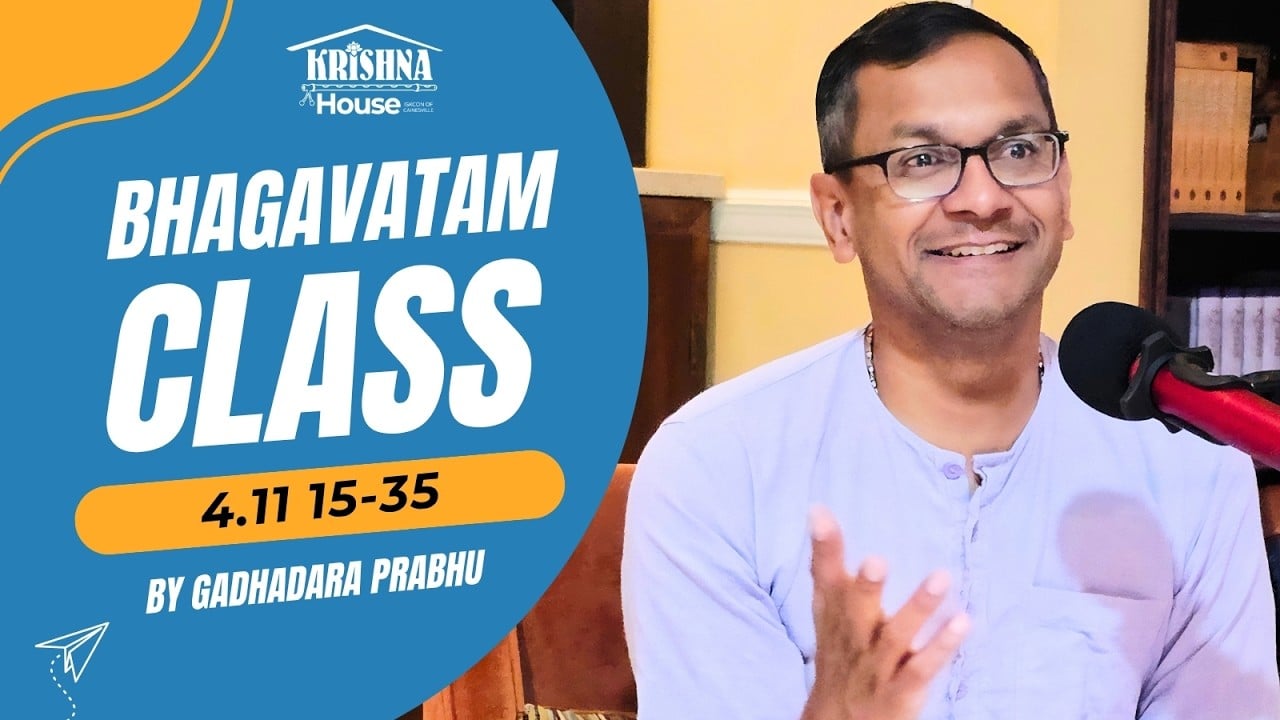
Bhagavatam Class 4.11 15–35, presented by Gadadhara Pandit Prabhu at Krishna House Gainesville, examines a pivotal scene in Srimad-Bhagavatham where Svayambhuva Manu corrects the course of Dhruva Maharaja’s mind and action. The narrative moves from a storm of justified outrage to the cool clarity of humility and surrender, while affirming a classical Vaishnava insight: the Supreme Lord stands as the ultimate cause behind all causes, and the wise therefore seek shelter in surrender rather than escalation. Verse 27 functions as a deliberate cognitive pivot, returning consciousness from krodha (anger) to vinaya (humility) and alignment with dharma. The lesson’s enduring value lies not only in its theological depth but also in its practical relevance to leadership, conflict resolution, and inner transformationconcerns shared across the dharmic traditions of Hinduism, Buddhism, Jainism, and Sikhism.
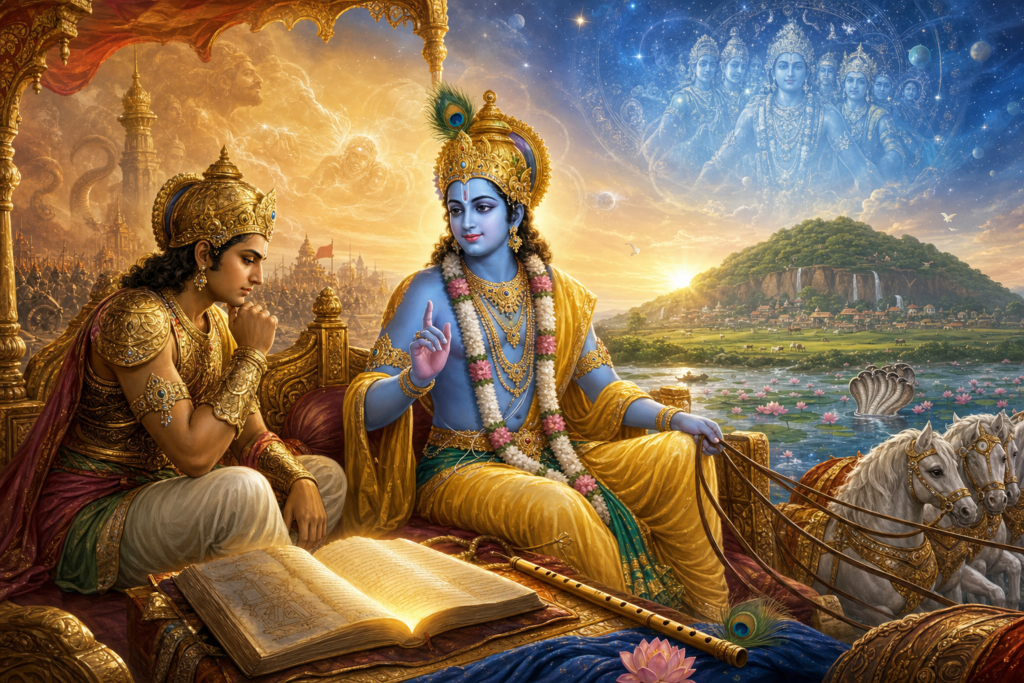
Set against the backdrop of Canto 4, Dhruva Maharajaalready renowned for rigorous tapasya and darshana of Lord Vishnu earlier in lifeconfronts a personal catastrophe: the killing of his younger brother by Yakshas. The initial response is sweeping retribution. The text captures the recognizable psychology of grief transmuted into generalization, and generalization into violence. In the precise band of verses 15–35, Svayambhuva Manu intervenes with sober spiritual reasoning, calibrating Dhruva’s valor with discrimination, and repositioning him within the larger moral and metaphysical map of Srimad-Bhagavatham.
Manu’s instruction offers a layered framing of causality. While empirical triggers appear to lie in worldly actors, the Bhagavata account consistently returns the practitioner to the Supreme Lord as sarva-kāraṇa-kāraṇamthe cause of all causes. This is neither a dismissal of material causation nor a denial of moral agency; rather, it is a call to see the orchestration of karma under divine supervision and to act with disciplined wisdom. When this vision lands, reaction gives way to responsibility: the responsibility to uphold dharma without indiscriminate harm, and to choose targeted justice over vengeance.
Verse 27 stands out as the text’s psychological hinge. Having named the Supreme Lord as the ultimate ground of being and becoming, the instruction redirects consciousness from reactivity to humility. The verse’s function is akin to deliberate cognitive reappraisal in contemporary terms: it halts the momentum of anger (krodha) and retaliation (pratigha), invites the cooling virtues of humility (vinaya) and inner collectedness (śama), and restores the capacity for proportionate, dharmic choice. The narrative shows how spiritual vision refines moral clarity, and how humility strengthens, rather than weakens, a ruler’s resolve to do what is right.
Ethically, the section teaches discrimination (viveka) in the exercise of kshatra-dharma. A just ruler avoids collective blame, distinguishes the guilty from the innocent, and refuses to make grief the pretext for generalized violence. This anticipates key principles recognized in later just-war theoryproportionality, noncombatant immunity, right intentionwhile being anchored in the Bhagavata’s devotional metaphysic. Manu does not forbid protection of the realm; he forbids rage as a method and indiscriminate destruction as a remedy. The shift is from heat to light: from the fuel of outrage to the lamp of discernment.
Philosophically, the claim that the Supreme Lord is the ultimate cause behind everything must be read in the Bhagavata’s own register. It upholds a two-level view of causality: immediate events unfold through material processes and moral choices, but all processes and choices occur within the Lord’s omniscient supervision. This safeguards accountability while dislodging the ego’s need to control, and it justifies śaraṇāgati (surrender) not as defeatism but as intelligent consent to truth. Surrender realigns courage from self-assertion to service (seva), enabling action that is as effective as it is ethical.
Spiritually, the passage maps a precise movement of mind. Anger narrows the field of attention, fuses identity with injury, and tends toward overreach. Humility widens the frame, reopens the channel of conscience, and invites the presence of the Supreme Lord into decision-making. In Vaishnava theology, such humility is not a psychological trick; it is a metaphysical correction. When the real centerKrishna, Vishnuis restored, the mind ceases to revolve around “I and mine” and can again orbit the good of all beings within dharma.
Across dharmic traditions, this shift from anger to humility, and from reactivity to surrender, resonates. Buddhism’s kṣānti-pāramitā (the perfection of patience) treats forbearance as a luminous strength; the Dhammapada’s counsel“conquer anger with non-anger”matches the intent of verse 27’s cooling directive. Jainism’s ethic of ahimsa and the discipline of kshamapana (forgiveness) similarly counter raudra dhyana (wrathful meditation) with higher, purer attention akin to shukla dhyana, moving consciousness away from harm and toward inner clarity. Sikh teachings on nimrata (humility), santokh (contentment), and living in hukam (the Divine Order) place righteous action within trustful surrender, mirroring the Bhagavata’s insistence that strength without humility imperils justice.
Manu’s counsel also anticipates contemporary insights in leadership and conflict transformation. Leaders who refuse collective blame, who slow decision cycles amid crisis, and who choose proportionate responses tend to reduce long-term harm and prevent cycles of retaliation. From boardrooms to community forums, the Bhagavata’s modelrecognize ultimate causality, restrain reactive force, and reorient action to serviceproves both principled and pragmatic. It reframes power as stewardship and victory as restoration rather than domination.
Devotionally, śaraṇāgati (surrender) functions as a methodology for everyday life. In practice, it involves trusting protection beyond one’s control, relinquishing strategies that are hostile to spiritual aims, cultivating confidence in being guided, and offering the fruits of action in gratitude. When anger surges, this method provides concrete steps: pause, remember the Lord’s presence, consider the karmic web without assigning hasty blame, and ask which response most honors dharma and compassion. Such discipline converts pain into prayer and outrage into ordered courage.
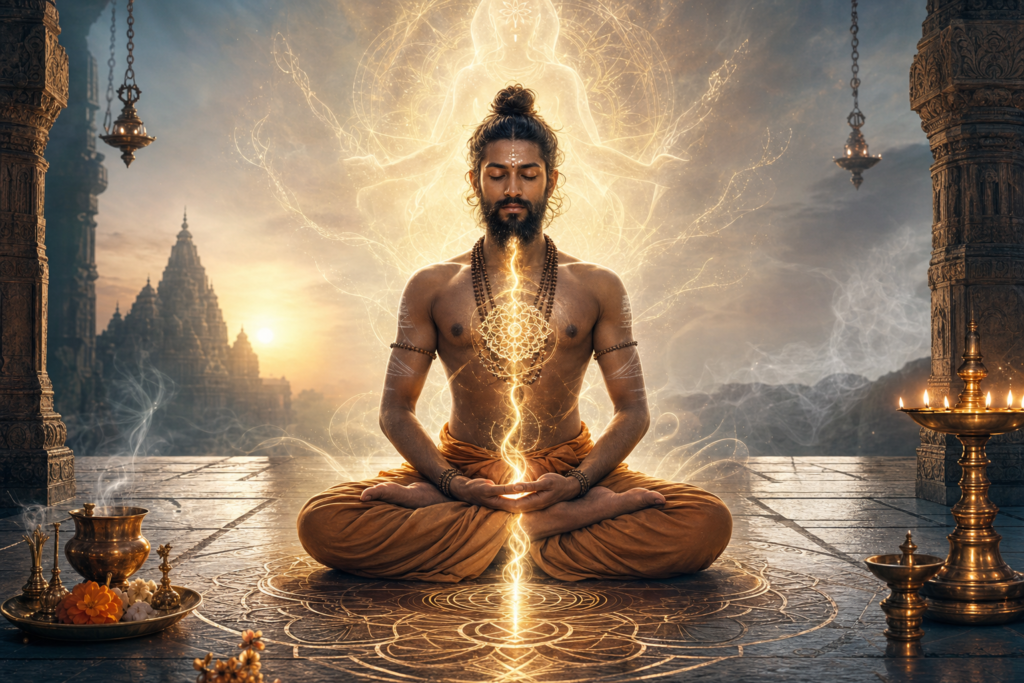
For practitioners, verse 27’s “return” is repeatable. It can be rehearsed in meditation, enacted in difficult conversations, and applied in civic life. The mind learns to spot the early signatures of krodhathe tightening chest, the rehearsed grievance, the urge to generalizeand to exchange them for humility’s signaturesslowed breath, widened perspective, and the felt sense of standing within the Lord’s view. Over time, this trains an inner stability that neither denies injustice nor feeds on it.
The class by Gadadhara Pandit Prabhu at Krishna House Gainesville underscores that Srimad-Bhagavatham is not a text of quietism. It honors courage, duty, and decisive action. Yet it insists that action be purified of the intoxication of rage and the fog of partial vision. The Supreme Lord as the ultimate cause becomes, in lived practice, a compass bearing: act, but do not usurp the role of the cosmic judge; protect, but do not punish the innocent; seek justice, but do so in the light of humility.
Read alongside other chapters in Canto 4, the Dhruva cycle reveals an instructive arcfrom ambitious hurt to transcendent vision, from reactivity to realized leadership. This particular segment (4.11.15–35) supplies the hinge that makes the arc sustainable: a theology that resolves theodicy into trust, and a psychology that transforms anger into clarity. It is a call to integrate bhakti’s warmth with dharma’s rigor, producing action that heals.
In an age of polarized discourse and quick outrage, the Bhagavata’s insistence on surrender and humility serves unity among dharmic paths. The shared vocabularyahimsa, kṣānti, kshamapana, nimrataillustrates converging commitments: reduce harm, deepen compassion, and ground courage in the Divine. Far from erasing differences, this unity dignifies each tradition’s strengths while convening them around a common ethical horizon.
Srimad-Bhagavatham 4.11.15–35 thus remains enduringly relevant. It neither excuses wrongdoing nor sanctifies anger as moral energy. It sanctifies humility as the condition for right action and surrenders the final word on causality to the Supreme Lord. That combinationclear-eyed ethics, deep devotion, and a practiced return to verse 27’s humilityequips seekers, leaders, and communities to respond to suffering without multiplying it.
Inspired by this post on Dandavats.