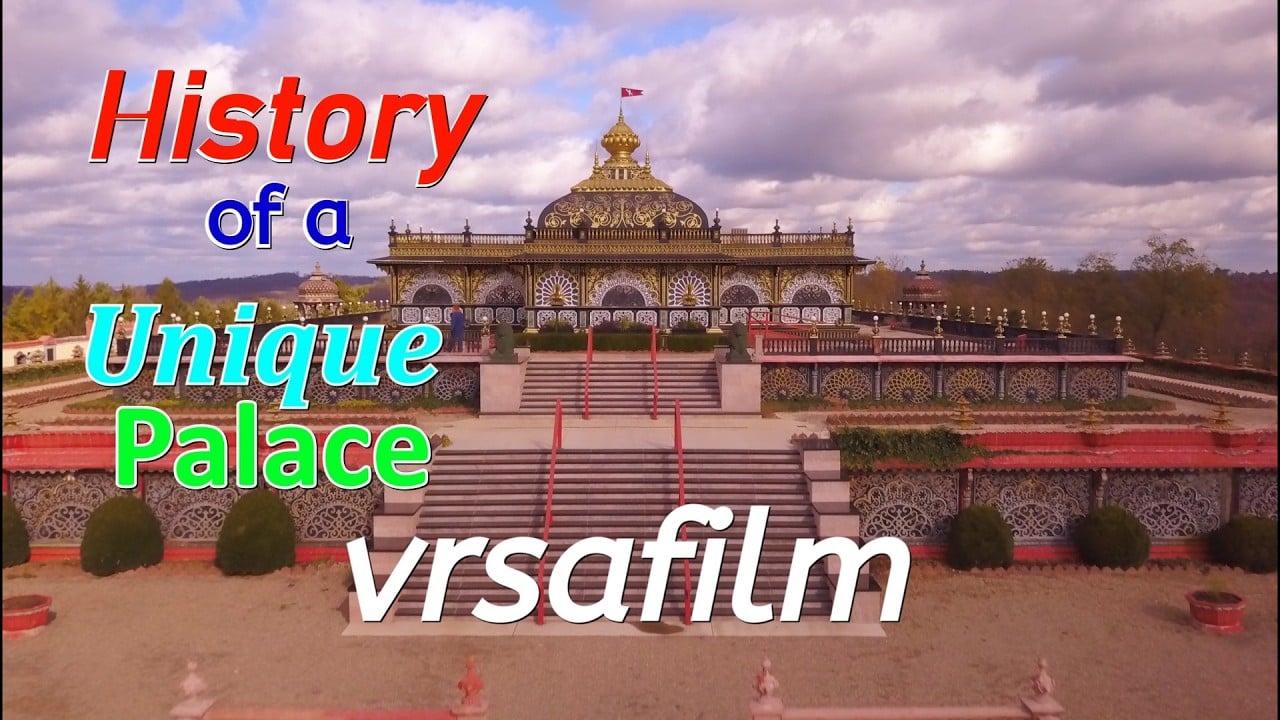
New Vrindaban in West Virginia stands as a remarkable experiment in living bhakti and cultural heritage. This second documentary by Vrsabhanu das focuses on the palace precinctwidely known as the Palace of Goldsituated amid the Appalachian hills, and examines its history, design logic, and enduring significance within the Hare Krishna Movement and ISKCON (International Society For Krishna Consciousness).
Conceived in the early 1970s under the guidance of Srila Prabhupada, the palace began as a modest residence and evolved, after 1977, into a memorial shrine celebrating his life and teachings. The project crystallized a core ISKCON ideal: to translate devotion (bhakti) into tangible, shared spaces that teach, inspire, and serve.
Built largely by resident devotees who arrived with little or no formal training in architecture or the building trades, the palace became a living workshop. Teams learned masonry, carpentry, glasswork, and decorative arts on site, advancing through iterative problem‑solving, peer instruction, and exacting devotional standards that anchored technique in service (seva).
Its material palette blends hand‑cut marble, inlaid stone, carved wood, shimmering glass mosaics, and selective gold‑leaf gilding for domes and interior details. Stylistically, it draws on North Indian palatial idioms resonant with Gaudiya Vaishnava iconography, translating sacred aesthetics into a North American landscape without sacrificing authenticity or clarity of symbolism.
Process discipline shaped every phase. Templates and jigs standardized repetitive motifs; lime‑based plasters accommodated fine detailing; cold‑applied leafing techniques reduced waste; and on‑site studios for glass cutting, metalwork, and carving created a guild‑like ecosystem in which novices became artisans. The result is a coherent vocabulary of arches, cornices, and jaali‑like screens that balance light, ventilation, and ornamentkey considerations in Temple Architecture.
Architecturally, the Palace of Gold exploits cardinal orientation for solar gain and glare control, while clerestory openings and mirrored inlays harvest and diffuse natural light. Interior acoustics, aided by coffered ceilings and dense plaster, support congregational sound during kirtan with minimal electronic amplification, aligning form, function, and devotional practice.
Surrounding gardensrose beds, water features, terraced walks, and axial vistasextend the palace’s didactic program outdoors. Seasonal plantings frame pilgrimage paths, while reflective pools amplify the play of light, encouraging a contemplative rhythm consistent with Hindu Art and Culture and the meditative ethos of sacred landscapes.
Visitors often describe a moment of quiet astonishment on entering the main hall: the scent of carved wood and stone, the glint of gold leaf, and the resonance of kirtan synthesize into an ambience that feels both intimate and grand. This sensory immediacyrooted in material craftopens a gateway to philosophical inquiry and reflective experience.
Beyond aesthetics, the ensemble embodies a Vaishnava understanding that beauty offered in service refines the heart and uplifts community life. The construction narrativeordinary people undertaking extraordinary workillustrates dharma in action and echoes values honored across Hinduism, Buddhism, Jainism, and Sikhism: compassion, discipline, humility, and the pursuit of truth. This dharmic unity is the project’s quiet, universal message.
Over the decades, hundreds of thousands of visitors have toured the palace and gardens, many encountering ISKCON philosophy for the first time. Guided walks, kirtan, and interpretive exhibits introduce Srila Prabhupada’s teachings in accessible terms, fostering interfaith and intercultural dialogue and strengthening appreciation for India’s civilizational wisdom and Cultural Heritage.
During filming in New Vrindaban, numerous devotees recounted how encounters with Srila Prabhupada reshaped their livesstories of mentorship, practical spirituality, and service that give the architecture human scale. The documentary weaves these oral histories with archival photography and close‑range study of craft, revealing the palace as both artifact and living narrative.
Time and weather inevitably challenge such rich surfaces. Phased conservationre‑gilding select elements, improving roof assemblies and drainage, consolidating plasters, and upgrading mechanical systemssupports long‑term heritage preservation. Materials compatibility, reversible methods, and careful documentation guide interventions so the original workmanship remains legible and instructive for future artisans.
As a landmark of the Indian diaspora in North America, the Palace of Gold functions as cultural diplomacy in stone, glass, and gold. It invites students of architectural history, heritage conservation, and religious studies to examine a rare case in which immigrant devotion, volunteer labor, and place‑based design produced a site of international interest while sustaining living practice.
In sum, New Vrindaban’s palace area stands as a meticulously crafted testament to Srila Prabhupada’s vision and to the perseverance of devotees who learned by doing. The documentary by Vrsabhanu das captures this achievement with care, illuminating how devotion, craftsmanship, and community can together shape an enduring legacy that welcomes all seekers on the dharmic path.
Inspired by this post on Dandavats.