Inside the Impregnable: Golden Walls, Iron Gates, and Hanuman’s Reconnaissance of Lanka
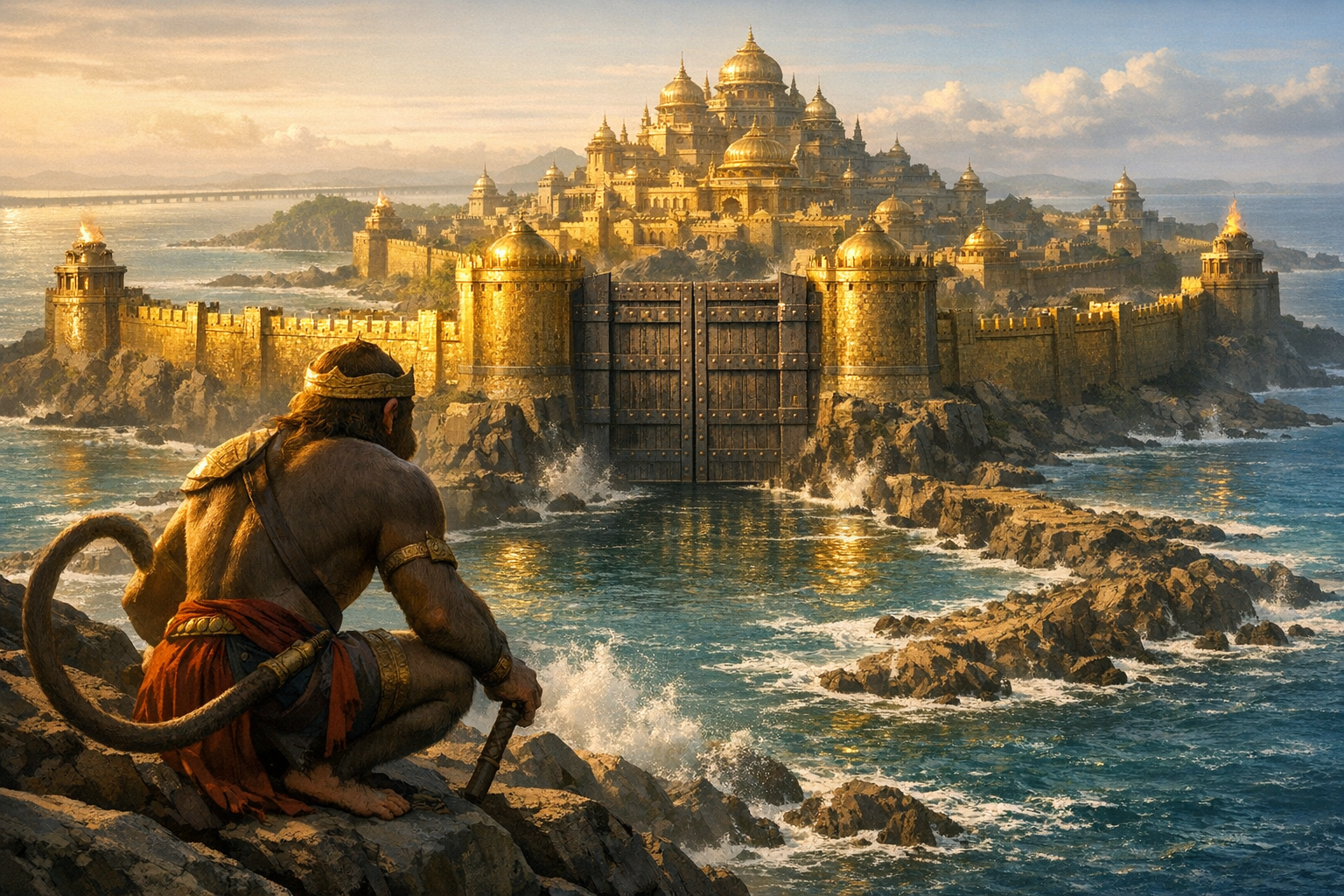
In the Valmiki Ramayana, the early arc of the Yuddha Kāṇḍa pivots on a sober military appraisal: Hanuman’s reconnaissance of Ravana’s Lanka. Returning from his mission that confirmed Sita’s location, Hanuman does not offer triumphalism; he offers a soldier’s report. The narrative foregrounds a city girded by golden ramparts and sealed with iron gatesimagery that fuses opulence with deterrence. Read as military literature as much as epic poetry, the account sets the stage for a complex campaign in which intelligence, engineering, logistics, and dharma converge to meet an adversary ensconced in an island fortress.
From the vantage of classical statecraft, Lanka functions as a textbook jala-durgaan island or water fortwhose primary moat is the sea itself. Approaches are canalized by reefs, headlands, and surf, naturally constricting any landing into narrow, defensible corridors. This maritime geometry complicates not only the initial approach but also sustainment, because an attacker must solve for repeated crossings, protected beachheads, and supply throughput long before decisive engagements commence. Hanuman’s briefing therefore underscores geography as the first and most unforgiving layer of defense.
The Ramayana’s visual emphasis on “golden walls” (hema-prākāra) and “iron gates” (āyasa-dvāra) should be read in dual registersmaterial and symbolic. Militarily, high, reflective ramparts increase stand-off, hamper escalade, and enable defenders to mass fire from elevated platforms. Iron-bound gatessecured with parigha (massive bars)convert portals into chokepoints where a numerically inferior garrison can stall larger forces. Symbolically, the glittering facade advertises wealth and order, amplifying psychological deterrence before the first arrow flies. In both senses, Lanka turns spectacle into strategy.
Hanuman’s description implies a layered defense-in-depth: outworks along the waterfront, primary curtain walls with battlements, and an inner citadel enclosing the royal complex. Such zoningan antar-durga nested within urban wallscreates successive kill zones that erode momentum and morale. Gatehouses double as towers for signals and archery, while narrow internal streets near key gates can be used to channel and disrupt assault formations. The architectural grammar mirrors what classical Indian fortification theory prescribes for resilient urban defense.
Armament and garrison doctrine in Lanka leverage unique rakshasa capabilities. The defenders fight best at night, invert conventional rhythms of vigilance, and weaponize fear through māyā (deception and illusion). Projectile competencyarchery, javelins, and heavy missilesis coordinated from walls and towers, while mobile fighters sortie through sally ports to harass besiegers. The narrative also alludes to specialized war enginesśataghnīglossed by commentators as spiked beams or iron-studded cylinders hurled or rolled to break dense assault clusters. Even if later technical details vary by recension, the throughline is clear: Lanka integrates material fortification with doctrinal advantages in darkness, surprise, and psychological warfare.
Security is equally procedural. Watch rotations, beacon fires, horn and drum signals, and layered pickets transform the city into a sensing organism. The sea doubles as a surveillance asset: surf noise, bioluminescence, and narrow landing shelves limit covert insertions. Hanuman’s safe ingress, therefore, marks not a gap-free system but a stress test of an otherwise disciplined perimeter, revealing how even robust architectures can be penetrated by stealth, agility, and an adversary who does not fight on predictable schedules.
As reconnaissance tradecraft, Hanuman’s mission is exemplary. It combines infiltration, pattern-of-life observation, route mapping, and target confirmation under conditions of uncertainty and risk. The result is an intelligence product that does more than count troops; it interprets topology, technology, timing, and temperament. He identifies approach vectors, inventories obstacles, notes response times, and tests moraleculminating in a battlefield picture precise enough to inform strategy yet flexible enough to accommodate the vanara army’s unconventional capabilities.
The subsequent burning of portions of Lanka, while ethically fraught in a modern lens, functions in-epic as a controlled “stress test.” It reveals flammability risks, command-and-control bottlenecks, and the speedthen limitsof urban fire response. Strategically, the event demonstrates that even an impregnable facade can harbor cascading vulnerabilities when shocked. Psychologically, it punctures the aura of invincibility that golden ramparts projectan effect measured less in casualties than in confidence.
Translating intelligence into operations, Hanuman’s assessment frames the necessity of setubandhathe engineered causeway from the Indian littoral to Lankaled by Nala and Nila. Whether read devotionally or analytically, the bridge is an elegant solution to an island’s veto over logistics: it normalizes supply, widens throughput, and enables the creation of protected beachheads. In amphibious terms, it converts episodic crossings into sustained lines of communication, allowing mass, rotation, and medical evacuationpreconditions for any ethical, discriminating campaign that prioritizes Sita’s safety and civilian protection.
The campaign’s moral grammar is explicit. Envoys are sent; counsel is offered; terms for de-escalation are presented. Vibhishana’s defectionframed in some traditions as “Vibhishana Gita”underscores sārānāgati (seeking refuge) and the ethical obligation to protect the righteous even when they come from the enemy’s ranks. In this sense, Lanka’s siege is narrated not as pure annihilation but as dharma-yuddhawar constrained by justice, mercy, and the pursuit of rightful restoration. The Ramayana’s ethic aligns with broader dharmic sensibilities revered across Hindu, Buddhist, Jain, and Sikh traditions: valor yoked to restraint, victory tempered by compassion.
Placed alongside the Arthasastra’s statecraft, Lanka’s defenses and the Vanara-Rama response form a recognizable dialectic. Kautilya details fort typologies, siege methods, deception, negotiation, and the primacy of intelligence. Lanka exemplifies a water fort whose defenses require a mixed toolkit: engineering, allied cultivation (Vibhishana), disciplined rules of engagement, and the willingness to translate reconnaissance into operational design. In this cross-reading, epic narrative and political theory affirm each other’s first principles.
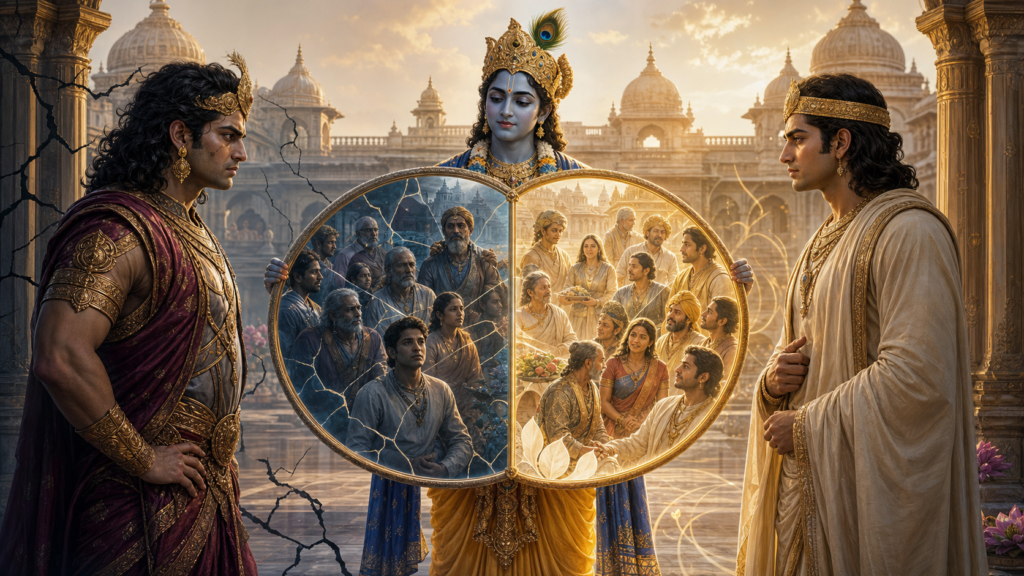
The golden city also invites a symbolic reading inseparable from the tactical one. Gold suggests not only wealth but the glitter of certainty; iron gates stand for naked force. Hanuman’s reconnaissance punctures both illusions. The report shows that overwhelming material power can coexist with strategic brittleness, and that an ethical, intelligence-led campaign can turn the oceanfrom Lanka’s shieldinto Rama’s bridge. The text thus stages a contest between two forms of strength: domination versus duty.
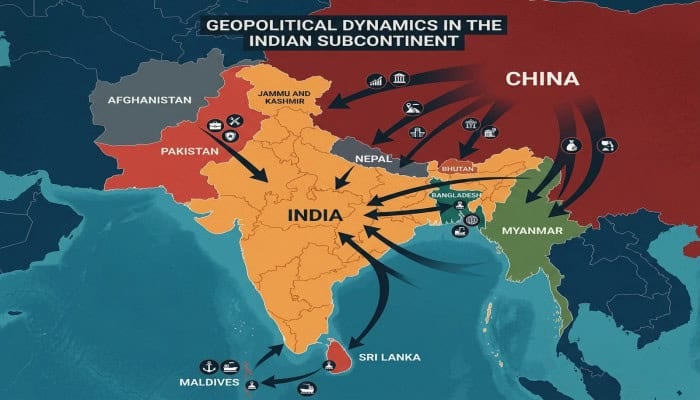
For a modern reader, the scene resonates beyond antiquity. Urban fortifications still rely on layered security, early warning, and psychological deterrence; amphibious operations still live and die by logistics; and intelligence remains the hinge between possibility and success. Perhaps most timely is the Ramayana’s insistence that the means must honor the ends: a principle treasured across dharmic lineages, wherein courage without compassion is mere force, and strategy without ethics is ultimately self-defeating.
Textual traditions acknowledge variation across recensions and commentaries in the Yuddha Kāṇḍa’s wording and emphases, yet a stable core persists: Lanka as a fortified island metropolis of dazzling wealth and deliberate design; Hanuman as scout, analyst, and catalyst; and the campaign as a synthesis of setubandha engineering, coalition-building, and dharma-yuddha. Read this way, the Ramayana remains both scripture and strategic case studyuniting knowledge and virtue in the pursuit of rightful restoration.
In sum, the “impregnable” becomes penetrable not by brute escalation but by clarity of purpose, fidelity to dharma, and intelligent design. Hanuman’s reconnaissance is the quiet turning point: it converts wonder into understanding, fear into planning, and distance into a bridge. What begins as a report on golden walls and iron gates ends as a lesson in how enduring civilizationsacross Hindu, Buddhist, Jain, and Sikh horizonsseek victory: by aligning strength with wisdom and power with compassion.
What is the main focus of this analysis of Hanuman’s reconnaissance of Lanka?
The article reads Hanuman’s mission in the Yuddha Kāṇḍa as a precise military assessment rather than a triumphant report. It highlights how his intelligence on Lanka’s geography, defenses, morale, and vulnerabilities shapes Rama’s campaign.
Why is Lanka described as a jala-durga or water fort?
Lanka functions as a jala-durga because the sea itself serves as its primary defensive moat. Reefs, headlands, surf, and narrow landing approaches make attack and supply difficult before any battle begins.
What do the golden walls and iron gates symbolize in the article?
Militarily, the golden ramparts and iron-bound gates create height, distance, chokepoints, and psychological deterrence. Symbolically, gold suggests wealth and hubris, while iron represents force and fear.
How does Hanuman’s intelligence lead to setubandha?
Hanuman’s report shows that Lanka’s island geography makes repeated crossings and supply lines the central operational problem. Setubandha, the engineered causeway led by Nala and Nila, turns the sea from a barrier into a sustained line of communication.
How does the article connect the Ramayana with the Arthasastra?
The article compares Lanka’s defenses and Rama’s response with classical Indian statecraft themes found in the Arthasastra. Both emphasize fort types, intelligence, engineering, negotiation, deception, and disciplined operational design.
What ethical lesson does the article draw from the siege of Lanka?
The article presents the campaign as dharma-yuddha, a war constrained by justice, mercy, and rightful restoration. It stresses that strength must be guided by wisdom, compassion, and restraint.