
Pradhanikarahasya, preserved as a revered annexure to the Devimahatmya (Durgasaptashati), articulates a rigorous Shakta theology in which Goddess Mahalakshmi is affirmed as the primordial source from which the universe arises. Far beyond a sectarian hymn, it is a concise metaphysical treatise that frames Mahalakshmi as the Supreme Shaktiprior to time, space, and all categories of beingthereby situating the Goddess at the very center of Sanatana Dharma’s cosmology and practice.
Within the living ritual tradition, Pradhanikarahasya accompanies the Devimahatmya alongside auxiliary recitational texts such as the Argala and Keelaka stotras, and in several recensions with Vaikrtika Rahasya and Murtirahasya. The text is widely recited during Navaratri and Durga Puja across regions, reflecting its canonical place in Shakta praxis and its resonance within broader Hindu scriptures and Puranic devotions.
The very title encodes its thesis: pradhana marks the primordial, unmanifest substrate; karana denotes causality; and rahasya signals an esoteric exposition. Pradhanikarahasya thus discloses the secret of the primordial cause, asserting that the ultimate ground of manifestationidentified in Sāṅkhya as pradhana or mūlaprakritiis in truth the conscious, sovereign power of the Devi, here honored as Mahalakshmi.
In its cosmogony, Mahalakshmi exists before all else, the unfailing and self-luminous source from whom emanate Brahma, Vishnu, and Shiva and within whom they function. As Supreme Shakti, she is both beyond attributes (nirguna) and graciously manifest with attributes (saguna), a twofold vision that aligns devotional worship with the most rigorous non-dual metaphysics. The text thereby integrates devotion (bhakti), cosmology, and ontology into a single, coherent synthesis.
The vision of Pradhanikarahasya harmonizes with Vedic and Upanishadic strands that honor the Divine Feminine as cosmic sovereignty and wisdom. The Devi Suktam of the Rig Veda proclaims an all-pervading Goddess who empowers gods and sages alike, while the Sri Suktam invokes Lakshmi as the radiance of auspiciousness and prosperity aligned with rta. The philosophical framework finds echoes in the Shvetashvatara Upanishad’s reflections on maya and the Lord of maya, and the Bhagavad Gita’s mapping of prakriti and purushahere re-interpreted through Shakti’s primacy as the conscious power that is never separate from the Absolute.
Pradhanikarahasya also offers a hermeneutic key to the three narrative cycles of the DevimahatmyaMadhu-Kaitabha, Mahishasura, and Shumbha-Nishumbhaby reading them through the lens of the three gunas. Mahakali, Mahalakshmi, and Mahasaraswati become not merely mythic forms but expressions of tamas, rajas, and sattva at the cosmic and psychological levels. In this exegesis, the Goddess is the regulator and reconciler of the gunas, revealing that spiritual maturation entails their ethical and contemplative transformation.
Cosmologically, the text situates creation as a movement from the unmanifest (avyakta) into articulated form through the play of Shakti. The oceanic imagery that recurs in Puranic literaturefoam, waves, and tidesaptly figures the emergence of multiplicity from a unitary depth. Mahalakshmi is named Mahamaya not as illusion in a pejorative sense, but as the inscrutable power that both veils and unveils the Real, enabling relational life and devotion while pointing beyond them to the unsublatable ground.
Philosophically, Pradhanikarahasya engages Sāṅkhya’s pradhana and Vedanta’s Brahman by subsuming both within Shakta non-dualism. Rather than a duality of inert matter and pure consciousness, the text insists on the indivisibility of consciousness and power: Chit and Shakti are one reality. This stance allows Advaita Vedanta’s nirguna absolute and bhakti’s saguna divinity to converge without remainder, clarifying why spiritual literature can speak of one Supreme while also celebrating countless divine forms.
In this framework, Goddess Lakshmi is not restricted to the domain of material wealth. Sri signifies plenitude, harmony, and auspicious order. As the ethical radiance of dharma, Lakshmi aligns prosperity with responsibility and interdependence, making her the guardian of the four purusharthasdharma, artha, kama, and moksha. Pradhanikarahasya thereby reframes wealth as a sacrament of order and compassion, not mere accumulation.
Ritually, practitioners integrate Pradhanikarahasya into daily or festival recitations of the Durgasaptashati, often alongside homa, japa of Lakshmi mantras, and meditation on the Sri Suktam. In many households and temples, this disciplined cycle becomes a contemplative spine that cultivates clarity, gratitude, and ethical steadinessqualities that devotees consistently report as the lived fruits of sustained engagement with the text.
The text’s inclusive spirit readily supports unity across dharmic traditions. Buddhist traditions honor Prajnaparamita as the Mother of Buddhas, the wisdom-compassion matrix that births awakening; Sikh scripture and heritage celebrate the valorous feminine power in compositions like Chandi di Var; Jain practice venerates compassionate Yakshinis such as Ambika and Padmavati as guardians of the path. While metaphysical nuances differ, these traditions share a deep intuition for the sacred feminine as protector, guide, and wellspring of insightan ethos Pradhanikarahasya strongly affirms. Such convergences strengthen inter-dharmic harmony without collapsing doctrinal distinctiveness.
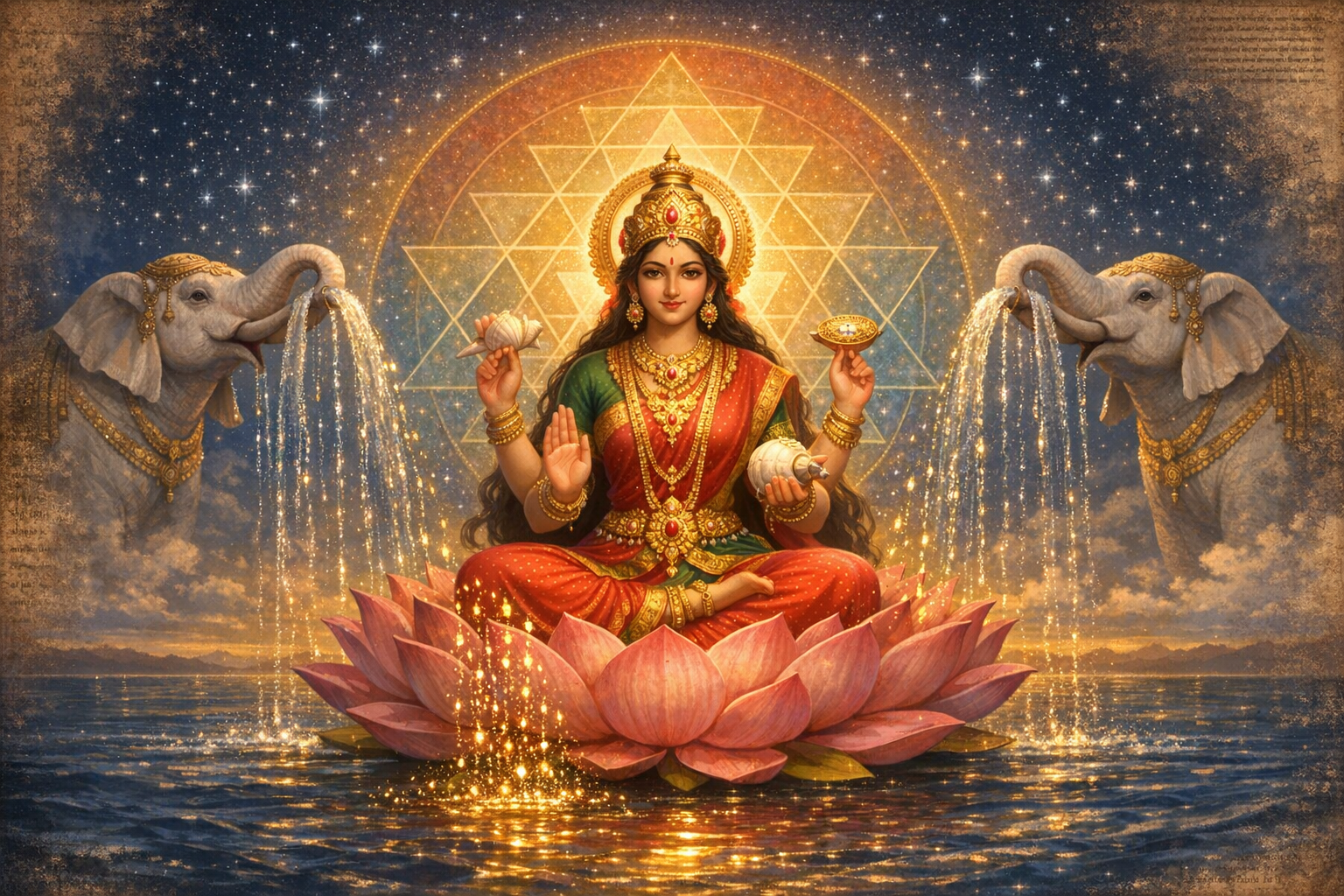
Iconographically, Mahalakshmi’s lotus seat signals transcendence amid samsara, her elephants evoke royal dignity and the life-giving monsoon, and her handsbestowing boons and fearlessnessembody active grace. When conch and discus are present, they underline the inseparability of Sri and Vishnu, mapping Pradhanikarahasya’s vision onto a Vaishnava-Shakta continuum that nourishes Hindu unity in diversity.
Read as a guide to inner transformation, the asuras of the Devimahatmya symbolize destabilizing impulsesaggression, greed, and delusionthat cloud discernment. Pradhanikarahasya reframes their defeat as the awakening of sattva through the Goddess’s insight-bearing power. The result is not world-denial but world-integration: a stabilized intelligence that serves society, honors ecological limits, and pursues liberation with humility.
Historically, the Devimahatmya circulated with regional paddhatis and commentaries, and Pradhanikarahasya travelled alongside it as an authoritative explanatory tract. Its presence in recitational lineages from Bengal to the Deccan and Tamil country attests to its pan-Indian reception. Even where manuscript families differ in arrangement, the doctrinal through-lineMahalakshmi as the first principleholds consistently, reinforcing its standing in Shakta theology and Hindu scriptures more generally.
In contemporary settingsurban temples, home altars, and diaspora study circlesthe text functions as a bridge between scriptural learning and everyday discernment. Practitioners commonly pair a close reading of Pradhanikarahasya with seva, gratitude practices, and mindful consumption, allowing the philosophy of Sri to inform financial ethics, family responsibilities, and civic engagement. This integrated approach both honors tradition and addresses modern complexities.
At its heart, Pradhanikarahasya clarifies a simultaneously simple and profound claim: the universe is held, pervaded, and ultimately resolved by Mahalakshmi, the Supreme Goddess. Recognizing that presence in all beings fosters reverence, reduces sectarianism, and deepens the shared dharmic commitment to truth and compassion. In a time of fragmentation, this compact yet far-reaching text illuminates a path of unitywithin Hinduism and across the broader family of dharmic traditionsrooted in Shakti’s wisdom and grace.
Inspired by this post on Hindu Blog.







