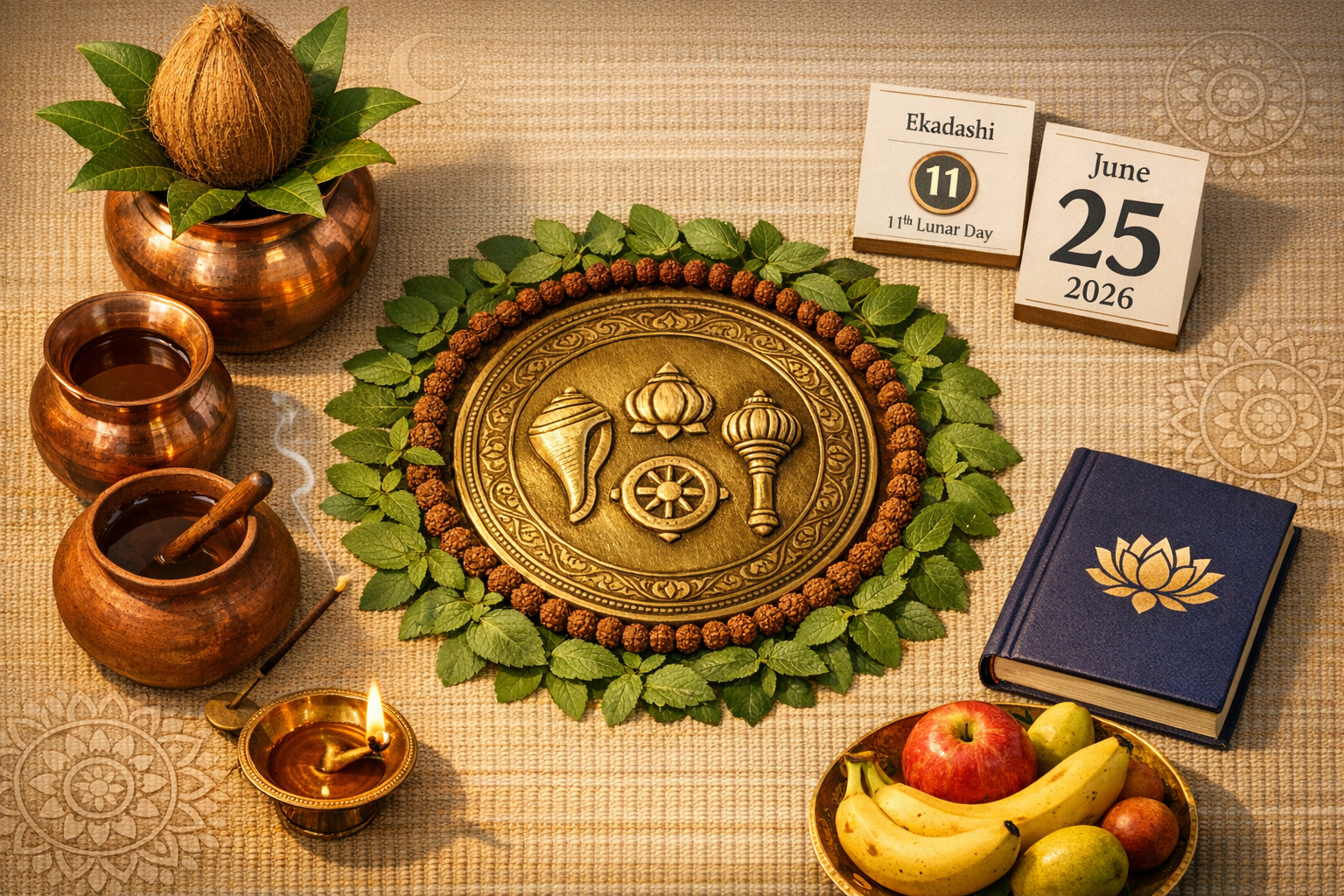
Nirjala Ekadashirevered as Pandava Ekadasi and Bhimsen Ekadashifalls on the Ekadashi tithi of Jyeshtha Shukla Paksha and is dedicated to the worship of Sri Vishnu. In 2026, most Indian panchangs place Nirjala Ekadashi on 25 June. The observance is famed for its austerity: a traditional waterless fast (nir-jala) observed from sunrise on Ekadashi until the Parana on Dwadashi. As with all lunisolar observances, diaspora communities should confirm local dates using a reliable panchang to account for time-zone differences.
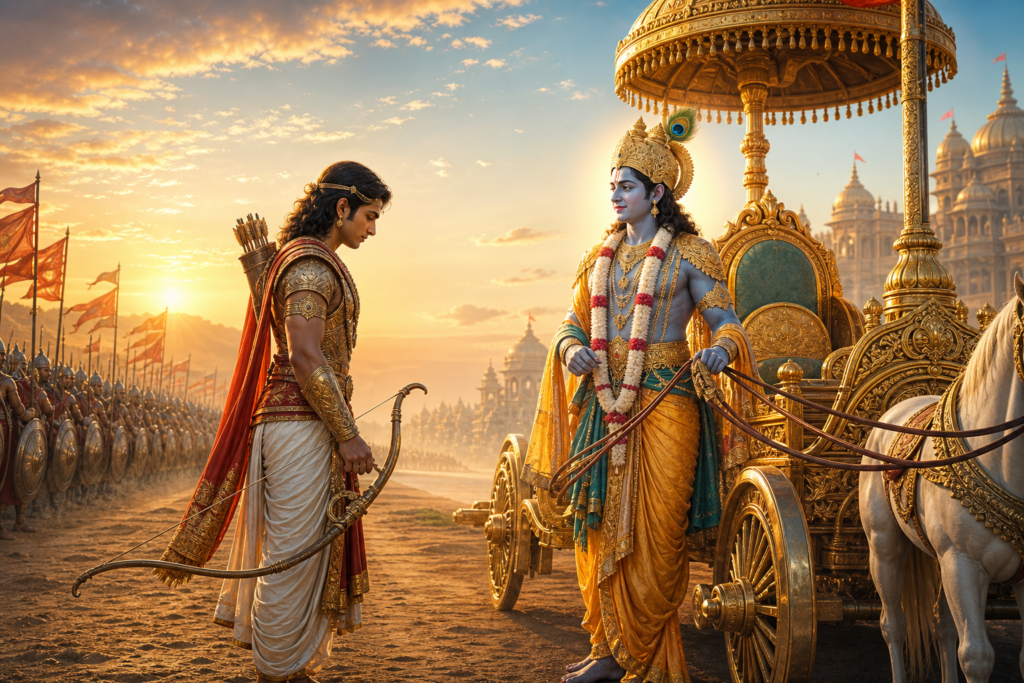
Scriptural attestations to the Nirjala Ekadashi vrat katha, its spiritual significance, and its transformative merit appear in the Brahma Vaivarta Purana. The vrata’s popular name, Bhimsen Ekadashi, recalls the Mahabharata tradition where Bhima, known for prodigious appetite, sought a single, supremely rigorous Ekadashi to compensate for the difficulty of fasting on all others; the nir-jala observance is thus held to confer the accrued punya of the year’s Ekadashis when performed with devotion and correct procedure. This twin emphasis on uncompromising tapas (discipline) and expansive compassion (dāna, seva) underwrites the vrata’s distinctive place in Vaishnava practice.
Calendarically, Nirjala Ekadashi is determined by the Ekadashi tithi (the 11th lunar day) in the waxing half of Jyeshtha. Both purnimanta and amanta month conventions converge on this identification, though regional almanacs may differ slightly on civil dates due to sunrise-based tithi alignment. Two technical rules guide observance: Ekadashi must prevail at local sunrise for the fast to be observed that day; Parana (fast-breaking) is performed on Dwadashi after sunrise and after the lapse of Hari Vasara (the first quarter of Dwadashi), within the recommended Dwadashi window. These rules preserve the vrata’s alignment with the lunar day rather than the civil clock, a hallmark of classical panchang logic.
The Nirjala Ekadashi vrat katha emphasizes intention (sankalpa), purity (shuddhi), and steadiness (dhriti). In the well-known narrative linked to Bhima, guidance from sages culminates in a single, waterless Ekadashi that matches the spiritual yield of multiple observances. The legend does not valorize extremity for its own sake; rather, it situates austerity as an instrument of bhaktian inward consecration to Vishnuexpressed outwardly through restraint and charity.
Preparations typically begin on Dashami night with a satvik regimen: light, simple foods, curtailed sensory stimulation, and mental orientation toward japa, dhyana, and seva. On Ekadashi morning, a snana (ritual bath) is followed by sankalpa to observe Nirjala Ekadashi strictly, invoking Sri Vishnu’s grace for purity of mind and steadiness throughout the fast.
Core puja elements center on Vishnu worship. Devotees perform archana to forms such as Narayana, Krishna, or Vamana; offer Tulasi leaves, incense, lamp, and naivedya appropriate to the vrata; and recite stotras like Vishnu Sahasranama and passages from the Bhagavad-Gita (commonly Chapter 15, Purushottama Yoga). The mantra japa of “Om Namo Bhagavate Vāsudevāya” or “Om Namo Nārāyaṇāya” sustains meditative focus through the day.
The hallmark of this observance is the nir-jala constraint: refraining from water as well as food until Parana on Dwadashi. Many lineages defer tirtha (charanamrita) until Parana to honor the spirit of the vrata, while still offering water in puja to the Deity. The discipline is complemented by compassion: serving water to others (jal-dāna) and supporting water-distribution efforts during peak summer ties personal tapas to social care.
Devotional culture often frames Nirjala Ekadashi as a full-day immersion in bhakti. Households and temples may adopt a sattvic atmosphere of kirtan, bhajan, scriptural reading, and quiet contemplation. When possible, jagaran (night vigil) deepens focus; where not feasible, silence, study, and mindful rest are recommended, keeping the inward current of remembrance unbroken.
Parana is performed on Dwadashi. Classical guidance recommends: break the fast after sunrise, only after Hari Vasara has elapsed, and within the first half of the Dwadashi day when practical. Local panchangs list precise Parana windows; if Dwadashi ends before a convenient time, the fast may be concluded earlier in accordance with shastra and guru-parampara. In many traditions, Parana begins with tirtha, followed by light satvik foods, honoring the body’s transition with care.
Because Nirjala Ekadashi is exacting, traditional counsel exempts children, the elderly, the infirm, pregnant or nursing individuals, and anyone for whom water abstention is medically unsafe. Shastra also recognizes upaya (alternative means): phalahara (fruits), only-water, or partial fasts may be adopted under guidance, with emphasis on sincerity of sankalpa, japa, and seva. The vrata’s spiritual intentcultivation of sattva and bhaktiremains paramount over sheer physical rigor.
From a sadhana perspective, Nirjala Ekadashi refines attention, steadies prana, and clarifies the inner witness. Shastra attributes the punya of all Ekadashis to this vrata when undertaken with pure devotion. Ethically, it trains the will away from compulsion, turning energies toward remembrance, humility, and service. In Vaishnava theology, this reorientation is an offering to Vishnu, harmonizing personal effort with divine grace.
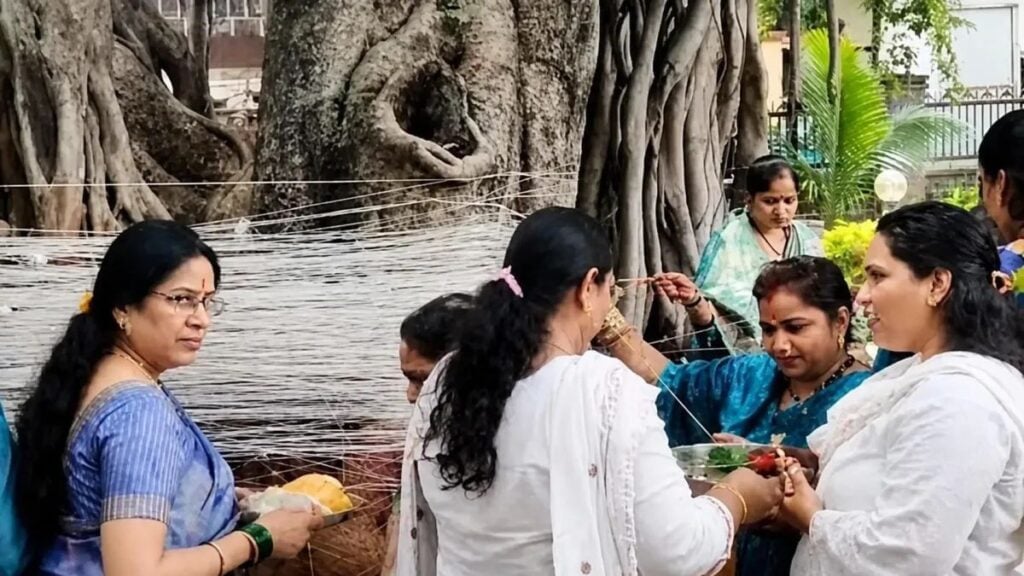
The observance also embodies a social ethic consonant with dharma. In many regions, devotees sponsor water kiosks (piyau), donate earthen pots (matka), umbrellas, or cooling aids, and support community kitchens. Such practices affirm a holistic Ekadashi: rigorous self-restraint paired with tangible care for others, particularly in the summer month of Jyeshtha.
While Nirjala Ekadashi is a Vaishnava vrata, its spirit resonates across the dharmic family. Buddhism’s Uposatha underscores mindful self-regulation; Jainism’s upavasa emphasizes ahimsa, tapas, and inner purification; Sikh discipline highlights seva, simran, and truthful living. Honoring these convergences nurtures unity in diversitydifferent paths, shared values of restraint, compassion, and remembrancestrengthening social harmony without diluting distinct traditions.
Regional practices add texture. In North India, Vrindavan, Varanasi, and other tirtha-kshetras see heightened temple activity; Vaishnava centers worldwide (including ISKCON communities) structure the day around kirtan, katha, and coordinated seva. Households may adopt simple vrata-altars with Tulasi, offer lamps at dusk, and read from texts like the Bhagavata Purana or the Bhagavad-Gita to anchor the mind in sattva-guna.
Common queries address practicalities. Many traditions allow minimal achamana for purity while maintaining nir-jala in spirit; others defer even this until Parana. Onion, garlic, and tamasic foods are avoided before and after the fast. Those unable to observe water abstention can adopt a standard Ekadashi (anna-tyaga) or phalahara, explicitly dedicating the vrata to Sri Vishnu, while amplifying japa and seva. Women observing household duties often calibrate participation with wisdom and moderation, underscoring that the heart of Ekadashi is remembrance and integrity.
For 2026, devotees are encouraged to plan carefully: confirm the 25 June civil date locally; note the Ekadashi sunrise rule; verify the Dwadashi Parana window and the lapse of Hari Vasara; and arrange charity or water-distribution seva in advance. Those living in hot climates should pace activities prudently and rest as needed; where health concerns exist, an alternative Ekadashi mode should be chosen in consultation with family elders or spiritual guides.
Nirjala Ekadashi 2026 thus offers a rare confluence of tapas and karunawaterless vrat discipline illuminated by generous water-giving to others. Grounded in the Brahma Vaivarta Purana and enriched by living practice, it aligns personal transformation with communal well-being. Observed with knowledge, care, and unity-minded respect for all dharmic traditions, the vrata becomes more than abstention: it is a luminous commitment to truth, devotion, and shared human dignity.
Inspired by this post on Hindu Pad.