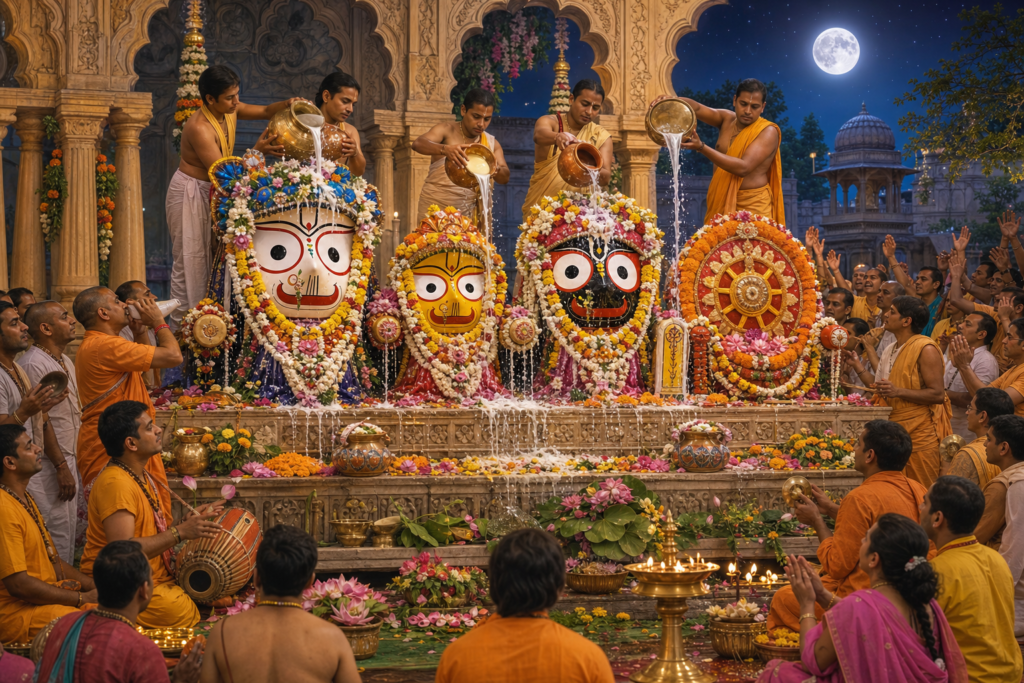
The annual Brahmotsavams of Sri Govindaraja Swamy Temple in Tirupati will be observed from May 23 to May 31, 2026, with Ankurarpanam on the evening of May 22. In this nine-day Vaishnava festival administered by Tirumala Tirupati Devasthanams (TTD), the utsava murti of Sri Govindaraja Swamy graces the temple Mada streets on a series of Vahana Sevas, accompanied by resonant Govinda namasmarana and traditional music, drawing thousands of pilgrims to the heart of Tirupati’s sacred heritage precinct.
Anchored in the Vaishnava Agamas (notably Vaikhanasa and allied traditions), Brahmotsavam follows a precise ritual architecture. Ankurarpanam, the ceremonial sowing of seeds, sanctifies the space-time of the festival and marks auspicious beginnings. Customarily, Dwajarohanam (flag-hoisting with Garuda insignia) inaugurates the public phase of festivities, while Dhvaja-avarohanam (flag-lowering) and the ceremonial Chakrasnanam of the Sudarshana Chakra conclude proceedings. The detailed, day-wise program and timings are typically released by TTD closer to the event, and devotees are advised to refer to the official schedule when planning darshan.
Historically and theologically, the temple of Sri Govindaraja Swamy holds a central place in Tirupati’s liturgical life. Tradition associates the consecration of the icon to the 12th-century Vaishnava acharya, Bhagavad Ramanujacharya, embedding the shrine within the broader Sri Vaishnava canon of worship and scholastic lineage. This layered inheritance is tangibly experienced during Brahmotsavam, when ritual, music, temple architecture, and community devotion integrate into a living expression of India’s sacred cultural heritage.
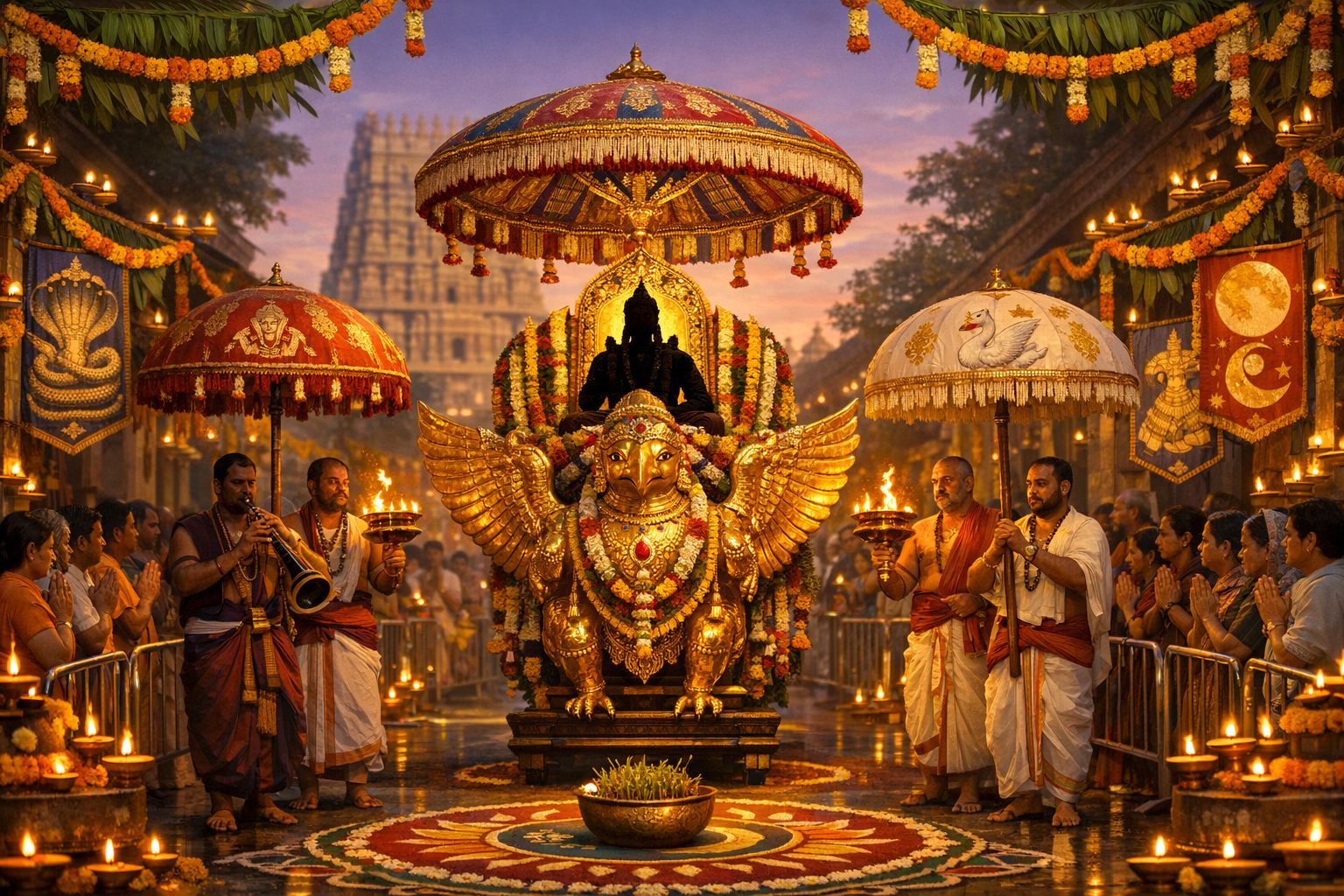
Vahana Sevas are the public face of Brahmotsavam. The deity, adorned in distinct alankarams, tours the four Mada streets in a clockwise pradakshina, bestowing darshan to devotees who line balconies, intersections, and mandapas. While the exact sequence varies by temple and year, common vahanams in Vaishnava Brahmotsavams include Sesha (Ananta), Hamsa, Simha, Hanumantha, Gaja, Surya Prabha, and Chandra Prabha, each carrying specific theological symbolismsuch as protection and cosmic order (Sesha), discriminative wisdom (Hamsa), courage (Simha), seva-bhava (Hanumantha), royal strength (Gaja), spiritual illumination (Surya), and serenity (Chandra).
Among these, Garuda Vahanam is widely regarded as a highlight across Sri Vaishnava temples, drawing especially large congregations. Devotees often describe a palpable swell of devotion during Govinda namasmarana as the vahana advancesnadhaswaram and tavil rhythms punctuating the chants, diyas flickering on balconies, and the gentle movement of the procession uniting spectators in collective prayer. The experience is at once communal and deeply personal, evoking a sense of grace, protection, and hope that many carry long after the festival night concludes.
From a ritual studies perspective, Ankurarpanam signals fertility, renewal, and the ritual “seed” of merit; Dwajarohanam sacralizes the festival’s temporal boundaries; daily Vahana Sevas extend the deity’s anugraha (blessing) into the public sphere; Snapana Tirumanjanam (ritual abhishekam, where scheduled) integrates purification and rejuvenation; and the concluding rites reaffirm cosmic harmony. This sequence exemplifies how Agamic liturgy choreographs time, space, and sound to cultivate devotion and ethical vigilance in everyday life.
Practical planning for 2026 should align with the late-May climate. Mornings and evenings are the primary windows for Vahana Sevas, with midday reserved for temple-based rituals; exact timings will be notified by TTD. Comfortable, modest clothing aligned with temple dress norms, hydration plans, a cap or umbrella for daytime, and a shawl for evenings are prudent. Footwear zones are typically demarcated; devotees may expect security screening, designated entry and exit corridors, and barricaded viewing stretches along the Mada streets.
Darshan logistics during Brahmotsavam typically include free darshan queues and special entry categories as announced by TTD. Early arrival at viewing points on the Mada streets improves visibility and comfort; families with elderly members often prefer corners and widened junctions, which provide lateral clearance during vahana turns. Photography policies can shift based on crowd and security considerations; announcements on-site should be followed without exception to maintain safety and sanctity.
Tirupati’s accommodation fills quickly during major utsavams. Devotees should plan early booking of TTD choultries, guest houses, or reputable hotels within reachable distance of the temple quarter. Public transport connectivity is robust, with Tirupati railway station and bus station offering reliable access; last-mile connectivity by auto or walk is customary for the heritage zone during evening sevas when traffic diversions are in force.
Environmental stewardship is a growing feature of major temple festivals. Carrying a reusable water bottle where permitted, minimizing single-use plastics, and using designated bins support the city’s waste management. Prasadam should be handled respectfully, and offerings (flowers, coconuts) must adhere to temple guidelines. Volunteer groups often assist with crowd movement and first aid; cooperation with Srivari Seva volunteers and police marshals ensures a smoother collective experience.
Accessibility considerations are increasingly mainstreamed in TTD-administered events. Those traveling with seniors or persons with disabilities may explore notified assistance points, use shaded viewing areas, and schedule breaks between morning and evening sevas. Medical camps and hydration kiosks are typically positioned at strategic points during peak days, particularly for marquee Vahana Sevas such as Garuda Vahanam.
The spiritual ethos of Brahmotsavam resonates across dharmic traditions. While Sri Govindaraja Swamy Temple is a Vaishnava shrine, its valuesseva, satya, karuna, and loka-sangrahaare shared across Hinduism, Buddhism, Jainism, and Sikhism. Pilgrims from diverse dharmic backgrounds find meaning in the festival’s emphasis on ethical living, humility, community uplift, and reverence for sacred life, affirming unity-in-diversity at the heart of India’s civilizational fabric.
Pilgrimage planning can be enriched through a circuit of Tirupati’s sacred sites. Many visitors pair Brahmotsavam darshan at Sri Govindaraja Swamy Temple with visits to the hill shrine of Sri Venkateswara at Tirumala, Sri Padmavati Ammavari Temple at Alamelumangapuram (Tiruchanur), and Kapila Theertham. This integrated itinerary offers an illuminating cross-section of temple iconography, ritual forms, and devotional music traditions that together define the Tirupati region’s sacral landscape.
Symbolically, the vahanams communicate an ethical grammar for everyday life. Sesha Vahanam orients pilgrims to cosmic support and surrender; Hamsa underscores viveka (discernment); Simha calls for courage against adharma; Hanumantha extols tireless service; Surya and Chandra emphasize rhythm, balance, and the cyclical nature of effort and rest. The progressive sequence across the nine days can be read as a spiritual pedagogy, inviting contemplation long after the festivities.
For 2026, devotees may anticipate structured crowd advisories for peak days, voluntary service sign-ups, and real-time public announcements around Mada streets. Families benefit from designating rendezvous points and keeping essential items light and hands-free. Respect for barricades, priority lanes, and emergency access corridors is essential, especially during the most sought-after Vahana Sevas.
Food and water should be sourced from hygienic counters, especially during warmer afternoons. Children and seniors should be protected from heat stress; simple measuresoral rehydration salts, shaded pause points, breathable fabricssignificantly improve comfort. As always, temple etiquettesilence during archana, mindful handling of prasadam, and deference to the sanctity of the utsava murtipreserves the sacred tenor of Brahmotsavam.
Beyond devotion, Brahmotsavam sustains livelihoods of local artisans, flower vendors, musicians, and service providers. The festival is therefore a living ecosystem where cultural, spiritual, and economic strands interweave. Participation with sensitivitypurchasing ethically, avoiding waste, and honoring traditional artshelps conserve this intangible heritage for future generations.
In summary, the Govindaraja Swamy Temple Brahmotsavams 2026 offers a rare confluence of rigorous Agamic ritual, aesthetic splendor, and inclusive devotion. With Ankurarpanam on May 22 and the main festivities from May 23 to 31, pilgrims can look forward to meaningful darshan on the Mada streets, the theological richness of Vahana Sevas, and practical arrangements oriented to safety and accessibility. Approached with preparedness and a spirit of unity, the festival becomes both a cultural celebration and a transformative sadhana.
Inspired by this post on Hindu Pad.