
-
Parvati Mata’s Sacred Lion: The Powerful Meaning Behind Her Divine Vahana
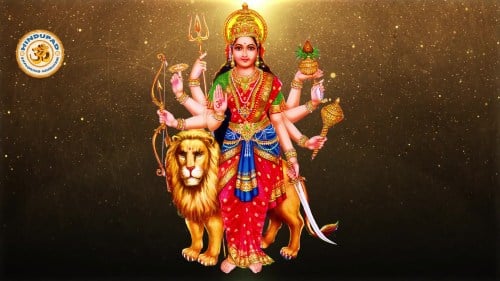
The legend explains how Parvati Mata’s unwavering tapas transforms a predatory lion into a devoted guardian and sacred vahana. The popular account follows the animal from hunger and aggression to spiritual purification, protection and belonging in the divine household. A close textual comparison shows that the Śiva Purāṇa preserves a parallel episode involving a tiger…
-
Why Parvati Mata Rides the Lion: The Powerful Meaning of Her Sacred Vahana
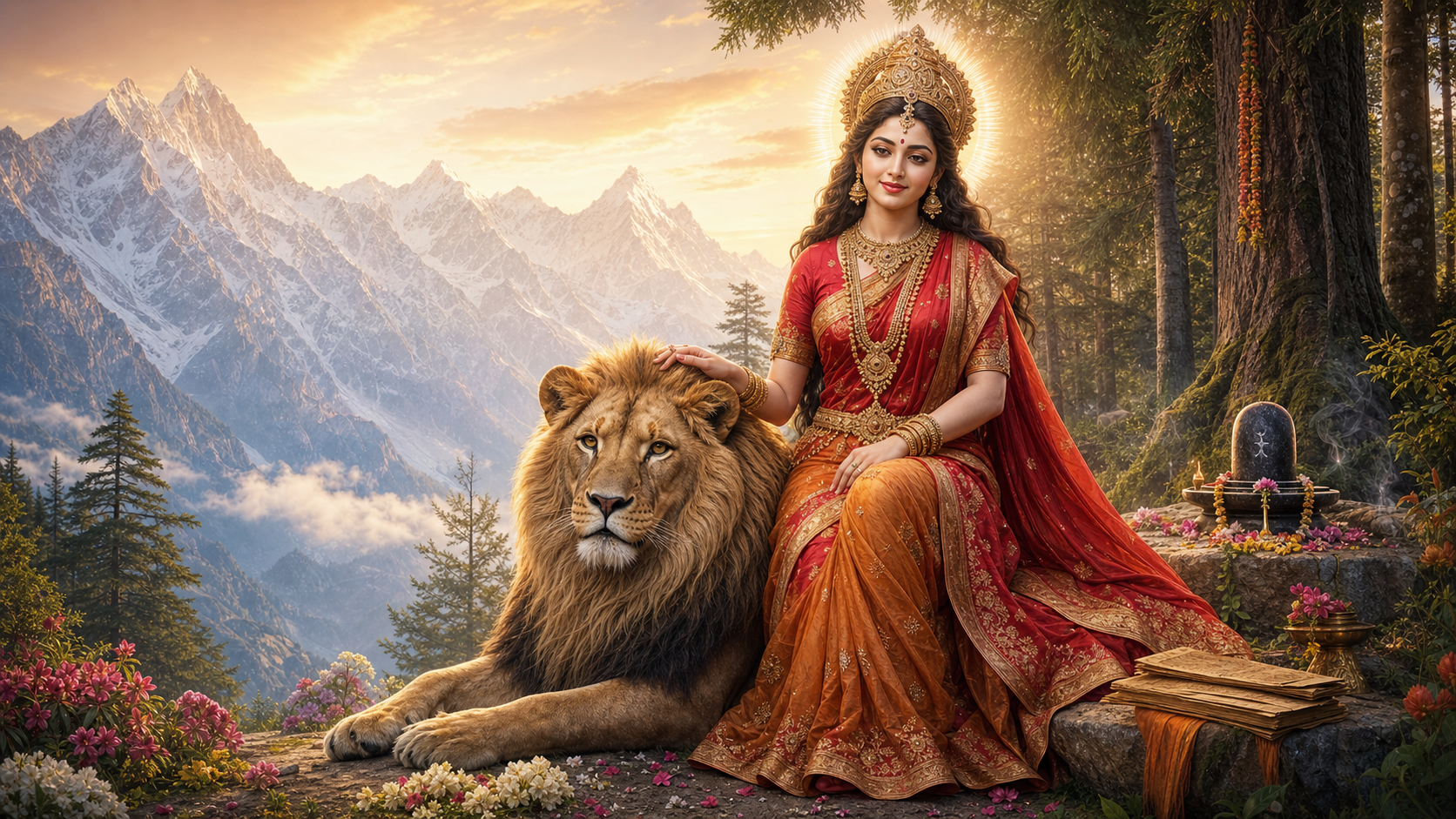
The sacred lion of Parvati Mata represents far more than a divine means of transport. This study traces the popular legend of the hungry predator transformed by Parvati’s penance, compassion, and grace. It also distinguishes the tiger described in the Shiva Purana from the lion traditions preserved in the Skanda Purana and Devi Bhagavata Purana.…
-
When Vishnu Left Garuda Behind: Two Bhakti Legends Where Love Outran the Vahana
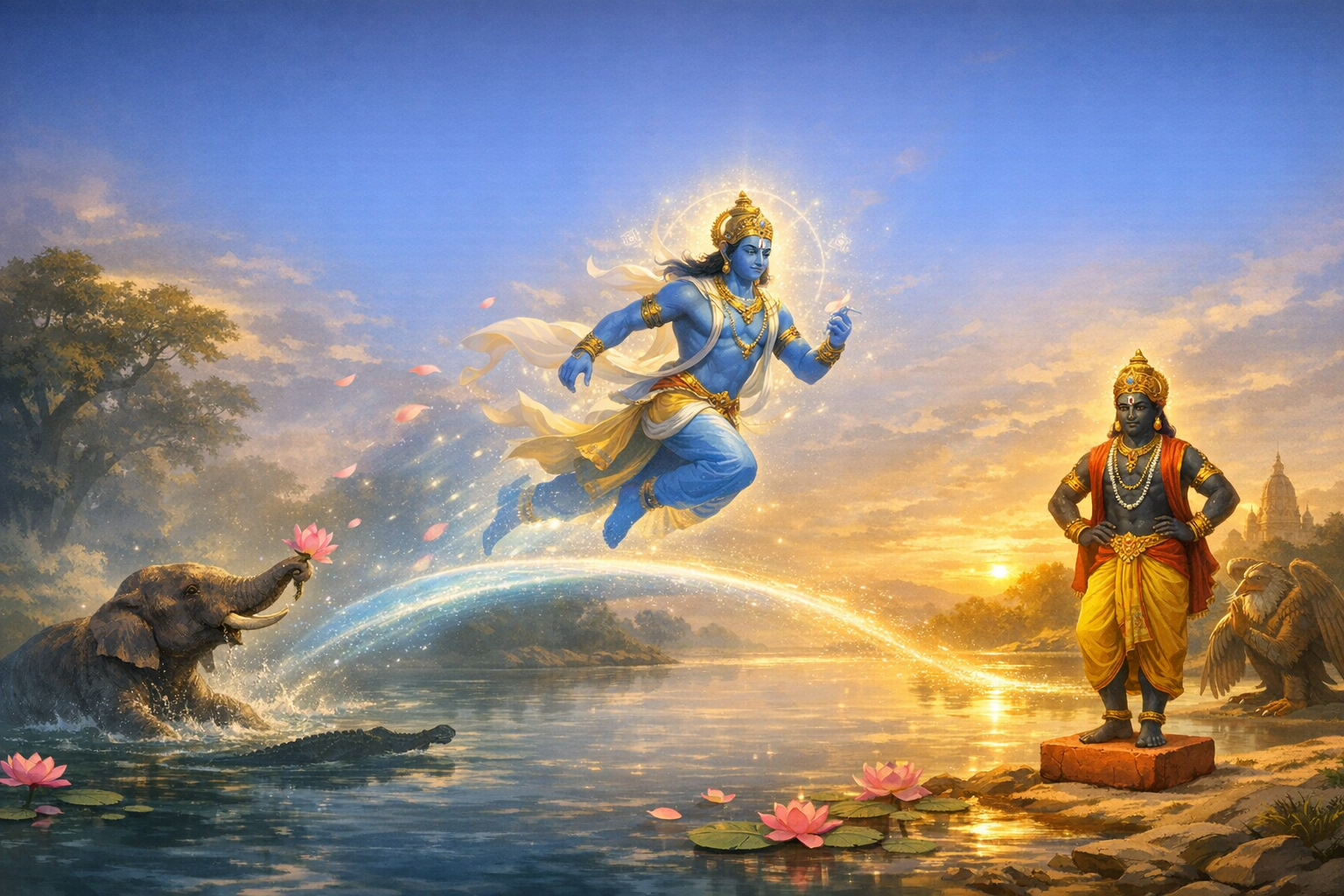
This essay explores two celebrated Vaishnava narrativesGajendra Moksha and the Pandharpur Vithoba–Pundalik traditionto show how bhakti can “outpace” even Garuda, Vishnu’s exalted vahana. It clarifies textual foundations in the Bhagavata Purana while distinguishing poetic temple lore that stresses the immediacy of compassion. It explains why the idiom that Vishnu “left Garuda behind” functions as a…
-
Kamadeva Unveiled: Reclaiming Hinduism’s Sacred Science of LoveNot Lust
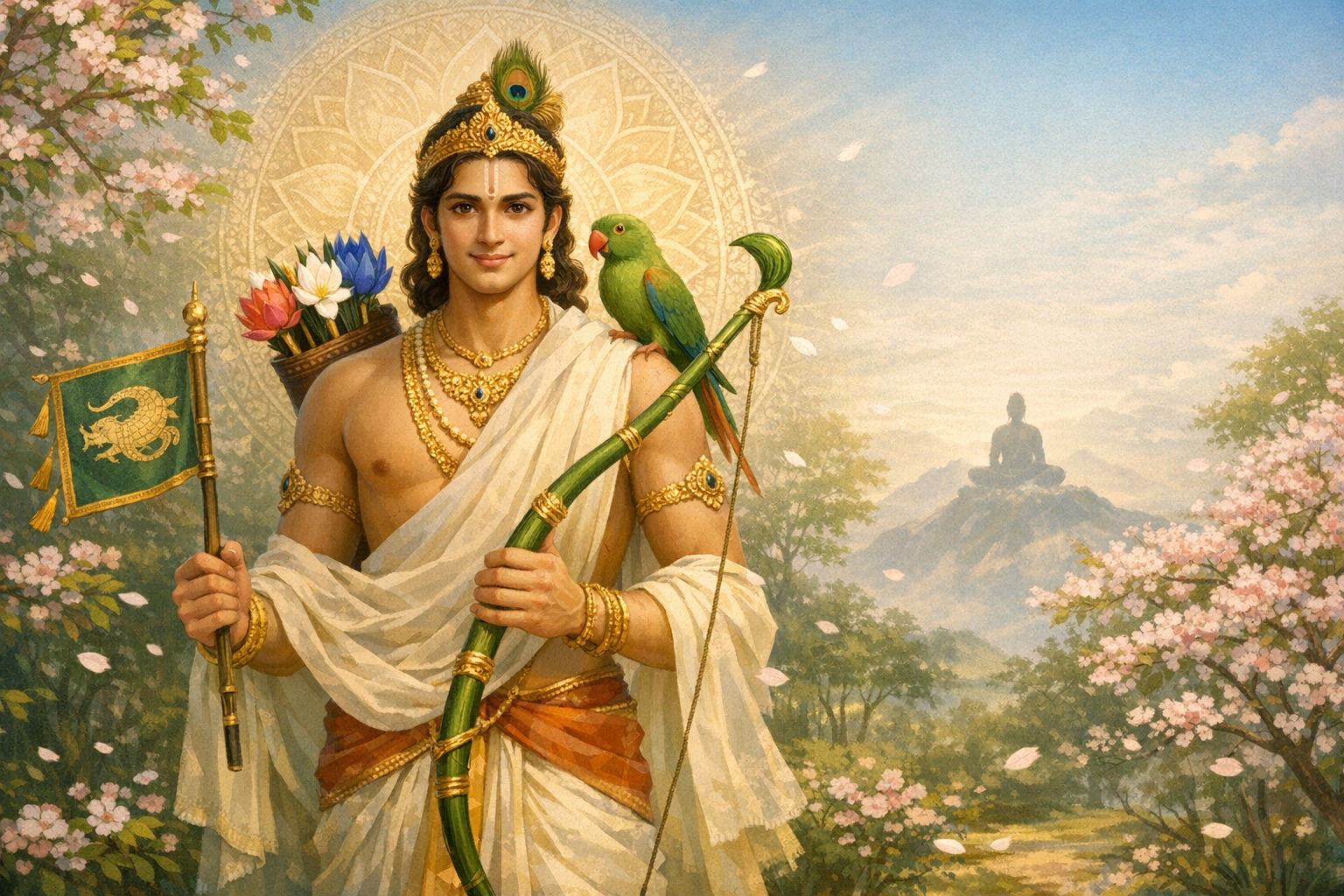
Kamadeva in Hindu thought is not a Cupid-like figure of conquest but the ethically governed power of love and creative desire. Vedic and Atharvavedic sources locate kama at the heart of cosmogenesis, while Purāṇic narratives refine it through the Ananga episode and Pradyumna motif. Framed within the purusharthas, kama is pursued under dharma, distinguishing love’s…
-
Why Shiva Rides the Bull, Not the Horse: Deep Symbolism, Dharma, and Yogic Insight
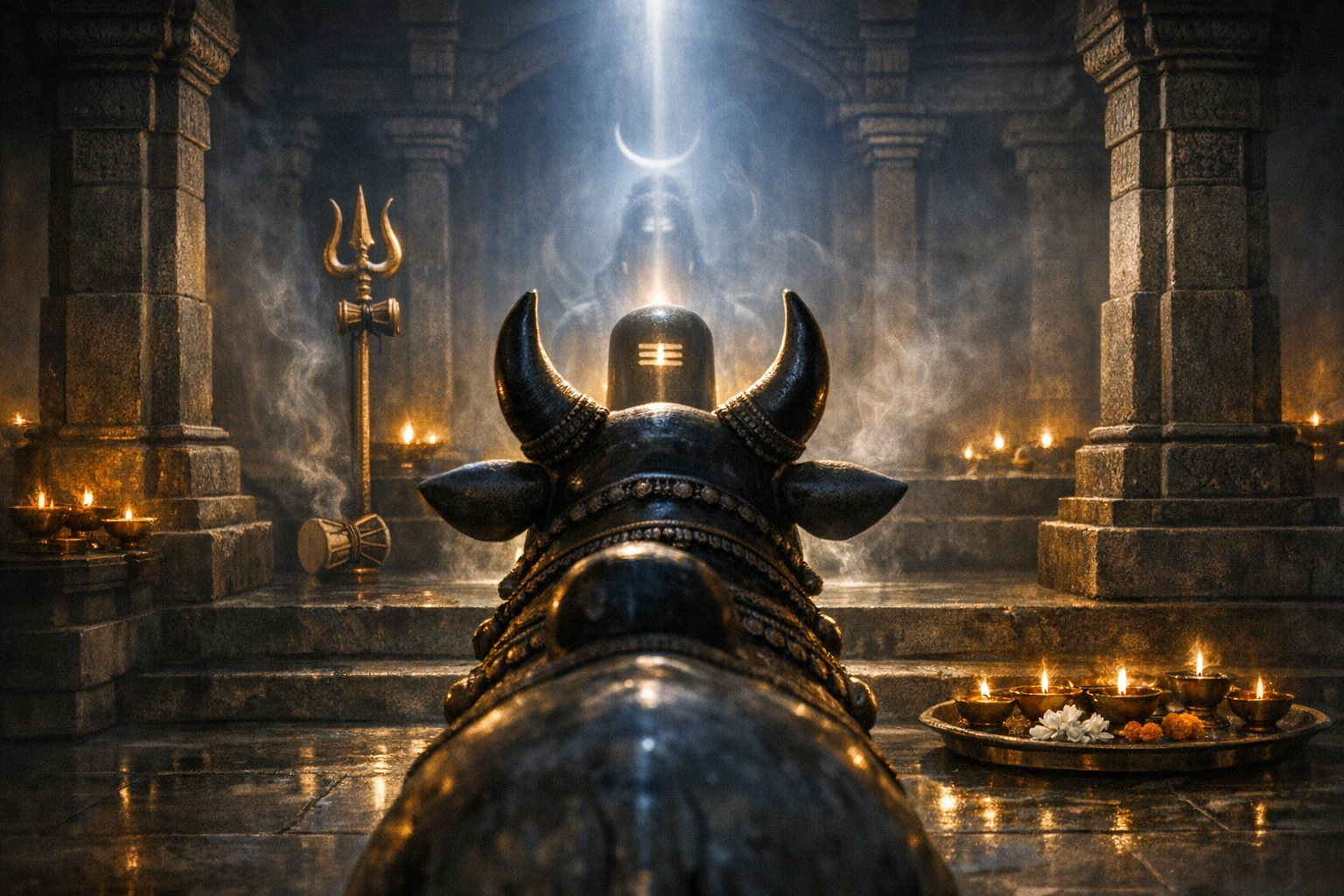
Why is Shiva inseparably linked with Nandi the bull, and never with a horse? This analysis shows how Puranic narratives, Shaiva Agamas, and temple architecture converge to present Nandi as the vehicle of dharma, ethical steadiness, and yogic stillness. By contrast, Vedic symbolism casts the horse as rajasic sovereignty and outward dominionmeanings that do not…
-
Vetala as Bhadrakali’s Vahana: Kerala’s Fierce Symbol of Protection, Death, and Renewal
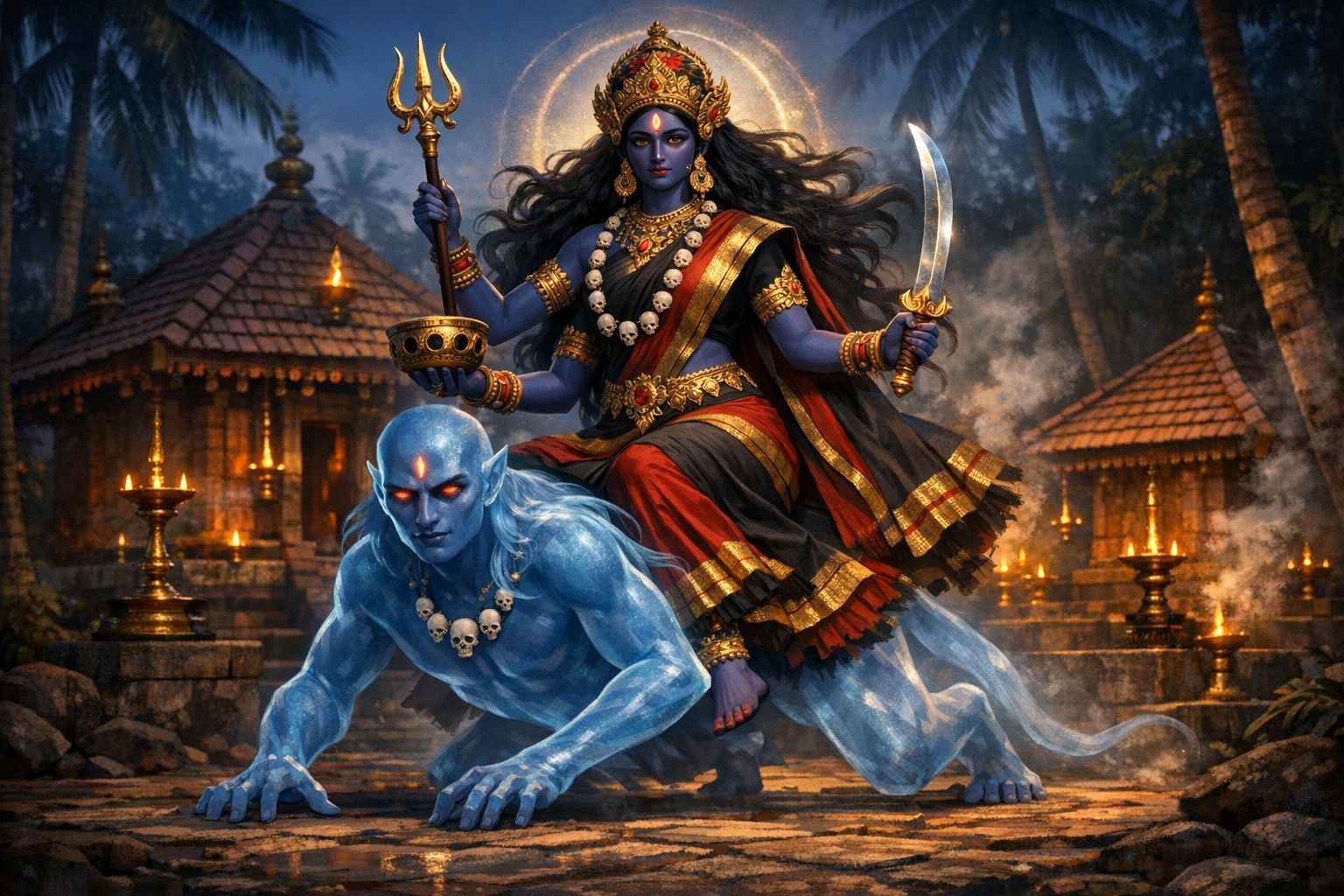
Kerala’s Shākteya tradition preserves a powerful icon: Bhadrakali emerging from Shiva’s third eye to restore cosmic order, sometimes depicted with a vetalathe restless deadas her vahana. This regional motif is not a pan-Indian standard, yet it is deeply coherent within Kerala’s temple ecology, tantra, and performance traditions such as Theyyam, Kaliyattam, Padayani, and Mudiyettu. The…
-
Vishnu’s Cow and Shiva’s Bull: A Profound Decoding of Order and Wild Energy in Sanatana Dharma
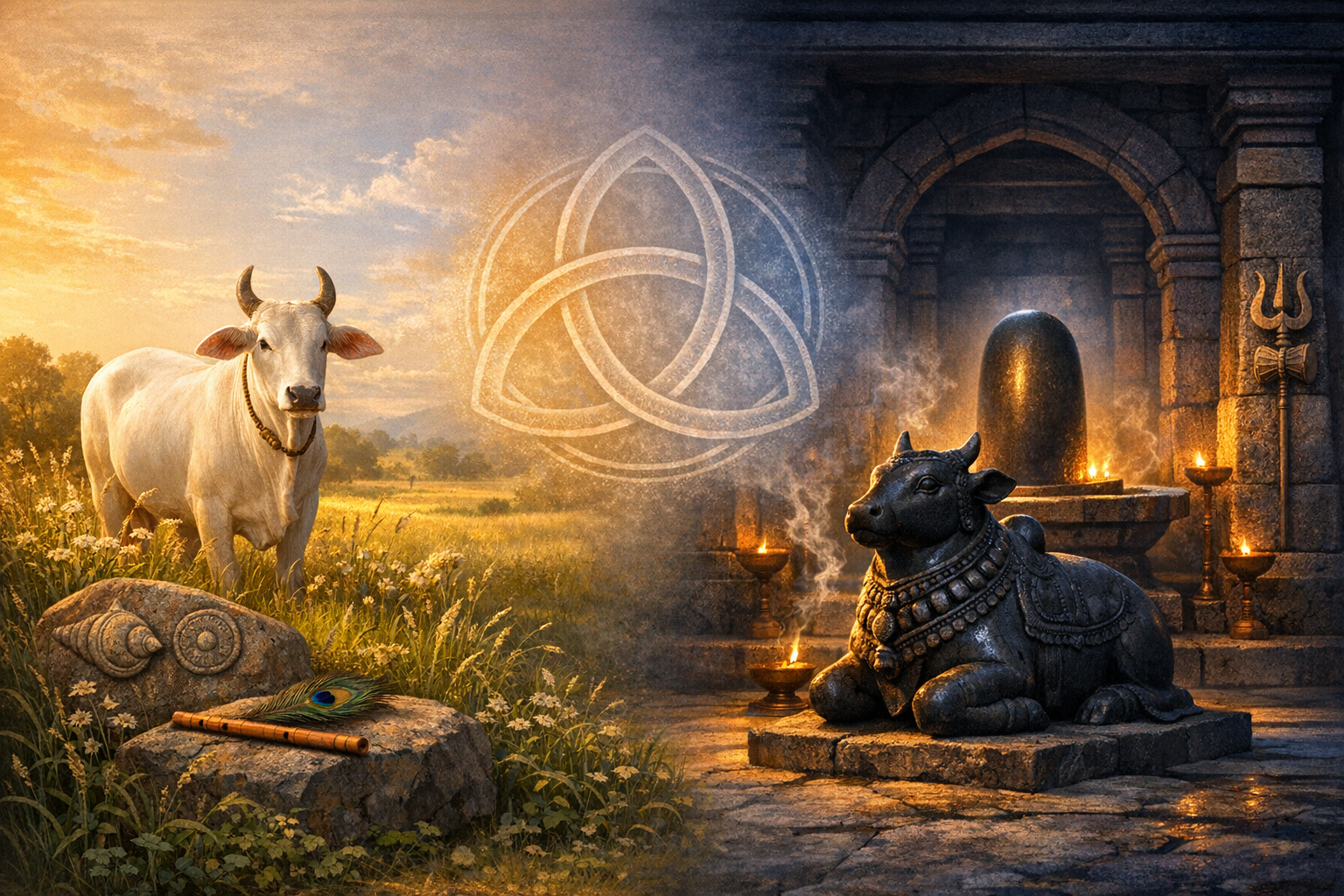
This in-depth exploration decodes why Hinduism venerates the cow and the bull, showing how Vishnu’s pastoral symbolism and Shiva’s bull iconography express a unified philosophy of order and wild energy in Sanatana Dharma. Drawing on Vedic, Puranic, and Agamic currents, it clarifies the ethical ecology of ahimsa, yajña, and sustainable stewardship. The analysis interprets Nandi…
-
Govindaraja Swamy Brahmotsavams 2026, Tirupati: Dates, Vahana Sevas, RitualsA Comprehensive Visitor Guide
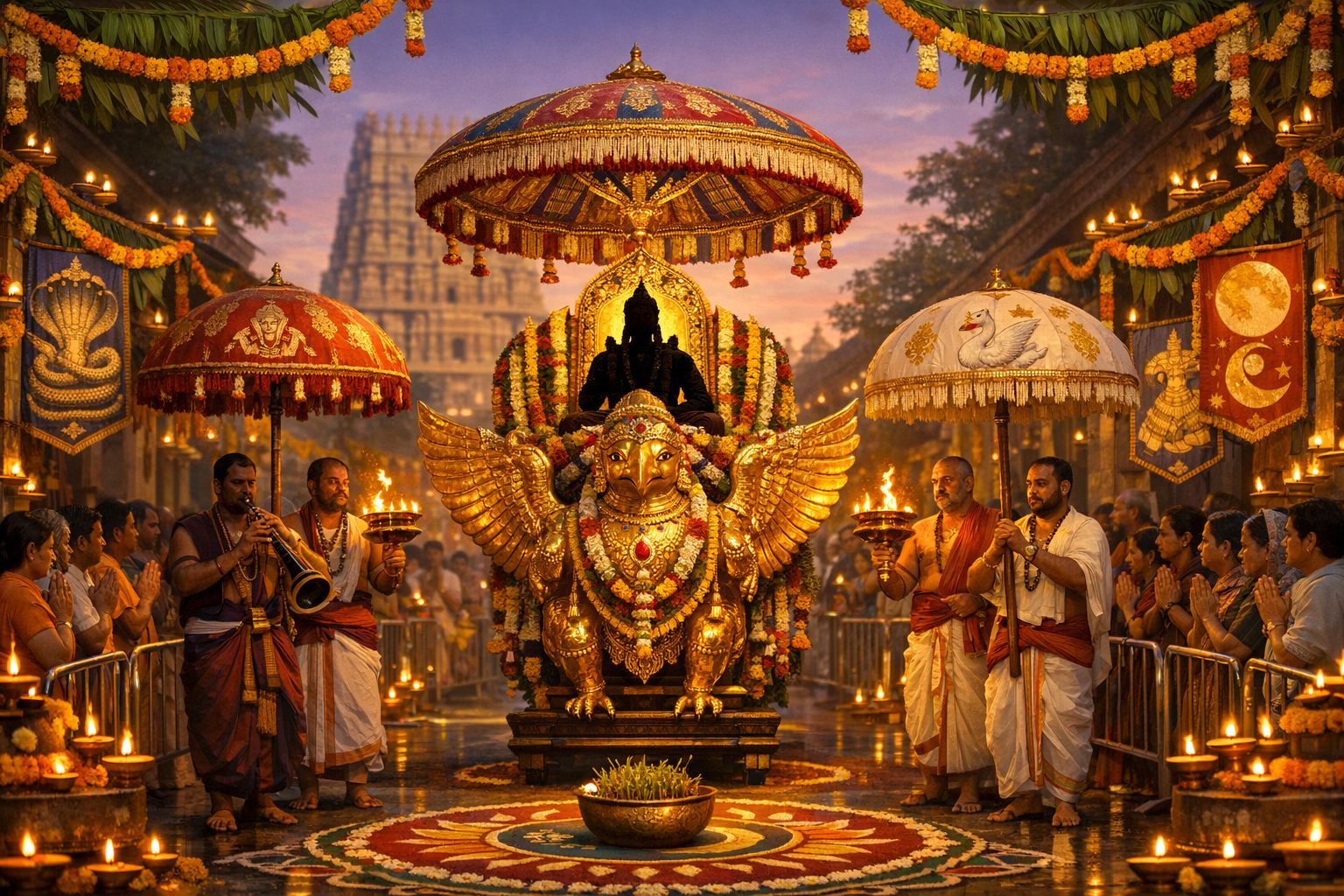
Sri Govindaraja Swamy Temple’s Brahmotsavams in Tirupati will be held from May 23–31, 2026, beginning with Ankurarpanam on the evening of May 22. This comprehensive guide explains the Agamic framework of the nine-day Vaishnava festival and what devotees can expect on the Mada streets during Vahana Sevas, including the widely cherished Garuda Vahanam. Readers gain…
-
Why Hindu Gods Ride Animals: Transformative Psychology, Ecology, and Dharma of Vahanas
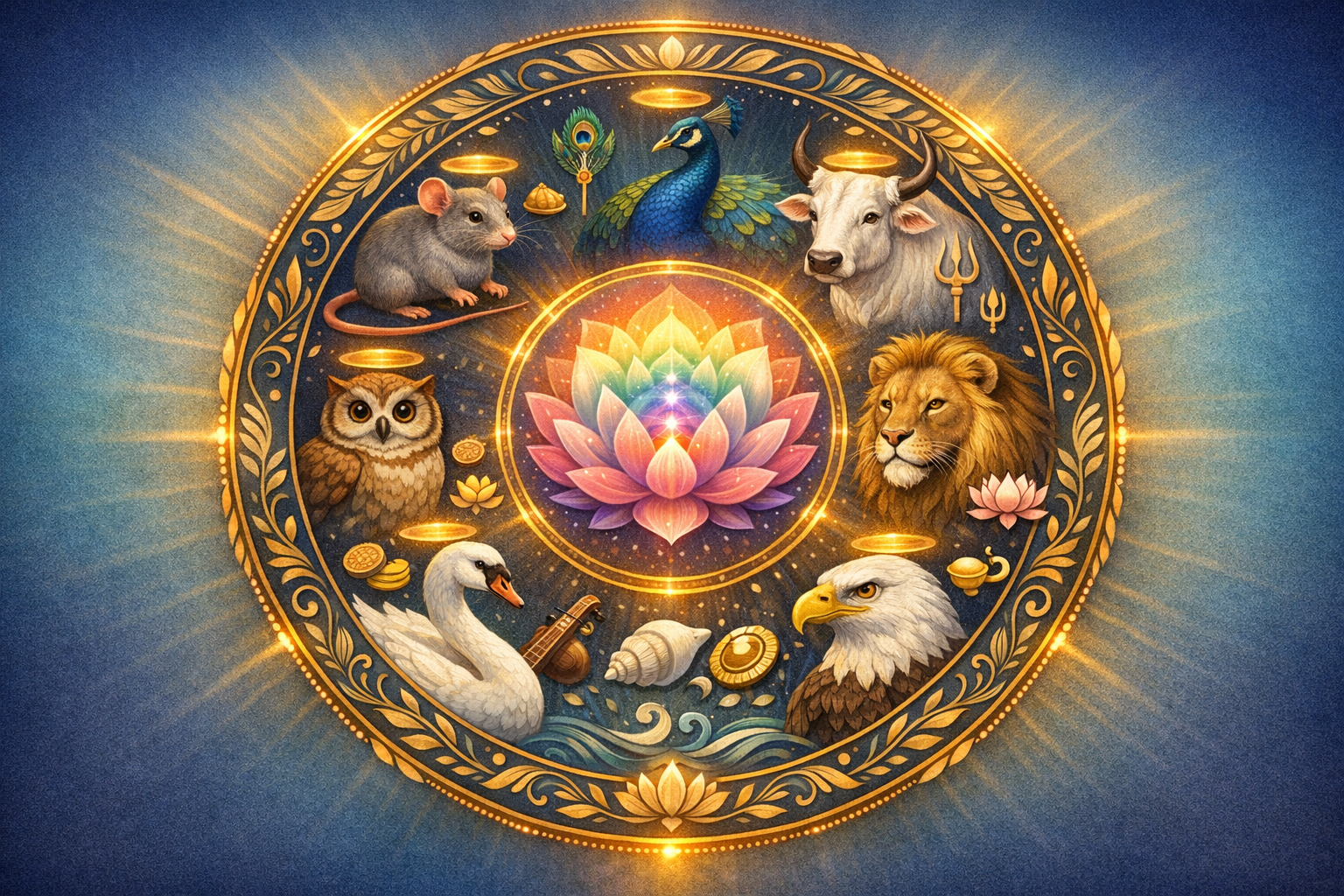
Hindu vahanas are not decorative curiosities but a precise language of symbols that translate spiritual psychology into memorable forms. By placing the deity (awareness) above the animal (energy), each icon teaches mastery of instinct and alignment with dharma. Ganesha’s mouse encodes control over small, easily overlooked habits; Subrahmanya’s peacock signals the sublimation of charisma and…