Unveiling Brahma’s Wedding at Pushkar: Cosmic Timing, Gayatri’s Grace, and Yajna Power
The narrative of Lord Brahma marrying Gayatri, a Gurjar maiden, at Pushkar stands at the confluence of sacred geography, śrauta ritual law, and cosmic timing. Within Hindu traditions, this episode illuminates how dharma responds to the triad of deśa, kāla, and pātra (place, time, and participant), and why Pushkar is revered as a preeminent tīrtha whose sanctity flows from both text and terrain.
According to Purāṇic and regional tellings, Brahma commenced a mahāyajña at Pushkar. As yajamāna, he required the presence of a patnī for key offerings, yet Savitrī (often identified with Sarasvatī) had not arrived when the auspicious muhūrta was expiring. To preserve the integrity of the rite and the cosmic order (ṛta), Brahma wed Gayatri, a Gurjar girl associated in local memory with Pushkar’s landscape and pastoral communities. With the patnī-samyāja completed, the yajña attained fruition, and Pushkar’s lake and ghāṭs were divinely sanctified.
Textual memory preserves multiple strands of this account. Padma Purāṇa, Skanda Purāṇa (Pushkara-māhātmya), and Brahma Purāṇa transmit variants in which Savitrī’s delay, Indra’s facilitation of the marriage, and Gayatri’s identity are narrated with differing emphases. Some traditions portray Gayatri as a regional kṣetra-devī; others read her as the personification of the gāyatrī chandas and mantra-śakti. This plurality of sources reflects a broader Hindu acceptance of layered truths rather than a single canonical version.
Ritually, the episode highlights śrauta requirements. In Vedic praxis, key offerings such as the patnī-samyāja presuppose the yajamāna’s spouse to complete the cycle of reciprocity between devas, mantra, and human agents. The presence of the four principal ṛtviks (hotṛ, adhvaryu, udgātṛ, and the supervising brahmā priest), the tri-agnis (āhavanīya, gārhapatya, and dakṣiṇāgni), and the correct muhūrta together ensure ritual efficacy (siddhi). In this framework, Brahma’s decision to wed Gayatri before the muhūrta lapsed exemplifies adherence to kalānusāra-dharmaduty aligned with time.
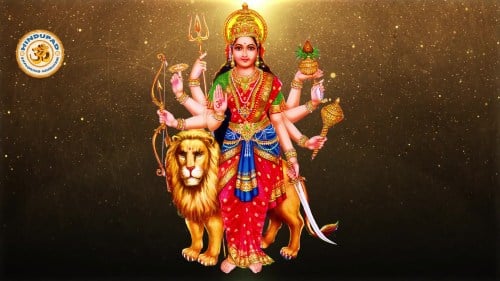
Gayatri in this story operates on two planes at once. Philologically, “gāyatrī” denotes a 24-syllable chandas (metre) and the goddess who embodies the luminous power of mantra. Anthropologically, Gayatri appears as a Gurjar daughter rooted in Pushkar’s social fabric. The synthesis of Vedic mantra-śakti and a living regional identity ties the yajña’s success to both textual authority and local participation, a hallmark of sacred geography in India.
The Gurjar dimension of the tale is significant. By situating Gayatri within a pastoral Gurjar milieu long associated with dairying and trans-desert mobility in Rajasthan, the narrative affirms how tīrthas embed themselves in community life. It suggests a theology of inclusion in which regional custodians of land and livelihood enter the highest arcs of sacred history, thereby transforming Pushkar from a merely textual shrine into a lived, collective inheritance.
When Savitrī finally arrived, her indignation yielded a consequence that shaped Hindu pilgrimage: Brahma’s independent worship would be rare upon earth, effectively limited to Pushkar. Read constructively, this is less a tale of rivalry than a moral and metaphysical rebalancing. It signals that even the loftiest goalshere, the safeguarding of muhūrta and yajñamust be weighed against consent, relational dharma, and the sanctity of vows. The abiding result is theological focus: Jagatpita Brahma Mandir at Pushkar emerges as a uniquely authorized center for Brahma’s worship.
Pushkar’s sacred geography embodies this synthesis. The Jagatpita Brahma Mandir anchors the lake’s ritual life, while the Savitri Mata Temple on Ratnagiri Hill and the Gayatri Mata Temple articulate the story’s relational topography. Pilgrims often remark that the line-of-sight among these shrines forms an inward triangle of remembrance, integrating knowledge (Savitri), mantra-śakti (Gayatri), and creative order (Brahma) around Pushkar Lake.
Encircled by 52 ghāṭs, Pushkar Lake is regarded as a tīrtha where snāna at dawn, pradakṣiṇā along the embankments, and quiet japa of the gāyatrī mantra converge into a holistic sādhana. The ritual grammar is unhurried yet precise: offerings of arghya to the rising sun, reverent pauses at principal ghāṭs, and mindful silence that lets the lake’s sanctity resonate as lived experience rather than spectacle.
Kārtika Pūrṇimā concentrates this sanctity into a single lunar moment. The Pushkar Mela, known worldwide, is not merely a fair but a convergence of vrata, tīrtha-yātrā, and communal rites around the lake’s periphery. Lamps afloat on the waters, mantras borne by desert winds, and the cadence of conches and bells together imprint in memory what texts describe as tīrtha-mahattvathe manifest greatness of a pilgrimage place.
From a ritual-technological view, the Pushkar narrative foregrounds how yajña integrates form and function. The yūpa-stambha (sacrificial pillar), the measured geometry of vedi (altar), and the sequence of āhutis operate in concert with mantra to re-knit the bonds among devas, humans, and nature. Within this system, the patnī-samyāja is not a formality but an ontological hinge: the spouse completes the yajamāna’s offering as sahadharmiṇī, embodying the cooperative principle intrinsic to Vedic religion.
Cosmic timing (muhūrta) is the narrative’s second axis. Hindu calendrics treat time not as an inert backdrop but as a living partner in action. The moral in Pushkar is clear: even deities honor time’s constraints. Choosing dharma under temporal pressurewithout discarding consent or sanctityis the mark of wisdom (prajñā) rather than expedience.
Theologically, the interplay of Savitrī and Gayatri articulates a subtle metaphysics. Savitrī, linked to the solar deity Savitṛ and to the flow of knowledge (śuddha-vāk), signifies luminous insight. Gayatri, associated with the mantra “tat savitur vareṇyaṃ…,” carries the kinetic force of prayer in action (prayoga-śakti). Read together, the consorts signify that sacred knowledge and the disciplined utterance of mantra must cohere for ritual and life to attain fruition.
This layered reading resonates with broader dharmic ideals of unity-in-diversity. Anekāntavāda in Jain thought, upāya-kauśalya (skillful means) in Buddhist practice, and sevā-centered equality in Sikh tradition all affirm that truth discloses itself through many valid approaches. Pushkar’s acceptance of multiple divine forms and narrative variations thus models a civilizational ethos: spiritual plurality nurtures social harmony and shared ethical purpose.
A gender-conscious lens also discerns constructive agency rather than caricature. Savitrī’s protest underscores consent and mutual recognition as sacred in their own right, while Gayatri’s role reveals women’s ritual centrality in completing yajña. Together they remind pilgrims that dharma honors both principled dissent and co-creative partnership.
Historically, Pushkar’s Brahma temple exhibits architectural layers. While the shrine’s sanctity is ancient in memory and text, the present masonry of Jagatpita Brahma Mandir largely dates to medieval reconstructions (with later restorations in the modern era). This palimpsest mirrors the narrative itself: enduring spiritual core, adaptive outer forms.
Regional society further deepens the site’s meaning. Gurjar pastoral networks long stitched Rajasthan’s arid zones into circuits of exchange and care, linking water, fodder, and faith. By honoring a Gurjar daughter as Gayatri at the heart of a canonical yajña, the tradition elevates local stewardship into cosmic historyan affirmation of inclusive belonging that many pilgrims find both moving and instructive.
For contemporary visitors, contemplative practice at Pushkar often centers on quiet parikrama, mindful snāna, and recitation of the gāyatrī mantra at sunrise and sunset. The emphasis is on interiorizationallowing mantra, place, and breath to align. Many speak of an intuitive calm that arises when the lake’s still surface is mirrored within.
The ecological ethic of tīrtha care follows naturally. Sacred lakes are living systems; their clarity depends on restraint in offerings, responsible waste practices, and reverence for shared waters. In this sense, Pushkar’s sanctity extends as a covenant of stewardshipspiritual merit (puṇya) entwined with environmental responsibility.
Comparative sacred geography helps situate Pushkar among India’s tīrthasincluding Prayagraj’s confluence, Haridwar’s Gaṅgā ghāṭs, and the coastal kṣetras of the south. Each site integrates text, terrain, and community into a living pedagogy. Pushkar’s distinct contribution is to center Brahma’s worship while binding Savitrī and Gayatri into a triangulated remembrance of knowledge, mantra, and creative order.
Practically, pilgrims often visit Jagatpita Brahma Mandir first, ascend to Savitri Mata Temple on Ratnagiri Hill for panoramic darśana, and then offer prayers at Gayatri Mata Temple. This threefold rhythm enacts the narrative’s arc: intention, insight, and completionan accessible liturgy for travelers seeking both devotion and understanding.
In sum, Brahma’s wedding to Gayatri at Pushkar is best read as a charter for sacred balance. It safeguards muhūrta without trivializing consent, honors śruti-informed ritual while embracing local community, and invites allHindus, Buddhists, Jains, and Sikhsto recognize a shared ethic of plurality, harmony, and responsibility. As lake, temple, and mantra converge, Pushkar becomes less a destination and more a living conversation between time and the timeless.
What does Brahma’s wedding to Gayatri at Pushkar explain?
The article presents the wedding as a way to understand Pushkar’s exceptional sanctity, especially the Jagatpita Brahma Mandir, Pushkar Lake, and the lake’s ghāṭs. It connects sacred geography, śrauta ritual law, and cosmic timing in one pilgrimage narrative.
Why did Brahma marry Gayatri before Savitrī arrived?
According to the Purāṇic and regional tellings discussed in the post, Brahma needed a patnī for key offerings while the auspicious muhūrta was expiring. His marriage to Gayatri allowed the patnī-samyāja to be completed and the mahāyajña to attain fruition.
How does the article describe Gayatri’s identity?
Gayatri is described on two planes: as the goddess linked to gāyatrī chandas and mantra-śakti, and as a Gurjar daughter rooted in Pushkar’s local social memory. This synthesis ties Vedic ritual authority to regional community participation.
What is the significance of Savitrī and Gayatri in the Pushkar narrative?
Savitrī is linked with luminous knowledge, while Gayatri carries the active force of mantra and prayer. Together, their roles frame the story around knowledge, action, consent, relational dharma, and ritual completion.
Which sacred places form Pushkar’s ritual triangle in the article?
The article identifies the Jagatpita Brahma Mandir, Savitri Mata Temple on Ratnagiri Hill, and Gayatri Mata Temple as a ritual triangle around Pushkar Lake. This geography integrates Brahma’s creative order, Savitrī’s knowledge, and Gayatri’s mantra-śakti.
How do pilgrims practice at Pushkar according to the post?
The post describes dawn snāna, pradakṣiṇā along the embankments, quiet japa of the gāyatrī mantra, and visits to Brahma, Savitri, and Gayatri temples. It also presents Kārtika Pūrṇimā and the Pushkar Mela as concentrated moments of tīrtha-yātrā, vrata, and communal rites.