Curating a Vaisakhi exhibition through the lens of Sikh art becomes most resonant when imagined as an “Invitation to the Villa”: an intimate, human-scaled setting where architecture, landscape, and galleries converge to host shared memory and living practice. Within such a villa, Vaisakhi is not only a festival; it is a curatorial framework that unites harvest, history, and the Khalsa founding (1699) at Anandpur Sahib under a single narrative arc. The result is a scholarly, community-centered experience that honors Sikh heritage while fostering unity across dharmic traditions—Hinduism, Buddhism, Jainism, and Sikhism—through values of seva (service), compassion, and learning.
Vaisakhi marks the agrarian new year in Punjab and the formal birth of the Khalsa Panth under Guru Gobind Singh at Anandpur Sahib. It is celebrated globally by the Sikh Community and recognized as a moment of recommitment to truth, courage, and collective responsibility. Exhibiting Sikh art in this context allows visitors to trace the evolution of identity, devotion, and sovereignty—from the portable manuscripts and martial regalia of mobile communities to the courtly arts that matured under the Sikh Empire. The festival’s civic and spiritual energies meet naturally within a villa’s courtyards and salons, where processional, devotional, and educational programs can unfold side by side.
At the heart of Sikh visual culture is the primacy of the Word—Gurbani—expressed through Gurmukhi calligraphy and the emblematic script of Ik Onkar. This script-centric heritage shapes a rich design language for manuscripts (gutkas), title pages, and borders, as well as for signage and interpretive graphics within galleries. Artworks often depict the Gurus and notable episodes from janamsakhi traditions, scenes from the lives of Guru Nanak and other Gurus, and historic vignettes of the Khalsa’s formation and defense of dharma. These works do not portray divinity in anthropomorphic form; rather, they honor teachers, ethical moments, and the power of the Shabad.
Sikh painting emerged through dynamic exchanges with Mughal, Rajput, and Pahari ateliers, especially during the 18th–19th centuries in centers such as Patiala, Lahore, and Amritsar. Characteristic genres include courtly portraiture, battle panoramas, and devotional scenes, frequently combining refined figuration with jewel-like color and textile patterning. Phulkari textiles—an iconic Punjabi embroidery tradition—add a parallel thread to the exhibition narrative, showcasing women’s artistry, agrarian rhythms, and intergenerational transmission of skill. Together, paintings and textiles anchor the exhibition in both the public and domestic faces of Punjabi-Sikh culture.
Martial objects—khanda and kirpan blades, chakkar (quoit), shields, and armor—reveal the ethics and aesthetics of Kshatra in Sikh history. These artifacts embody disciplined courage, community protection, and the safeguarding of religious freedom. In a villa setting, such objects can be displayed in dialog with calligraphic panels or illuminated folios, visually reinforcing the Sikh ideal that sword and scripture serve justice and truth in tandem. Careful interpretive labels avoid spectacle, centering instead on ethical frameworks and historical context.
Exhibition design in a villa benefits from a spatial progression that mirrors the Vaisakhi journey: from harvest and gratitude in open courtyards to remembrance and resilience in interior galleries, culminating in renewal and unity at a communal gathering space. An initial courtyard can house a Nishan Sahib-inspired installation and soundscapes of kirtan, inviting visitors to transition from everyday awareness into reflective attention. Galleries then layer paintings, textiles, and objects with bilingual labels (Gurmukhi and English) and guided wayfinding. The final salon or garden terrace can host dialogue, education, and community encounters—literalizing the “Invitation to the Villa.”
For collections care, museum-standard preventive conservation is essential. Recommended conditions for paper and textiles include 45–55% relative humidity with minimal fluctuation and temperatures near 18–22°C, while light-sensitive materials remain below approximately 50 lux with UV effectively filtered. Mounts are fabricated from inert, archival materials; supports distribute stress across fragile substrates; and handling follows gloves-on protocols with clear movement plans. Manuscripts are best exhibited as high-quality facsimiles where appropriate, ensuring satkar (respect) for scripture while providing public access to content and design.
Interpretation aligns with Sikh practice and ethics. Guru Granth Sahib is not treated as an object; rather, facsimile folios and digital surrogates convey its calligraphic beauty, musical structure, and linguistic richness. Gallery audio can feature raag-based renditions to contextualize the Guru’s musical framework, while transliteration and translation panels enable non-Gurmukhi readers to engage with meaning. This approach respects religious protocols while advancing inclusive learning.
Community co-curation strengthens academic rigor and trust. Elders, scholars, artists, and educators can contribute oral histories, object memories, and lived insights that deepen catalog research. Youth docents trained in exhibition content lead tours, connecting Sikh history with contemporary identity formation. Such participatory methods yield more accurate labels, fewer interpretive gaps, and a genuine sense of shared stewardship over cultural heritage.
Vaisakhi’s civic expressiveness naturally extends into public programs. Within the villa’s grounds, demonstrations of Gatka (Sikh martial arts) can be safely staged with clear barriers and interpretive commentary that emphasizes discipline and ethics. Bhangra and Giddha workshops encourage intergenerational participation and highlight Punjabi folk traditions. Thoughtful program design links performance to gallery themes—courage, community, and celebration—ensuring that activity enhances, rather than distracts from, the exhibition’s scholarly argument.
Cross-dharmic dialogue is essential to the villa’s invitation. Vaisakhi aligns calendrically with several Indic new year observances, while its moral arc—gratitude for harvest, service to society, and recommitment to truth—resonates with Hindu, Buddhist, and Jain ethics. Panels and guided discussions can explore convergences: seva and dana (generosity), non-harm and justice, and the pursuit of knowledge across traditions. The aim is not homogenization but unity in diversity, where each path retains integrity while enriching the shared civilizational tapestry.
Educational design can scaffold different learning styles. For families, interactive stations in the courtyard introduce Phulkari motifs, basic Gurmukhi strokes, and the Khanda’s geometry through hands-on activities. For advanced learners, seminars address Sikh painting lineages, manuscript paleography, metallurgical analysis of arms, and conservation ethics. Each layer calibrates depth without sacrificing clarity, ensuring readability for general audiences and substance for specialists.
Digital extensions broaden access and preserve knowledge. A searchable online catalog with high-resolution images, 3D object views, and bilingual metadata supports both casual discovery and academic research. Short, captioned videos document conservation treatments and mount-making, while audio features contextualize raag structures and poetic meters in Gurbani. These tools extend the villa’s invitation far beyond its walls, serving the Sikh diaspora and the global public.
A curatorial timeline clarifies context without overwhelming visitors: 1469 (Guru Nanak’s birth) anchors origin; subsequent Gurus mark the development of institutions, scripture compilation, and community practice; 1699 at Anandpur Sahib establishes the Khalsa; and the 18th–19th centuries witness consolidation, artistry, and statecraft. The timeline situates objects within real historical pressures—migration, warfare, diplomacy, and patronage—so that each gallery chapter reads as evidence rather than mere ornament. Clear dates and maps encourage historical literacy.
Object selection must reflect breadth and depth. Representative clusters might include: janamsakhi paintings; portrait studies of the Gurus and prominent Sikhs; courtly commissions from Patiala or Lahore; Phulkari ensembles with regional stitch variations; arms and armor typologies (khanda, kirpan, chakkar, dhal); coins and medals of the Sikh Empire; and devotional artifacts such as rumalas and chauris used in respectful contexts. Provenance, condition, and interpretive value drive inclusion, with transparency about gaps or uncertainties in the record.
Labeling strategy follows an academic yet accessible voice. Each label clarifies medium, date, region, and technique; relates object biography and provenance; and connects to the exhibition’s thesis. Glossaries for terms such as Panj Piare, Amrit Sanchar, Nishan Sahib, and Ik Onkar provide quick reference. QR codes can expand into essays on topics like the Sikh school’s dialogue with Pahari painting or the ethical display of sacred texts.
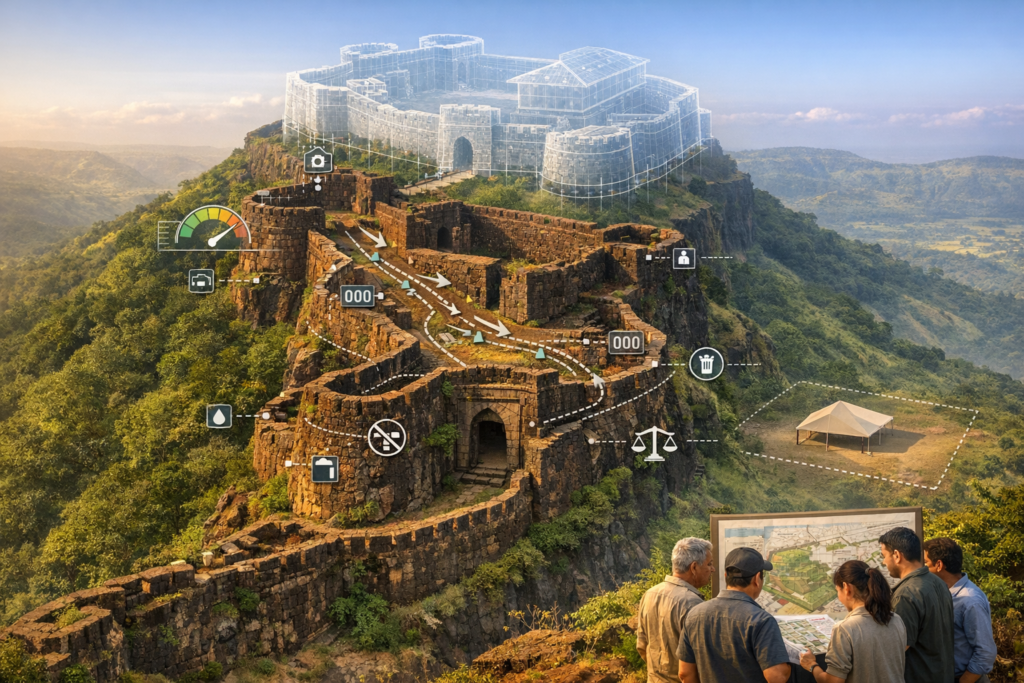
Risk management and security ensure that celebration does not compromise safety or conservation. Visitor flow plans leverage the villa’s axial paths; environmental buffers protect sensitive materials; and discrete security integrates with hospitality. For performances, rehearsals establish safe distances, and equipment checks mitigate light, sound, and vibration risks to adjacent galleries. These backstage disciplines allow the exhibition’s public warmth to rest on professional rigor.
Seasonality reinforces authenticity. Scheduling the exhibition to open around April 13–14, when Vaisakhi typically falls, aligns gallery narratives with the lived calendar of the Sikh Community. Public programs—talks on Anandpur Sahib’s historical geography, workshops on Gurmukhi calligraphy, and moderated dialogues on Khalsa ethics—can be paced over the festival period to maintain momentum and reflection. Seasonal foods and agricultural displays, framed as cultural education rather than commerce, complete the sensory arc.
Emotional resonance arises from carefully designed thresholds. Many visitors recognize in Phulkari a grandmother’s labor of love; in a portrait of a Guru, a compass for ethical living; and in martial regalia, the memory of collective sacrifice and steadfastness. Thoughtful seating, quiet alcoves for reflection, and clearly marked spaces for inquiry encourage personal meaning-making without prescriptive narratives. The villa’s scale helps conversations feel close, respectful, and genuine.
Evaluation closes the loop between intent and impact. Mixed-method tools—short exit surveys, observational studies of wayfinding, and focus groups with Sikh and non-Sikh visitors—identify what worked and where clarity can improve. Findings inform future iterations, including traveling versions of the exhibition that can be adapted to other community venues. In this way, the “Invitation to the Villa” becomes a replicable model for cultural heritage engagement.
Ethics remain paramount. Loans and acquisitions adhere to transparent provenance and legal standards; community consultation guides decisions about sensitive objects; and interpretive language avoids sensationalism. Where uncertainties exist, labels acknowledge them. This open, scholarly posture strengthens public trust and advances the field’s understanding of Sikh art and Vaisakhi’s layered meanings.
Above all, the exhibition demonstrates how Sikh art clarifies Vaisakhi’s living message: truth in action, courage in conscience, and service to all (sarbat da bhala). The villa framework offers a hospitable architecture for this message, enabling courtyards to host performance and dialogue, while galleries protect and interpret treasured works. By illuminating convergences with Hindu, Buddhist, and Jain values, the exhibition advances unity without erasing difference. This is the enduring power of an “Invitation to the Villa”—a space where heritage, scholarship, and community meet in dignity and joy.
In celebrating Vaisakhi through Sikh art with academic care and communal sensitivity, the villa transforms into a living forum: a place to learn, remember, and renew. Visitors depart with a clearer grasp of Sikh history, a deeper feel for Punjabi artistic excellence, and a practical vision of how dharmic traditions can stand together in the present. That is both the curatorial achievement and the civic promise of this exhibition blueprint.
Inspired by this post on SikhNet – News.